The best high chairs 2026 has to offer do far more than give a baby somewhere to sit. The right chair turns mealtime into a calm, shared moment instead of a daily wrestling match with straps, crumbs and a wobbling frame. It keeps your child safe, comfortable and at the table with the rest of the family, and it saves you from cleaning up after every single meal.
Choosing one is harder than it looks. High chairs now come in dozens of shapes, from slim folding frames that vanish behind a door to solid wooden chairs that grow with your child for years. Some have trays that slide off with one hand, others convert into a toddler seat or a booster. Prices range widely, and the most expensive option is not always the one that fits your kitchen, your routine or your child.
This guide cuts through the noise. We look at what actually matters when you shop for a high chair in 2026, compare the main types side by side, and walk through the safety, comfort and cleaning details that separate a chair you love from one you regret. Everything here is written for real family life, not a showroom.
Key Takeaways
- Safety comes first: a five-point harness, a wide stable base and a crotch post are non-negotiable features.
- Convertible and grow-with-me chairs offer the best long-term value, often lasting from six months to five years.
- Folding high chairs are the smart pick for small kitchens, while solid wood chairs suit families who want a permanent seat at the table.
- Easy cleaning matters more than looks: removable trays and wipe-clean seats save hours every week.
- The right chair depends on your space, your table height and how often you eat out as a family.
What Makes a Great High Chair in 2026
A great high chair does three things well: it holds your child safely, it fits your home, and it is easy to clean. If any one of those fails, the chair will frustrate you every day, no matter how good it looked in the shop.
Safety starts with the harness. A five-point harness keeps a wriggling baby secure without being uncomfortable, and it should adjust easily as your child grows. Look for a crotch post that stops your child sliding down, and a base wide enough that the chair cannot tip when your little one leans hard to one side.
Finally, think about your daily routine. A chair that is a chore to clean will be resented within a week. Smooth surfaces, a removable tray insert and a seat cover you can wipe down or throw in the wash are worth more than any fancy extra feature.
The Main Types of High Chairs
High chairs fall into four broad groups. Each has clear strengths, and the best choice depends on how you live rather than which one looks the most impressive.
Full-Size High Chairs
Full-size chairs are the classic choice. They stand on their own legs, have a large tray, and usually offer the most padding and the most adjustment options. Many recline for younger babies and raise or lower to match your table height.
Convertible and Grow-With-Me Chairs
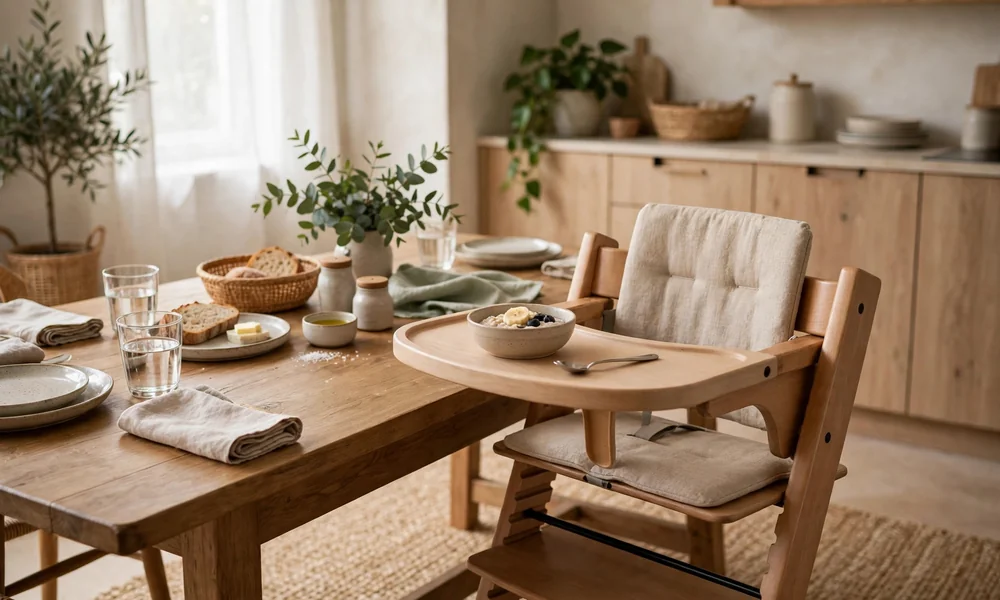
Convertible chairs change as your child grows. They start as a high chair, then become a toddler chair, a youth chair, or even a small adult seat. Wooden designs in this group often last for years and look good enough to keep in the dining room permanently.
Folding High Chairs
Folding chairs collapse flat for storage, which makes them ideal for small kitchens, flats and grandparents’ houses. Many fold with one hand and stand on their own when folded, so they tuck neatly behind a door or in a cupboard.
Hook-On and Booster Seats
Hook-on seats clamp to a table edge, and booster seats strap onto a regular dining chair. Both are compact, portable and great for travel or restaurants. They are also the cheapest way to give your child a place at the table.

High Chair Comparison at a Glance
The table below sums up how the main types compare across the features that matter most in everyday use.
| Type | Best For | Space Needed | Age Range | Cleaning |
|---|---|---|---|---|
| Full-size | Everyday home use | Large | 6 months to 3 years | Good |
| Convertible | Long-term value | Medium | 6 months to 5 years | Good |
| Folding | Small kitchens | Small when folded | 6 months to 3 years | Very good |
| Hook-on / booster | Travel and eating out | Minimal | 9 months to 3 years | Excellent |
How to Choose the Right High Chair for Your Home
Start by measuring your space. A chair that is too wide for the gap between your table and the wall will be pushed into a corner and used less. Check the footprint with the tray on, because that is how the chair will sit most of the time.
Next, check your table height. The tray should sit just below your child’s chest and roughly level with the table surface, so your baby feels part of the meal rather than parked beside it. Chairs with adjustable height make this easy; fixed-height chairs need to match your table from the start.
For families who love the outdoors, the same thinking applies to seating away from home. Our guide to the best toddler camping chairs covers portable seats that work well for picnics and trips, so your child always has a safe place to sit.
Your High Chair Buying Checklist
Run through this checklist before you buy. A chair that ticks all six boxes is very likely to serve your family well.
- Five-point harness: straps that adjust easily and stay snug as your child grows.
- Stable wide base: the chair should not rock or tip when your child leans sideways.
- Adjustable height and footrest: so the tray lines up with your table and your child’s feet are supported.
- Removable, dishwasher-safe tray: one you can lift off with one hand and clean in seconds.
- Wipe-clean seat: smooth surfaces or a machine-washable cover that handles daily mess.
- Easy fold or compact storage: especially important if your kitchen is short on space.
Safety First: What to Check Before Every Meal
A good chair is only safe if you use it properly. A few habits make all the difference, and they take seconds.
Always strap your child in, even for a quick snack. Babies can stand up in an unstrapped chair faster than you expect, and a fall from chair height can cause a serious injury. The harness should be snug enough that you can fit two fingers under the strap, but no looser.
Check the tray is locked before you step away. A tray that slides off under pressure can tip a child forward. Give it a firm tug every time you fit it, and teach anyone else who feeds your baby to do the same.
Stability and Weight Limits
Every high chair has a maximum weight, usually between 15 and 22 kilograms. Check it before you buy, and stop using the chair once your child outgrows it. A chair used beyond its limit can fail without warning.
Test stability in the shop if you can. Push the chair gently from the side and from the front. It should feel solid, not springy. Chairs with a wide splayed base and a low centre of gravity are the hardest to tip, which is exactly what you want with a lively toddler.
Cleaning and Everyday Life
High chairs get dirty fast. Food lands on the tray, the seat, the straps and the floor, and a chair that is hard to clean will eat into your evenings. The best designs accept this reality and make cleaning as painless as possible.
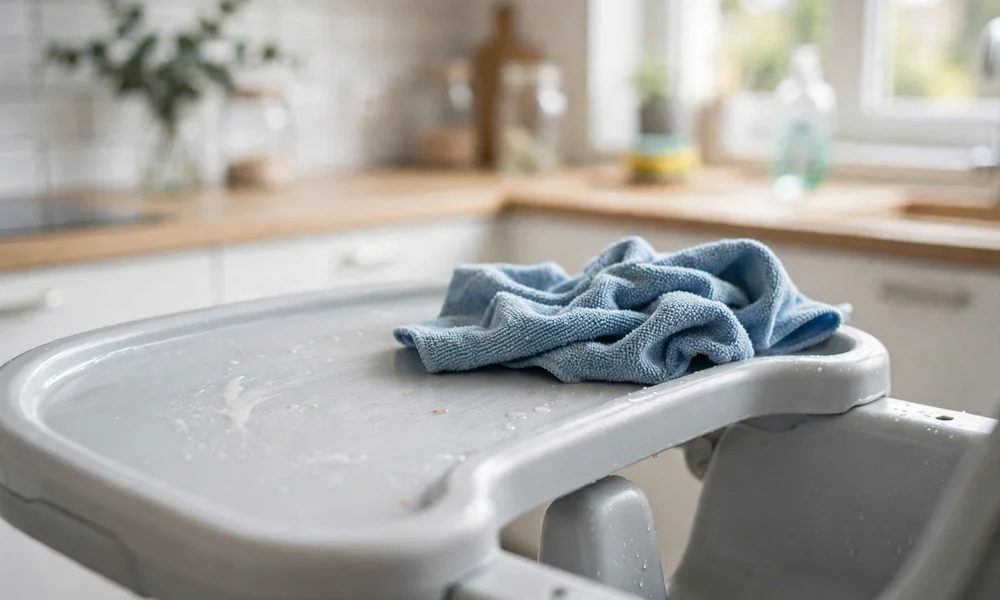
A removable tray insert is the single most useful cleaning feature. You can carry it to the sink, rinse it, and put it back in seconds. Dishwasher-safe inserts are even better, because they come out spotless with no scrubbing at all.
Mealtimes are also easier when the food itself is simple to prepare. A good set of blenders for homemade baby food lets you puree fresh meals in minutes, so you spend less time cooking and more time at the table together.
When to Start Using a High Chair
Most babies are ready for a high chair at around six months, when they can sit up with support and show interest in food. Some chairs recline, which lets you use them a little earlier for supervised feeding, but your baby should always be upright when eating.
Making Mealtimes Easier for Everyone
The high chair is only part of the picture. A few small changes to how you run mealtimes can make them calmer for the whole family.
Eat together whenever you can. Babies learn by watching, and a child who sees parents enjoying food is more likely to try new things. Keep the mood light, and let your baby explore food with their hands, even if it gets messy.
Keep a routine. Serving meals at roughly the same times each day helps your child know what to expect, and a predictable routine makes the chair feel familiar rather than strange. A short clean-up routine after each meal also stops the mess from piling up.
And accept that some mess is unavoidable. Crumbs on the floor are part of life with a baby, and the right tools make it manageable. For the daily aftermath, our guide to the best robot vacuums for kitchens shows how to keep the floor clean without sweeping after every meal.
Frequently Asked Questions
What age should a baby start using a high chair?
Most babies are ready at around six months, when they can sit with support and hold their head steady. Reclining chairs can be used slightly earlier for supervised feeding, but your baby should always sit upright while eating.
Is a five-point harness really necessary?
Yes. A five-point harness is the safest option because it holds your child at the shoulders, waist and between the legs. A three-point harness is better than nothing, but it leaves more room for a wriggling baby to slip out.
How long will a high chair last?
A full-size or folding chair usually lasts until your child is about three years old. A convertible chair can last until five or beyond, because it changes into a youth chair once the high chair stage is over.
Are wooden high chairs better than plastic ones?
Neither is better across the board. Wooden chairs are sturdy, long-lasting and look good in a dining room. Plastic chairs are lighter, easier to wipe clean and often fold away. Choose based on your home and how you plan to use the chair.
Can I use a high chair at a restaurant?
Most restaurants have their own high chairs, but a portable hook-on seat or booster is a useful backup when they do not. Check that the table is sturdy enough for a hook-on seat, and always test the clamp before you put your child in it.
How do I clean a high chair properly?
Wipe the tray and seat after every meal with warm soapy water, and wash the straps weekly. Removable tray inserts can go in the dishwasher, and fabric covers should be machine-washed on a gentle cycle. Check the frame joints for trapped food at least once a week.
The Bottom Line
The best high chair for your family is the one that fits your home, keeps your child safe and survives daily cleaning without a fight. Convertible chairs win on long-term value, folding chairs win on space, and full-size chairs win on comfort and stability. Pick the type that matches how you actually live, run through the safety checklist, and choose a chair your baby will be happy to sit in. Mealtimes are one of the best parts of the day with a little one, and the right chair makes them better for everyone at the table.