Every parent knows the moment: the first spoonful of sweet potato arcs gracefully past your baby’s mouth, lands on a clean outfit, and somehow ends up on the floor, the chair, and your sleeve. A good bib is the small piece of kit that stands between a happy, messy meal and a full wardrobe change. The best baby bibs of 2026 do more than catch drips. They stay comfortable against soft skin, survive the washing machine week after week, and keep food where it belongs — mostly in the baby.
How to Choose a Baby Bib
Start with your baby’s age and stage. Newborns mostly need a soft, absorbent bib for drool and milk dribbles, and comfort matters more than coverage. Once solids start, usually around six months, a waterproof bib with a pocket becomes the workhorse — it catches the food that misses the mouth and saves the outfit underneath. Toddlers who insist on feeding themselves need the most coverage of all, which is where long-sleeve or smock-style bibs earn their keep.
Pay attention to the closure. Snaps let you adjust the fit as your baby grows, and they hold better than Velcro once food gets involved. Velcro is quicker to fasten on a wriggling baby, but it can snag other laundry and loses grip over time. Tie closures look lovely and work well on bandana bibs, but they take a few seconds longer at a moment when seconds count. Whatever you choose, check that the neckband sits flat and leaves room for two fingers underneath — snug enough to stay on, loose enough to be comfortable.

The Best Baby Bibs of 2026
1. The Everyday Silicone Pocket Bib
If you buy only one style of bib, make it this one. A well-designed silicone pocket bib catches a surprising amount of food in its wide, stiffened pocket, wipes clean with a damp cloth, and dries in minutes on the side of the sink. Look for one with a soft, rounded neck and at least three snap settings so it grows with your baby from first tastes to confident spoon-wielding. The best versions roll up neatly for the nappy bag, which matters more than you would think on a day out. Avoid ultra-cheap silicone that feels stiff or smells strongly when new — food-grade silicone should feel flexible and be odour-free after a first wash.
2. The Soft Organic Cotton Bib
For babies with sensitive skin, nothing beats a soft organic cotton bib. The fabric is gentle against the chin and neck, absorbs drool and dribbles before they reach the clothes, and washes beautifully. Choose a bib with a double layer of fabric and a waterproof backing if you want it to handle proper meals rather than just dribble duty. The trade-off is laundry: cloth bibs need washing after every messy meal, so buy at least five or six and treat them as a rotation rather than a single purchase.
3. The Bandana Bib
Bandana bibs are the stylish answer to the drool phase. Their triangular shape sits neatly under the chin, the fabric is usually soft cotton or bamboo, and they look more like a cute accessory than a piece of feeding equipment. They are best for babies who are teething or dribbling rather than eating full meals, because they absorb rather than repel liquid and have no pocket. The tie closure lets you adjust the fit precisely, and they come in patterns that make even a sick-day outfit look deliberate. Keep several in rotation, because a soaked bandana bib needs swapping mid-morning.
4. The Long-Sleeve Smock Bib
Once your baby starts feeding themselves, a standard bib covers the chest and nothing else — which is why sleeves exist. A long-sleeve smock bib protects arms, lap, and most of the outfit, and it ties or fastens at the back so little hands cannot pull it off mid-meal. The best smock bibs use a lightweight waterproof fabric that wipes clean, with elasticated cuffs that keep sleeves out of the food. They take up almost no space folded in a bag, and they are the single best defence against spaghetti day. The only real downside is that some babies resist having their arms covered, so introduce it early and keep mealtimes relaxed.
5. The Bamboo Fibre Bib
Bamboo fibre bibs have quietly become a favourite among parents of babies with eczema or easily irritated skin. The fabric is exceptionally soft, naturally absorbent, and breathable, and it stays gentle wash after wash. Bamboo bibs usually come in a simple pullover or snap design with a slightly longer body than a standard cotton bib, which helps them catch more. They are not waterproof, so they suit drool, milk, and lighter meals best, and they pair well with a silicone bib layered over the top for the messiest foods. If your baby’s skin reacts to ordinary fabrics, bamboo is well worth trying.
6. The Waterproof Terry Bib
A waterproof terry bib combines the best of two materials: a soft, absorbent terry front that feels kind against the skin, and a waterproof backing that stops liquid reaching the clothes. These are the workhorses of the weaning months, handling porridge, yoghurt, and fruit puree without complaint. Look for a generous size that covers the chest properly and a snap closure that survives repeated washing. The one weakness is drying time — the terry layer holds moisture, so these bibs need a proper airing between meals, and you will want at least four in your drawer.
7. The Disposable Bib for Days Out
Disposable bibs will never replace your everyday rotation, but they are brilliant for travel, restaurants, and nursery days. A good disposable bib has a sticky tab that fastens to clothing, a waterproof backing, and a small pocket at the bottom to catch crumbs. They weigh almost nothing, fold flat, and you simply bin them when the meal is over — no wet bib festering in the changing bag. Keep a pack in the car and a few in the nappy bag. The obvious downside is waste, so use them for outings rather than every meal at home.
8. The Adjustable Grow-With-Me Bib
Babies grow fast, and a bib that fits at six months is often too small by twelve. Grow-with-me bibs solve this with multiple snap rows that adjust the neck size and a body long enough to cover a toddler’s chest. The best ones are made from a soft, wipe-clean material that works for both the weaning stage and the toddler stage, so one purchase lasts a year or more. This is the most economical choice in this list, and it makes a thoughtful gift for a new parent who is still building up their baby kit.
9. The Food-Catch Pocket Bib with Wide Scoop
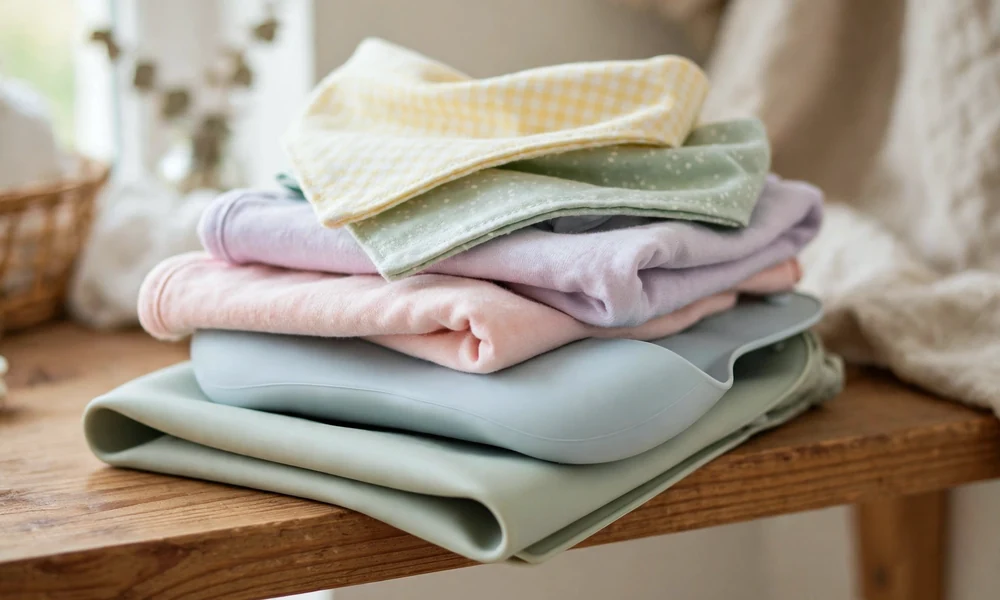
Not all pockets are equal. The bibs that actually catch food have a wide, deep scoop that stays open on its own rather than collapsing flat against the chest. This design matters most for foods that fall rather than drip — peas, pasta, bits of toast — the things that roll straight off a flat bib and onto the floor. A wide-scoop pocket bib pairs naturally with a good high chair, and our guide to the best high chairs of 2026 covers the seats that hold a baby at the right height for those first independent meals. Choose a pocket bib with a stiffened rim that keeps its shape in the wash, and check that the pocket is easy to rinse out.
10. The Soft-Neck Bib for Sensitive Skin
Some babies develop redness or irritation where a bib rubs against the neck, especially during the teething months when bibs are worn for hours at a time. A soft-neck bib uses a padded or bound neckline, often in bamboo or organic cotton, with no stiff seams or scratchy labels against the skin. The closure is usually a gentle snap rather than Velcro, which avoids the scratching that Velcro edges can cause. If your baby’s neck is often pink or sore after wearing a bib, switching to a soft-neck design and changing bibs as soon as they get damp usually solves the problem within a few days.
What to Avoid
The worst baby bibs share a few common faults, and they are easy to spot before you buy. A neckband that is too tight or too stiff will make your baby hate mealtimes, so always check the fit and the flexibility of the material. Bibs with no waterproof layer soak through within minutes of a wet meal, defeating the entire purpose. Thin single-layer cloth bibs are fine for drool but useless for food. And beware of bibs with small decorative buttons or detachable parts — anything that can come loose near a baby’s mouth is not worth the risk, however cute it looks in the packet.
Caring for Baby Bibs
Good care extends the life of every bib you own. Silicone bibs need only a rinse or a wipe, and most can go in the dishwasher on the top rack. Cloth bibs should be rinsed in cold water straight after a meal — hot water sets stains like carrot and tomato — then washed with your normal baby laundry. Avoid fabric softener on waterproof bibs, because it can reduce the water-repellent finish over time. Air-drying is gentler than tumble drying and helps snaps and waterproof coatings last longer. And if a cloth bib starts to smell even after washing, a soak in a little white vinegar before the wash usually fixes it.

Setting Up for Messy Mealtimes
The bib is only one part of a good mealtime setup. A stable seat at the right height, a wipeable tray, and food cut to a safe size matter just as much. If you are still choosing your feeding gear, our guide to the best baby food makers of 2026 will help you prepare smooth purees and soft finger foods at home, and a good bottle routine helps too — see our comparison of the best versus worst baby bottles of 2026 for the feeding side of the picture. With the right bib, the right seat, and realistic expectations about mess, mealtimes become one of the best parts of the day rather than a cleanup operation.
Frequently Asked Questions
When should a baby start wearing a bib?
From birth, if you like — a soft cloth bib catches milk dribbles and protects outfits from the earliest weeks. Most parents find bibs become essential once solids begin, usually around six months, and stay in daily use until around two years old, when most toddlers can manage a meal with only minor casualties.
Are silicone bibs safe for babies?
Yes, provided they are made from food-grade silicone and are free from BPA and phthalates. Food-grade silicone is soft, flexible, and easy to clean, and it does not harbour bacteria the way damp cloth can. Check the packaging for safety certifications, wash a new bib before first use, and replace it if the material ever becomes cracked, stiff, or torn.
The right bib will not make mealtimes tidy. Nothing will. What it will do is keep your baby comfortable, protect the clothes underneath, and save you one load of laundry a day — which, in the first year of a baby’s life, is a genuinely meaningful win. Start with a silicone pocket bib and a few soft cloth bibs, add a smock bib when self-feeding begins, and adjust from there. Your baby will tell you what works, usually by trying to pull it off.