Door Draft Stoppers That Keep the Cold Out in 2026
Door draft stoppers are the cheapest way to make a cold house feel warm. Every exterior door has a gap at the bottom, and on a windy winter night it works like a small open window, pulling cold air across the floor and into the room. You feel it most at ankle height, and turning up the heating never fixes it, because the warm air you pay for escapes through the same gap. The best door draft stoppers of 2026 block that gap, and you can feel the difference within an hour.
This guide compares the main types, from fabric snakes and foam tubes to brush sweeps and adhesive seals, and explains how to measure, fit and choose between them. We judged each type on how well it seals, how it copes with different floors, how long it lasts, and whether it needs tools. If your hallway feels cold whatever the thermostat says, the answer is probably lying at the bottom of your door.
Key takeaways
- A door draft stopper pays for itself fast: blocked cold air is air your heating no longer has to replace.
- Fabric draft snakes need no fitting at all, and they suit rented homes and uneven floors.
- Brush and rubber sweeps seal better than fabric on smooth floors, but they need the right clearance.
- Measure the gap before buying, since a stopper that is too thick will jam the door.
- Draft stoppers work best in a draught-proofing routine, with sealed windows and covered letterboxes.
Why doors leak so much cold air
A door gap does not look like much: typically one to three centimetres high and about a metre wide, the same area as a small open vent, with wind pressure pushing cold air through it all day and night. Warm air rises and escapes high up, and cold air is drawn in low down, mostly under the doors. This is the stack effect: a draughty door is part of a current of air moving through the whole house.
The draught matters more than heat loss alone. A cold current across the floor makes a room feel several degrees colder than the thermostat reading, because your feet and ankles feel the moving air directly. Block the draught and the room feels comfortable at a lower setting, which is where the savings come from.
The main types of door draft stoppers
Draft stoppers come in a few basic designs, each suiting a different door, floor and household. The right choice depends on the gap size, the floor, and whether you can fix something to the door.
Fabric draft snakes
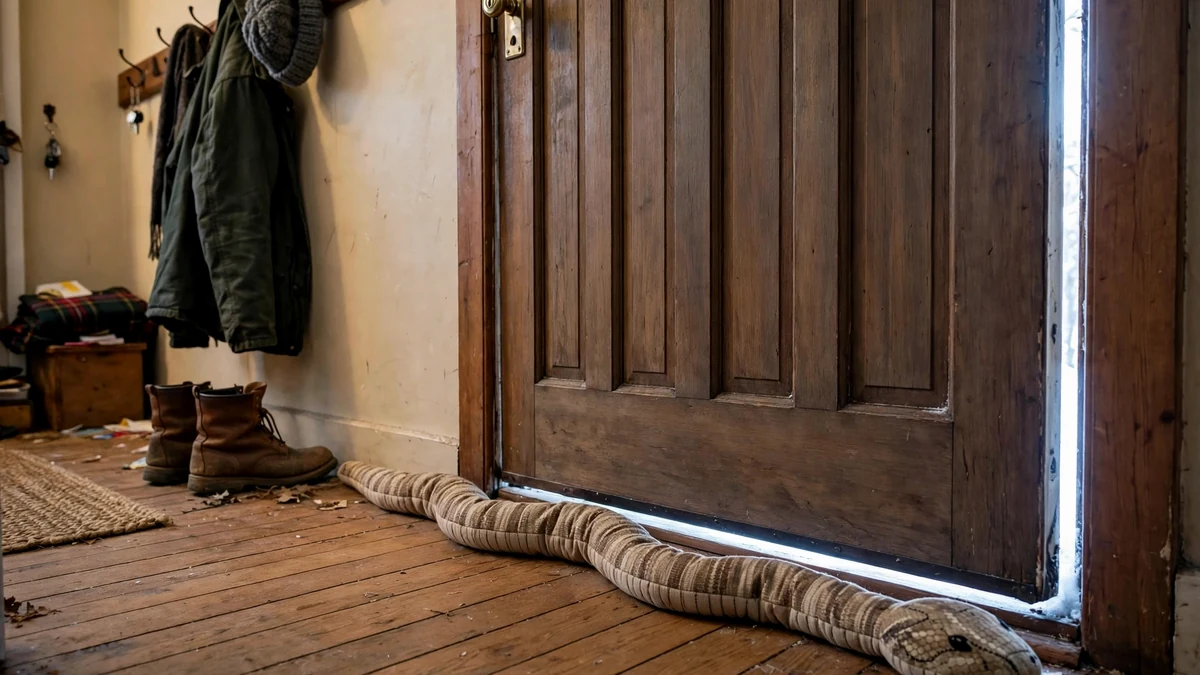
A fabric draft snake is a long, weighted tube that lies along the bottom of the door, and it is the simplest draft stopper there is. You lay it against the door and it blocks the gap with its own weight: no screws, no glue, and no measuring beyond the width of the door. Snakes are filled with sand, rice, foam or stuffing; heavier fills seal better on uneven floors. They suit rented homes and doors you cannot modify, but they only seal one side, and they need moving when the door opens, so they suit doors that stay mostly closed.

Foam and rubber tubes
Foam draft stoppers work like fabric snakes but are made from a single piece of dense foam, often half-round or triangular, that wedges into the gap. The foam compresses against door and floor, and wipes clean easily, suiting back doors and utility rooms. Some are double-sided, with a tube on each side joined by a sleeve that slides under the door, sealing both sides at once. That design suits doors that open often, though it needs enough clearance for the sleeve to pass through.
Brush and rubber door sweeps
A door sweep is a strip fixed to the bottom of the door, with a brush or rubber blade that sweeps the floor as it moves. Brush sweeps are most forgiving on uneven floors, since bristles bend around bumps, while rubber blades seal better on smooth floors and keep out dust and insects as well as cold air. Sweeps are fitted with screws or adhesive and stay on permanently, suiting doors used every day. The key measurement is clearance: too long drags and wears out fast, too short leaves a gap. Most sweeps can be trimmed, so measure twice and cut once.
Adhesive foam seals and weather stripping
Adhesive foam tape and rubber weather stripping seal the sides and top of the frame, and they work best alongside a bottom stopper rather than instead of one. The tape is pressed into the frame and compresses when the door closes, shutting the thin gaps that let in cold air and rattling noise. Foam tape is cheap and easy to fit, but it compresses permanently and needs replacing every year or two. Rubber stripping lasts longer and seals better, though it needs a clean, dry frame to stick.
How to measure your door gap
Measuring takes two minutes and avoids the most common mistake: a stopper that does not fit. Close the door and slide coins or cardboard under it at the middle and both ends, since floors are rarely level. A gap under one centimetre suits a slim brush sweep or flat adhesive seal; one to three centimetres suits most snakes and foam tubes. Over three centimetres is too big for a stopper alone: the door may have dropped on its hinges, and adjusting them or fitting a threshold strip will do more. Also measure the door width: a short snake leaves a cold channel at each end, and a long one bunches up.

What to look for before you buy
Start with the floor. On smooth wood, tile or laminate, almost any stopper works. On carpet, a fabric snake or brush sweep is better, since foam and rubber drag on pile while bristles and heavy fabric settle into it. On very uneven floors, such as old floorboards, a heavy sand-filled fabric snake is best, moulding to the floor where a rigid sweep would bridge the dips and leave gaps.
Think about how the door is used. A front door that opens a dozen times a day needs a fixed sweep or double-sided stopper, while a bedroom door that stays shut all night is served by a simple snake. If pets push doors open, a heavy snake beats a light one, since a cat can shove a light foam tube aside. Washability matters too: fabric snakes with removable covers go in the washing machine, while foam tubes just need a wipe.
Door draft stoppers compared
| Type | Best for | Seal quality | Fitting | Price range |
|---|---|---|---|---|
| Fabric draft snake | Rented homes, uneven floors | Good | None needed | Budget |
| Double-sided foam stopper | Doors used often | Very good | Slides under door | Budget |
| Brush door sweep | Uneven floors, daily use | Very good | Screws or adhesive | Budget to mid |
| Rubber door sweep | Smooth floors, dust and insects | Excellent | Screws or adhesive | Budget to mid |
| Adhesive frame seals | Sides and top of the door | Good | Peel and stick | Budget |
The trade-off is clear: fabric snakes win on ease, sweeps win on sealing, and the best result for a cold front door is usually a combination, with a sweep on the bottom and foam seals around the frame. That combination costs little more than a single stopper, and it seals the whole door rather than just the gap at the bottom.
How to fit a door draft stopper
Fitting a fabric snake takes no time: lay it against the door on the draught side, usually the hallway side, and push it tight into the gap so no light shows through. For a double-sided stopper, slide the sleeve under the door and centre it so the tubes sit against the door on both sides. A door sweep takes more care: close the door, hold the sweep so the blade just touches the floor, and mark the fixing points. Drill pilot holes for screws, or clean the door bottom and let it dry for adhesive. Fix one end first, then work along, checking the blade touches evenly. Open and close the door a few times: it should move smoothly, with slight resistance and no dragging. If it sticks, trim the sweep shorter.
Doors, windows and the whole draughty house
A draft stopper works best when the rest of the house is sealed too. Heavy curtains help: they trap still air against the glass. Our guide to blackout curtains that actually block the light covers the heavy fabrics that block draughts best, and the best versus the worst curtains comparison shows which types are worth the money. Letterboxes, cat flaps and keyholes add up too, and covers for them cost very little. For a draughty bedroom, the curtains versus blinds comparison for bedrooms weighs the insulation of each, and in a cold room the heavier option usually wins.
Mistakes that waste your money
The most common mistake is buying without measuring, and ending up with a stopper that jams the door or floats above the gap. The second is putting a light foam tube on a door that opens often: it gets kicked aside within a day. A third is sealing the bottom and ignoring the sides and top, which can leak as much air as the bottom gap. A stopper on a door with a step or raised threshold cannot sit flat and leaves a channel at each end. Finally, no stopper substitutes for fixing a door that has dropped on its hinges: if the gap is wider on one side, adjust the hinges first.
Checklist: choosing and fitting a door draft stopper
- Measure the gap at both ends and the middle before buying.
- Match the stopper to the floor: fabric or brush on carpet, foam or rubber on smooth floors.
- Pick a fixed sweep or double-sided stopper for busy doors, and a snake for doors that stay shut.
- Seal the sides and top of the frame as well as the bottom.
- Check the door opens and closes smoothly after fitting.
- Replace compressed foam tape every year or two, and wash fabric covers when dirty.
Frequently asked questions
Do door draft stoppers really work?
Yes. A well-fitted stopper blocks the cold air under the door, removing the floor-level draught that makes a room feel cold.
What is the best draft stopper for a front door?
A brush or rubber sweep on the bottom of the door, plus adhesive seals around the frame. It moves with the door, so it works on busy doors.
Can I use a draft stopper on carpet?
Yes, but choose a fabric snake or brush sweep: foam and rubber drag on carpet pile, while heavy fabric and bristles settle into it.
Will a draft stopper fit under any door?
Most gaps are one to three centimetres, suiting standard stoppers. Under one centimetre use a slim sweep; over three, fix the hinges or fit a threshold strip.
Do draft stoppers stop noise as well?
They help: blocking the gap cuts hallway noise, and sealing the frame helps more, though no stopper replaces a solid-core door.
How do I clean a fabric draft snake?
Choose one with a removable cover and wash it like a cushion cover. Others can be spot-cleaned or shaken outside.
Bottom line
The best door draft stoppers in 2026 fit your gap and floor: a heavy fabric snake for a rented home or uneven floor, a brush or rubber sweep for a front door that opens all day, and adhesive frame seals to finish the job. Measure first, and your hallway will stop feeling like the coldest room in the house.