Sushi rice is the part of sushi that most home cooks get wrong, and it is the part that matters most. The fish can be excellent and the knife work can be neat, but if the rice is mushy, or dry, or sour in the wrong way, the sushi falls apart in the hand and in the mouth. Good sushi rice is glossy, warm, and just sticky enough to hold its shape, with a gentle sweet-sour seasoning that lifts the fish rather than fighting it. Picking the right rice, washing it properly, and seasoning it while it is still warm is what makes sushi rice actually stick, in every sense of the word.
Key Takeaways
- Buy Japanese short-grain rice, sold as sushi rice or Japonica, and never substitute long-grain rice, which will not stick.
- Wash the rice in cold water until the water runs almost clear, changing the water four or five times, then let it drain for thirty minutes.
- Use about one part rice to one part water, cook it gently with the lid on, and rest it for ten minutes before seasoning.
- Season the hot rice with warmed rice vinegar, sugar and salt, folding it in gently with a wooden paddle while you fan it cool.
- Use sushi rice while it is warm and slightly glossy, and never refrigerate it, which turns it hard and dry.
What Sushi Rice Actually Is
Sushi rice is not a variety you grow; it is a preparation. It starts with Japanese short-grain rice, a plump, almost round grain with a high starch content that cooks soft and sticky. The seasoning is as important as the grain: it gives the rice its gentle tang, its sheen, and its ability to hold together without turning to paste.
The grain is the first thing to get right, and it is worth being fussy about. Look for short, plump grains that are pearly white and mostly whole, with very few broken pieces. Long-grain rice, jasmine rice and basmati will never make sushi rice, however carefully you cook them, because their starch is different and their grains are built to stay separate. Medium-grain rice, such as the Italian arborio used for risotto or the Spanish bomba used for paella, is closer in shape but wrong in behaviour: arborio releases too much starch and turns creamy, while bomba absorbs liquid and stays firm.
How to Pick a Bag Worth Buying
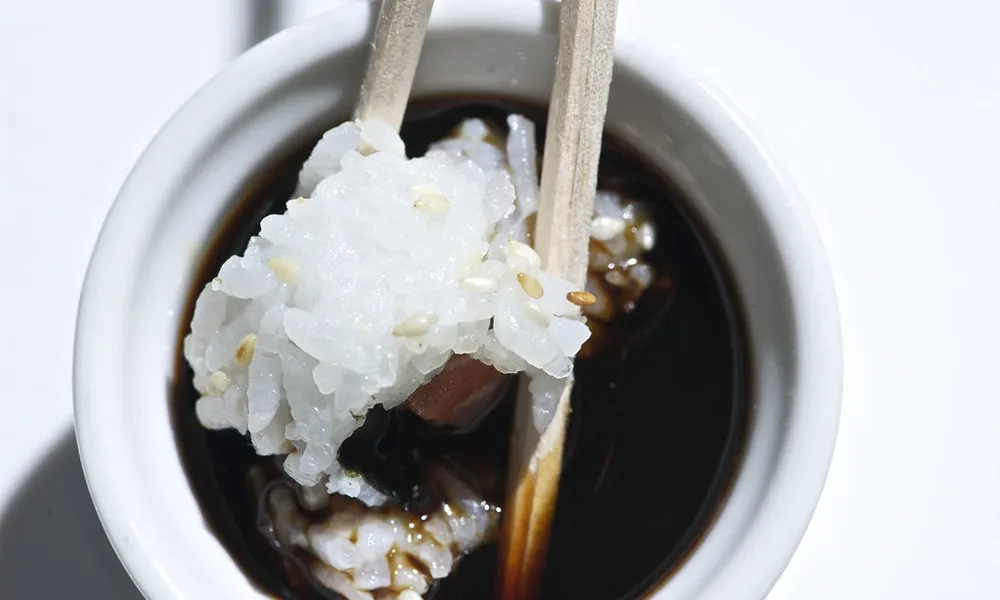
Read the label before you look at the price. Avoid anything labelled long-grain, and be wary of bags that say only premium white rice with no variety named, because that usually means a blend of whatever was cheapest. Check the milling date or packing date when the bag shows one, and prefer the most recent.
Price is a useful signal with sushi rice, up to a point. The cheapest bag on the shelf is usually a blend or an old harvest, and it will show in the finished rice. You do not need the most expensive Japanese import for a weeknight sushi dinner, but a mid-priced named variety from California or Japan will cook noticeably better than the bargain bag. Buy a small bag first when you are trying a new brand, cook a single cup, and only buy the larger bag when the rice passes the test: glossy, sticky enough to hold, and clean-tasting with no mustiness.
Washing: The Step That Decides the Stickiness
Washing is where sushi rice is won or lost, and it is the step most beginners rush. Dry short-grain rice carries a lot of loose surface starch from milling, and if you do not wash it away, the rice cooks to a gluey, heavy mass instead of a light, glossy one. Put the rice in a large bowl, cover it with cold water, and swirl it with your hand. The water will turn milky white. Pour it away and repeat, four or five times, until the water runs almost clear. It takes a few minutes, and it is the difference between rice that sticks and rice that clumps.
After washing, let the rice drain in a sieve for about thirty minutes. While the rice drains, measure your water. The ratio for sushi rice is about one part rice to one part water by volume, slightly less water than for jasmine rice, because short-grain rice needs less to cook through. If you soak the rice for thirty minutes before cooking, as some cooks do, reduce the water a fraction further, because the grains have already taken up some.

Cooking, Seasoning and Fanning
Cook the rice gently and leave it alone. Put the drained rice and the measured water in a heavy pot with a tight lid, bring it to a boil over a medium heat, then turn the heat to the lowest setting that keeps a gentle steam and cook for about fifteen minutes. Do not lift the lid. Every time the lid comes off, steam escapes and the cooking time stretches. When the time is up, turn the heat off and leave the pot alone for ten minutes. This rest lets the steam finish the grains evenly, so the rice at the bottom is not wet while the top is dry.
While the rice rests, make the seasoning. The classic mixture is rice vinegar, sugar and salt, warmed gently until the sugar and salt dissolve. For three cups of dry rice, a good starting point is about a third of a cup of rice vinegar, two tablespoons of sugar and a teaspoon of salt, adjusted to your taste. Warm it, do not boil it, and stir until everything has dissolved.
Seasoning is a physical skill as much as a recipe. Tip the hot rice into a wide, shallow wooden bowl if you have one, or a wide baking tray if you do not, so the rice spreads out in a thin layer. Pour the warm seasoning over the rice in a thin stream while you fold it in with a wooden paddle or a spatula, using a cutting motion that slices through the rice rather than stirring it. Stirring crushes the grains and turns the rice to paste; folding keeps them whole. At the same time, fan the rice with a hand fan or a folded piece of card. The fanning cools the rice quickly, which gives it its glossy sheen and stops it from overcooking in its own heat. Keep folding and fanning for a few minutes, until the rice is warm rather than hot, glossy, and just sticky enough to hold together when you squeeze a small amount in your hand.
How to Tell When Sushi Rice Is Right
The test is in your hand. Take a small amount of the seasoned rice and squeeze it gently. It should hold together in a loose clump, and it should come apart again easily when you press it with a finger. If it stays in a hard lump, it is overworked or overcooked, and no amount of fanning will save it.
Sushi Rice Compared With Other Rices
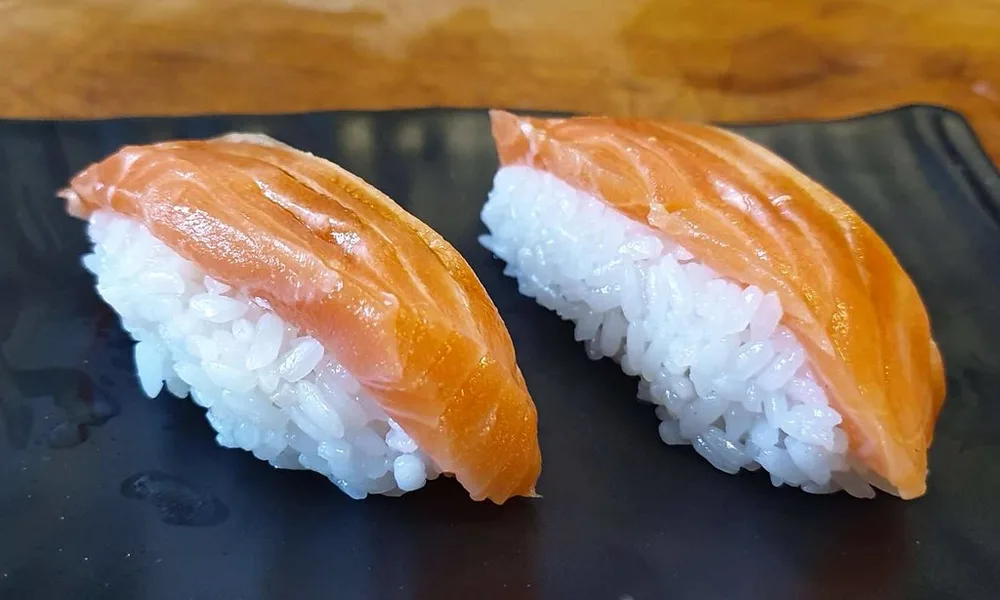
Sushi rice is the stickiest of the everyday rices, and that stickiness is a feature, not a flaw. The table below shows how it compares with the rices it is most often confused with, and why none of them will do the same job.
| Rice | Grain | Texture when cooked | Stickiness | Best for |
|---|---|---|---|---|
| Sushi rice | Short, plump | Soft, glossy | High, holds shape | Sushi, onigiri, rice bowls |
| Jasmine rice | Long | Soft, fluffy | Light, clings a little | Stir-fries, curries |
| Basmati rice | Extra long | Fluffy, separate | Very low | Curries, biryani, pilaf |
| Medium-grain rice | Medium | Soft, tender | Medium | Everyday meals, puddings |
| Arborio rice | Short, plump | Creamy, starchy | High, but creamy | Risotto only |
Sushi Rice vs Onigiri Rice: Same Grain, Different Job
Sushi rice and onigiri rice start from the same short-grain rice, but they are not the same dish, and the difference is the seasoning. Sushi rice is seasoned with vinegar, sugar and salt, and it is served warm, glossy and lightly tangy. Onigiri rice is usually plain short-grain rice, cooked the same way but left unseasoned, or seasoned only with a little salt, and it is shaped into triangles or balls while warm, often with a filling and a strip of nori. The plain rice holds together just as well, because the stickiness comes from the grain, not the vinegar.
Sushi Rice Buying and Cooking Checklist
- Buy Japanese short-grain rice, sold as sushi rice or Japonica, in a named variety such as Koshihikari when you can.
- Check the grains are short, plump, pearly white and mostly whole, with very few broken pieces.
- Wash the rice four or five times in cold water until the water runs almost clear, then drain it for thirty minutes.
- Use about one part rice to one part water, cook gently with the lid on, and rest the pot for ten minutes.
- Season the hot rice with warmed rice vinegar, sugar and salt, folding gently while you fan it cool.
- Use the rice warm and glossy within a few hours, covered with a damp cloth, and never refrigerate it.
Frequently Asked Questions
Can I use jasmine rice for sushi?
No. Jasmine rice is a long-grain rice built to stay separate and fluffy, so it will not hold together in a roll or a piece of nigiri. Sushi needs a short-grain Japonica rice, whose starch makes the cooked grains cling together gently.
Do I have to wash sushi rice?
Yes, and it matters more than with any other rice. Wash it in cold water four or five times until the water runs almost clear, to remove the loose surface starch that would turn the rice gluey.
What is in sushi vinegar?
Rice vinegar, sugar and salt, warmed gently until the sugar and salt dissolve. A good starting point for three cups of dry rice is about a third of a cup of rice vinegar, two tablespoons of sugar and a teaspoon of salt. Ready-made sushi vinegar is the same mixture in a bottle, and it is a fair shortcut, though usually sweeter.
Why does my sushi rice turn out mushy?
Usually too much water, rice that was not washed enough, or a lid lifted too often during cooking. Measure one part rice to one part water, wash four or five times, keep the lid on while it cooks, and rest the pot for ten minutes before seasoning. Fold the seasoning in gently with a cutting motion, never stir it, or the grains will crush.
Can I make sushi rice in a rice cooker?
Yes. Wash and drain the rice as usual, use the same one-to-one water ratio, and let it rest for ten minutes after the cooker switches off. Tip it into a wide bowl, season it, and fan it cool exactly as you would with pot-cooked rice.
How long does sushi rice keep?
Only a few hours at room temperature, covered with a damp cloth. Never refrigerate sushi rice, because the cold turns the starch hard and dry, and reheating will not bring back the texture. Cook only as much as you need, and use any leftover seasoned rice for a rice bowl rather than trying to shape sushi from it.
The Bottom Line
Sushi rice that actually sticks is not a trick and it is not a special product. It is a short-grain Japonica rice, washed until the water runs almost clear, cooked gently with just enough water, and seasoned while hot with rice vinegar, sugar and salt, folded in with a fan to cool it. Buy a named variety, wash it properly, keep the lid on, and use the rice warm. Do that, and the rice will hold its shape, taste clean and faintly sweet-sour, and let the fish do the talking. For the wider pantry, see the rice varieties worth stocking, season it with the top rice vinegars for 2026, and eat it with chopsticks worth the upgrade.