Top Rice Vinegars for Bright, Balanced Cooking in 2026
Rice vinegar is the quiet bottle that makes Asian cooking taste right. It is the gentle acidity in sushi rice, the lift in a cucumber salad, the brightness that keeps a stir-fry from tasting flat, and the backbone of a dipping sauce you keep going back to. Used well, you barely notice it — the food just tastes cleaner and brighter. Used badly, a dish turns harsh and sour in a way no sugar can fix.
Choosing well is mostly about knowing which of the three main types you need and reading the label before you buy. The differences between unseasoned, seasoned and black rice vinegar matter far more than the brand, and the best bottle for sushi rice is not the best bottle for a dipping sauce.
Key takeaways
- Rice vinegar is mild, slightly sweet and far less sharp than white or wine vinegar — that gentleness is the whole point of it.
- Unseasoned rice vinegar is the versatile choice; seasoned rice vinegar already contains sugar and salt and is made for sushi rice.
- Black rice vinegar is dark, malty and rich, and belongs in dipping sauces and braises, not in sushi rice.
- A good unseasoned bottle lists rice and water, and little else.
- A little goes a long way: start with a tablespoon, taste, and add more, because you cannot take vinegar back out.
What rice vinegar actually is
Rice vinegar is made by fermenting rice — first into rice wine, then into vinegar — and the result is a pale, mild vinegar, usually around 4 to 5 percent acidity, with a gentle sweetness other vinegars do not have. It is a staple of Japanese, Chinese and Korean cooking, and a pantry regular far beyond those kitchens, because its soft acidity suits dishes where a sharper vinegar would bully everything else off the plate.
The key fact is what it is not. It is not white vinegar, which is harsh and one-note, not apple cider vinegar, which is fruity and punchy, and not wine vinegar, which is tannic and sharp. Rice vinegar is the mild one, and that mildness is why it works in sushi rice, where it must season the rice without overpowering the fish, and in delicate dressings, where it brightens without biting.
Rice vinegar types compared
| Type | Colour and flavour | Acidity | Best for |
|---|---|---|---|
| Unseasoned white rice vinegar | Pale gold, clean, mildly sweet | 4–5% | Sushi rice, dressings, pickling, everyday cooking |
| Seasoned rice vinegar | Pale gold, sweet and lightly salty | 4–5% | Sushi rice straight from the bottle, quick dressings |
| Black rice vinegar | Dark brown, malty, rich and smoky | 4–5% | Dumpling dipping sauces, braises, noodles |
| Red rice vinegar | Rosy red, tart and slightly sweet | 4–5% | Chinese seafood dishes, sweet-and-sour sauces |
| Brown rice vinegar | Amber, nutty and mellow | 4–5% | Hearty dressings, grain bowls, marinades |
Most home cooks need two bottles: an unseasoned white rice vinegar for everything, and a black rice vinegar for dipping sauces.
Reading the bottle before you buy
Start with the ingredient list, which on a good unseasoned bottle is short: water, rice, and perhaps a little alcohol from the fermentation. If the list runs long — flavourings, colouring, sweeteners, preservatives — the bottle is a flavoured product rather than a real vinegar. Seasoned vinegar is the exception: sugar and salt belong there.
Acidity matters more than price. Most rice vinegars sit at 4 to 5 percent, the gentle range the recipes in this guide assume. A bottle at 6 percent or above will taste noticeably sharper, so use a little less of it. Colour is a useful check too: white rice vinegar should be pale gold and clear, and a dark, murky bottle has usually been stored badly.
The taste test: what good rice vinegar tastes like
Taste a little rice vinegar neat, on a spoon, and you will learn more in five seconds than the label can tell you. Good rice vinegar tastes clean and bright first, with a soft sweetness underneath and no harsh burn at the back of the throat. It should remind you faintly of cooked rice and white wine. A faint sharpness at the end is fine — it is still vinegar — but it should be a background note, not the main event.
Then taste it the way you will actually use it: a teaspoon whisked into a tablespoon of oil with a pinch of salt. Good rice vinegar makes a dressing that tastes bright and balanced; bad rice vinegar stays harsh even diluted.
Sushi rice: where rice vinegar earns its keep
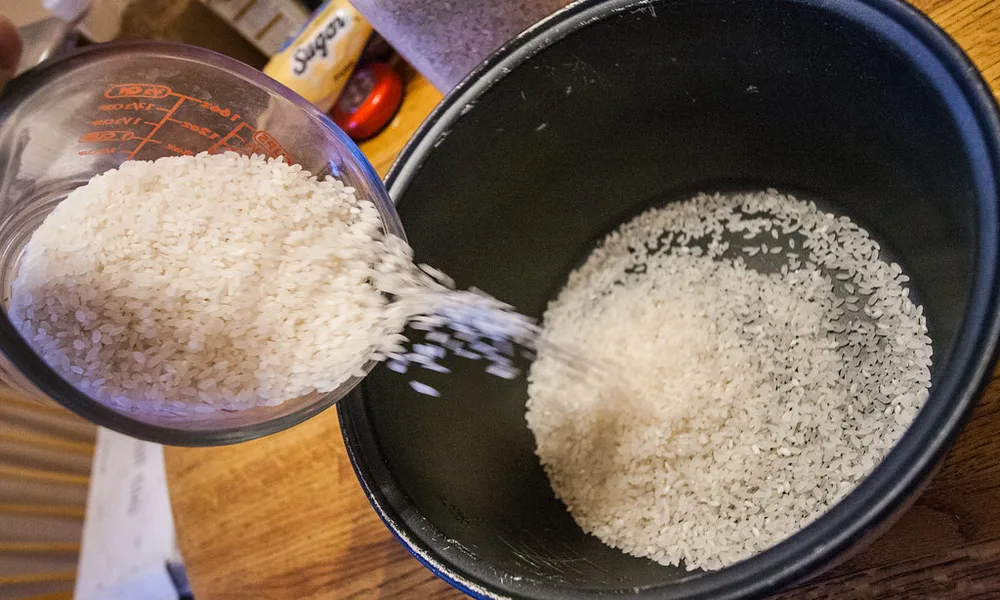
Sushi rice is the single most important job rice vinegar does, and the easiest to get wrong. The vinegar is not cooked into the rice; it is folded in after cooking, while the rice is still hot, so each grain is coated and seasoned without being crushed. The classic ratio is about a quarter of a cup of seasoned vinegar for every three cups of dry rice, but a seasoned bottle needs no help, while an unseasoned bottle needs a spoonful of sugar and a pinch of salt whisked in first.
Warm the vinegar gently before you add it, so the sugar dissolves and it spreads evenly. Drizzle it over the hot rice and fold it in with a rice paddle, cutting through the rice rather than stirring it, which mashes the grains. Fan the rice as you fold, because fanning cools it and gives it the glossy finish good sushi rice is known for. The rice should taste gently sweet and tangy, never sour. Our guide to the best rice explains how to choose the grain itself, but the vinegar is what turns plain cooked rice into sushi rice.
Dressings, marinades and stir-fries
Outside sushi, rice vinegar is the dressing vinegar for anything delicate. Three parts oil to one part rice vinegar, with a little soy sauce, a pinch of sugar and a dab of grated ginger, suits cucumber salad, shredded cabbage, cold noodles and grain bowls. It is also the vinegar for quick pickles: thinly sliced cucumber, carrot or radish in rice vinegar with sugar and salt turns crisp and bright in twenty minutes.
In stir-fries, rice vinegar goes in at the end, not the beginning. A splash tossed through the pan in the last thirty seconds lifts the whole dish, cutting through oil and waking up the flavours, while vinegar added early just boils away and leaves the dish flat. The same timing applies to marinades: rice vinegar is gentle enough for fish and chicken without toughening them, but even a gentle acid changes delicate fish if left too long, so thirty minutes is plenty. Our guide to soy sauce covers the other half of this partnership.
Dipping sauces and dumplings
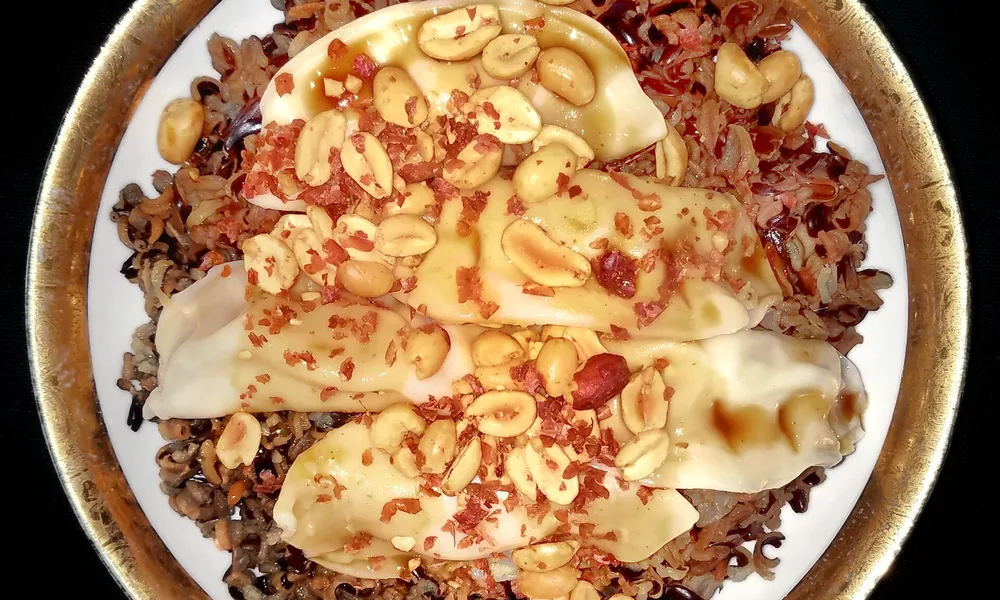
Black rice vinegar is the star of the dumpling table, and it deserves its own bottle rather than a substitute. A classic dumpling dip is simply black rice vinegar with a little soy sauce and chilli oil, or with finely sliced ginger, and the malty, almost smoky depth of the black vinegar is what makes it — white rice vinegar in the same dip tastes thin and one-note by comparison.
White rice vinegar has its own dipping role: mixed with soy sauce and a little sugar, it makes the light, bright dip served with spring rolls and potstickers, where the vinegar cuts through the fried wrapper and refreshes the palate between bites. Aim for sweet, salty and sour all at once, with none of the three shouting. Our guide to sesame oil explains the finishing oil that usually joins this trio.
Storing rice vinegar so it stays good
Rice vinegar is far more forgiving than most pantry bottles. Its acidity keeps it stable, and an opened bottle will last for months in a cool, dark cupboard without going off. Keep the cap on between uses, wipe the neck clean, and store it upright away from the stove, where heat and steam speed up flavour loss.
There is no need to refrigerate rice vinegar, even an expensive bottle, though the fridge will not hurt it. Seasoned vinegar keeps a little less well than unseasoned, because its sugar can attract moisture, so use it within a few months of opening. If a bottle smells musty or has developed a thick, slimy layer on top, it has gone off and should be thrown away.
Mistakes that ruin good rice vinegar
The most common mistake is using too much. Rice vinegar is mild, which tempts people to pour generously, but a dressing that is one part vinegar to one part oil will taste sour no matter how mild the vinegar is. Start with a tablespoon, taste, and add more by the teaspoon. The second mistake is the wrong swap: white vinegar, apple cider vinegar or white wine vinegar in place of rice vinegar all change the dish, and the result is usually too sharp or too fruity.
The third mistake is adding rice vinegar too early in cooking, where the heat boils off its delicate flavour and leaves only acidity. The fourth is buying seasoned vinegar for a recipe that needs unseasoned, then finding the dish too sweet and salty to fix. The fifth is treating black rice vinegar as interchangeable with white — it is a different ingredient, dark and malty, and it will colour a dish in ways white vinegar never would.
Checklist: choosing your rice vinegar
- Buy unseasoned white rice vinegar as your everyday bottle, and black rice vinegar for dipping sauces.
- The ingredient list is short — rice and water first, with sugar and salt only in seasoned vinegar.
- Acidity sits at 4 to 5 percent, and the bottle is pale gold and clear, not cloudy or dark.
- Tasted neat, it is clean and bright with soft sweetness, not harsh or alcoholic.
- The bottle is small enough to finish within a few months of opening.
- It smells fresh and faintly of rice, with no musty or stale note.
Frequently asked questions
What is the difference between seasoned and unseasoned rice vinegar?
Seasoned rice vinegar already contains sugar and salt, and it is made for sushi rice straight from the bottle. Unseasoned rice vinegar is plain vinegar, and you add your own sugar and salt.
Can I substitute white vinegar for rice vinegar?
You can in a pinch, but the dish will taste sharper. Use about half as much white vinegar as the recipe asks for rice vinegar, and add a pinch of sugar to soften it.
Does rice vinegar go bad?
Rarely. Its acidity keeps it stable for months, even years, in a cool, dark cupboard. The flavour fades slowly, and a little sediment is normal.
Is rice vinegar gluten-free?
Most rice vinegar is naturally gluten-free, since it is made from rice, but some bottles contain added flavourings. Check the label if you need a guarantee.
What is black rice vinegar used for?
Black rice vinegar is the dark, malty vinegar for dumpling dipping sauces, noodle dishes and braises. It is not a substitute for white rice vinegar in sushi rice.
How much rice vinegar should I use in sushi rice?
About a quarter of a cup of seasoned vinegar for every three cups of dry rice, folded in while the rice is hot. Taste the rice after folding: it should be gently sweet and tangy, never sour.
The bottom line
The rice vinegar worth keeping in 2026 is a clean, mild unseasoned bottle at 4 to 5 percent acidity, with rice and water at the top of a short ingredient list, plus a bottle of black rice vinegar for dipping sauces. Use it gently, add it late in cooking, and let its soft brightness do the work.