
Good chopsticks are worth the upgrade in 2026, and the reason is not snobbery: it is grip. The difference between a pair that holds a slippery noodle on the first try and a pair that drops it back into the bowl three times is the difference between a relaxed meal and a frustrating one. Cheap disposable chopsticks are fine for a takeaway box, but a well-made reusable pair changes how confidently you eat, how much you enjoy the food, and how long the pair lasts.
Choosing chopsticks is not about buying the most expensive pair on the shelf. It is about matching the material, length and tip to the food you eat most, because the chopsticks perfect for sushi can be wrong for a deep bowl of ramen. This guide compares the strongest chopsticks of 2026 and shows why a small upgrade pays off at every meal.
Key Takeaways
- Wood and bamboo grip food best because their natural texture holds slippery noodles and fish, while smooth metal is the hardest to eat with.
- Square or tapered tips give you more control than round tips, especially with small or delicate pieces of food.
- Most adults suit chopsticks around twenty-one to twenty-three centimetres long, with longer pairs for cooking and serving.
- A good pair should feel balanced, not top-heavy, and the two sticks should be identical in length and weight.
- Look after them properly and a quality wooden pair lasts for years; wash by hand and dry them straight away.
Why Cheap Chopsticks Fail
Disposable bamboo chopsticks are designed to be used once, and they behave like it. They are often rough, with splinters along the split edge, and their tips are blunt and uneven, so they crush delicate food instead of holding it. They also vary from pair to pair, which means your grip has to adjust every time you sit down to eat. For a single takeaway meal that is acceptable, but as a daily tool it is a poor experience.
Cheap reusable chopsticks fail in a different way. The most common problem is a finish that is too smooth: glossy lacquer or polished metal looks good in the packet, but it lets noodles slide and fish slip, and you end up squeezing harder, which tires your hand. The second problem is weight. A pair heavy at the top end feels unbalanced, while a pair too light feels insubstantial. A good pair sits in the middle: light enough to use for a whole meal without fatigue, and heavy enough to feel precise.
The third failure is mismatched sticks. Hold a pair together and look at the tips: they should meet exactly, with no gap and no overlap. If one stick is longer or heavier than the other, your fingers will fight the pair at every bite.
Wood, Bamboo, Metal and Lacquer: What Each Material Does Best
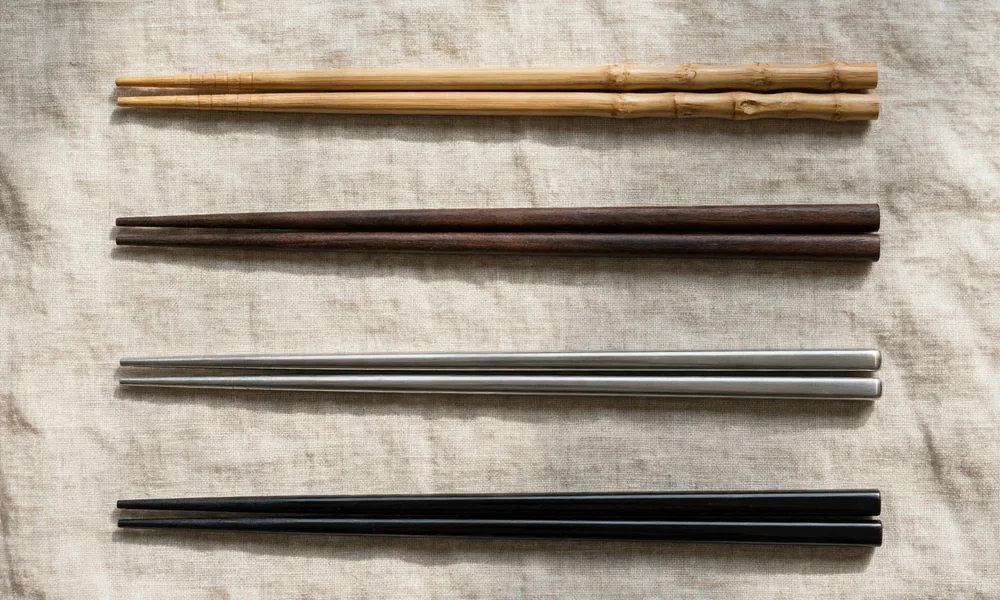
Bamboo is the best starting point for most people. It is light, warm to hold, naturally grippy, and inexpensive enough that a good pair costs very little. Its texture holds noodles and rice without slipping, and it does not conduct heat, so it stays comfortable with hot food. Its weakness is durability: bamboo can split if it is soaked or put through the dishwasher, so it needs hand washing and quick drying.
Hardwood chopsticks, in woods such as ebony, rosewood and walnut, are the upgrade from bamboo. They are denser, smoother and more durable, and a well-finished wooden pair has a fine tapered tip that grips small pieces of food precisely. They feel more substantial without being heavy, and with basic care they last for years.
Metal chopsticks, usually stainless steel, are the most durable of all and the easiest to clean. Their weakness is grip: smooth steel is slippery with noodles and oily food, and it conducts heat, so the tips can get hot in a steaming bowl. Textured tips help, but they still do not grip as well as wood. Lacquered chopsticks sit in between: beautiful and easy to clean, but often too slippery for beginners, and the lacquer can chip if knocked against a hard bowl.
| Material | Grip | Weight | Care | Best for |
|---|---|---|---|---|
| Bamboo | Excellent | Light | Hand wash | Everyday eating |
| Hardwood | Excellent | Medium | Hand wash | Best all-round |
| Stainless steel | Fair | Heavy | Dishwasher safe | Durability |
| Lacquered wood | Good | Medium | Hand wash | Formal meals |
| Fibreglass | Good | Light | Dishwasher safe | Heat resistance |
Length, Tip Shape and Balance
Length is the first measurement to get right. Most adults are comfortable with chopsticks between twenty-one and twenty-three centimetres long, which suits a normal dining table and a standard bowl. Shorter pairs, around eighteen centimetres, suit smaller hands and children, while longer pairs, twenty-four centimetres and above, suit cooking, serving and eating from a deep pot. A pair that is too long feels unwieldy and forces your fingers too far apart; a pair that is too short leaves your fingers too close to the food.
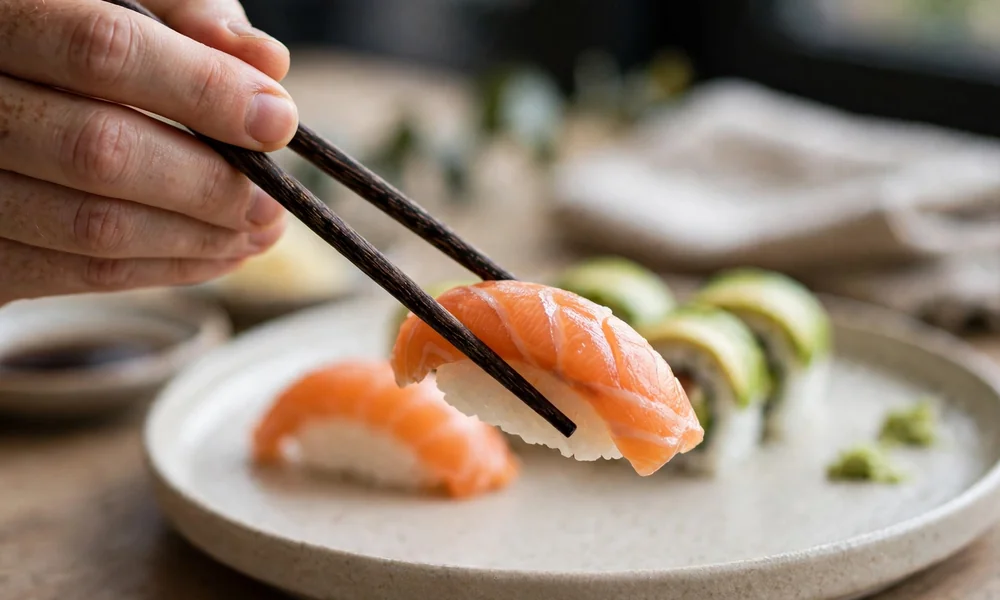
Tip shape matters more than most people realise. Square tips, common on Japanese chopsticks, give you a flat surface to grip food with and are excellent for small, delicate pieces such as sushi and sashimi. Round tips, common on Chinese chopsticks, are better for scooping and for larger pieces. Tapered tips that narrow gradually give the finest control of all, because the contact point with the food is small and precise. Grooved or textured tips add grip on slippery food, and they are worth looking for if you eat a lot of noodles.
Balance is the test that ties it all together. Hold a pair at the point where your fingers naturally rest, about a third of the way from the top, and see whether it tips forward or back. A balanced pair sits level; a top-heavy pair drops forward and makes your fingers work harder. The best pairs feel almost weightless in the hand, which is why they are worth paying a little more for.
How to Hold Them Properly
Good chopsticks make good technique easier, but technique still matters. Hold the top stick between your thumb and your index and middle fingers, like holding a pencil, and rest the bottom stick against your ring finger so it stays still. The top stick does the moving; the bottom stick stays fixed.
Three common mistakes make even good chopsticks feel bad. The first is gripping too far down the sticks, which kills your leverage. The second is squeezing too hard, which tires your hand and crushes the food. The third is crossing the tips, which happens when the sticks are different lengths or you grip them unevenly. If you are dropping food, the answer is almost always a lighter grip further up the sticks, not a harder squeeze.
For noodles, lift a small bundle rather than a large one, let it cool for a second, and use the chopsticks to guide the noodles rather than clamp them. The rice noodles worth cooking in 2026 are a good place to practise, because they are slippery enough to test your grip and forgiving enough to enjoy while you learn.
Chopsticks for Different Meals
Not every meal wants the same pair. Sushi and sashimi are best eaten with short, square-tipped wooden chopsticks, because the food is delicate and the pieces are small. Noodles want longer chopsticks with textured tips, because you need reach into a deep bowl and grip slippery strands. Rice is easiest with wooden or bamboo chopsticks, because the grains cling to the natural texture, while smooth metal lets them slide away.
Cooking is a different job again. Long cooking chopsticks, thirty centimetres or more, keep your hands away from hot oil and boiling water, and they are brilliant for turning food in a pan and fishing noodles out of a pot. They are not eating chopsticks, but every keen cook should own a pair. A chopstick rest is a small, worthwhile extra: it keeps the tips off the table between bites.
Children and beginners benefit from a shorter, lighter pair with a slightly thicker body that is easier to hold. There is no shame in starting with a training pair; confidence comes faster when the tool is not fighting you. As a companion to the meal, the soy sauces worth pouring in 2026 matter more than most people think, because a good sauce rewards a good pair of chopsticks.
Care, Cleaning and How Long They Last
Wooden and bamboo chopsticks need hand washing in warm soapy water, then drying straight away. Never soak them, leave them in the sink, or put them in the dishwasher, because heat and soaking cause splitting and warping. Dry them with a cloth and store them flat, not standing in a jar where the tips can chip.
Metal and fibreglass chopsticks are far more forgiving and can go in the dishwasher. Lacquered chopsticks need hand washing too, because dishwasher heat can crack the lacquer. Replace a pair when the tips become rough or splintered, because a damaged tip drops food. A quality wooden pair, cared for properly, should last for years of daily use.
A dedicated chopstick case keeps a good pair safe in a drawer and easy to take to work or on a picnic. If you eat from bowls often, the soup bowls that hold the heat in 2026 are worth a look, because a bowl with the right depth makes chopsticks easier to use, not harder.

The 6-Point Checklist Before You Buy
- Material: choose bamboo or hardwood for grip, and metal only if durability matters more than grip.
- Length: pick twenty-one to twenty-three centimetres for most adults, shorter for small hands.
- Tips: look for tapered or square tips that meet exactly, with texture if you eat a lot of noodles.
- Balance: hold the pair at the natural grip point; it should sit level, not tip forward.
- Finish: avoid a very glossy, slippery finish unless you are already confident with chopsticks.
- Care: check the washing instructions before you buy, and be ready to hand wash wooden pairs.
Frequently Asked Questions
What length of chopsticks should I buy?
Most adults suit chopsticks between twenty-one and twenty-three centimetres long. Shorter pairs suit smaller hands and children, while longer pairs are better for cooking and serving from deep pots.
Are wooden or metal chopsticks better?
Wooden and bamboo chopsticks grip food better and feel warmer in the hand, which makes them better for everyday eating. Metal chopsticks are more durable and easier to clean, but they are slippery and conduct heat.
Can I put wooden chopsticks in the dishwasher?
No, wooden and bamboo chopsticks should be hand washed in warm soapy water and dried straight away. Dishwasher heat and soaking cause splitting, warping and a rough surface that drops food.
How do I stop dropping food with chopsticks?
Use a lighter grip, hold the sticks further up, and let the top stick do the moving while the bottom stick stays still. Textured tips and a wooden pair also help, because they grip slippery food far better than smooth metal.
How long do good chopsticks last?
A quality wooden pair lasts for years with hand washing and quick drying. Replace a pair when the tips become rough, splintered or uneven, because damaged tips drop food and can splinter.
Do I need different chopsticks for sushi and noodles?
It helps. Short, square-tipped wooden chopsticks suit sushi, while longer chopsticks with textured tips suit noodles and deep bowls. One good all-round wooden pair is enough to start with, and you can add a specialist pair later.
The Bottom Line
Good chopsticks are worth the upgrade in 2026 because they make every meal easier: better grip, better balance, and a pair that feels like it belongs in your hand rather than fighting it. Choose bamboo or hardwood for grip, pick a length that suits your hand, check that the tips meet exactly, and hand wash and dry the pair straight away. It is a small purchase, but you will notice it at every meal.


