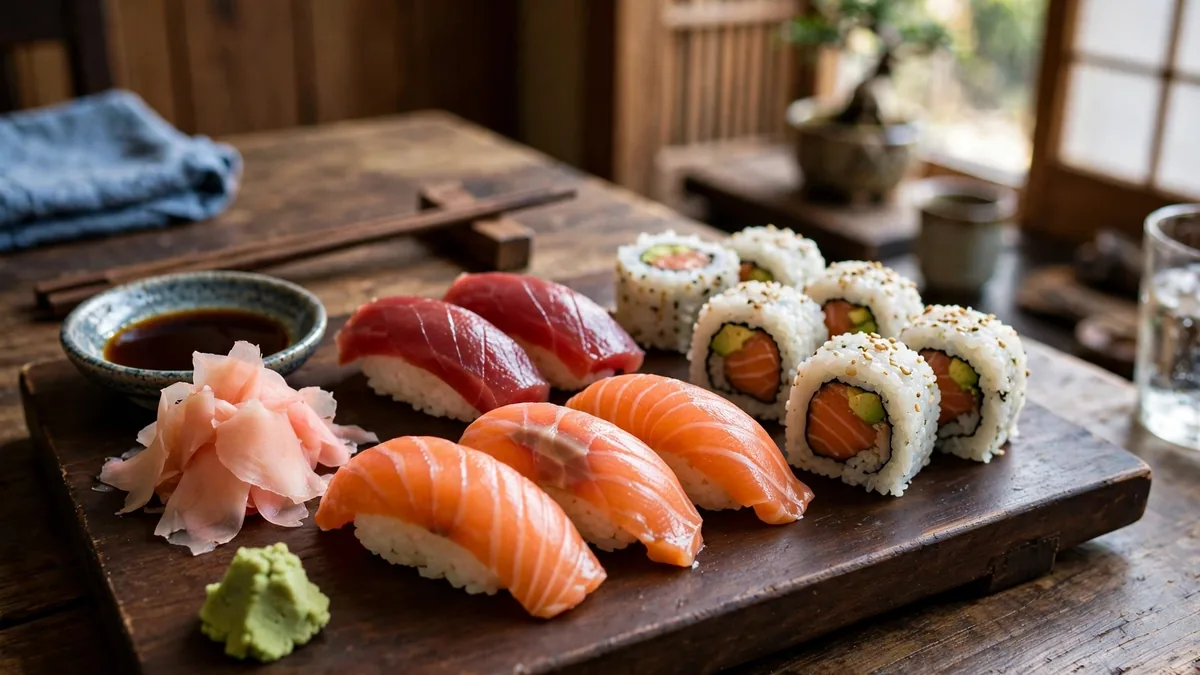
Choosing sushi sets for home in 2026 decides whether a sushi night is relaxed or frustrating. A good set gives you plates shaped for nigiri and rolls, small dishes that hold soy sauce without spilling, a mat that rolls tightly, a knife that cuts cleanly, and chopsticks that grip. A bad set looks pretty in the box, then fights you, with plates too small for a roll and a mat that unravels as you press down.
This guide explains how to choose sushi sets for home in 2026, from a first set for a family sushi night to a fuller kit for weekly rolling. It covers the pieces that matter, the materials that last, and the sizes that suit real tables. You do not need the most expensive set, or every piece a shop will try to sell you. You need a set that matches the way you actually eat sushi at home.
Key Takeaways
- A sushi set is a matched group of plates, soy dishes, chopsticks and rolling tools, not a single plate or a pair of chopsticks.
- Start with plates, soy dishes, a bamboo mat and chopsticks; add a knife and a serving board only when you roll sushi often.
- Ceramic and stoneware plates suit most homes best: heavy enough to stay put, easy to clean, and kind to delicate fish.
- Buy for two or four people first, because a set for eight takes up a whole cupboard and most of it will sit unused.
- Check the mat, the knife edge and the chopstick tips first, because they decide whether rolling and eating feel easy or awkward.
What a Sushi Set Actually Is
A sushi set is a group of pieces designed to work together for a sushi meal at home. At its simplest it holds plates for the sushi, small dishes for soy sauce, and chopsticks for eating. Fuller sets add a bamboo rolling mat, a rice paddle, a serving board, a sushi knife, and sometimes a small dish for wasabi and ginger. The pieces share a size, a material and a style, so the table looks considered instead of cobbled together.
That is a different purchase from buying chopsticks on their own. Our guide to chopsticks covers the single utensil in depth: wood against metal, tip shapes, length, and grip. Chopsticks are one piece of a sushi set, but chopsticks alone cannot hold soy sauce, present a roll, or roll the rice. A sushi set is the whole table; chopsticks are one tool on it.
It is also different from a general dinnerware set, built for everyday meals such as roasts, pasta and salads. A sushi set is built for one kind of meal: small pieces eaten by hand or with chopsticks, dipped in a shallow pool of sauce. Its plates are smaller and flatter, its dishes are tiny, and the set is about presentation as much as function. A dinner plate swamps six pieces of nigiri, and a cereal bowl is the wrong shape for soy sauce.
The Main Types of Sushi Set
Five kinds of set cover almost every home. The one you choose decides how much you can make, how many people you can feed, and how much cupboard space you give up.
Starter sets for two
A starter set for two is the best first buy: two plates, two soy sauce dishes, two pairs of chopsticks and sometimes two rests, in one box. Look for plates at least twenty centimetres across, because a smaller plate crowds a roll and leaves nowhere to rest the ginger.
Family sets for four
A family set for four doubles the starter set and usually adds a serving platter in the middle of the table. Check that the platter fits before you buy, because a forty-centimetre platter needs a table with room to spare.
Rolling and making kits
A rolling kit is for people who make sushi rather than only eating it. It centres on the bamboo mat, and adds a rice paddle and sometimes moulds for beginners. The mat matters most: flat bamboo slats bound tightly with cotton string, with no gaps and no loose ends. Wrap it in cling film for your first few rolls, and it will stay clean far longer.

Knife-included sets
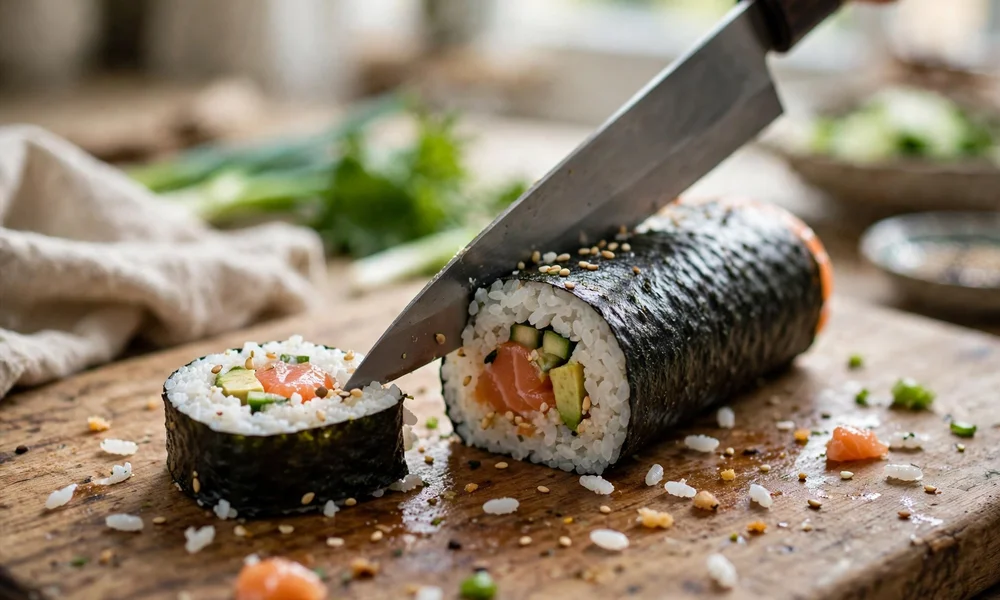
Some sets include a sushi knife, and for a keen maker that is worth having. It is long, thin and very sharp, slicing fish and rolls in one clean stroke instead of sawing through them. A sawn roll sheds rice and tears the nori, while a sliced roll holds its shape. Keep it sharp, wash it by hand, and dry it straight away.
Ceramic, wood and lacquer sets
Material decides how a set feels and how long it lasts. Ceramic and stoneware are the safest choice: heavy, stable, usually dishwasher-safe, and they show off the fish beautifully. Wood suits serving boards but needs hand washing and can stain from soy sauce. Lacquer looks striking but scratches easily. For a first set, ceramic is the sensible answer.
Plates, Dishes and the Details That Matter
The plate is the piece you use most, so judge it first. A good sushi plate is flat or very slightly curved, with a rim low enough that chopsticks can pick up a piece without lifting it over a wall. Rectangular plates suit rolls in a row, round plates suit nigiri in a circle. A plate with a deep well is wrong for sushi: it hides the food and pools the sauce.
The soy sauce dish is small for a reason. It should hold about two tablespoons, deep enough to dip the fish side without the rice soaking, and wide enough that nigiri fits without folding. Too shallow spills when you lift the sushi out; too deep drowns the rice. A small, heavy dish that does not slide is worth more than a pretty one that skates away. Chopstick rests keep chopsticks off the table, and a serving board turns four plates into a shared meal, as our guide to serving platters explains.
How We Judged
We judged sushi sets the way a home cook uses them: setting the table for two and four, rolling maki, slicing rolls, dipping nigiri, and washing up. A set earned marks for plates that held a portion without crowding, dishes that dipped without spilling, a mat that rolled tightly, and chopsticks that gripped slippery fish. We also checked storage, because a set needing a whole shelf for pieces used twice a year is a worse buy than a smaller set used every week.
Sushi Sets Compared
| Set type | Best for | Pieces | Material | Storage |
|---|---|---|---|---|
| Starter set for two | First set, couples | Plates, dishes, chopsticks | Ceramic | One small shelf |
| Family set for four | Family sushi nights | Four settings plus platter | Ceramic or stoneware | One cupboard shelf |
| Rolling and making kit | Making sushi at home | Mat, paddle, moulds | Bamboo and plastic | One drawer |
| Knife-included set | Keen home makers | Set plus sushi knife | Ceramic and steel | One shelf, knife block |
| Wood or lacquer set | Presentation, gifts | Plates, dishes, board | Wood or lacquer | Careful, dry storage |
A starter set is the best first buy, a family set suits regular sushi nights, and a rolling kit suits anyone who wants to make sushi rather than order it in.

Rice, Fish and Getting the Meal Right
The set is only half the meal; the rice is the other half. Sushi rice needs to be short-grain, seasoned while warm, and sticky enough to hold together without turning to glue. Our guide to sushi rice explains how to pick rice that actually sticks, and it is worth reading before your first session, because the wrong rice will defeat the best mat and the sharpest knife. Cook it, fan it as you season it, and let it cool before you roll.
Fish deserves the same care. Buy sushi-grade fish from a fishmonger you trust, keep it cold, and use it the same day. Cut against the grain in one smooth stroke. If you are unsure about raw fish, start with cooked prawns, smoked salmon, cucumber, avocado and pickled vegetables. Arrange nigiri in neat rows, fan rolls so the filling shows, and keep ginger and wasabi in their own space.
Mistakes to Avoid
The most common mistake is buying too much set. A set for eight looks generous in the shop, but most of its pieces will live in a cupboard, and the platter will not fit a normal table. Buy for the people who actually eat sushi at your table, and add pieces as you need them.
The second mistake is choosing looks over function. A beautiful lacquer set that cannot go in the dishwasher will spend its life on a shelf, while a plain ceramic set that washes easily will be on your table every week. The third mistake is a cheap mat and a blunt knife: a loose mat lets rice through and rolls unevenly, and a blunt knife crushes a roll. Replace the mat when the strings fray, and sharpen the knife when it drags.
Checklist: Before You Buy a Sushi Set
- Count the people who eat sushi at your table, and buy a set for two or four, not eight.
- Check the plate size: at least twenty centimetres across, flat, with a low rim.
- Check the soy dish: deep enough to dip, wide enough for nigiri, heavy enough not to slide.
- Inspect the mat: tight bamboo slats, firm cotton binding, no gaps or loose ends.
- Test the chopsticks: tips that meet, a grip that holds slippery fish, a comfortable weight.
- Check care: dishwasher-safe ceramic for everyday use, hand wash only for wood and lacquer.
Frequently Asked Questions
What should a first sushi set include?
Plates, soy sauce dishes and chopsticks for two, plus a bamboo mat if you plan to make sushi yourself. You can add a knife, a serving board and extra settings later.
Is ceramic or wood better for sushi plates?
Ceramic is better for most homes: heavy, stable, easy to clean and usually dishwasher-safe. Wood suits serving boards, but wooden plates need hand washing, can stain from soy sauce, and warp if they stay wet.
Do I need a sushi knife, or will a kitchen knife do?
A kitchen knife will cut a roll, but a sushi knife cuts it cleanly in one stroke, keeping rice and nori together. If you roll sushi more than once a month, it is worth having. If you eat ready-made sushi, you do not need one.
How do I keep a bamboo mat clean?
Wrap the mat in cling film before you roll, then wash it in hot soapy water, scrub between the slats, and dry it standing up. Never soak it for hours, and never put it in the dishwasher, because both loosen the binding and warp the slats.
Can I put a sushi set in the dishwasher?
Ceramic and stoneware can usually go in the dishwasher, but check the maker’s guidance first, because glazes vary. Wood, lacquer and bamboo should always be hand washed, and wooden chopsticks should be washed by hand and dried straight away.
How many people should a sushi set serve?
Buy for the people who actually sit down for sushi at your home. Two is right for a couple, four for a family, and anything larger will spend most of its life in a cupboard. It is cheaper to add two settings later than to store a set for eight you never use.
The Bottom Line
The best sushi set for home in 2026 is a ceramic starter or family set that fits your table, your cupboard and the people you actually feed. Plates that hold a portion without crowding, soy dishes that dip without spilling, a tight mat, a sharp knife and chopsticks that grip are worth far more than extra pieces you will never use. Buy for two or four, choose ceramic, and look after the mat and the knife.