Pho vs Ramen in 2026: How to Find the Best Pho Bowl
The best pho of 2026 is not the bowl with the most beef or the longest queue outside the door. It is the bowl where the broth tastes like something was simmered for hours, the noodles are still springy, and the herbs on the side are fresh enough to matter. Pho is Vietnam’s most famous noodle soup: a clear, fragrant broth, flat rice noodles, thin slices of beef or chicken, and herbs you add yourself.
This guide puts pho next to its closest rival, ramen, because the comparison is the fastest way to understand what pho is and what it is not. Both are noodle soups judged by their broth, but they come from different countries and different ideas of what a bowl should do.
Key Takeaways
- Broth is the test: the best pho broth is clear, fragrant and layered, tasting of charred onion, ginger, star anise and beef, never just salt.
- Flat rice noodles are non-negotiable: wide, flat rice noodles that stay silky and springy, not wheat noodles and not mushy ones.
- Herbs are part of the dish: basil, bean sprouts, lime and chilli are added at the table and change the bowl as you eat.
- Pho and ramen are different soups: Vietnamese pho is light and aromatic, Japanese ramen is rich and built on tare seasoning and wheat noodles.
- Eat it while it is hot: pho is at its best in the first fifteen minutes, before the noodles swell and the herbs wilt.
What Pho Actually Is
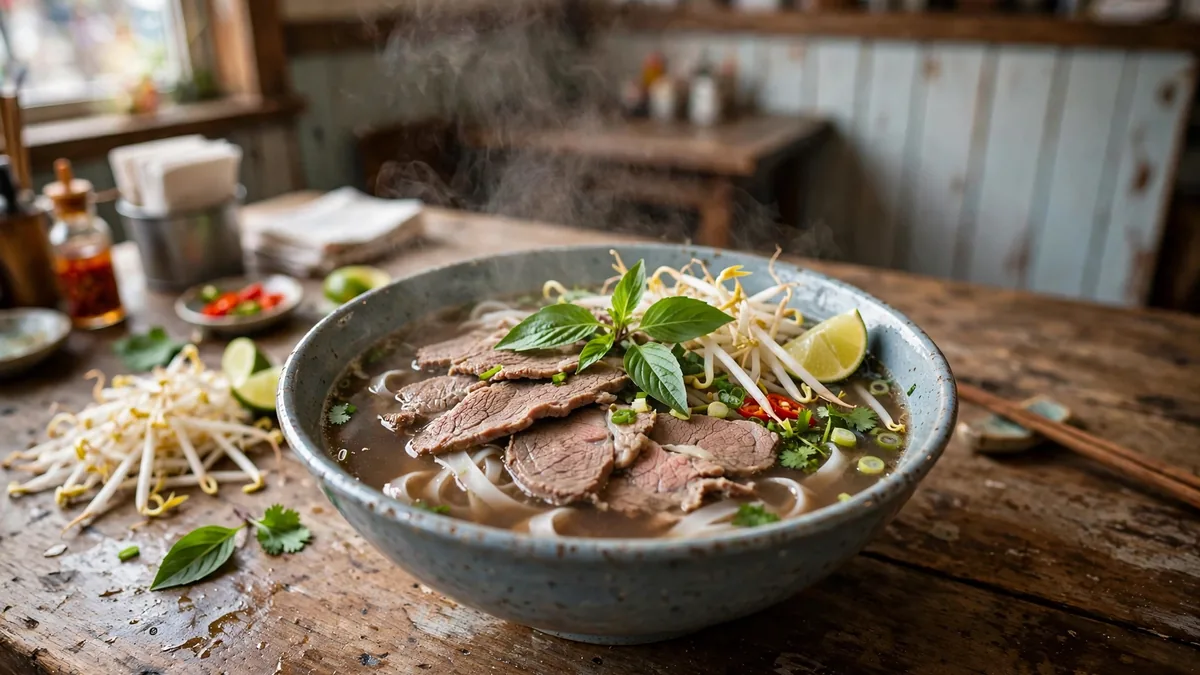
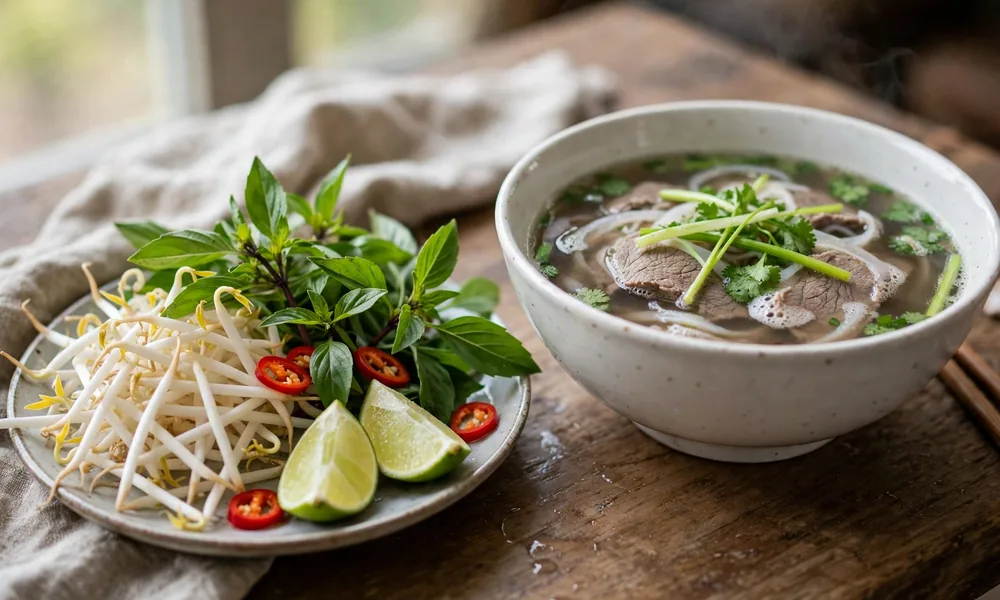
Pho, pronounced roughly “fuh”, is a Vietnamese noodle soup that began as street food and became a national dish. A bowl starts with a beef or chicken broth simmered for hours with charred onion and ginger, star anise, cinnamon, cloves and cardamom, then strained until clear. Flat rice noodles are blanched separately, thin slices of raw beef go on top and cook in the hot broth, and spring onion and coriander finish it. The bowl arrives with Thai basil, bean sprouts, lime wedges and sliced chillies, which you add yourself, a little at a time.
Pho is not a finished dish when it leaves the kitchen; it is a dish you finish at the table. The broth is seasoned lightly on purpose, because fish sauce, hoisin and chilli sauce are on the table for you to add. A good bowl gives you control. A bad bowl has already decided everything for you, usually with too much salt.
The Two Bowls Most People Meet
Phở bò is beef pho, the classic, named for the cut: rare beef, brisket, tendon, tripe and meatballs, or a combination. Phở gà is chicken pho, lighter and cleaner. Northern pho from Hanoi is simpler, with a clearer broth and fewer herbs, while southern pho from Saigon is more generous with herbs and hoisin. Neither style is better.
Pho vs Ramen: The Real Differences
Pho and ramen sit next to each other on menus all over the world, and they are often confused by people who have only tried one of them. Ramen is Japanese, and our ramen guide breaks down how it is judged by broth, tare seasoning, wheat noodles and toppings. Pho is Vietnamese and plays by different rules.
| Pho | Ramen | |
|---|---|---|
| Origin | Vietnamese, from Hanoi street stalls | Japanese, with Chinese noodle roots |
| Broth | Clear, light, aromatic beef or chicken broth | Rich, often cloudy broth with tare seasoning |
| Noodles | Flat, wide rice noodles | Springy wheat noodles, thin or thick |
| Seasoning | Fish sauce, added at the table | Tare, a concentrated seasoning added by the chef |
| Toppings | Beef or chicken, herbs you add yourself | Chashu pork, egg, nori, chosen by the chef |
| Flavour | Bright, fragrant, herbal | Deep, salty, fatty and savoury |
| Eating style | Customised at the table with herbs and sauces | Eaten as served, hot and fast |
The simplest way to remember it: pho is a light, aromatic soup you finish yourself, while ramen is a rich, complete bowl the chef finishes for you. If a bowl of pho arrives cloudy, heavy and tasting only of salt, it has borrowed ramen’s worst habits without any of its strengths.
The Broth, the Noodles and the Beef
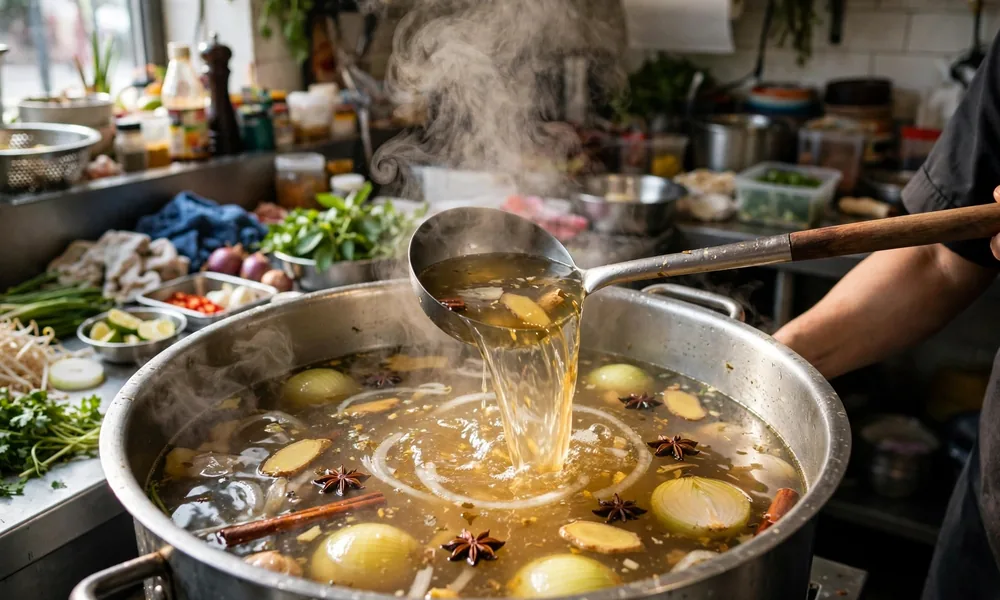
Everything in pho exists to serve the broth, and the broth is where most bowls fail. A great pho broth starts with bones, not stock cubes, and simmers for six hours or more. The onion and ginger are charred first, giving the broth colour and a faint sweetness. Star anise, cinnamon, cloves and cardamom go in a spice bag so they flavour the broth without clouding it, and the broth is skimmed and strained until it is clear enough to see the noodles through.
Taste a spoonful of broth before you add anything. It should taste of beef or chicken first, then of the spices, then of a gentle saltiness from fish sauce. You should be able to pick out the star anise if you look for it, and the ginger should leave a faint warmth rather than a burn. If the first spoonful tastes only of salt, the broth was seasoned to cover a thin base. If it tastes sweet, someone added too much sugar or hoisin, a shortcut a good shop never needs. Pho must also arrive steaming hot, hot enough to cook the raw beef slices and keep the noodles from clumping. A lukewarm bowl is a failed bowl.
Pho noodles are flat rice noodles, and they matter as much as the broth. The best rice noodles for pho are wide, silky and slightly chewy, cooked just past firm and blanched to order. Noodles that are mushy were overcooked or held too long; noodles that clump into a block were under-rinsed or served cold. Beef in pho is sliced paper-thin and cooked by the broth itself. Rare beef, phở tái, is the most common order: the slices go in raw and turn just pink in the hot soup. Beef that arrives grey and tough was sliced too thick or sat in the broth too long.
Ordering and Making Pho
Start with the house special or the rare beef if it is your first visit, because that is the bowl the shop is judged on. Add tendon or brisket on a second visit, once you know the broth is worth it. Ask for the broth as the kitchen makes it, and add your own fish sauce and chilli at the table. Hoisin goes in small amounts, or not at all; too much turns the soup sweet and muddy, and it covers the broth you came for.
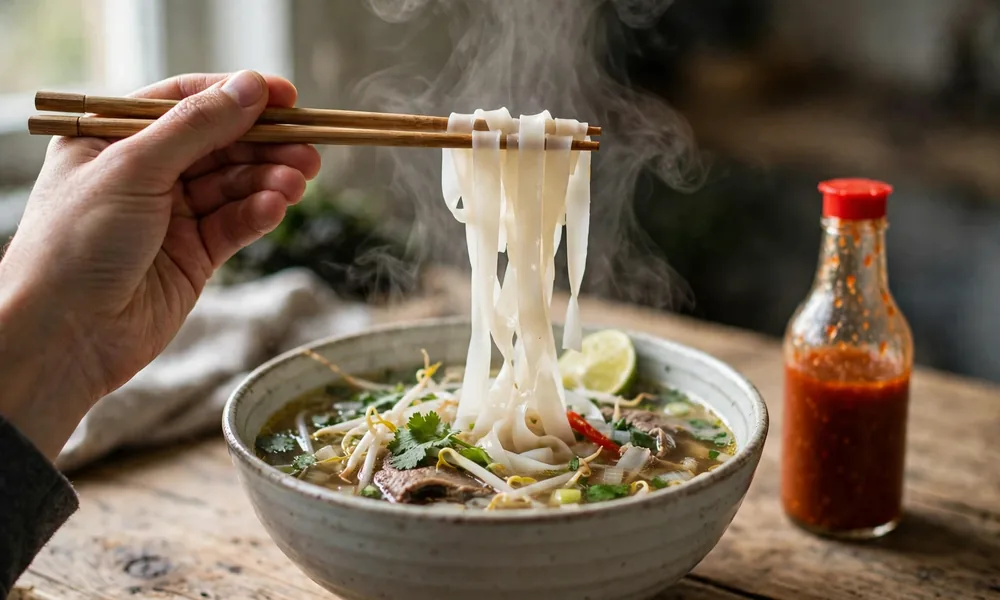
Eat pho with chopsticks in one hand and a spoon in the other. The chopsticks lift noodles and beef, the spoon carries broth, and the two together let you eat a mouthful that has everything in it. Good chopsticks help here: pho noodles are slippery, and short, smooth chopsticks make them harder to hold than they need to be. Slurping is fine and expected. Eat steadily rather than slowly, because the noodles keep cooking in the hot broth, and a bowl that sits for twenty minutes is a worse bowl than the one that arrived.
Watch for the small signs that separate a good pho shop from a mediocre one. The broth should be made in-house, which you can tell by the smell when you walk in: beef, spice and charred onion, not just salt. The herbs should be fresh and dry, not wilted or wet, and the beef should be sliced to order.
Homemade pho is worth the effort, but be honest about what it takes. The broth needs bones, time and patience: beef bones blanched and rinsed, then simmered for at least six hours with charred onion and ginger and a spice bag of star anise, cinnamon, cloves and cardamom. There is no real shortcut; stock cubes will give you a soup, but not pho. Cook flat rice noodles fresh for each bowl, slice the beef as thin as you can, and put out a proper herb plate so everyone seasons their own bowl. Fish sauce, hoisin and chilli sauce belong on the table, not in the pot.
The Best Pho of 2026: What to Look For
Whether you are choosing a restaurant or judging a bowl that just arrived, the same checks apply. Run through them before you add anything to the broth, because once the sauces go in, you are tasting your own seasoning rather than the kitchen’s work.
- Clear broth: you can see the noodles through it, and the first spoonful tastes of beef, spice and ginger, not just salt.
- Steaming hot: the bowl arrives with steam rising and the beef still cooking gently in the broth.
- Springy noodles: flat rice noodles that are silky and chewy, never mushy and never clumped together.
- Thin-sliced beef: slices so thin they cook in seconds and stay tender, not grey and tough.
- Fresh herbs: basil, bean sprouts, lime and chillies that are crisp and dry, served on a separate plate.
- Balanced seasoning: fish sauce, hoisin and chilli on the table for you to add, not already drowning the soup.
Frequently Asked Questions
What is pho made of?
Pho is made of a clear beef or chicken broth flavoured with charred onion, ginger, star anise, cinnamon, cloves and cardamom, flat rice noodles, thinly sliced beef or shredded chicken, and fresh herbs. Fish sauce seasons the broth, and hoisin and chilli sauce are added at the table.
Is pho the same as ramen?
No. Pho is Vietnamese and ramen is Japanese. Pho has a clear, light broth and flat rice noodles, and you season it yourself at the table. Ramen has a richer broth seasoned by the chef with tare, springy wheat noodles, and toppings like chashu pork and egg.
How do you pronounce pho?
Pho is pronounced roughly “fuh”, with a rising tone, not “foe”. It comes from the Vietnamese phở, and the single syllable rhymes with the start of “fun” rather than with “go”.
What is the best pho to order first?
Order phở tái, the rare beef pho, or the house special on your first visit, because that is the bowl a shop is judged on. Save tendon, tripe and meatballs for a second visit, once you know the broth is worth coming back for.
Can you make pho at home?
Yes, but the broth takes six hours or more, starting with blanched beef bones, charred onion and ginger, and a spice bag of star anise, cinnamon, cloves and cardamom. If you are short on time, buy the best broth you can find rather than rushing your own.
Is pho healthy?
Pho is one of the lighter noodle soups: a clear broth, lean protein, rice noodles and a lot of fresh herbs. The main things to watch are the salt, mostly from fish sauce and added sauces, and the portion size, because a large bowl holds far more noodles than a normal meal needs.
Bottom Line
The best pho of 2026 is a clear, fragrant broth, springy flat rice noodles, thinly sliced beef and a plate of fresh herbs you add yourself. Judge a bowl by its broth before you touch the sauces, eat it hot and fast, and remember what makes it different from ramen: pho is light and aromatic where ramen is rich and deep, and it is a soup you finish at the table.