A Guide to the Best Bruschetta in 2026: Tomato, Toppings and Toast
The best bruschetta of 2026 starts with three things done properly: bread crisp outside and chewy inside, ripe tomatoes, and olive oil that tastes of something. Bruschetta is one of the simplest dishes in Italian cooking, and that simplicity is what makes it hard to get right. There is nowhere to hide: a stale slice, a watery tomato or a flat oil will show up in the first bite. Get the three basics right, though, and bruschetta is cheap, fast, and hard to stop eating.
Key Takeaways
- Good bruschetta starts with the bread: a rustic loaf sliced thick, toasted until crisp, and rubbed with garlic while still hot.
- Ripe tomatoes are the whole dish, so use the best you can find and salt them early enough to draw out their juice.
- Use good olive oil and use enough of it; a thin drizzle over dry toast is the commonest bruschetta mistake.
- Top the toast at the last minute, because tomato topping left sitting on bread makes it soggy in minutes.
- Keep the classic simple and save the fancy toppings for a second batch, so you can taste what the bread and tomato are doing.
What Bruschetta Actually Is
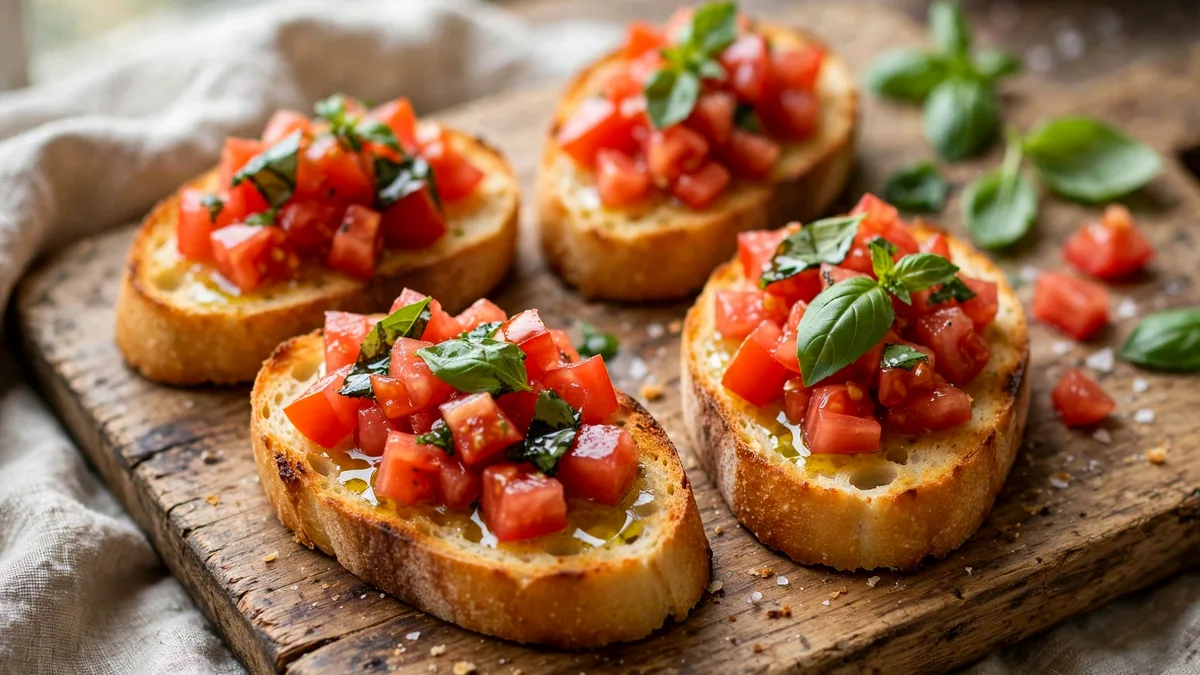
Bruschetta is toasted bread, rubbed with garlic, drizzled with olive oil, and topped with chopped tomato and basil. The word comes from the Italian bruscare, to roast over coals, and the dish began as a way for olive oil makers to taste the new season’s oil on hot bread: the bread is a vehicle for the oil, the garlic is a whisper rather than a shout, and the tomato topping came later, as a way to use up ripe summer tomatoes.
There are two things bruschetta is not. It is not garlic bread, a buttered loaf baked soft, and it is not a crostini, a smaller, thinner, crisper toast served as a canapé. Bruschetta is bigger, sturdier and simpler: a thick slice of rustic bread, toasted hard enough to hold a juicy topping without collapsing, but still chewy in the middle.
Learn the classic tomato version first: it teaches the balance the dish depends on. The tomatoes should be ripe, sweet and a little acidic, cut small and salted ten minutes before serving so they release their juices. The basil should be torn, not chopped, so it stays bright. Toast the bread on both sides, rub it with garlic while hot, add the oil generously, and top it just before serving.
How the Best Bruschetta Was Chosen
Every style below was scored on five measures. Bread comes first: does the toast stay crisp under a juicy topping, or collapse into a soggy mess? Tomato quality is second, because pale, hard tomatoes cannot be rescued. Balance is third, covering salt, acid, garlic and oil. Texture is fourth, because the dish is a contrast between crunch and juice. Versatility is fifth, covering how well each style suits different occasions.
Two notes before the list. First, no single restaurant or brand is named as the best, because the same good patterns appear in many kitchens, and what matters is learning to recognise them. Second, bruschetta is a technique as much as a recipe: the same ingredients can turn out crisp or soggy depending on the bread, the timing and the topping. Readers who want the same logic applied to the base will find it in our guide to the top baguettes for everyday eating in 2026, where crust, crumb and freshness matter just as much as they do here.
Comparison Table: The Best Bruschetta of 2026
The table below compares the main bruschetta styles side by side, so you can match the topping to the occasion, the season and the people you are feeding.
| Style | Best for | Flavour | Watch out for |
|---|---|---|---|
| Classic tomato and basil | Summer lunches, first-timers | Fresh, sweet, herby | Watery tomatoes make soggy toast |
| Tomato and mozzarella | Sharing plates, light dinners | Creamy, mild, fresh | Too much cheese overwhelms the tomato |
| Mushroom and thyme | Autumn evenings, red wine | Earthy, savoury, warm | Wet mushrooms soften the bread |
| White bean and rosemary | Hearty starters, winter | Creamy, herby, filling | Can be bland without enough salt and oil |
| Garlic and olive oil only | Tasting good oil, simple snacks | Warm, peppery, clean | Needs genuinely good oil to work |
Classic Tomato and Basil
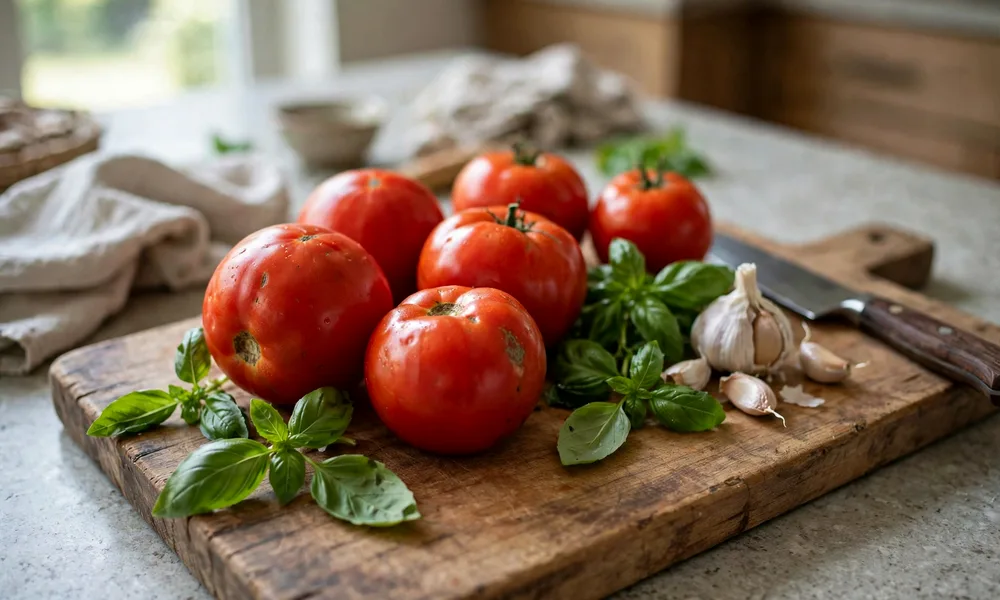
The classic is the standard every other bruschetta is measured against, and the easiest to get wrong, because it has so few ingredients. Start with the tomatoes. The best are ripe, heavy for their size, and fragrant at the stem end; cherry tomatoes work well because they are usually sweeter and less watery out of season, while a good beef tomato, properly ripe, gives the juiciest topping. Cut them small, salt them, and leave them for ten minutes so they release their juice, then drain off the excess liquid and keep it: that tomato juice, mixed with olive oil, is the best dressing the topping will ever have.
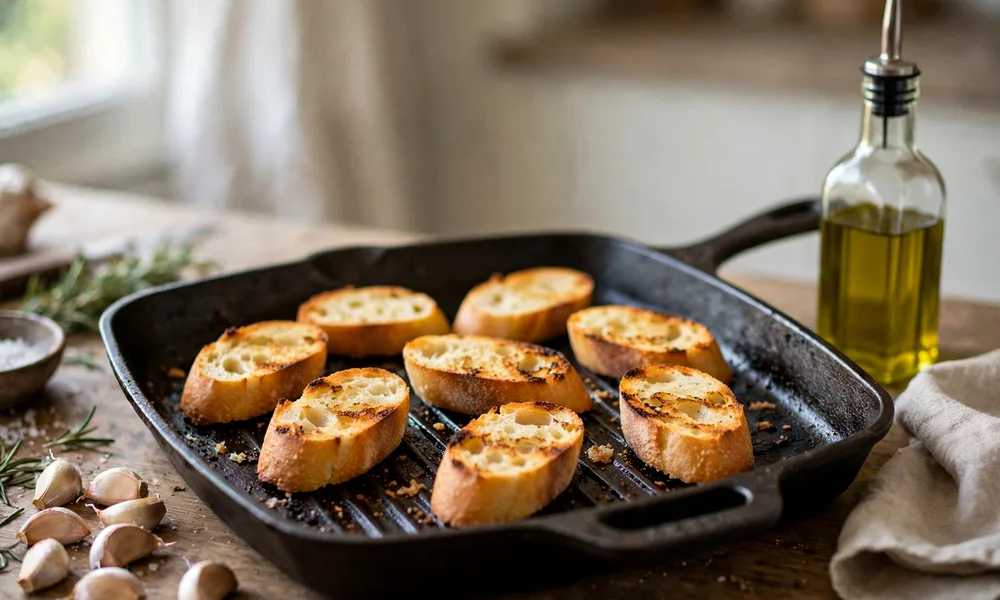
The bread matters as much as the tomato. A rustic sourdough or country loaf, sliced about two centimetres thick, gives the best result: a strong crust and an open, chewy crumb that takes a topping without falling apart. Toast it until both sides are golden and crisp at the edges, then rub a cut garlic clove over the hot surface once or twice. Too much garlic and the toast tastes harsh; too little and you lose the warmth that makes bruschetta taste like itself.
Tomato and Mozzarella
Tomato and mozzarella is the classic with a creamy, mild partner, and it works best when the cheese is a supporting player, not the star. Use fresh mozzarella, torn into small pieces rather than sliced, and let it come to room temperature first, so it tastes milky instead of cold and rubbery. A little goes a long way: a few pieces per slice, tucked among the tomatoes, so the tomato still leads. A few drops of balsamic, used sparingly, can add a sweet-sour note that suits the cheese.
The mistake is turning the dish into a mini pizza. Too much cheese, especially melted under a grill, makes the topping heavy and the bread soft, and the fresh, bright character of bruschetta disappears. Keep the tomato fresh, and let the bread stay crisp underneath. This version suits a sharing plate, because it is more filling than the classic.
Mushroom and Thyme
Mushroom bruschetta is the autumn version, made when good tomatoes are out of season. Slice the mushrooms thickly and cook them in a hot pan with olive oil until browned, then finish with garlic, thyme and a splash of white wine or lemon juice. They should be savoury and a little caramelised, not pale and steaming, because wet mushrooms are the fastest way to ruin a piece of toast. A spoonful of ricotta underneath adds richness without weighing the dish down.
This version rewards a sturdier bread and a slightly thicker slice, because the topping is heavier and hotter than tomato. Serve it warm, as a starter with a glass of red wine, and make it in small batches, because mushroom bruschetta cools fast and the bread softens as it sits.
The Bread Decides Everything
People argue about toppings, but the bread decides whether bruschetta works, and it is the first thing to check when you eat out. A good slice is thick, at least a centimetre and a half, with a crust that crackles and a crumb that is open and chewy rather than tight and doughy. It should be toasted hard enough to stay crisp while you eat it, and rubbed with garlic and oiled while hot, so the flavours sink into the crumb.
Avoid soft sandwich bread, which collapses under a wet topping, and very thin baguette, which turns into a cracker and snaps when you bite it. A baguette can work, sliced on a sharp diagonal so each piece is wide enough to hold a topping, and our guide to the garlic bread with a crisp crust and soft centre in 2026 shows the same logic in a different dish: a crisp outside, a soft inside, and a topping that respects the bread underneath.
Olive Oil, Garlic and Timing
The oil is the ingredient people skimp on, and it separates good bruschetta from great bruschetta. Use an extra virgin olive oil that tastes of something: grassy, peppery, a little bitter at the back of the throat, a sign of fresh, good oil, not a flaw. Use it generously, on the hot toast before the topping so it soaks into the crumb, and again over the finished bruschetta so it glistens. Our guide to the best olive oil 2026 explains how to pick a bottle that tastes green and fresh rather than flat and stale.
Garlic should be rubbed, not spread. Cut a clove in half, rub the cut side over the hot toast once or twice, and stop. The heat of the bread draws the garlic flavour out without the harshness of raw garlic, leaving a warm background note that makes the tomato taste more like itself. Chopped raw garlic in the topping overwhelms the tomato and repeats on the palate for hours.
Timing is the last skill, and the one that matters most on the day. Make the topping ahead and toast the bread ahead, but do not put them together until the moment you serve: tomato topping left sitting on toast makes it soggy in minutes. Toast in batches, top in batches, and send each batch out while it is still crisp.

Checklist: Making Bruschetta in 60 Seconds
- Pick the ripest tomatoes you can find, and salt them ten minutes before serving.
- Slice rustic bread thick, toast it until crisp on both sides, and rub it with garlic while hot.
- Use a good extra virgin olive oil, and use enough of it, on the toast and over the topping.
- Tear the basil, do not chop it, so it stays bright and fragrant.
- Top the toast at the last minute, never more than a few minutes before serving.
- Make a second topping for variety, but keep the classic tomato version as the first batch.
Frequently Asked Questions
What is the difference between bruschetta and crostini?
Bruschetta is a thick slice of rustic bread, toasted and topped, usually with tomato, and eaten as a starter. Crostini are smaller, thinner, crisper toasts, served as canapés with richer toppings.
Can I make bruschetta ahead of time?
You can prepare the topping and toast the bread ahead, but assemble them only at the last minute: assembled bruschetta goes soggy within minutes.
What bread is best for bruschetta?
A rustic sourdough or country loaf, sliced about two centimetres thick, works best. It has a strong crust and an open crumb that stays crisp under a juicy topping. Soft sandwich bread collapses, and very thin baguette snaps.
Should bruschetta be served hot or cold?
The toast should be warm and the topping at room temperature. Hot toast with cool, fresh tomato topping is the right contrast, and it is why you top the bread just before serving.
What is the best olive oil for bruschetta?
A fresh extra virgin olive oil that tastes grassy and peppery, used generously. Cheap, flavourless oil makes the whole dish taste flat, because the oil is one of the main flavours.
Can I use canned tomatoes for bruschetta?
Not for the classic version. Canned tomatoes are too soft and wet, and they make the toast soggy. Save them for sauces, and use the ripest fresh tomatoes you can find, or make a mushroom or bean topping instead.
The Bottom Line
The best bruschetta in 2026 is the simplest version done properly: thick rustic bread, toasted crisp and rubbed with garlic, topped at the last minute with ripe salted tomatoes, torn basil and a generous drizzle of good olive oil. Get the bread, the tomato and the oil right, and the rest follows.


