
Top Baguettes for Everyday Eating in 2026
The best baguettes for everyday eating in 2026 are the ones you actually finish the day you buy them: a long, lean loaf with a crust that crackles when you break it, a crumb that is open and chewy rather than dense and doughy, and a flavour of toasted wheat and salt that needs nothing more than butter to be a meal. This guide ranks the best baguettes for everyday eating, by type and by what each one does well, so you can pick the right loaf for sandwiches, soup, breakfast or simply tearing apart at the table.
Key takeaways
- Buy a baguette the day you plan to eat it: the crust is at its best within hours of baking and softens fast after that.
- A good crust crackles and shatters when you bite it, while a bad one is pale, soft and chewy like a breadstick left in a bag.
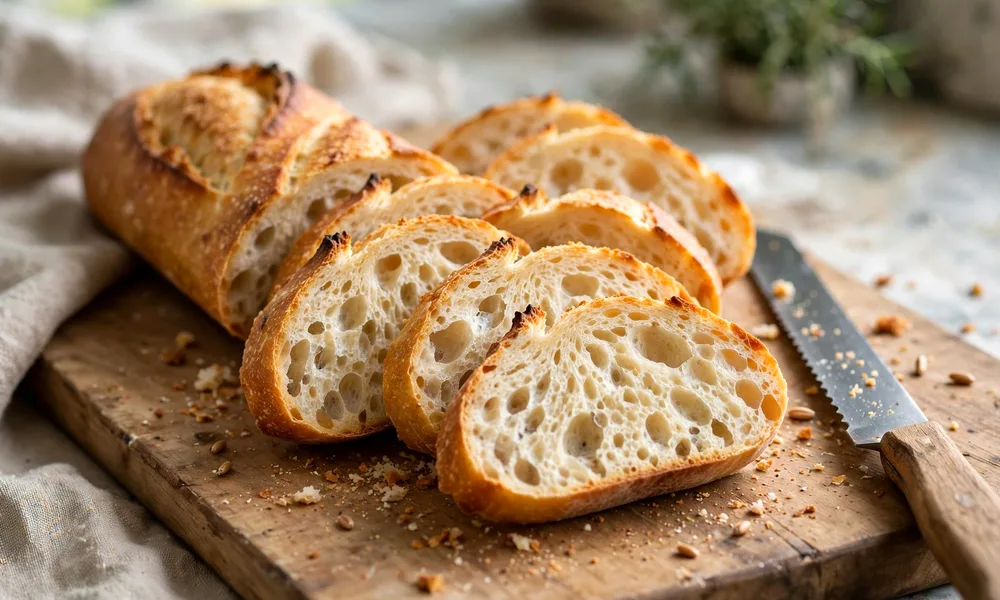
- The crumb should be open and uneven, with irregular holes, not tight and even like a sandwich loaf.
- Length matters less than weight and bake: a 250-gram loaf with a deep golden crust beats a longer, paler one every time.
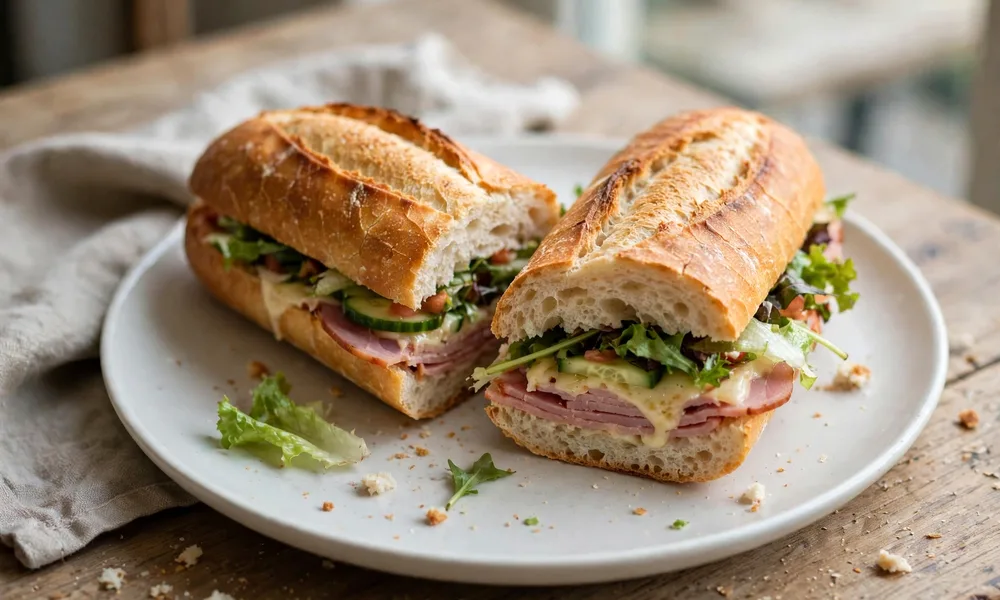
- Match the baguette to the job: a classic white baguette for sandwiches, a wholemeal or seeded one for soup and cheese, a short demi-baguette for one person.
How the best baguettes were chosen
Every baguette below was judged on five things that matter at the table rather than on the shelf. Crust comes first: it should be crisp, golden and noisy, shattering into flakes when you bite it, and it should stay crisp for at least a few hours rather than going leathery by lunchtime. Crumb is second, judged on openness, chew and moisture: a good baguette has an airy, uneven crumb with holes of different sizes, and it springs back when you press it. Flavour is third, because a baguette made from flour, water, salt and yeast should taste of toasted grain and salt, not of nothing at all.
Two notes before the list. Second, a baguette is a same-day bread by design, so the ranking weighs how a loaf eats on the day it was baked above all else. The right knife helps too, and our guide to the best bread knives of 2026 explains why a serrated blade slices a crusty loaf cleanly instead of crushing it.
Comparison table: the best baguettes for everyday eating in 2026
| Rank | Baguette type | Best for | Watch out for |
|---|---|---|---|
| 1 | Classic white baguette | Everyday eating, sandwiches | Goes stale within a day |
| 2 | Bakery baguette tradition | Flavour, eating on its own | Costs more, sells out early |
| 3 | Wholemeal baguette | Soup, cheese, heartier meals | Denser crumb, less shatter |
| 4 | Seeded baguette | Extra flavour and crunch | Seeds can fall off when sliced |
| 5 | Demi-baguette | One person, less waste | Same price per gram as a full loaf |
| 6 | Supermarket baguette | Budget, convenience | Pale crust, bland flavour |
| 7 | Baguette for toasting | Next-day eating, bruschetta | Not at its best eaten fresh |
The best baguettes for everyday eating in 2026
1. Classic white baguette: the best everyday loaf
The classic white baguette is the loaf this whole guide is built around, and for everyday eating it is still the one to beat. A good one is about 60 centimetres long and weighs around 250 grams, . The crumb inside is creamy white, open and chewy, with holes that range from small to large, and the flavour is clean and wheaty with a clear note of salt. It is the most versatile baguette there is: it makes the best sandwiches because it holds fillings without falling apart, it tears beautifully at the table, and it turns into excellent toast the next morning.
2. Bakery baguette tradition: the best for flavour
A baguette tradition is the French bakery standard, made with a longer ferment and no additives, and it is the best baguette for anyone who eats bread on its own. The longer ferment, often overnight, gives it a deeper flavour than a standard baguette: more toasted grain, a faint sourness and a finish that lingers after you swallow. The crust is darker and thicker, with a proper shatter, and the crumb is more open, with larger, irregular holes. If your bakery offers both a standard baguette and a tradition, buy the tradition for eating plain with butter and cheese, and keep the standard one for sandwiches where the filling does the talking.
3. Wholemeal baguette: the best heartier loaf
A wholemeal baguette trades some of the classic lightness for a denser, nuttier loaf, and for soup, cheese and heartier meals it is the better choice. The wholemeal flour gives it a darker crumb, a more filling bite and a flavour of toasted grain that stands up to strong cheese and rich soup in a way white bread cannot. The crust is usually less shattering than a white baguette, because the bran in the flour softens it, but a good one still crackles and holds its shape. A wholemeal baguette also keeps a little better than a white one, staying pleasant into the next day, which makes it a sensible buy if you know you will not finish it in one sitting.
4. Seeded baguette: the best for extra flavour
A seeded baguette is a classic white baguette with seeds rolled into the crust, usually sesame, poppy or sunflower, and it is the best choice when you want the bread itself to add flavour. The seeds toast in the oven and give the crust an extra crunch and a nutty taste that works beautifully with cheese, cured meats and egg sandwiches. The best seeded baguettes use seeds that are pressed firmly into the dough so they stay put when you slice, and the seeds are toasted rather than raw, so they taste nutty instead of grassy. A seeded baguette is also a good pick for a cheese board, where the seeds echo the flavours of the cheese without needing any extra topping.
5. Demi-baguette: the best for one person
A demi-baguette is simply a baguette baked at half length, and for one person eating alone it is the smartest buy in the bakery. A full baguette is a lot of bread for one person, and half of it usually goes stale before it is eaten. A demi-baguette gives you the same crust, the same crumb and the same flavour in a portion you can finish in a day, with no waste and no stale half-loaf in the bin. If your bakery does not sell demi-baguettes, buy a full one and freeze half of it in slices on the day you buy it.
6. Supermarket baguette: the best budget option
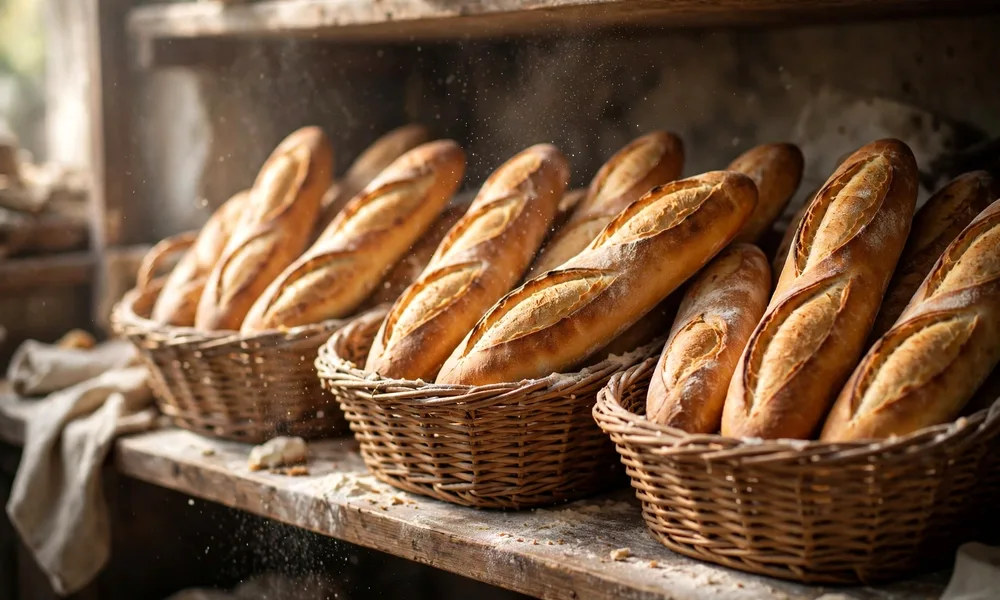
A supermarket baguette is the cheapest and most convenient option, and on a good day it is perfectly serviceable. The best ones are baked in store rather than shipped in frozen, and you can tell the difference by the crust: an in-store baguette has a golden, crisp crust and a warm smell, while a thawed one is pale, soft and smells of almost nothing. If you buy one, buy it in the morning when it comes out of the oven, eat it the same day, and do not expect it to improve with age: a supermarket baguette that is stale by evening was never going to last, and the money you saved is not worth a loaf nobody wants to eat.
7. Baguette for toasting: the best next-day loaf
The last entry is not a type you buy but a way of using the baguette you already have, and it is the best answer to the baguette’s biggest weakness: it goes stale fast. A day-old baguette makes superb toast, because the crumb has dried just enough to crisp rather than steam, and the crust, which went soft overnight, comes back in a hot oven or under the grill. Storage matters here too, and our guide to the best bread boxes of 2026 explains how a good box keeps a loaf edible for days longer than an open counter does.
What to avoid when buying a baguette
The most common baguette mistake is buying by length instead of by bake. A long, pale loaf looks impressive and costs little, but it is usually under-baked, with a soft crust and a doughy crumb that tastes of raw flour. Look instead for colour: a deep golden crust, almost brown at the scores, is the sign of a loaf that was baked hot enough and long enough. And avoid buying a baguette hours before you need it: the crust is at its best within a few hours of baking, so buy it on the way home rather than in the morning. A baguette is the one bread where timing matters more than brand, and the best bakery in town cannot save a loaf you bought at dawn and ate at dinner.
Checklist: buying a baguette for everyday eating
- Buy the baguette the day you will eat it, and as close to mealtime as you can.
- Squeeze it gently: a good baguette crackles, and the crust flakes when you break the end.
- Look for a deep golden crust, almost brown at the scores, not a pale blonde one.
- Check the crumb through the cut end: open and uneven holes, not a tight even texture.
- Choose a paper bag over plastic, and never store a baguette in the fridge.
- Pick the size you will finish: a demi-baguette for one person, a full loaf for a family meal.
Frequently asked questions
How long does a baguette stay fresh?
A baguette is at its best for about four to six hours after baking. After that the crust softens and the crumb starts to dry, and by the next day it is best toasted rather than eaten fresh.
Why does my baguette go soft so quickly?
A baguette has a lot of crust and very little crumb, so moisture moves out of the crumb and into the crust fast. A plastic bag makes it worse by trapping that moisture against the crust.
Can you freeze a baguette?
Yes, and it freezes well if you do it on the day you buy it. Slice it first, freeze the slices in a bag, and toast them straight from frozen.
What is the difference between a baguette and a baguette tradition?
A baguette tradition is made with a longer ferment and no additives, which gives it a deeper flavour, a darker crust and a more open crumb. A standard baguette is made faster and tastes milder. The tradition usually costs more and sells out earlier.
How do I slice a baguette without crushing it?
Use a long serrated knife and let the teeth do the work with a gentle sawing motion, pressing down as little as possible. A straight blade pushes the crust down into the crumb before it starts to cut, which is why a serrated knife matters so much for crusty bread.
What should I serve with a baguette?
Butter and cheese are the classic pairing, and a good baguette needs nothing more. It also suits soup, cured meats, salads and sandwiches, and day-old slices toasted with olive oil make the base for bruschetta. For a deeper dive into another crusty loaf, our guide to the best sourdough of 2026 covers the slow-fermented loaf that keeps for days rather than hours.
Bottom line
The best baguettes for everyday eating in 2026 are the ones bought fresh, eaten the same day and matched to the meal: a classic white baguette for sandwiches, a tradition for eating on its own, a wholemeal or seeded one for soup and cheese, and a demi-baguette when you are eating alone.


