
A Guide to Buying Real Sourdough in 2026
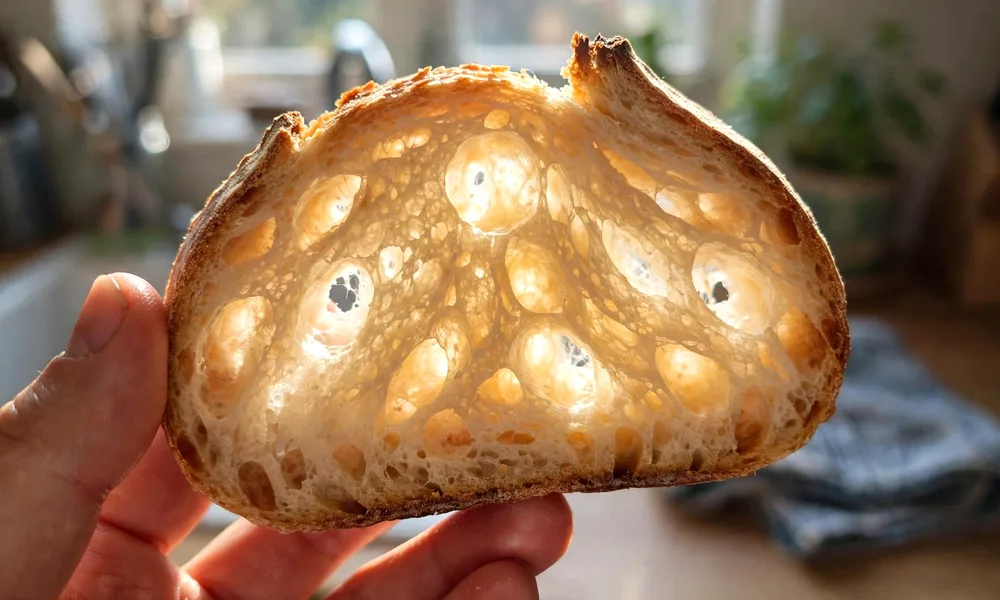
Real sourdough in 2026 is easy to love and surprisingly easy to get wrong. A true loaf is made from flour, water and salt, risen slowly by a living starter instead of commercial yeast, and it shows in the eating: a crust that crackles when pressed, a crumb full of uneven holes, and a flavour gently tangy rather than sour for its own sake. The trouble is that the word sourdough now appears on loaves that were never anywhere near a starter. Supermarkets sell bread flavoured with vinegar and labelled sourdough style, and bakeries sell fast yeasted loaves with a little starter added for the name. This guide explains how to tell the real thing from the imitation, which types are worth your money, and how to keep a good loaf at its best once you bring it home.
Key takeaways
- Real sourdough lists only flour, water and salt, plus starter; yeast, vinegar or flavourings on the label mean it is not the real thing.
- Press the crust: it should crackle and feel firm, while the crumb springs back slowly and shows large, uneven holes.
- Taste comes from time, not sourness: a long, slow ferment gives a deep, gently tangy flavour, while a sharp vinegar bite is a shortcut.
- Buy the loaf you will finish in three to four days, since real sourdough stales faster than a soft supermarket loaf.
- A bakery loaf costs more, but a small real loaf eaten to the last slice beats a large fake one thrown away half stale.
How the best sourdough was chosen
Every sourdough below was judged on five measures. Ingredients come first: flour, water, salt and starter, nothing else, because anything added to fake the flavour means the ferment was rushed. Flavour is second, judged on depth and balance, with a gentle tang that lifts the bread rather than a sharp sourness that dominates it. Texture is third: a crisp, crackling crust and an open, springy crumb with uneven holes, not a soft crust and a tight, even crumb. Freshness is fourth, because a real sourdough should still be good on day three, and a loaf that is dry by the next morning was never a good buy. Value is fifth: the price against how much of the loaf actually gets eaten.
Two notes before the list. First, sourdough is a method, not a single loaf: the same slow ferment produces white, wholemeal, rye and seeded loaves that behave differently. Second, sourdough sits inside the wider world of bread, and our comparison of the best and worst breads of 2026 puts it alongside its cousins, judging each bread the way you would actually eat it. Knowing the family helps you spot a loaf labelled sourdough that is really just white bread with a tangy flavouring.
Comparison table: the best sourdough in 2026
| Rank | Sourdough type | Best for | Watch out for |
|---|---|---|---|
| 1 | Bakery white sourdough | Everyday eating, toast, sandwiches | Price, sells out early |
| 2 | Wholemeal sourdough | Heartier slices, soup, toast | Can be dense if under-risen |
| 3 | Seeded sourdough | Extra flavour, cheese boards | Seeds can burn on top |
| 4 | Rye sourdough | Smoked fish, pickles, deli fillings | Too sour for plain toast |
| 5 | Country loaf with mixed flours | Sharing at the table | Dries once cut open |
| 6 | Sourdough rolls | Portions, lunchboxes, freezing | Small rolls dry out fastest |
| 7 | Supermarket sourdough | Budget, easy to find | Often yeasted, sometimes flavoured |
The best sourdough in 2026
1. Bakery white sourdough: the best everyday loaf
A white sourdough from a real bakery is the benchmark, and the loaf against which every other sourdough should be judged. It is baked that morning from slow-fermented dough, with a deep gold crust that crackles under your fingers, and a pale, open, springy crumb full of holes of different sizes. The flavour is the test: a gentle, clean tang with a wheaty sweetness underneath, never a sharp vinegar bite. The weakness is time: with no preservatives, a loaf starts to firm up within a day. Buy the size you will finish in three days, keep it cut-side down, and toast the last slices.
2. Wholemeal sourdough: the best heartier loaf
Wholemeal sourdough swaps some white flour for wholemeal, giving a darker crumb and a nuttier, deeper flavour. It is the best sourdough for toast, where the heartier crumb holds up to butter and jam without going soggy, and for soup, where a thick slice survives dunking. The risk is density: an under-risen wholemeal loaf can be heavy and close-textured, which defeats the point of a slow ferment. Press it before you buy: it should spring back, feel light for its size, and still show open holes.
3. Seeded sourdough: the best for extra flavour
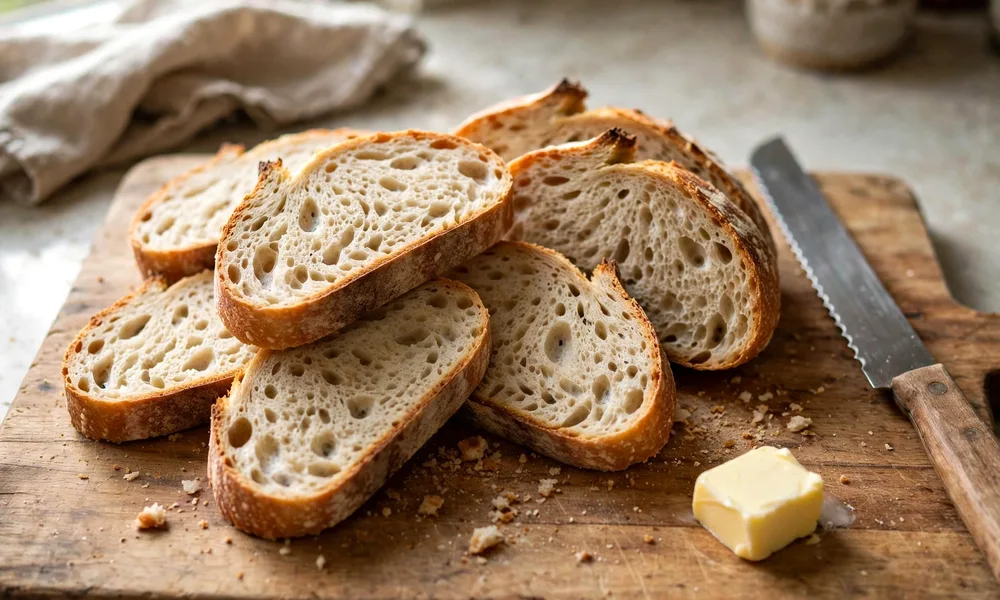
Seeded sourdough adds flavour and texture without changing the loaf. Sunflower, pumpkin, sesame and linseed toast in the oven, giving the crust a nutty note that suits cheese, cured meats and roasted vegetables. The best seeded loaves have seeds mixed through the dough as well as on top, so every slice carries the flavour, evenly spread rather than clumped in one corner. Avoid loaves where the seeds are burnt dark on top, which tastes bitter, or fall off at the first slice, which means they were scattered on at the end instead of baked in.
4. Rye sourdough: the best for deli fillings
Rye sourdough is the darkest and most assertive of the family, and it earns its place on a different kind of plate. The rye flour gives a dense, moist crumb and a flavour that is earthy and slightly sour in a way that suits smoked salmon, pickled herring, pastrami and strong cheese. It is the best sourdough for a deli sandwich, where a mild white loaf would disappear under the filling, but too strong for plain toast with jam. A rye loaf that tastes only of sourness, with no depth underneath, was probably rushed. A good rye keeps longer than a white loaf, staying moist for four or five days.
5. Country loaf with mixed flours: the best for sharing
A country loaf, made from a blend of white, wholemeal and sometimes rye flour, is the loaf to put in the middle of the table. It is usually baked as a large round, with a thick crust and a crumb balancing openness with substance, and it suits tearing and sharing. The mixed flours give a more complex flavour than a plain white loaf, nutty from the wholemeal with a gentle tang from the ferment. The trade-off is storage: once the round is cut open, the exposed crumb dries fast, so wrap the cut end tightly and use the rest the next day.
6. Sourdough rolls: the best for portions
Small sourdough rolls solve the problem of a loaf too big for one person. They bake faster, so the crust is a larger share of each roll, and they freeze well, making them the best choice for a single household that wants real sourdough without waste. The best rolls have the same open crumb as a full loaf, just smaller, and a crust that crackles rather than going leathery. Avoid rolls that feel heavy for their size, which usually means under-proved dough, and rolls with a pale, floury top, which usually means they were baked too cool and will taste doughy.

7. Supermarket sourdough: the best budget option
Supermarket sourdough is the easiest sourdough to find and the cheapest, and it is worth knowing what you are actually buying. The honest ones are made with a real starter and a long ferment, then baked in store, and they can be surprisingly good: a crisp crust, a tangy crumb and a price half that of a bakery loaf. The rest are yeasted loaves with sourdough flavouring, and the label gives them away: yeast, vinegar or flavouring means the ferment was short and the tang was added. Buy the supermarket loaf only after reading the label, and judge it by the same tests: crackling crust, open crumb, gentle tang.
What to avoid when buying sourdough
The most common sourdough regret is a fake loaf: bread that tastes of vinegar, has a soft, pale crust and a tight, even crumb, and goes stale by the next morning. Avoid the trap by checking three things before you pay: the ingredients list, which should read flour, water and salt, with no yeast or flavouring; the crust, which should crackle and feel firm rather than soft and chewy; and the crumb, which you can judge by pressing the loaf gently and feeling it spring back. A loaf that is heavy for its size, pale on top, or sour enough to make you wince was rushed or faked. The same checks work for every loaf, and a good bread knife that slices cleanly without crushing will show you the crumb honestly, because a dull blade squashes the holes flat and hides the truth.
Checklist: buying real sourdough
- Read the ingredients: flour, water and salt only, with no yeast, vinegar or flavouring listed.
- Press the crust and listen for a crackle; a soft, chewy crust means a fast bake, not a slow ferment.
- Ask when the loaf was baked and buy the morning bake, not yesterday’s loaf at full price.
- Choose the size you will finish in three to four days, since real sourdough has no preservatives.
- Check the crumb by pressing the loaf: it should spring back slowly and feel light for its size.
- Store it cut-side down or in a cloth bag, never in the fridge, which makes it stale fastest.
Frequently asked questions
How can I tell real sourdough from fake sourdough?
Read the ingredients. Real sourdough lists flour, water and salt, risen by a starter. If the label lists yeast, vinegar or sourdough flavouring, the tang was added rather than fermented, and the loaf is not real sourdough.
Why does real sourdough cost more than ordinary bread?
Time is the cost. A real sourdough ferments for twelve to twenty-four hours, takes skilled handling, and has a short shelf life, so the baker cannot make it in the same volume as a fast yeasted loaf. A small real loaf eaten to the last slice is still better value than a large fake one thrown away half stale.
How long does sourdough stay fresh?
A good loaf is best on day one, still good on day three, and best toasted by day four. Keep it cut-side down on a board or in a cloth bag at room temperature. The fridge makes it go stale fastest, so never store sourdough there.
What is the best way to store sourdough?
Keep the loaf cut-side down on a board, or in a cloth bag, at room temperature. A bread box that keeps loaves fresh longer helps too, balancing moisture so the crust stays crisp and the crumb stays soft for four to five days.
Is sourdough better for digestion than ordinary bread?
Many people find the long ferment easier on the stomach, because the starter bacteria break down some of the compounds in flour during the slow rise. It is not a medical claim, but the slow ferment is the reason sourdough has its reputation.
What should I serve with sourdough?
Keep it simple: good butter, olive oil, cheese, soup or eggs. A thick slice toasted and spread with real butter that beats margarine for flavour is the honest test of any loaf, and if it tastes good with nothing but butter, it is a good sourdough.
Bottom line
The best sourdough in 2026 is the loaf that was given time: flour, water and salt, a living starter, and a slow ferment that shows in a crackling crust, an open crumb and a gentle tang. Read the label, press the crust, buy the size you will finish, and it will reward you for three or four days. The fake ones are cheaper for a reason, and it is written in the ingredients.


