
Serving Carts vs Bar Carts: Which One Earns Its Place in Your Dining Room in 2026
Serving carts bring dinner to the table; bar carts bring the drinks. That single difference decides which one belongs in your dining room, and it is the difference most shoppers miss, because in a photograph the two look almost identical: two or three tiers, four small wheels, a rail around the top. But a serving cart is built around hot food, heavy plates and a meal served course by course, while a bar cart is built around bottles, glasses and mixing a drink.
This guide covers the serving carts worth buying in 2026, how to size one for your dining room, and how it differs from its lookalike cousins. A bar cart holds bottles and glasses for entertaining, a kitchen cart adds counter space for cooking, and a rolling cart carries light everyday storage from room to room. A serving cart does a different job: it carries a meal, hot and complete, from the kitchen to the people waiting at the table.
Key Takeaways
- A serving cart serves food at the table; a bar cart serves drinks. Buy for the meal you actually host, not the cart that photographs best.
- Two tiers are the sweet spot: one for the hot dishes being served, one for plates, covers and spares, with the top kept clear enough to dish up from.
- Heat matters more than looks: a heated tray, a plate warmer or a well-fitting cover keeps food hot through a whole course, and an unheated cart does not.
- Lockable castors are not optional: a cart loaded with hot food that rolls away on a hard floor is a burn waiting to happen.
- Measure the route from the kitchen to the table as well as the parking spot, because a cart that cannot pass the dining chairs is just a side table.
Serving Carts vs Bar Carts: The Difference That Matters
Both are wheeled trolleys, both live in the dining room, and both get rolled out when guests arrive. The difference is what they carry. A bar cart carries bottles and glasses, which are light, stable and served cold or at room temperature. A serving cart carries covered dishes, a soup tureen, a roast on a carving board and a stack of hot plates, which are heavy, hot and liable to slosh.
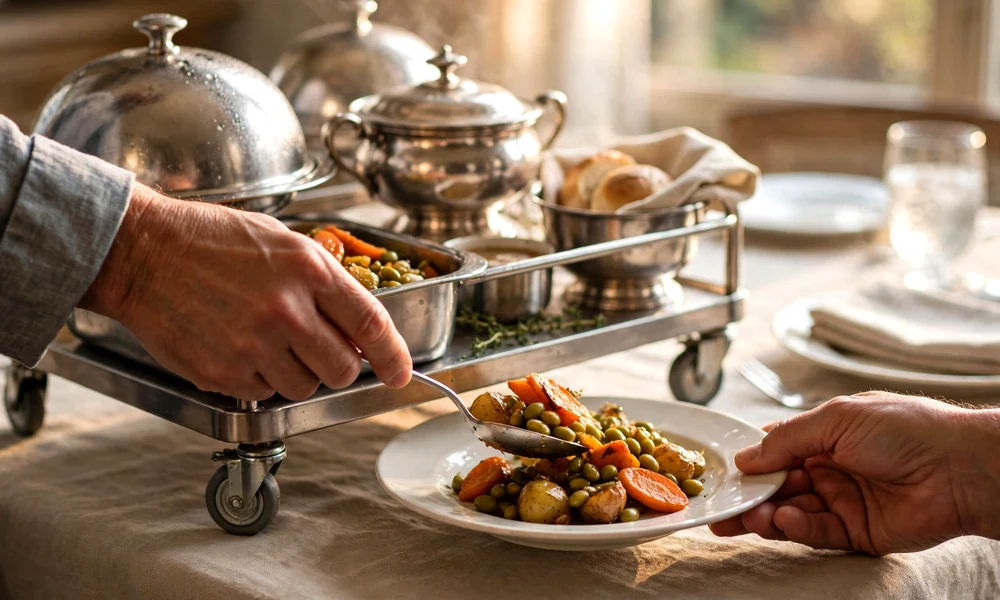
Think about an ordinary Sunday lunch. With a serving cart, the whole meal travels in one trip: roast on top under its cover, vegetables and gravy below, warm plates stacked on the lower shelf. At the table the cart parks beside the host, who carves and serves without getting up.
The Main Types of Serving Cart
Serving carts come in a handful of shapes, and the right one depends on what you serve and how many you serve.
Wooden Dinner Trolleys
The wooden dinner trolley is the classic choice, and the best serving cart for most homes in 2026. A beech, oak or walnut frame with solid shelves reads as furniture rather than catering equipment, which matters where the cart is on display all day. The top is usually a deep tray with a raised edge, big enough for a roasting tin or a large serving dish, and the lower shelf holds plates and covers. Wood forgives ring marks and gives dishes a stable footing, but it does not keep food warm, so hot dishes need covers.
Stainless Steel Service Carts
A stainless steel service cart is the workhorse of the list. It has a steel top, open shelves below and a frame that wipes clean in seconds, which matters where gravy, sauces and hot fat share a surface. The steel takes heat without marking, so a hot dish can go straight from the oven onto the top, and a spilled sauce wipes off instead of staining. The trade-off is warmth and noise: steel looks clinical in a cosy dining room and rings when a plate is set down hard. A folded linen cloth on the top solves both.
Heated Serving Carts
A heated serving cart is the only type that keeps food hot by itself, and it is worth the money if you regularly serve meals that wait. A heating element under the top shelf holds dishes at serving temperature while everyone finds their seat, which is the difference between a roast served hot and a roast served warm. The best versions have a simple thermostat with two or three settings, not a fiddly digital panel, and a cord that unplugs cleanly so the cart can roll to the table once loaded.
Drop-Leaf Carving Trolleys
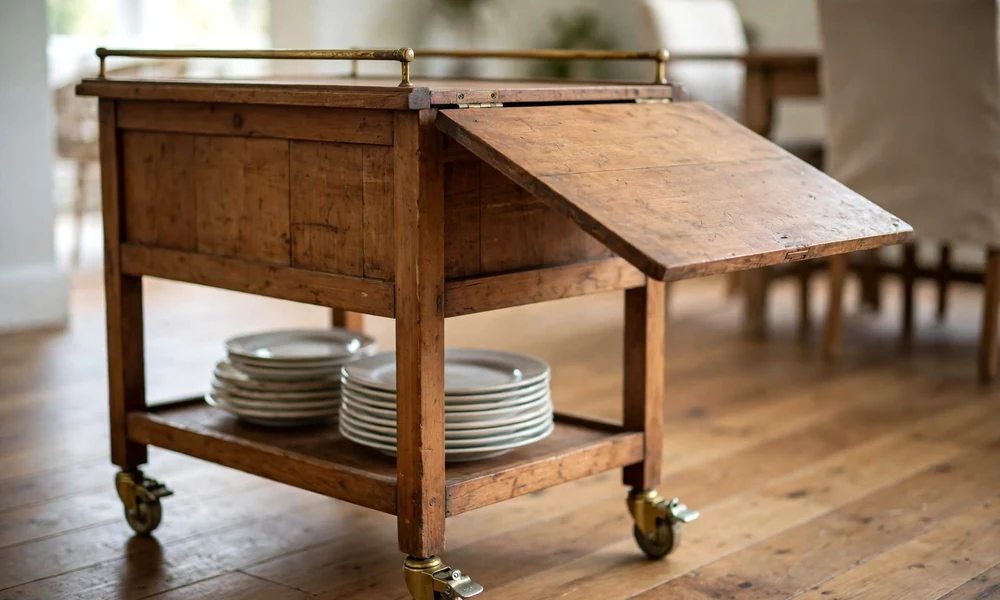
A drop-leaf carving trolley is for hosts who carve at the table. The top folds out to double its size when the roast arrives, giving room for the carving board, the serving plates and the gravy boat side by side, then drops back to a narrow console when the meal is over. Folded, it is barely thirty centimetres deep and parks against the wall; open, it holds a full carving spread. Check the hinge locks firmly open with no wobble.
Dessert and Tea Trolleys
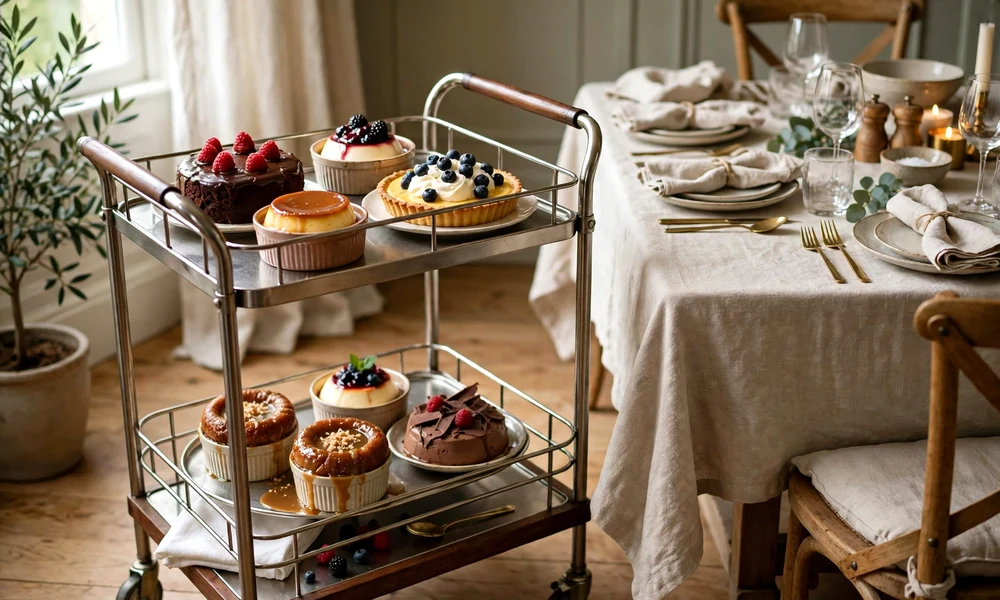
A dessert and tea trolley is the lighter end of the family, built for the end of the meal rather than the main course. Two shallow tiers carry cakes, puddings, a teapot and cups, and the cart rolls to the table when the plates are cleared. It is the cart for afternoon tea and for a dessert spread at a family gathering. It will not carry a roast: the tiers are too shallow and the frame too light.
Serving Carts Compared
| Type | Best For | Top | Heat | Weight |
|---|---|---|---|---|
| Wooden dinner trolley | Everyday family meals | Deep wooden tray | Covers only | Heavy |
| Stainless steel service cart | Hot, messy serving | Steel, heat-proof | Covers only | Medium |
| Heated serving cart | Meals that wait | Heated shelf | Built-in element | Heavy |
| Drop-leaf carving trolley | Carving at the table | Folding, doubles in size | Covers only | Medium |
| Dessert and tea trolley | Pudding and afternoon tea | Two shallow tiers | None | Light |
If the cart will carry a roast every Sunday, wood or steel wins. If the meal waits while guests settle, the heated cart earns its price.
How to Choose the Right Serving Cart
Measure twice, and measure the right things. Measure the wall or corner where the cart will live, and then measure the route it will travel: the gap between the kitchen door and the dining table, the doorway it must pass, and the turning circle beside the host’s chair. A cart that fits its parking spot but cannot reach the table is no use. As a rough guide, a width of sixty to seventy-five centimetres suits most dining rooms, and anything deeper than fifty centimetres starts to crowd the walkway.
Wheels decide whether a cart is genuinely mobile or just furniture with decoration. Look for smooth-rolling castors that lock, ideally two locking and two free, so the cart stays put on a hard floor and moves easily when pushed. Check the weight rating too, since a cart loaded with a roast, a tureen and a stack of plates is heavier than it looks.
Heat is the feature most buyers forget until the first cold roast. If the cart has no heater, buy good covers: a domed metal cloche keeps a dish hot far longer than a flat lid, and a warmed plate underneath buys another ten minutes. Never put a dish straight from a hot oven onto a wooden top without a board underneath, and measure the tallest thing the cart must hold before you buy.
Serving a Meal Course by Course
A serving cart changes how a meal flows, and the change is worth planning for. Load it in the kitchen in the order the food will be served: the first course on top, the next below, the plates on the lowest shelf where their weight keeps the cart stable. Roll it to the table once, park it beside the host, and lock two castors before anyone starts serving.
Between courses, the cart earns its keep a second time. Used plates stack on the lower shelf, the next course comes up from below, and the table stays clear for conversation. When the meal ends, the cart carries the dirty plates back to the kitchen in one trip.
Mistakes That Waste Money
The most common mistake is buying for the lightest meal you serve instead of the heaviest. A cart bought for afternoon tea ends up carrying a roast it was never built for. Buy the sturdiest cart your budget allows, and buy it for the heaviest meal you serve, not the lightest. The second mistake is overloading the top shelf. A serving cart is top-heavy by design when it carries hot food, and a heavy top shelf makes it tip when it crosses a rug edge or a door threshold. Keep the heavy things low, the light things high, and never pull a loaded cart by one handle at an angle.
Another mistake is choosing glass shelves for food service. Glass shows every mark, slides under a hot dish, and cannot take a hot roasting tin without risk. Wood or steel tops are the right choice for food, and glass belongs on the bar cart, where the load is cold and light.
Checklist: Buying a Serving Cart
- Measure the parking spot, the doorway and the route from the kitchen to the table before you order anything.
- Choose two tiers as the default, with a raised rail on top and room for a stack of plates below.
- Check the wheels: smooth-rolling castors, at least two lockable, rated for a fully loaded cart of forty kilograms or more.
- Decide on heat: a heated cart, good covers, or warmed plates, and never assume food stays hot on its own.
- Match the top to the food: wood or steel for hot dishes, never glass for a roast or a tureen.
- Leave breathing room on every shelf and keep the top tier clear enough to dish up from at the table.
Frequently Asked Questions
What is the difference between a serving cart and a bar cart?
A serving cart carries hot food and plates to the dining table, with deep trays, high rails and a top that takes heat. A bar cart carries bottles and glasses for drinks, with shallow shelves and room for stemware.
Can a serving cart be used as a bar cart?
It can hold bottles, but it does it badly. Its deep trays hide labels, its wide shelves waste the vertical space a bar cart uses for glasses, and a heated top warms spirits nobody wants warmed.
How much weight can a serving cart hold?
Most serving carts are rated for forty to sixty kilograms in total, or roughly fifteen to twenty kilograms per shelf. Heated and steel carts usually hold more, light dessert trolleys less.
Do serving carts keep food hot?
Only heated carts keep food hot by themselves, using an element under the top shelf. Unheated carts rely on covers, warmed plates and speed: a domed cloche and a hot plate underneath keep a dish hot for a whole course.
What size serving cart is best for a dining room?
Most dining rooms suit a cart sixty to seventy-five centimetres wide and no more than fifty centimetres deep. That holds a roast, a tureen and a stack of plates without blocking the walkway.
Where should a serving cart live when it is not being used?
Against the longest spare stretch of dining-room wall, or in the gap it was measured for, with the castors locked.
The Bottom Line
A serving cart earns its place when your meals are plated and served at the table. Buy a wooden dinner trolley or a steel service cart with deep trays, high rails and lockable castors, add heat with a heated model or good covers, and measure the route from the kitchen before you order.


