Hand Rakes for Beds, Borders and Patios in 2026
Hand rakes are the small tools that do the careful work a big rake cannot reach. A hand rake is a one-handed rake with a short handle and three to seven tines, made for flower beds, pots, borders and patios. A good one pulls leaves out from between plants without snapping a stem, loosens the top of the soil without disturbing roots, and sweeps a patio edge clean. A bad one bends its tines on the first twig, slips in a wet hand, and turns a ten-minute tidy into a chore done by hand. This guide explains what makes hand rakes good, how the main types differ, and how to choose one for beds, borders and patios in 2026.
The distinction that matters most is size. A leaf rake is a long-handled tool with a wide fan of tines, made for clearing a lawn while you stand upright, and our guide to leaf rakes covers that job in full. A hand rake is the opposite: short, one-handed, and made for close work around plants. The general comparison, our guide to best vs worst rakes, puts hand rakes alongside leaf, bow and thatch rakes as one type among several. This guide is the dedicated one: hand rakes only, in depth.
Key Takeaways
- Hand rakes are for close work: beds, pots, borders and patios, not lawns.
- Tine count decides the job: three stiff tines cultivate soil, five or more flexible tines gather leaves.
- Steel tines beat plastic on wet leaves and rough ground, where weak tines bend or snap.
- The handle must fit a gloved hand, because a hand rake is used kneeling, close to the soil.
- Clean the tines after every use, since damp soil and sap rust steel and rot wood.
Hand Rakes at a Glance
| Best for | Rake type | Tines | Standout strength |
|---|---|---|---|
| Best overall | Five-tine steel rake | 5 | Leaves and light soil work in one tool |
| Best for soil | Three-tine cultivator | 3 | Stiff tines break crust without harming roots |
| Best for leaves | Seven-tine fan rake | 7 | Wide head gathers leaves fast in beds |
| Best for pots | Mini hand rake | 3 | Small head fits between stems in a pot |
| Best for patios | Flat-tine rake | 5 | Stiff flat tines sweep leaves off stone |
| Best value | Plain wooden-handle rake | 5 | Simple, strong, easy to keep clean |
What a Hand Rake Actually Is
A hand rake is held in one hand. It has a short handle, 15 to 30 centimetres long, and a small head, usually 8 to 15 centimetres wide, with three to seven tines. The tines are short, stiff and slightly curved, so they can pull leaves, break the surface of the soil, and gather debris without digging deep.
The job it does is close work. A long-handled rake sweeps a lawn from a standing position. A hand rake works from beside the plant, at soil level, where you can see the stems and roots you are working around. It clears leaves from a flower bed, pulls weeds out of a border, loosens the crust on a pot, and sweeps leaves off a patio step. None of those jobs suits a long handle, because it cannot reach between plants or be steered precisely.
The Main Types of Hand Rakes
The three-tine cultivator is the soil tool. It has three thick, stiff steel tines, set close together. It breaks the crust on the surface of the soil, mixes in compost, and pulls out small weeds by the root. It is too stiff and too narrow for gathering leaves, and that is not its job.

The five-tine rake is the all-round tool, and the right choice for most gardens. Five tines, spaced apart, gather leaves, pull out debris, and still break light soil. It is wide enough to clear a bed quickly, narrow enough to fit between plants.
The seven-tine fan rake is the leaf tool. Seven or more thin, flexible tines spread into a small fan, gathering leaves in broad pulls. It is the fastest hand rake for clearing a bed in autumn, and the gentlest on the soil, because the tines skim the surface rather than digging in. It is too soft for hard soil, and its tines bend on twigs and stones.
The mini hand rake is the pot tool: a scaled-down rake, with a head five centimetres wide and three short tines, made for containers and small beds. It loosens the soil in a pot and clears dead leaves in spaces where a full-size rake cannot fit. If you grow in pots, it is worth owning alongside a full-size rake.
Tines: Count, Material and Shape
Tine count is the first number to look at. Three tines mean a cultivator: stiff, narrow, made for soil. Five tines mean an all-rounder: leaves and light soil in one tool. Seven or more mean a leaf gatherer: wide, flexible, made for clearing.
Material decides how long the tines last. Spring steel is the best choice: strong, flexible, and it springs back after bending. Stainless steel resists rust but is harder to bend back once bent. Nylon tines are light and gentle, but they snap on twigs and go brittle in cold weather. Thin plastic tines are the worst choice: they bend on the first wet leaf and snap within a season. Check the fixing: the head should be riveted or bolted to the handle, not simply pushed on, because a loose head is how hand rakes fail.
Handles and Grip
The handle decides whether a hand rake feels good after twenty minutes, and that matters more than the steel. Wooden handles are the classic choice: warm in the hand, easy to grip, and they absorb shock. Plastic handles are lighter and do not rot, but they can feel slippery when wet and they crack in cold weather.
The handle must fit a gloved hand. A hand rake is used kneeling, close to the soil, so a handle that is too thin slips and one that is too thick tires your grip. A slightly flattened handle is easier to hold than a round one, because it does not twist in your hand. Some handles have a hole at the end for hanging, which is also how the rake should be stored.
Hand Rakes, Leaf Rakes and Bow Rakes
The three rakes look like cousins, and they are often sold side by side, but they do different jobs. A leaf rake is a long-handled tool with a wide fan of flexible tines, made for clearing leaves from a lawn while you stand upright. It covers a metre with each sweep, and it is the fastest tool for an open lawn. It cannot work in a bed, because its wide head will not fit between plants.
A bow rake is a long-handled tool with short, stiff steel teeth, made for soil and gravel: levelling, spreading and pulling a pile flat. It is too harsh for a bed full of plants, and its teeth will tear roots. A hand rake is the small, one-handed tool for beds, pots, borders and patios, working at soil level where the other two cannot reach. A good garden keeps all three, and our guide to garden trowels covers the other small tool that works alongside a hand rake in a bed.
How to Use a Hand Rake Well
Clearing leaves from a bed is the main job. Kneel beside the bed, hold the rake low, and pull the leaves toward you in short, gentle strokes, letting the tines slide under the leaves rather than digging into the soil. Work outward from the plants, not inward, so you do not pull soil onto the stems.
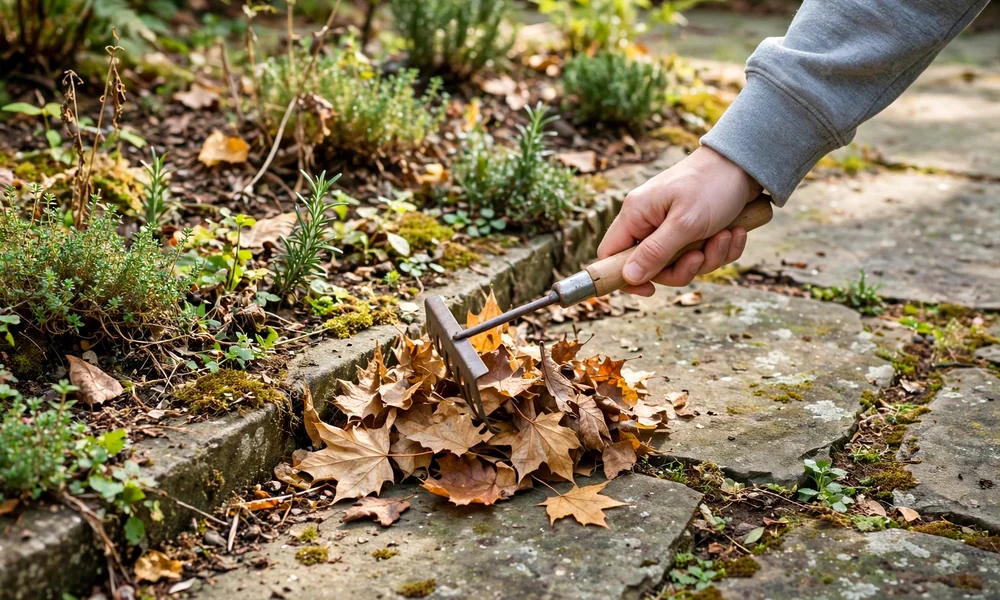
Loosening soil is the second job. Hold the rake upright, press the tines a few centimetres into the soil, and pull gently toward you, breaking the crust without disturbing the roots below. Work around seedlings, not through them, and keep the tines shallow: the aim is to break the surface so water can get in, not to dig.

Sweeping a patio is the third job. Hold the rake flat, with the tines almost parallel to the stone, and pull leaves and debris toward you in long strokes. The flat tines gather leaves without scratching the stone, and the short handle lets you work along an edge or a step.
Care and Storage
Hand rakes are killed by damp soil and sap, not by hard work, and two minutes of care after each session keeps them good for years. Knock the soil off the tines, wipe them clean, and dry the handle before you put the rake away. Oil on a cloth, wiped along steel tines, stops rust.
Store the rake dry, hanging by the hole in its handle or lying flat in a shed. Hanging keeps the tines off the ground and away from damp. Never leave a hand rake lying in a bed or on damp soil: the tines rust and the handle rots. Check the head fixing now and then, and tighten the rivet or bolt if the head starts to wobble.
Before You Buy: Six Checks
- Hold the rake in a gloved hand: if the handle slips, it will not work in wet weather.
- Flex a tine with your thumb: steel should spring back, plastic will stay bent or snap.
- Check the head is riveted or bolted to the handle, not simply pushed on.
- Match the tine count to the job: three for soil, five for everything, seven for leaves.
- Check the head fits your smallest bed or pot: if it will not fit between the plants, it is too wide.
- Pick the rake up and work it in the air: if your wrist aches in a minute, it is too heavy.
Frequently Asked Questions
Can a hand rake replace a leaf rake?
No. A hand rake is for beds, pots, borders and patios, where you work close to plants. A leaf rake is for lawns, where a wide fan and a long handle clear a large area quickly. A hand rake on a lawn would take all day.
How many tines should a hand rake have?
Three for soil work, five for general use, and seven or more for gathering leaves. A five-tine steel rake is the best all-round choice.
Are steel tines better than plastic?
Yes, for most gardens. Spring steel is strong, flexible, and it springs back after bending. Plastic tines are light and gentle, but they bend on wet leaves and snap on twigs.
Can I use a hand rake in a pot?
Yes, and it is one of the best uses for one. A mini hand rake, with a head five centimetres wide, loosens the soil in a pot and clears dead leaves in spaces where a full-size rake cannot fit. Use it gently, because the roots in a pot are close to the surface.
How do I stop the tines from rusting?
Wipe them clean and dry after every use, and wipe a film of oil along them. Store the rake hanging in a dry shed, not lying on damp soil.
Is a hand rake the same as a shrub rake?
No. A shrub rake is a small long-handled rake, made for reaching between shrubs while standing. A hand rake is one-handed, with a short handle, made for kneeling work in beds and pots. The shrub rake reaches further; the hand rake is more precise.
Bottom Line
Buy a hand rake for the tines, not the brand. Choose a five-tine steel rake with a wooden handle that fits your gloved hand, a head riveted firmly to the handle, and a size that fits your smallest bed. Keep it for close work around plants, leave lawns to a leaf rake and soil levelling to a bow rake, and clean and dry it after every session. A good hand rake, looked after, will be the smallest tool in the shed and the one you reach for most.