A Guide to Nursery Pots That Grow Strong Plants in 2026
A nursery pot is the thin plastic pot a plant is sold in: the black or terracotta-coloured container you bring home from the garden centre, with drainage holes in the bottom and a rim you can grip with one hand. It is not a display piece: it is a working pot, built to grow a plant cheaply, move it safely, and let it go on to a bigger pot or a bed when the time comes.
This guide covers the nursery pots worth buying in 2026: standard round pots, square pots that pack a bench, tall pots for deep roots, and biodegradable pots that go straight into the ground. It also draws the line between a nursery pot and the pots it gets confused with.
Key Takeaways
- Buy for the plant: small pots suit cuttings and seedlings, medium pots suit young shrubs, large pots suit plants that stay put for a season or more.
- Go up one size at a time when potting on: a plant moved into a pot three sizes too big sits in wet soil it cannot use, and the roots rot.
- Drainage holes are not optional: a pot without them drowns the roots no matter how careful you are with the watering can.
- Thin pots are cheap and light but crack in cold weather; thick-walled pots last for years and survive being dropped and stacked.
- Reuse nursery pots whenever you can: wash, disinfect and store them dry, because a clean used pot grows a plant just as well as a new one.
Nursery Pots Compared
| Type | Best For | Typical Sizes | Standout Strength |
|---|---|---|---|
| Standard round pot | Most plants, most benches | 9 cm to 30 cm | Cheap, stackable, easy to find |
| Square pot | Benches and trays | 7 cm to 20 cm | Packs tight, no wasted space |
| Tall or deep pot | Deep-rooted plants | 1 to 5 litres | Room for a long taproot |
| Biodegradable pot | Plants that hate moving | 6 cm to 15 cm | Plant the whole pot, no shock |
| Air-pruning pot | Strong root balls | 1 to 20 litres | Stops roots circling |
What a Nursery Pot Is, and What It Is Not
A nursery pot is a thin-walled plastic container made for growing, not for showing. It has drainage holes in the bottom, a slightly tapered side so plants slide out easily, and a rim strong enough to lift when full of wet soil. Nurseries use them because they are cheap, light and stackable; gardeners use them because they are the cheapest way to grow a plant from a cutting to planting size.
It is not a plant pot. A plant pot is the container a plant lives in for months or years, chosen for how it looks in a room as much as for how it grows. Our guide to the best plant pots of 2026 covers terracotta, glazed ceramic, self-watering and concrete pots. A nursery pot is the temporary home a plant arrives in; the plant pot is the permanent home you move it into.
It is not a fabric pot either. A fabric pot is a soft breathable grow bag that lets air reach the roots, and our guide to the best fabric pots of 2026 covers it in full. Fabric pots air-prune roots and suit vegetables on a patio, but they cost far more than a nursery pot and dry out faster.
And it is not a seed tray. A seed tray holds dozens of seedlings in small cells for a few weeks, and our guide to the best seed trays of 2026 covers the tray alone. Seedlings leave the tray and go into nursery pots, one plant per pot. The tray is the first step; the nursery pot is the second.
The Main Types of Nursery Pot
The right type depends on the plant and how long it will stay in the pot. A cutting needs a different pot from a shrub that sits on a bench for a year.
The Standard Round Pot: The Best Nursery Pot Overall
The standard round pot is the default, and the best nursery pot overall in 2026 because it suits almost everything. It is a tapered black or terracotta plastic pot with drainage holes, sold from 9 centimetres to 30 centimetres across. The taper lets the pot slide out of a stack and the plant slide out of the pot cleanly. Buy thick-walled pots if you reuse them, because thin pots crack in frost.
The Square Pot
The square pot packs a bench. Round pots waste a quarter of the space between them; square pots sit edge to edge, so a tray holds a third more plants. That makes them the choice for seedlings, cuttings and anything grown in bulk on a bench. Squeeze the sides first, because the corners can trap soil.
The Tall or Deep Pot
The tall pot is deeper than it is wide, and it suits plants with a long taproot: carrots, parsnips, sweet peas and young trees. A standard pot forces a taproot to bend and circle, which stunts the plant; a deep pot lets the root run straight down.
The Biodegradable Pot
The biodegradable pot is made from pressed peat, coir or paper fibre, and it solves the one problem plastic cannot: transplant shock. The seedling goes outside still in its pot, the fibre breaks down, and the roots never get handled. That makes it the best nursery pot for plants that dislike being moved, like cucumbers and sweet peas. The trade-off: fibre pots dry out faster, soften when wet, and fall apart if handled roughly when damp.
The Air-Pruning Pot
The air-pruning pot has holes or slits in its walls, so a root that reaches the edge meets air and stops, instead of circling the pot and strangling the plant. The plant answers by growing side roots further back, so the root ball becomes a dense fibrous mass. These pots cost more and dry out faster, but for a tree or shrub that lives in its pot for a year, the root ball is worth the price.
Size: Matching the Pot to the Plant
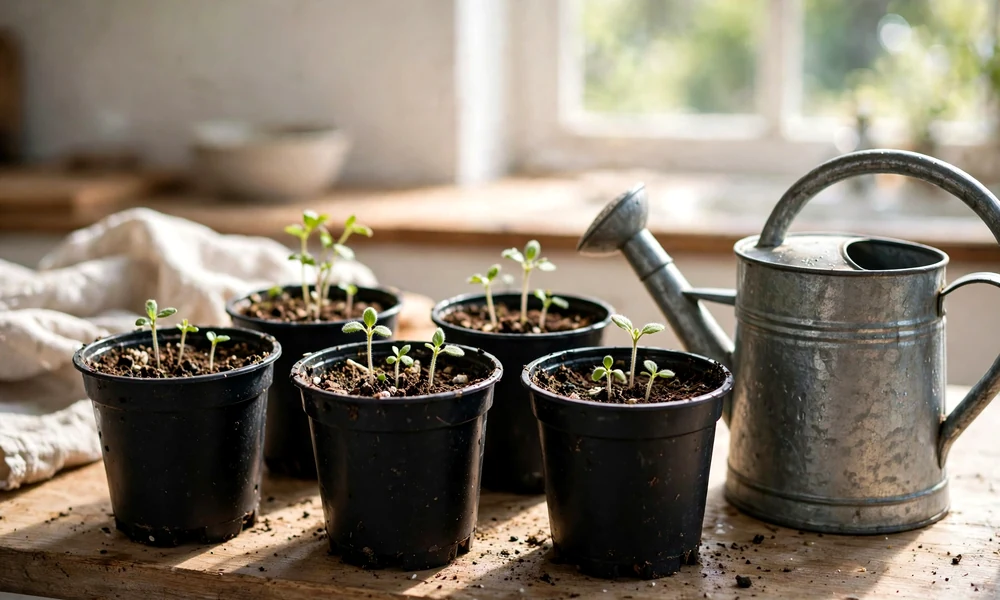
Size is the first number to check. A 9-centimetre pot suits a single cutting or a seedling just out of the tray. A 1-litre pot suits a young herb or a perennial in its first season. A 2- to 3-litre pot suits a shrub, a tomato or a pepper for a whole summer. A 5-litre pot or bigger suits a small tree or a fruit bush. When in doubt between two sizes, go up one.
The rule for potting on is simple: go up one size only, about two to five centimetres wider than the current pot. A plant moved into a pot three sizes too big sits in wet soil it cannot use, and the roots rot. Repot when roots appear from the drainage holes, when water runs straight through, or when growth slows. Spring is the best time.

Materials, Drainage and Durability
Most nursery pots are polypropylene, and the thickness is what separates a pot that lasts a season from one that lasts five. Thin pots are light and cheap, and they suit a plant that will be sold or planted out within weeks. Thick-walled pots cost more, but they survive frost and stacking, and they are the ones worth washing and reusing.
Drainage decides whether a plant lives or dies. Every nursery pot needs holes in the bottom, big enough to drain but small enough to hold the soil in. A pot with no holes leaves roots sitting in water until they rot. A layer of stones at the bottom does not replace a drainage hole. If a pot you like has no hole, drill one, or use it as a cover pot with a smaller nursery pot inside.
Potting On Without Damage
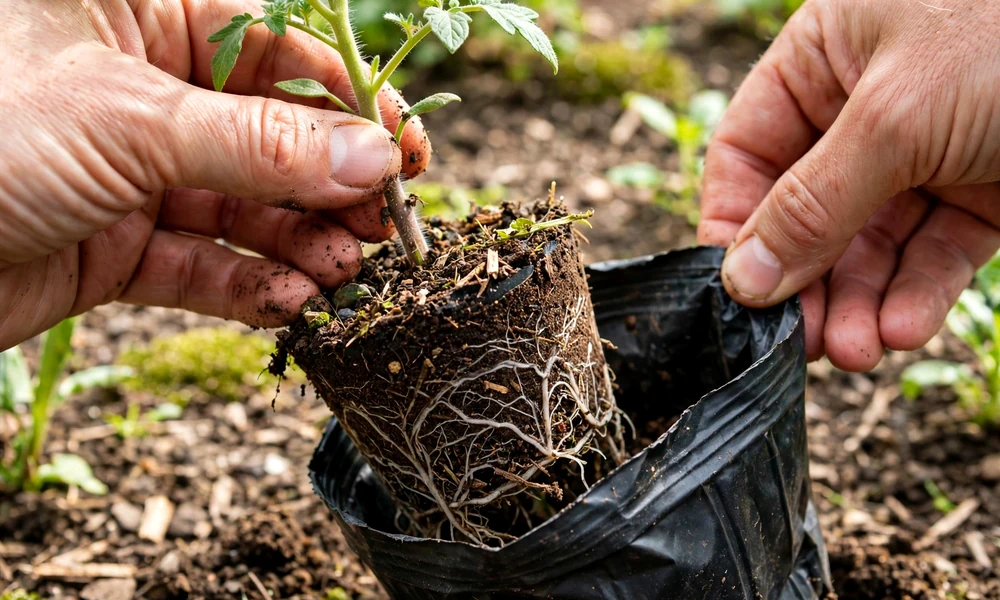
Moving a plant up a size is a simple job done badly more often than any other. Water the plant the day before, so the soil holds together. Squeeze the sides gently to loosen the root ball, then tip the plant out with one hand over the top, supporting the stem between your fingers. Never pull a plant out by its stem: the roots tear and the plant stalls for weeks.
Put fresh compost in the bottom of the new pot, set the plant at the same depth it was before, and fill around the sides, firming gently. Water well, and keep the plant out of strong sun for a day or two. If the roots are circling the bottom in a tight ring, tease them out gently first, because a root ball that goes in circling keeps circling.
Reusing Nursery Pots
Nursery pots are made to be reused, and a clean used pot grows a plant just as well as a new one. At the end of the season, brush off the old soil, wash in warm soapy water, and rinse in a weak disinfectant if last year brought damping-off or mould. Dry them fully before stacking. Throw away any pot that is cracked or so brittle it flexes white when squeezed.
Before You Buy: A Short Checklist
- Match the size to the plant: 9 cm for cuttings, 1 litre for young herbs, 2 to 3 litres for shrubs and tomatoes.
- Check every pot has drainage holes big enough to drain but small enough to hold the soil.
- Go up one size only when potting on, about two to five centimetres wider than the current pot.
- Buy thick-walled pots if you reuse them; thin pots only for plants that leave within weeks.
- Squeeze the sides before tipping a plant out, and never pull a plant out by its stem.
- Wash and disinfect used pots before reuse, and store them dry out of the sun.
Frequently Asked Questions
What is the difference between a nursery pot and a plant pot?
A nursery pot is the thin temporary pot a plant is grown and sold in, while a plant pot is the permanent container a plant lives in for months or years. The nursery pot is cheap, light and stackable; the plant pot is chosen for looks and drainage in a real room.
What size nursery pot should I buy first?
A mix of 9-centimetre pots for cuttings and 1-litre pots for young plants covers most gardens. Add 2- to 3-litre pots for shrubs, tomatoes and peppers, and only buy larger pots when a plant outgrows those.
Do nursery pots need drainage holes?
Yes, always. A pot without a drainage hole lets water sit at the bottom, where it rots the roots. If a pot has no hole, drill one, or use it as a cover pot with a smaller nursery pot inside.
Can I reuse nursery pots?
Yes, and you should. Wash them in warm soapy water, rinse in a weak disinfectant if last year brought disease, and dry them fully before stacking. Throw away cracked or brittle pots.
When should I move a plant to a bigger nursery pot?
When roots appear from the drainage holes, when water runs straight through, or when growth slows. Move up one size only, and repot in spring when the plant is starting to grow.
Are biodegradable nursery pots worth it?
For plants that hate being moved, yes. Cucumbers, courgettes and sweet peas go outside still in the pot, so the roots are never handled. For most other plants, a reusable plastic pot is cheaper.
The Bottom Line
The best nursery pot in 2026 is a thick-walled round pot in the right size for the plant, with drainage holes and a tapered side that lets the plant slide out cleanly. Buy square pots if you grow in bulk, tall pots for deep roots, and biodegradable pots for plants that hate moving. Match the size, go up one size at a time, and reuse the pots you already own.