Why Hand Cultivators Are the Best Tool for Loosening Topsoil in 2026
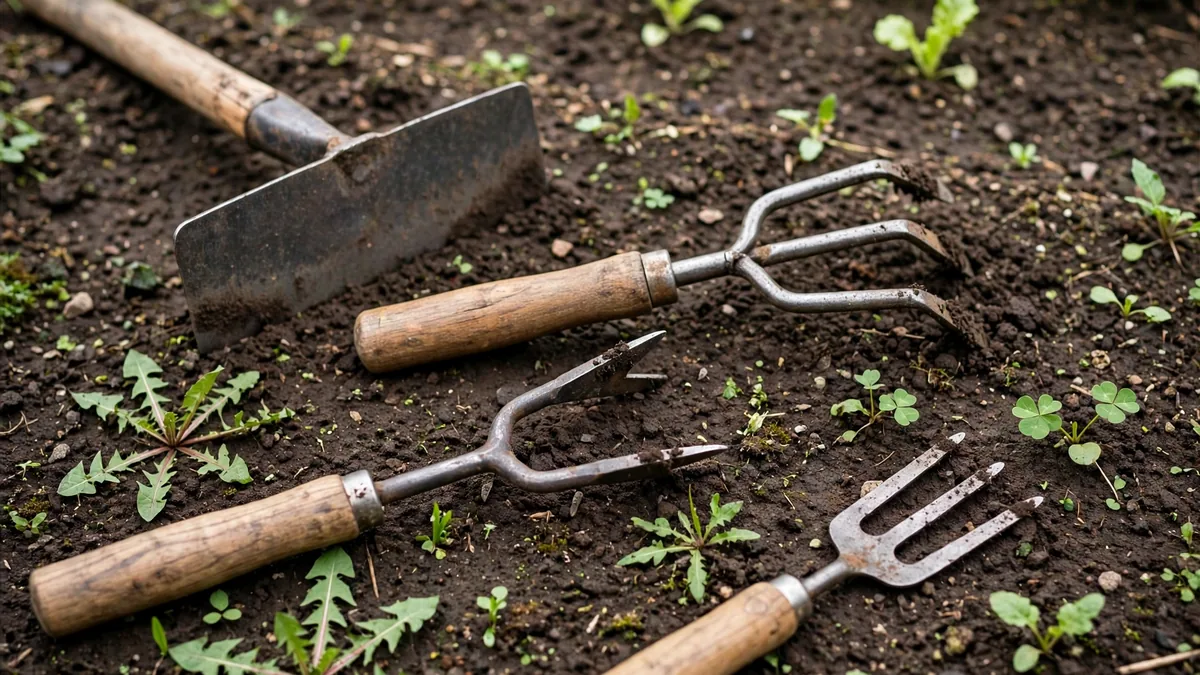
Hand cultivators are the best tool for loosening topsoil because they do the close work no long-handled tool can reach. A hand cultivator is a short-handled tool with three curved steel prongs that drag through the top few centimetres of soil, breaking a dry crust, mixing in compost and pulling small weeds out by the root, all without disturbing the plants around them.
This guide explains what makes hand cultivators good, how the main types differ, and how to choose one for beds, borders and pots in 2026. One distinction matters before you buy. A hand cultivator is a digging claw: its thick, curved prongs dig into the soil surface and loosen it. A garden trowel is a different tool: it has a single cupped blade for scooping holes and moving soil. Our guide to garden trowels that make planting easy covers the scooping tool in full; this guide covers the loosening one.
Key Takeaways
- A hand cultivator is the short-handled three-prong claw for loosening topsoil and weeding close to plants, not a digging fork and not a rake.
- Three thick, curved, forged prongs beat thin straight ones: they dig into crusted soil without bending and pull weeds out by the root.
- A long-handled garden fork digs beds deep; a hand cultivator works the top few centimetres around plants that are already growing.
- One-piece forged steel outlasts welded or stamped prongs by years, and the handle-to-head joint is where cheap cultivators fail first.
- Match the prong shape to the job: curved claws for loosening and weeding, straight prongs for mixing compost, a narrow head for pots.
Hand Cultivators Compared
| Type | Best for | Prongs | Handle | Watch out for |
|---|---|---|---|---|
| Three-prong claw | Loosening topsoil, weeding beds and borders | 3 curved, forged | Wood or cushioned grip | Too wide for small pots |
| Straight-prong cultivator | Mixing compost and fertiliser into soil | 3 straight, flat | Wood or plastic | Skates across dry crust |
| Narrow cultivator | Pots, containers, tight gaps between plants | 3 short, slim | Short, slim grip | Slow on wide beds |
| Ergonomic cultivator | Arthritis, weak wrists, long weeding sessions | 3 curved, forged | Angled soft grip | Costs more than basic models |
| Long-handled cultivator | Standing work in beds, less bending | 3 curved, forged | Extended shaft | Less control in tight spaces |

What a Hand Cultivator Actually Is
A hand cultivator is held in one hand. It has a short handle, 12 to 20 centimetres long, and a small head of three thick steel prongs, curved like a claw. You grip it, push the prongs into the soil, and drag it towards you. The prongs break the crust, crumble the clods and hook small weeds out by the root, all in one motion.
The garden fork comparison is the one that confuses buyers most, because both tools have prongs. The difference is scale and depth. A garden fork is a long-handled digging tool with four square tines that drives deep into the ground under your boot and turns whole beds. A hand cultivator is a short-handled claw that works only the top few centimetres, around plants that are already growing, where a long handle cannot reach and a deep tool would damage roots. Our guide to garden forks that dig without bending covers the deep tool in full; this guide is the dedicated one for the surface tool.
The hand rake comparison is subtler, and it matters because the two tools are sold side by side. A hand rake is a one-handed rake with three to seven thin tines, made for pulling leaves out from between plants and sweeping debris off beds and patios. Our guide to hand rakes for beds, borders and patios treats its three-tine version as a soil tool, and it is: three stiff tines do break a crust. But a hand rake is still a rake, built to pull and gather across a surface. A hand cultivator is built to dig and loosen into the surface, with thicker, more deeply curved prongs that hook weeds out by the root instead of raking them across the top. If your main job is gathering leaves, buy the rake. If your main job is loosening soil and weeding, buy the cultivator.
The Main Types of Hand Cultivator
The three-prong claw is the classic hand cultivator and the one most gardens need first. Three thick, curved, forged prongs, set close together, dig into crusted soil, mix in a handful of compost, and hook small weeds out by the root. The curve is the point: it lets the prongs slide under a weed and lift it, instead of snapping the stem off at the surface.
The narrow cultivator is the pot tool: a scaled-down claw, with a head five centimetres wide and three short, slim prongs, made for containers and tight gaps between plants. If you grow in pots, it is worth owning alongside a full-size claw.
Prongs: Count, Material and Shape
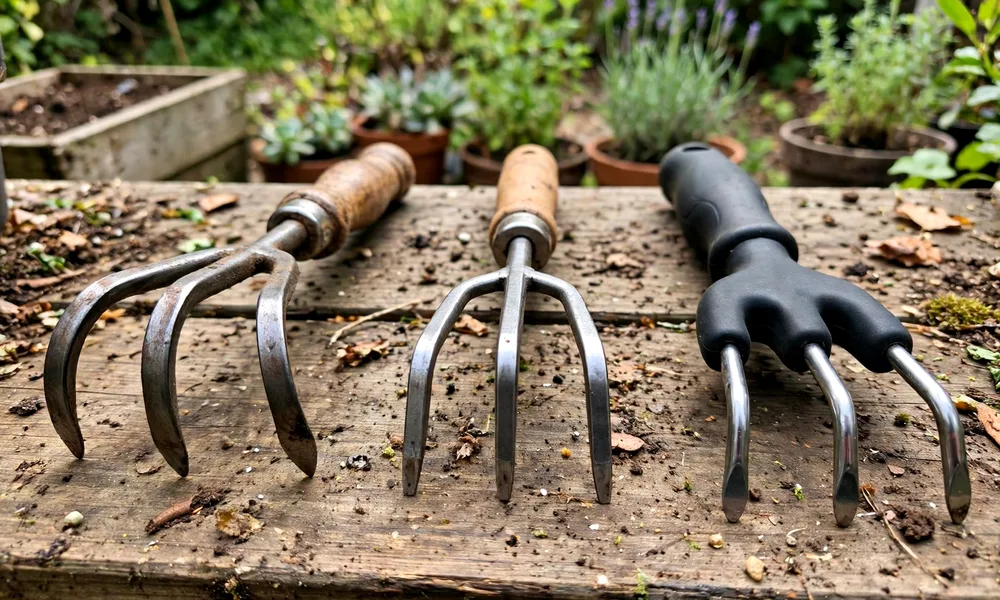
Prong count is the first number to look at. Three prongs mean a cultivator: thick, curved, made for soil. Some cheap models have four or five thin prongs, and they are really small rakes wearing a cultivator’s name: the thin prongs bend on twigs, snap in stony soil, and cannot hook a weed out by the root.
Material decides how long the prongs last. Forged steel is the best choice: strong, springy, and it holds its curve after bending. Stainless steel resists rust but is harder to bend back once bent. Aluminium prongs are light and never rust, but they bend on the first stone. Thin plastic prongs are the worst choice: they bend on the first dry crust and snap within a season.
Check the fixing, because that is where cultivators fail. The head should be riveted or bolted to the handle, or forged in one piece with it, not simply pushed on or glued. A loose head fails suddenly: one hard pull on a rooted weed and the head comes off in the soil. One-piece forged cultivators, where head and shank are the same metal, have no joint to fail at all.
Prong shape decides the job. Curved prongs hook and lift, which suits weeding and loosening. Straight prongs stir and mix, which suits feeding. The points should be sharp enough to pierce a dry crust but not so sharp they spear every root they meet.
Handles and Grip
The handle decides whether a hand cultivator feels good after twenty minutes, and that matters more than the steel. Wooden handles are the classic choice: warm, easy to grip, and they absorb shock. Plastic handles are lighter and do not rot, but they can feel slippery when wet and crack in cold weather.
The handle must fit a gloved hand. A hand cultivator is used kneeling, close to the soil, so a handle that is too thin slips and one that is too thick tires your grip. A slightly flattened handle is easier to hold than a round one, because it does not twist in your hand as you drag.
Length is a real choice, not a detail. A short handle, 12 to 15 centimetres, gives the most control in pots and tight gaps. A longer handle, 18 to 20 centimetres, gives more leverage in beds and suits bigger hands.
How to Use a Hand Cultivator Well
Good technique matters as much as good hardware, and most poor results come from pressing too hard. Push the prongs into the soil at a low angle, drag them towards you in short strokes, and let the curve do the work. On a dry crust, work after watering or rain, when the top of the soil is damp enough to crumble.
For weeding, slide the prongs under the weed at the base of the stem, hook the root, and lift gently. The aim is to bring the whole root out, not to snap the stem off at the surface, because a snapped weed grows back within days while a lifted one does not.
For feeding, sprinkle compost or granular fertiliser on the surface, then drag the cultivator through it in short strokes to mix it into the top few centimetres. Do not turn the soil over: the point is to feed the roots near the surface without disturbing them.
For pots, use the narrow cultivator and work in small circles, breaking the crust that forms on potting mix after watering. A crusted pot sheds water off the surface instead of letting it soak in, so loosening it is the difference between a plant that drinks and one that dries out.

Looking After a Hand Cultivator
A hand cultivator stays good only if you look after it. Knock the soil off after use, wipe the prongs dry, and store it where nothing can bend them. A thin wipe of oil keeps rust off.
Sharpen the prongs once a season with a file, taking the same number of strokes on each prong so they stay even. A sharp prong pierces a dry crust with far less effort than a blunt one, and it hooks weeds cleanly instead of pushing them aside.
Before You Buy Checklist
- Match the cultivator to the job: curved claw for weeding and loosening, straight prongs for mixing, narrow head for pots, ergonomic grip for sore hands.
- Check the prongs: three thick forged prongs, evenly spaced, curved, with points you cannot flex with your thumb.
- Check the fixing: head riveted, bolted or forged in one piece, never glued or simply pushed on.
- Hold the handle: it should fit a gloved hand, not twist as you drag, and feel balanced rather than head-heavy.
- Look at the length: short for pots and tight gaps, longer for beds and bigger hands.
- Weigh it: solid enough that the prongs do the work, light enough to use for half an hour without stopping.
Frequently Asked Questions
What is the difference between a hand cultivator and a hand rake?
A hand rake gathers leaves and debris with a fan of thin tines pulled across a surface. A hand cultivator digs and loosens with three thick, curved prongs that work into the top few centimetres of soil and hook weeds out by the root.
What is the difference between a hand cultivator and a garden fork?
A garden fork is a long-handled digging tool with four square tines that turns whole beds deep under your boot. A hand cultivator is a short-handled claw that works only the top few centimetres around plants that are already growing.
Can a hand cultivator replace a trowel?
No. A trowel scoops holes and moves soil, which a cultivator cannot do, and a cultivator loosens soil in place, which a trowel does poorly. You need both: the trowel when you plant, the cultivator when you weed and feed.
How many prongs should a hand cultivator have?
Three is the standard. Three thick prongs take the full force of your hand without spreading it thin. Models with four or five thin prongs are really small rakes: they bend on twigs and cannot hook a weed out by the root.
Is a hand cultivator good for weeding?
Yes, it is the best hand tool for it in beds and borders. Slide the curved prongs under the weed, hook the root and lift gently, and the whole plant comes out instead of snapping off at the surface.
How do I stop my hand cultivator from rusting?
Knock the soil off after use, wipe the prongs dry, and give them a thin wipe of oil before storing. Keep it hung up in a dry shed or toolbox, never loose in damp soil.
The Bottom Line
Buy a hand cultivator with three thick, curved, forged prongs, a head riveted or forged in one piece, and a handle that fits your gloved hand, and use it in short, gentle drags on damp soil to loosen the crust, mix in compost and lift weeds out by the root.