
How to Choose Garden Forks That Dig Without Bending in 2026
The best garden forks turn heavy soil without bending, snapping or wearing out your back. A good garden fork drives its tines into clay, lifts a root ball whole, and turns a compost heap in minutes, while a cheap one bends at the socket on the first stone. The difference is rarely the price. It is the steel, the socket, the tine shape and whether the fork matches the job.
This guide sorts the main kinds of garden fork and helps you pick the right one for digging beds, lifting root crops and turning compost in 2026. One distinction matters before you buy. A garden fork is a long-handled digging tool with four flat, square tines that pierce and lift soil. A spade is a different tool: it has a flat blade made for cutting down into soil and lifting it out. Our guide to the best spades of 2026 covers the cutting tool in full; this guide covers the piercing and lifting one. A pitchfork is a farm tool for lifting loose hay and straw, with long, thin, round tines; it has no place digging garden soil.
Key Takeaways
- A digging fork is the best all-round garden fork: four square forged tines, a long solid socket, and a handle that fits your height.
- Square tines pierce and lift soil without cutting roots the way a spade blade does, which is why forks beat spades for lifting potatoes and dividing perennials.
- A border fork is the smaller, lighter version for raised beds and tight spaces, where a full-size fork is too big to turn.
- Forged steel tines hold their shape in stony soil; welded or stamped tines bend, and the socket fails first, so check it before you buy.
- Match the handle to your height and the job: a long handle for standing digging, a D-handle for control, and a shorter fork for beds and borders.
Garden Forks Compared
| Type | Best for | Tines | Handle | Watch out for |
|---|---|---|---|---|
| Digging fork | Turning beds, breaking clay, general digging | 4 square, forged | Long, T or D | Heavy in clay if too wide |
| Border fork | Raised beds, tight spaces, lighter work | 4 square, shorter | Shorter shaft | Too small for heavy digging |
| Lifting fork | Potatoes, root crops, dividing plants | 4 flat, slightly wider | Long, D-handle | Slow at turning wide beds |
| Compost fork | Turning heaps, moving mulch and leaves | 4 long, slightly curved | Long, T-handle | Too light for digging soil |
| Hand fork | Weeding and loosening soil close to plants | 3 short, thick | Short, one-handed | Not a digging tool at all |

What a Garden Fork Actually Is
A garden fork is a long-handled tool with a head of four tines, usually square in section, set in a solid socket at the end of a wooden, fibreglass or steel shaft. You push the tines into the ground with your boot, rock the handle back, and lift. The tines pierce the soil instead of slicing it, so clods break apart along their natural lines and roots pass between the tines uncut.
The spade comparison is the one that matters most. A spade cuts: its flat blade slices down through soil and roots alike, which is exactly what you want when edging a lawn or cutting a trench. A fork pierces and lifts: its tines slide between roots, so a perennial lifted with a fork comes out with its root ball intact while a spade would cut half of it away.
A hand fork is the small cousin, not a smaller digging fork. It has three short, thick tines and a handle you hold in one hand, and it loosens soil around plants and pulls weeds from close quarters. A hand cultivator is different again: it is the short-handled three-prong claw for weeding and loosening the top few centimetres of soil. The garden fork is the long-handled tool for deep digging; the hand cultivator is the short-handled tool for surface work. Our guide to garden tools that last more than a season puts the digging fork in context with the rest of the shed, and the same buying rules apply: forged steel, a solid socket and a handle that fits you matter far more than a brand name.
The Main Types of Garden Fork
The digging fork is the standard garden fork and the one most gardens need first. Its four square tines, usually around 28 centimetres long, drive into the ground under your boot and lift a good spadeful of soil per push. A forged head with a long, solid socket is worth every penny: the socket takes the full force of your boot and body weight, so it is where cheap forks fail first. Choose the handle length for your height, and pick ash wood when you can: strong, light, slightly springy and easy to replace.
The border fork is a digging fork scaled down: shorter tines, a shorter shaft and a lighter weight. It is the right tool for raised beds, where a full-size fork cannot turn, and for gardeners who find a standard fork too heavy. The trade-off is capacity: a border fork moves less soil per lift and struggles in heavy clay, where its shorter handle gives you less leverage.
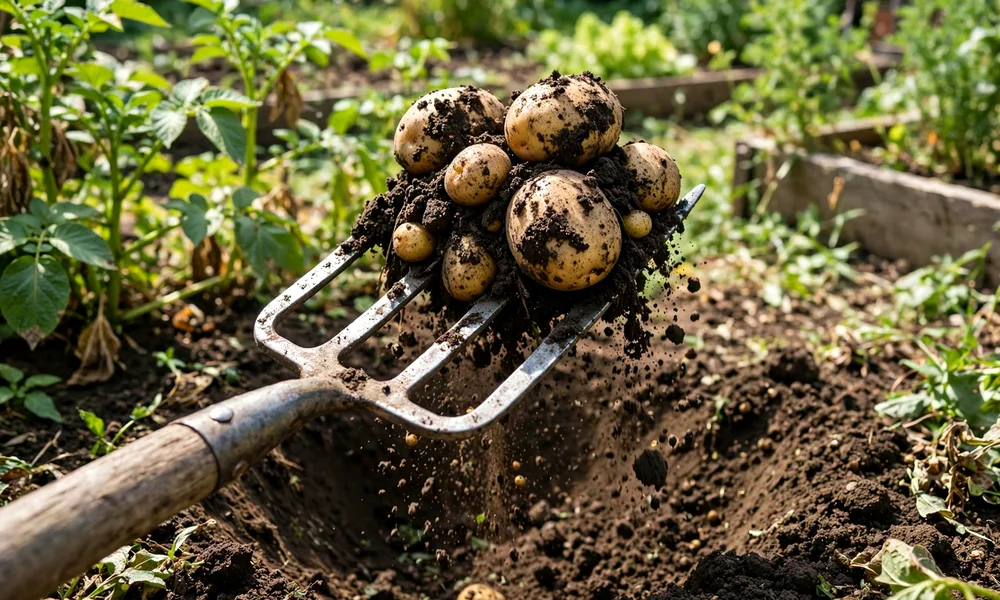
The lifting fork, sometimes called a potato fork, has flatter, slightly wider tines made for getting under root crops and lifting them without spearing them. Slide it in beside the row, lever gently, and the potatoes come up with the soil, most of them unmarked. If you grow potatoes, carrots or parsnips in any quantity, a lifting fork pays for itself in undamaged crops.

Tines, Steel and Sockets: What Makes a Fork Strong
Steel is the heart of every lasting fork. Forged steel is shaped while hot, so it is dense and strong, and forged tines hold their shape through stony soil that would fold a welded tine. Welded tines are made by joining separate pieces, and the weld is the weak point: it is where a tine bends or snaps under load. Stamped tines, cut from flat sheet, are worse still. If you can flex a tine with your thumb, put the fork back.
Tine shape decides the job. Square tines, the classic digging-fork shape, pierce compacted soil cleanly and resist bending because the square section is strong in every direction. Flat tines are better for lifting: they slide under crops and spread the load, so fewer potatoes get speared. Round tines belong on pitchforks, for loose hay and straw, not on garden forks; a round tine bends sideways in soil and has no cutting edge to part the ground.
The socket is where forks die. A long, solid socket that runs well up the shaft spreads the load from your boot and your levering across the whole joint. A short socket concentrates it in one place, and that is where the head works loose or the shaft snaps. Check it before you buy: the head should sit tight with no wobble, and the shaft should be pinned or riveted through the socket.
Handles: Wood, Fibreglass or Steel
The handle decides whether a fork feels good after an hour of digging. Ash wood is the classic choice: warm, slightly springy, and it absorbs shock instead of passing it to your wrists. A wooden handle can be replaced when it breaks. Look for straight grain running the length of the shaft; grain across the shaft is a break waiting to happen. Fibreglass handles are lighter and do not rot, but they pass more shock through. Steel handles are the strongest and the heaviest, and they tire the arms fastest.
Handle shape matters too. A T-handle gives two-handed control and suits tall gardeners in open ground. A D-handle gives a firm one-handed grip and better control in tight spaces. Hold the fork as you would use it and pick the shape that feels natural: a handle that is too long forces you to stoop, and one that is too short forces you to bend double. Our guide to garden trowels that make planting easy makes the same point about handles: a tool that hurts will not get used.
How to Dig With a Fork Without Hurting Your Back
Good technique matters as much as good hardware, and most sore backs come from levering instead of lifting. Push the tines straight down with your boot, drive them in to their full depth, then step back, pull the handle towards you in a smooth arc, and lift. Short, upright strokes beat long, bent-over ones.
Work backwards down the bed so you are always standing on undug ground, and turn the soil in rows rather than in random patches. On clay, dig when the soil is damp but not wet: bone-dry clay will not take a tine, and soaking clay doubles the weight of every lift.
Looking After a Garden Fork
A garden fork stays good only if you look after it. Knock the soil off after use, wipe the tines dry, and store it where nothing can bend them. A thin wipe of oil keeps rust off, and a fork hung on a hook keeps its edge far longer than one left leaning against a damp wall.
Before You Buy Checklist
- Match the fork to the job: digging fork for beds, border fork for raised beds, lifting fork for root crops, compost fork for heaps.
- Check the tines: four square forged tines, evenly spaced, straight, with points you cannot flex with your thumb.
- Check the socket: long and solid, no wobble, shaft pinned or riveted through it.
- Hold the handle: the length should suit your height, and the T or D shape should feel natural in your hands.
- Look at the grain: wooden shafts should have straight grain running the length, never across it.
- Lift it: a good fork feels balanced, not head-heavy, and light enough to use for an hour.
Frequently Asked Questions
What is the difference between a garden fork and a spade?
A spade has a flat blade that cuts down into soil and lifts it out, which suits edging and trenching. A garden fork has four tines that pierce and lift soil without cutting roots, which suits turning beds, lifting root crops and dividing plants.
Is a garden fork better than a spade for clay soil?
Yes, for turning and breaking clay. The tines pierce clay that a spade blade would skate across, and they break the clods apart along natural lines. For cutting a straight edge or a trench, the spade is still better.
How many tines should a garden fork have?
Four is the standard for a digging fork. Three leaves gaps that let soil fall through, and five makes the head heavy and hard to push in.
What is a border fork for?
A border fork is a smaller, lighter digging fork for raised beds and tight spaces, where a full-size fork cannot turn. It moves less soil per lift and struggles in heavy clay.
Can a garden fork lift potatoes without spearing them?
Yes, if you drive it in well outside the row and lever gently. A lifting fork with flat, slightly wider tines spears fewer tubers than a square-tined digging fork.
How do I stop my garden fork from rusting?
Knock the soil off after use, wipe the tines dry, and give them a thin wipe of oil before storing. Keep the fork hung up in a dry shed, never leaning with its tines in damp soil.
The Bottom Line
Buy a digging fork with four square forged tines, a long solid socket and a handle that fits your height, add a border fork for raised beds and a lifting fork for root crops, and dig with short upright strokes on damp, not wet, soil. Keep the tines sharp and dry, and it will serve for decades.


