What Is a Bulb Planter — and Which One Plants Bulbs at the Right Depth in 2026?
A bulb planter is a tool with one job: it cuts a clean, round hole in the soil at exactly the depth a bulb needs. If you have ever planted a hundred tulips with a trowel and ended up with half too shallow and half too deep, you already know why the tool exists. It takes the guesswork out of the most common bulb-planting mistake there is: getting the depth wrong.
This guide covers the bulb planters worth buying in 2026, from the hand-held cylinder to the long-handled step-on version and the drill attachment that plants a whole bed in an afternoon, and it draws the line between a bulb planter and the tools it gets confused with.
Key Takeaways
- Buy for the bulbs you plant: small bulbs need a narrow cylinder, tulips and daffodils a wide one with a readable depth gauge.
- Depth markings matter most: too shallow and the bulb flowers early and flops; too deep and it may never surface.
- A hand planter suits a dozen bulbs in a border; a long-handled step-on planter suits a whole lawn, because kneeling a hundred times is a job for nobody.
- A serrated edge cuts through turf cleanly, while a smooth edge skates across dry ground.
- Steel outlasts plastic by years, and a soil-release mechanism saves the most time when you plant in bulk.
Bulb Planters Compared
| Type | Best For | Depth Control | Standout Strength |
|---|---|---|---|
| Hand bulb planter | A dozen bulbs in a border | Printed depth markings | Cheap, precise, easy to carry |
| Long-handled step-on planter | Lawns and large beds | Adjustable depth stop | No kneeling, fast over big areas |
| Drill bulb auger | Hundreds of bulbs at once | Length of the auger | Fastest of all in soft soil |
| Dibber-style planter | Small bulbs and pots | Marked shaft | Lightest and simplest |
| Planter with soil release | Clay and heavy soil | Depth markings plus plunger | Soil plug pops out cleanly |
What a Bulb Planter Is, and What It Is Not
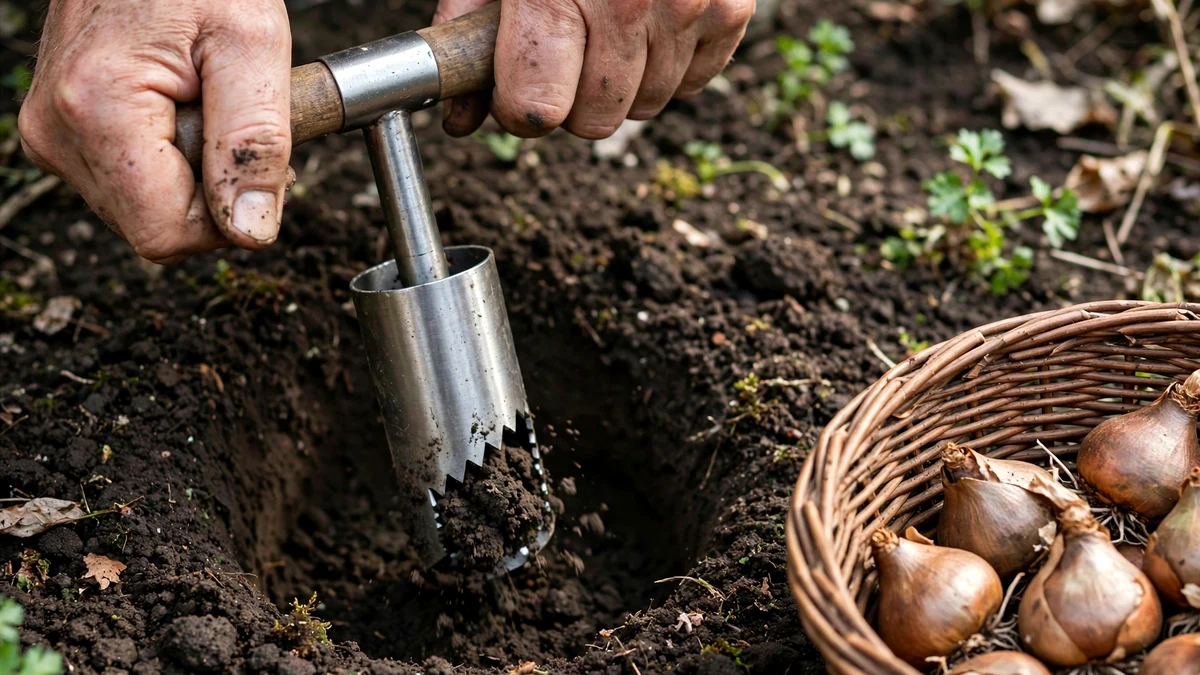
A bulb planter is a hollow steel cylinder with a cutting edge at the bottom and a handle at the top. Push it into the soil, twist, and pull out a neat plug of earth, leaving a round hole of a fixed depth. The bulb drops in, the plug goes back on top, and every hole in a bed comes out the same.
It is not a garden trowel. A trowel is a general digging tool with a flat blade that scoops and moves soil. Our guide to the best garden trowels of 2026 covers it in full. But a trowel makes a hole by scraping, so the depth varies with every dig, while a planter makes one shape of hole, at one depth, a hundred times in a row.
It is not a seed tray either. A seed tray is a shallow container where seeds germinate indoors, and our guide to the best seed trays of 2026 covers the tray alone. Seeds start life in a tray; bulbs go straight into the ground, at depth, in autumn.
And it is not a dibber, though the two look alike at a glance. A dibber is a solid pointed stick that pokes a hole by pushing soil aside, which compacts the soil around the hole. A bulb planter cuts a plug out, which leaves loose soil around the bulb. For crocus and snowdrops a dibber is fine; for tulips and daffodils, the planter wins.
The Main Types of Bulb Planter
The right type depends on how many bulbs you plant and where. Twelve tulips in a border need a different tool from five hundred daffodils across a lawn.
The Hand Bulb Planter: The Best Bulb Planter Overall
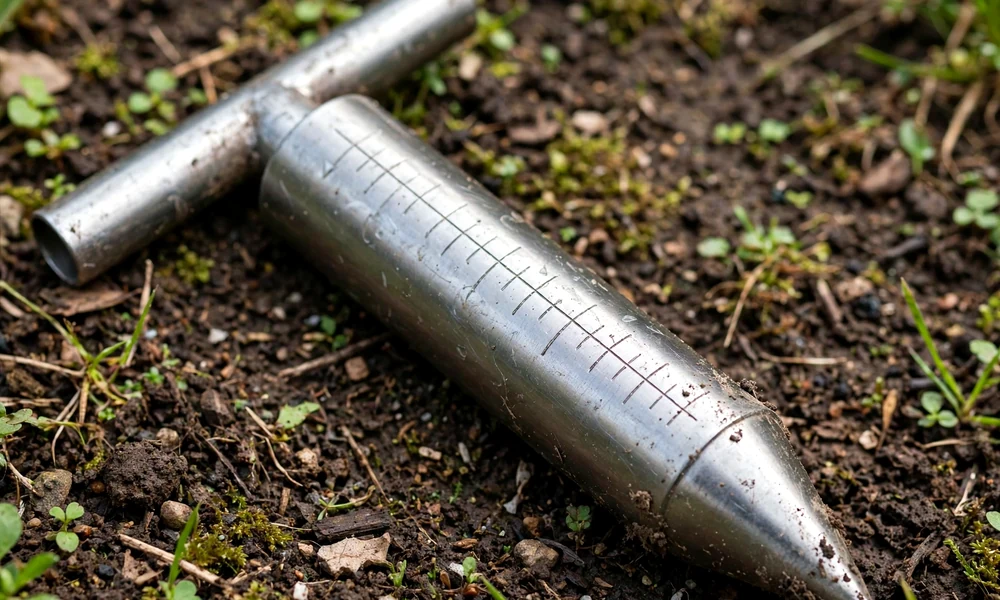
The hand bulb planter is the classic: a steel cylinder about seven centimetres across, with a T-handle, depth markings, and a serrated edge. It is the best bulb planter overall in 2026 because it does the ordinary job better than anything else. Buy one at least fifteen centimetres deep, because a shallow planter cannot reach tulip depth.
The Long-Handled Step-On Planter
The long-handled planter puts the same cylinder on a shaft of a metre or more, with a footplate you stand on. It is the planter for lawns and big beds, because it lets you plant a hundred bulbs without kneeling once. The best ones have an adjustable depth stop, so you can set ten centimetres for crocus and fifteen for tulips. In a crowded border, though, a long handle is clumsy.
The Drill Bulb Auger
A bulb auger is a spiral drill bit that fits a cordless drill, and it is the fastest way to plant a lot of bulbs in soft soil. It bores a clean hole in seconds, and a whole bed can be done in the time a hand planter takes for a dozen. It struggles in clay, where it clogs, and in stony ground, where it jams. If you plant five hundred bulbs, it pays for itself in one afternoon; if you plant fifty, it is overkill.
The Dibber-Style Planter
The dibber-style planter is a slim, pointed tool with depth marks along the shaft, made for small bulbs and pots. It suits crocus, snowdrops and muscari, where a full cylinder is wider than the bulb needs, and it is the lightest planter you can buy. It works best in soft, worked soil and worst in dry clay, where the hole closes up behind it.
The Planter With a Soil Release
Some planters add a plunger that pushes the soil plug out of the cylinder, and in heavy soil that one feature is worth more than any other. A plain cylinder in clay fills with a plug that sticks. If your soil is heavy, buy the release version; if it is light and sandy, you will never need it.
Depth: The Number That Decides Everything
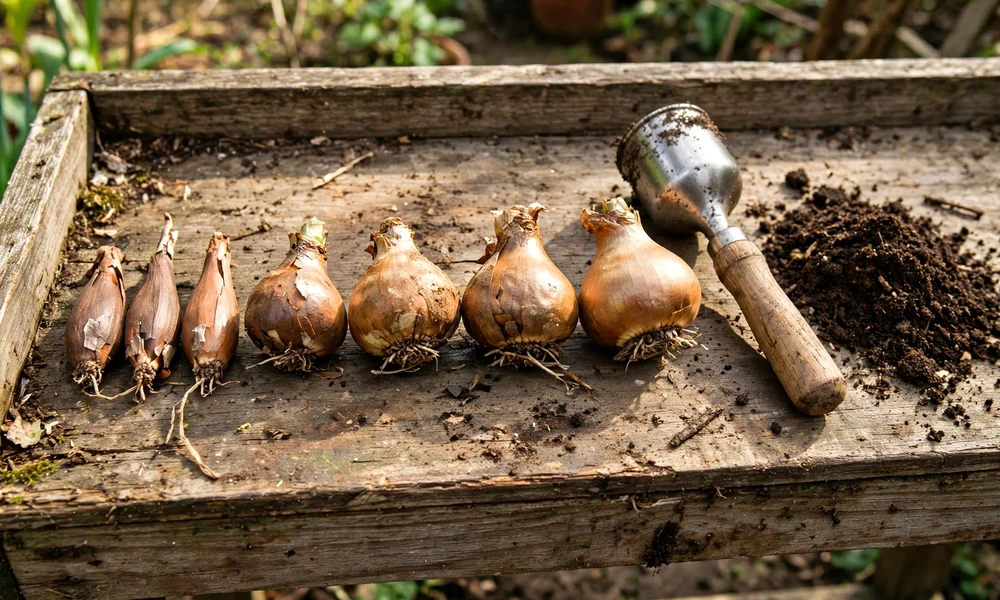
The rule most gardeners learn too late is simple: plant a bulb two to three times as deep as the bulb is tall. A tulip bulb five centimetres tall wants ten to fifteen centimetres of soil over it; a crocus two centimetres tall wants five to six. Too shallow, and the bulb freezes or gets dug up by squirrels, and the stem that emerges flops in the first wind. Too deep, and the shoot runs out of energy before it reaches the light.
This is why depth markings matter more than any other feature. Clear centimetre marks let you check every hole without a ruler, and an adjustable stop lets you set the depth once and repeat it a hundred times. Check the markings are etched into the steel, not printed on, because printed marks wear off in a single season.

Materials and Build
Steel decides how long a bulb planter lasts. A heavy-gauge stainless cylinder holds its edge, resists rust, and survives stony soil that would fold a thin stamped blade. Carbon steel cuts a keener edge but needs a wipe of oil after use. Plastic planters are light and cheap, but they flex, crack in cold weather, and cannot cut through turf; they suit soft potting compost and nothing else.
The handle matters as much as the cylinder. A T-handle lets you twist with both hands and gives the most control, while a short straight grip is harder on the wrist after fifty holes. On a long-handled planter, look for a wide footplate with a non-slip tread. Check the joint where the cylinder meets the handle: a welded or riveted joint lasts, while a glued joint works loose in the first season.
How to Use a Bulb Planter Well
Mark out the area first, and space the bulbs by the packet guidance. Push the planter straight down rather than at an angle, so the hole is vertical and the bulb sits flat. Twist as you press, lift the plug out in one motion, drop the bulb in pointy end up, and replace the plug, firming it gently. In a lawn, press the turf plug back flush so the grass recovers. Afterwards, knock the soil out of the cylinder, dry it, and hang it up, because a planter left in damp soil rusts overnight.
Bulb Planter vs Garden Trowel
A bulb planter and a garden trowel answer different questions. The trowel is the general tool: it digs, scoops, moves compost and plants seedlings. The bulb planter is the specialist: it makes one shape of hole, at one depth, over and over. If you plant a handful of bulbs a year, the trowel you own will do. If you plant fifty or more every autumn, the planter pays for itself in even flowering alone, because every bulb sits at the same depth and comes up at the same time.
After Planting: Supporting What Comes Up
A bulb planted at the right depth still needs care once it shoots. Tall tulips and heavy-headed daffodils can flop in wind and rain, and that is where a support earns its place. Our guide to the best plant supports of 2026 covers stakes, rings and hoops that hold stems upright. Put a support in while the shoots are still short.
Before You Buy: A Short Checklist
- Match the cylinder width to your bulbs: narrow for crocus and snowdrops, wide for tulips and daffodils.
- Check the depth markings are etched into the steel, not printed on, and that the cylinder reaches at least fifteen centimetres.
- Choose a serrated cutting edge if you plant through turf or rooty soil.
- Pick a T-handle for control in borders, or a long-handled step-on planter if you plant across a lawn.
- Look for a soil-release mechanism if your soil is clay or heavy.
- Check the joint between cylinder and handle is welded or riveted, and the steel is heavy enough not to flex.
Frequently Asked Questions
What size bulb planter should I buy first?
A hand planter about seven centimetres wide and fifteen centimetres deep is the best first buy. It suits tulips, daffodils and hyacinths, and it is small enough for borders and pots alike.
Can I use a bulb planter in a lawn?
Yes, and it is the best tool for the job. A serrated cylinder cuts a clean plug out of the turf, and if you press the plug back flush, the grass recovers and the hole disappears. A long-handled step-on planter is fastest for a whole lawn.
How deep should I plant tulip bulbs?
About fifteen centimetres, or roughly three times the height of the bulb. Daffodils want a similar depth, while small bulbs like crocus need only five to six centimetres.
Is a bulb planter better than a trowel for bulbs?
For depth, yes. A trowel scoops a hole of varying depth, while a planter cuts the same hole every time. For a dozen bulbs the difference is small; for fifty or more, the planter gives even flowering and a much faster job.
Can a bulb planter cut through clay soil?
A steel planter with a serrated edge and a soil-release mechanism can, but it is hard work. Wait until the soil is moist after rain, press straight down, and twist firmly. In dry clay, water the bed the day before you plant.
How do I clean a bulb planter after use?
Knock the soil out, wash in warm water, dry fully, and wipe carbon steel with a thin film of oil. Store it hanging up indoors, because a planter left in damp soil rusts even if it is stainless.
The Bottom Line
The best bulb planter in 2026 is a steel hand planter with a serrated edge, etched depth markings, and a cylinder at least fifteen centimetres deep, because it puts every bulb at the right depth with the least fuss. If you plant across a lawn, add a long-handled step-on version; if you plant in bulk, a drill auger does the same job in a fraction of the time.