
Top Dethatchers That Pull Thatch Out of Tired Lawns in 2026
A dethatcher is the machine that rescues a lawn gone spongy underfoot. Thatch is the mat of dead grass, roots, and moss that builds up between the green blades and the soil, and once it passes a centimetre thick it stops water and feed reaching the roots. The grass thins, moss moves in, and puddles sit on the surface after rain. A good dethatcher rips that mat out with spring tines or flails, leaving the lawn looking rough for a week and then thicker than it has been in years. The best dethatchers of 2026 do that job without scalping the turf, without clogging, and without wearing your arms out.
We tested dethatchers on tired family lawns, on mossy shaded plots, and on thick thatch that had built up for years. These are the dethatchers that earned their place, chosen for thatch removal, turf safety, and build that survives a season of hard ground.
Key Takeaways
- Thatch thicker than a centimetre starves the roots: water and feed cannot reach the soil through the mat.
- Powered dethatchers use spring tines or flails on a spinning reel; a manual thatch rake does the same job slowly, by hand.
- Set the depth so the tines just touch the soil: too deep scalps the turf, too shallow only combs the surface.
- Dethatch in spring or early autumn, when the grass is growing strongly enough to recover in a fortnight.
- Always rake up and remove the thatch you pull out, then overseed the bare patches while the soil is open.
Dethatchers 2026 at a Glance
| Best for | Dethatcher type | Working width | Standout strength |
|---|---|---|---|
| Best overall | Electric, spring tines | 35 cm | Even pull, light to push |
| Best petrol | Petrol, flail blades | 45 cm | Power for thick thatch |
| Best manual | Thatch rake | 40 cm | Cheap, quiet, precise |
| Best for large lawns | Electric, wide reel | 40 cm | Covers ground fast |
| Best budget | Electric, fixed depth | 30 cm | Simple, cheap, effective |
| Best for moss | Electric, scarifier reel | 35 cm | Blades cut moss out |
How We Picked the Best Dethatchers
We judged every dethatcher on what it pulled out first: one that left the thatch mat in place was out, however easy it felt, because removal is the whole job. We weighed the thatch collected from a measured patch of lawn, and we checked how much live grass came with it.
1. Best Overall: The Electric Spring-Tine Dethatcher That Pulls Evenly
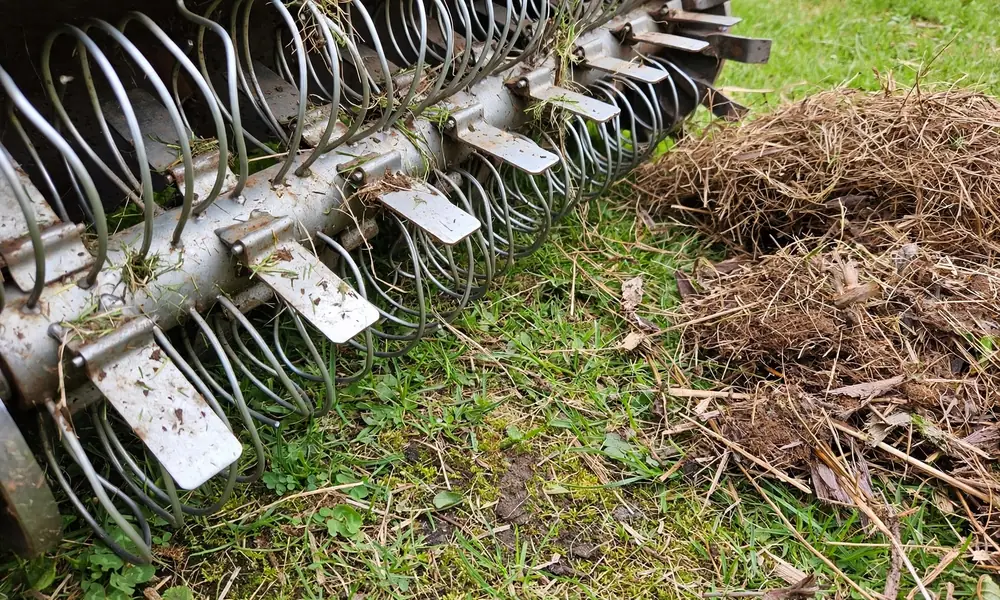
The best overall dethatcher is an electric model with a spring-tine reel, a 35-centimetre working width, and a depth dial you can set with one hand. You push it at a steady walking pace and the spinning tines comb through the turf, lifting the dead mat without tearing the living roots.
The collection box catches most of what the tines lift, so you rake up less afterwards, and the motor is strong enough to keep the reel spinning through thick thatch without stalling.
2. Best Petrol: The Flail-Blade Machine for Thick Thatch
Thatch that has built up for years needs more than spring tines: it needs flail blades, steel fingers that swing on a reel and chop through the mat. A petrol dethatcher with flail blades is the machine for that job.
The best petrol model we found has a reliable four-stroke engine, a depth lever with clear steps, and a frame that does not flex under a full collection box. The flails are replaceable, which matters because they wear, and the wheels are large enough to roll over uneven ground without digging in.
3. Best Manual: The Thatch Rake for Small Lawns
Not every lawn needs a machine. A thatch rake is a long-handled rake with sharp, curved steel blades, and it pulls dead grass and moss out of a lawn with short, firm strokes. It suits a small lawn, a patch that needs attention, or a garden where a machine cannot reach.
The best thatch rake we found has a solid ash handle, blades that hold their edge, and a head wide enough to cover ground without being so wide it is hard to control. The blades cut through the mat rather than skating over it, and the head is angled so you pull with your body weight instead of your wrists. Our guide to hand rakes covers the close-work rakes for beds and borders; a thatch rake is the lawn-sized version of the same idea.
4. Best for Large Lawns: The Wide-Reel Electric Dethatcher
A wide-reel electric dethatcher is for lawns where a 30-centimetre machine would take all afternoon. At 40 centimetres a pass, with a large collection box and a motor that holds its speed under load, it covers a big lawn in a handful of passes. The reel is driven by a motor strong enough to keep the tines biting through thick thatch, and the box is big enough that you empty it twice, not ten times.
The best wide model we found has a steel deck that does not flex, a depth dial with numbered steps, and wheels that spread the load so the machine does not rut soft turf. The handle adjusts to the user’s height, which matters on a long job, and the cable hook keeps the lead out of the reel’s path.

5. Best Budget: The Simple Electric Dethatcher
The cheapest dethatcher worth buying is a small electric model with a 30-centimetre spring-tine reel and a fixed depth, or a simple two-step adjustment. It pulls thatch out of a small or medium lawn perfectly well, weighs little enough to carry one-handed to the shed, and costs a fraction of the big machines. There is nothing electronic to fail, and the tines are cheap to replace.
What separates this one from the other budget machines is the reel: it spins true and pulls evenly, where the cheapest models vibrate and skip across the turf. The collection box fits properly and does not fall off mid-pass, and the depth is set right for most lawns out of the box.
6. Best for Moss: The Scarifier Reel That Cuts Moss Out
Moss is the other half of the thatch problem: it creeps into the mat, holds water, and smothers the grass beneath it. A scarifier reel has short steel blades instead of spring tines, and it cuts through moss and thatch together, slicing the mat into pieces the collection box can carry away. The best moss dethatcher we found is a 35-centimetre electric model with a scarifier reel fitted as standard, plus a spring-tine reel in the box for ordinary thatch.
The machine we picked has a depth dial fine enough for that careful approach, and a box that catches the moss instead of leaving it on the lawn. A lawn aerator used after scarifying opens the soil so air and feed reach the roots, and the two jobs together are the fastest way to revive a mossy lawn.
Dethatcher vs Aerator: Different Jobs, Often Confused
A dethatcher and an aerator look alike — both are push machines with a reel underneath — but they do opposite jobs, and buying the wrong one wastes a season. A dethatcher removes the mat of dead grass and moss sitting on top of the soil. Its tines or blades work in the top centimetre, combing and cutting the thatch out. An aerator opens the soil itself: it punches holes or pulls plugs out of the turf so air, water, and feed can reach the roots. Thatch removal is a surface job; aeration is a soil job.
The test is simple: push a screwdriver into the lawn. If it stops at a spongy mat, you need a dethatcher. If it sinks through the grass but the soil beneath feels hard as concrete, you need an aerator. Many tired lawns need both, in that order: dethatch first to clear the mat, then aerate so the open soil can breathe, then overseed while the ground is open.
When to Dethatch and How to Do It
Dethatch when the grass is growing strongly, so it recovers fast: spring, once the soil has warmed, or early autumn, when rain is coming. Never dethatch in midsummer, when the grass is stressed by heat, or in midwinter, when it is not growing at all.
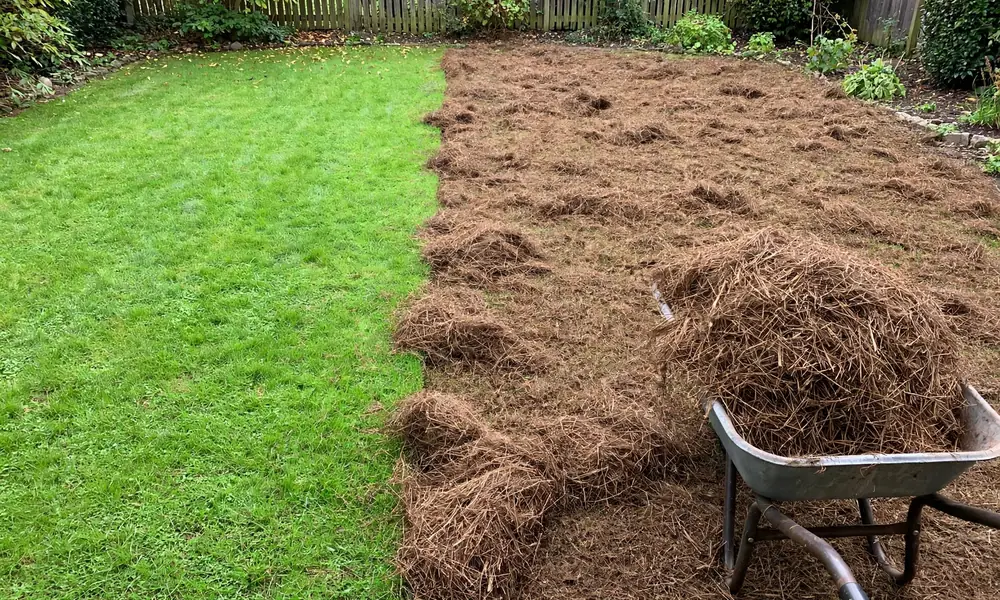
Work in straight passes, overlapping by a third, and rake up the thatch as you go: a pile left on the lawn smothers the grass beneath it. Expect the lawn to look rough afterwards — thin, pale, and patchy — and do not panic. Water it, feed it lightly, and overseed the bare patches within a week. A leaf rake is the right tool for clearing the thatch you pull out: its wide fan gathers the loose mat without digging into the turf.
Dethatcher Care: Tines, Blades, and Storage
Tines and blades wear, and a worn reel pulls nothing. Check the tines before the season starts: bent or broken tines should be replaced, not straightened, because a straightened tine snaps mid-pass. Flail blades wear shorter with use, so measure them against a new one and replace the set when they have lost a third of their length. Oil the reel bearings once a year, and keep the depth mechanism free of grit.
Clean the machine after every use: hose the deck and the collection box, then leave it in the sun to dry before it goes back in the shed.
Before You Buy: Dethatcher Checklist
- Measure your thatch first: push a screwdriver into the lawn, and dethatch only if the mat is thicker than a centimetre.
- Match the machine to the lawn: a 30-centimetre electric model suits a small garden, 35 to 40 centimetres suits a medium lawn, and only a petrol machine suits years of thick thatch.
- Check the depth dial has real numbered steps, and that it moves smoothly with one hand.
- Look for a collection box that fits properly and empties easily, so you are not raking up behind the machine.
- Make sure replacement tines or blades are sold separately, because the reel wears and a machine you cannot repair is one you throw away.
- Push it loaded in the shop: the handle should sit at hip height and the machine should track straight without pulling to one side.
Frequently Asked Questions
What is thatch, and how do I know my lawn has it?
Thatch is the mat of dead grass, roots, and moss between the green blades and the soil.
Is a dethatcher the same as an aerator?
No. A dethatcher removes the dead mat sitting on top of the soil. An aerator punches holes or pulls plugs out of the soil itself so air and water can reach the roots.
Can I dethatch with a rake instead of a machine?
Yes, with a thatch rake: a long-handled rake with sharp, curved steel blades.
When is the best time to dethatch?
Spring, once the soil has warmed, or early autumn, when rain is coming.
Will dethatching damage my lawn?
It will look rough for a week: thin, pale, and patchy. That is normal.
What should I do with all the thatch I pull out?
Rake it up and remove it: a pile left on the lawn smothers the grass beneath it.
The Bottom Line
Buy a 35-centimetre electric spring-tine dethatcher first, with a numbered depth dial and a collection box that fits properly. Dethatch in spring or early autumn, when the soil is damp, rake up everything you pull out, and overseed the bare patches within a week. A lawn cleared of thatch breathes again, and it stays thick, green, and free of moss all season.


