Top Lawn Aerators for Compacted Lawns That Need Air in 2026
A lawn aerator opens up soil that has gone hard and tired. When a lawn is walked on every day, driven over, or simply left to settle for years, the soil compacts, and air, water, and feed can no longer reach the roots. The grass thins, moss creeps in, and puddles sit on the surface after rain. A lawn aerator fixes that by punching holes or pulling small plugs out of the turf, so the roots can breathe again.A good aerator makes clean, even holes at the right depth; a bad one barely dents the surface and clogs after every step.
We tested lawn aerators on compacted family lawns, on clay soil that sets like concrete in summer, and on small town gardens. These are the best lawn aerators of 2026, chosen for hole depth, ease of use, and build that survives a season of hard ground.
Key Takeaways
- Aeration revives a compacted lawn: holes let air, water, and feed reach the roots again.
- Hollow-tine aerators pull out soil plugs and relieve compaction best; spike aerators punch holes without removing soil.
- Match the aerator to your lawn size: step-on tools suit small gardens, tow-behind models suit large lawns.
- Aerate when the soil is damp, never bone dry or waterlogged, because tines cannot enter hard, dry ground.
- Leave the soil plugs on the lawn to break down, and overseed bare patches while the holes are open.
Lawn Aerators 2026 at a Glance
| Best for | Aerator type | Hole depth | Standout strength |
|---|---|---|---|
| Best overall | Step-on hollow tine | 7 to 10 cm | Real plugs, small garden |
| Best spike | Step-on spike | 5 to 8 cm | Fast, light, no plugs to clear |
| Best tow-behind | Tow-behind hollow tine | 7 to 10 cm | Covers a large lawn quickly |
| Best aerator shoes | Strap-on spike shoes | 4 to 6 cm | Aerate while you walk |
| Best budget | Hand hollow-tine fork | 7 to 9 cm | Cheap, simple, no moving parts |
| Best for large lawns | Roller drum spike | 5 to 8 cm | Wide pass, steady rolling |
How We Picked the Best Lawn Aerators
We judged every aerator on the holes first: one that barely dented the surface was out, however easy it felt, because depth is the whole job. We tested on compacted clay, ordinary loam, and sandy soil, and measured how deep the tines went and how clean the holes were. We also checked whether the tines clogged, whether the handles bent, and whether the weight punished your arms and back after an hour of steady work.
1. Best Overall: The Step-On Hollow-Tine Aerator That Does the Real Job
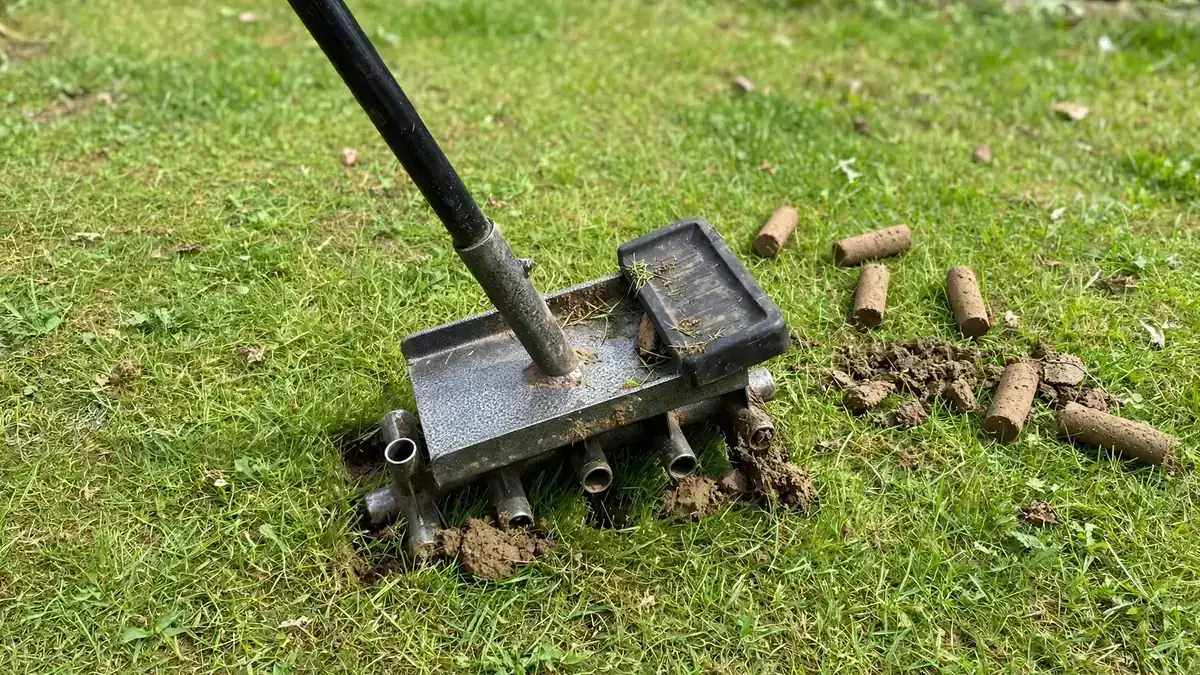
The best overall lawn aerator is a step-on hollow-tine model with four to six tines, a wide foot plate, and a long handle. You place it on the lawn, step down with your full weight, and the hollow tines pull out small plugs of soil, leaving clean holes 7 to 10 centimetres deep. That is the difference that matters: hollow tines remove soil, so the ground genuinely loosens, while spike tools only push soil aside.The foot plate takes a boot without slipping, and the handle is long enough to lift the tool without stooping. The tines eject their plugs instead of clogging, the holes come out even, and the tool survives a whole lawn without bending.
2. Best Spike: Fast Holes Without the Mess
Spike aerators do not pull plugs out; they punch holes, which means there are no soil cores to clear up afterwards.The best spike aerator we found is a step-on model with solid steel spikes, a wide foot plate, and a handle that lets you rock the tool out of the ground. It is faster than a hollow-tine tool and lighter to carry, and it suits a lawn that only needs a light annual pass rather than deep decompaction. The holes are shallower, 5 to 8 centimetres, and the soil is pushed aside rather than removed.

3. Best Tow-Behind: The Large-Lawn Workhorse
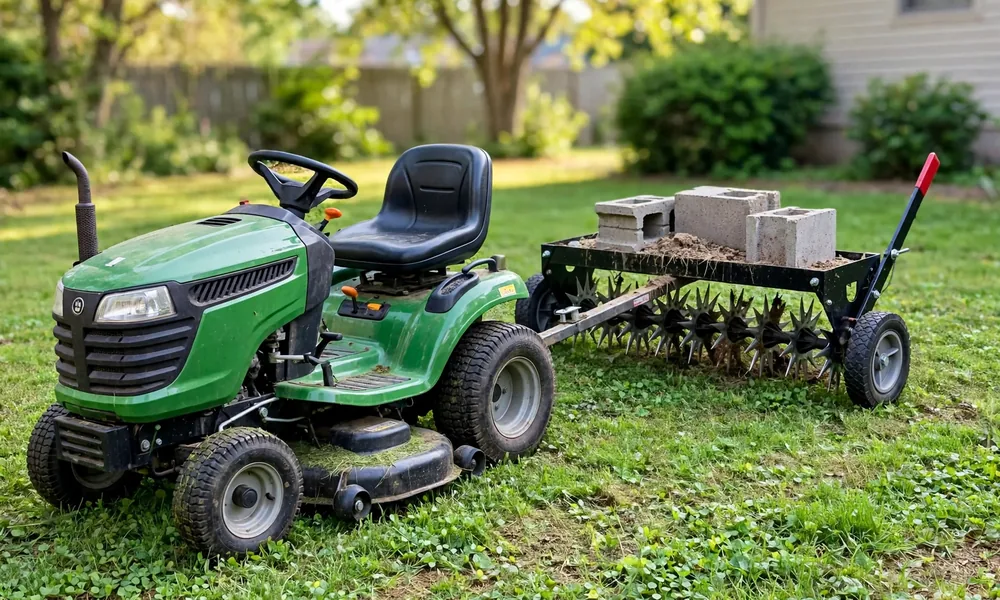
A large lawn needs a tow-behind aerator, because stepping across a thousand square metres by hand would take a whole weekend. The best tow-behind model we tested has a wide drum of hollow tines, a hitch that fits a ride-on mower or garden tractor, and a weight tray you can load with blocks to drive the tines deeper.It covers a wide pass with every run, and the holes come out even across the whole lawn. You need a tractor or ride-on to pull it, but for a big garden it is the only sensible choice. The tines are replaceable, and the drum lifts clear for transport across paths and drives.
4. Best Aerator Shoes: Strap On and Walk
Aerator shoes are spiked soles that strap onto your boots, so you aerate the lawn simply by walking across it. The best pair we found has a metal base plate, thirteen spikes per shoe, and straps that stay tight through a whole session.They are the cheapest way to aerate: put them on, walk the lawn in straight lines, and take them off. The holes are shallow, 4 to 6 centimetres, and uneven, because your weight shifts as you walk, so they suit a lawn that needs a light pass rather than deep repair. For a small lawn, they are good value.
5. Best Budget: The Hand Hollow-Tine Fork
A good budget aerator does not pretend to be a machine. It is a simple hand fork with two or three hollow tines and a T-handle, and it costs a fraction of the step-on models.The best budget option we tested pulls clean plugs 7 to 9 centimetres deep, and the tines are thick enough not to bend in clay. The compromise is speed: you work one small patch at a time, bending and lifting with every hole. For a patchy lawn or a few worn spots, it is the right buy.
6. Best for Large Lawns: The Roller Drum Spike Aerator
A roller drum aerator is a wide spiked drum you push or pull across the lawn, covering a broad strip with every pass.The best drum model we found has a fillable drum, so you can add water or sand for weight on hard ground, and spikes arranged in a spiral so the drum rolls smoothly instead of thumping. It covers ground far faster than any step-on tool, and the rolling action is easier on your back than lifting and stepping. The holes are 5 to 8 centimetres, so it suits lawns that need regular maintenance rather than deep rescue.
Hollow Tine or Spike: Which Type Do You Need?
Most lawns need a hollow-tine aerator first: hollow tines remove soil, which genuinely loosens compacted ground, and the holes stay open longer. Buy a spike aerator second, for a light annual pass on a lawn that is already in reasonable shape. A spike aerator on badly compacted clay will barely dent the surface, however hard you push, and a hollow-tine tool on a lawn that only needs a light pass is slow work for no reason. Lawn mowers keep the grass short, but they do nothing for the soil underneath; aerating is the job that fixes what mowing cannot.
When and How to Aerate
Aerate in autumn or spring, when the grass is growing strongly and can recover quickly. Autumn is best for most lawns: the soil is still warm, rain is coming, and the holes give the roots a winter to settle. Never aerate bone-dry soil, because the tines cannot enter it, and never aerate waterlogged soil, because the holes collapse. Water the lawn the day before, so the soil is damp and yielding. Work in straight, overlapping lines about 10 centimetres apart, and go over the worst patches twice. Leave the soil plugs on the lawn: they break down in a week or two and feed the turf. Overseed bare patches while the holes are open, because seed that falls into a hole germinates far better than seed scattered on the surface.

Aftercare: What to Do Once the Holes Are Open
The holes are only half the job; what you do next decides how much the lawn improves. Top-dressing is the most useful next step: brush a thin layer of sandy loam or compost across the lawn so it falls into the holes, which improves drainage and feeds the roots at depth. Water lightly after aerating if no rain is coming, and keep off the lawn for a few days so the holes do not close underfoot. Raise the cutting height for the first cut after aerating, so the grass keeps more leaf to recover with. Clear fallen leaves before you aerate, and a leaf rake is the right tool for that, because leaves left on the lawn smother the holes you have just made. Repeat the job once a year on a family lawn, and twice a year on clay soil or a lawn that takes heavy wear.
Before You Buy: Six Checks
- Check the tine depth: hollow tines should reach 7 to 10 centimetres, spikes at least 5.
- Stand on the foot plate in boots: it should take your full weight without flexing.
- Look for replaceable tines, because tines bend and wear, and a tool you cannot repair is a tool you throw away.
- Match the width to your lawn: a wide drum suits a large lawn, a narrow step-on suits a small one.
- Test the handle height: you should lift the tool without stooping.
- Check the weight when loaded: a tow-behind tray full of blocks is heavy to move by hand.
Frequently Asked Questions
How often should I aerate my lawn?
Once a year is enough for most family lawns, in autumn. Lawns on clay soil, or lawns that take heavy wear, benefit from twice a year: autumn and spring.
Is a hollow-tine aerator really better than a spike aerator?
For compacted soil, yes: hollow tines remove soil, so the ground genuinely loosens and the holes stay open. Spike aerators push soil aside, which can make compaction worse around the hole.
Can I aerate a lawn myself, or should I hire someone?
A small or medium lawn is a straightforward do-it-yourself job with a step-on aerator, taking an hour or two. A very large lawn is worth hiring a machine for.
Should I remove the soil plugs after aerating?
No. Leave them on the lawn. They break down in a week or two, return nutrients to the turf, and feed the soil life that keeps the lawn healthy. Raking them up wastes the best part of the job.
When is the best time of year to aerate?
Autumn is best for most lawns, when the soil is warm and rain is coming. Early spring is the second choice. Avoid midsummer, when the grass is stressed by heat, and midwinter, when the ground is cold and wet.
Do aerator shoes actually work?
They work as a light pass, not as a deep repair. The holes are shallow and uneven, because your weight shifts as you walk. They suit a small lawn that needs a top-up, or for use after a hollow-tine pass, but they will not rescue badly compacted clay.
The Bottom Line
Buy a step-on hollow-tine aerator first, with four to six tines, a wide foot plate, and replaceable tines. Aerate in autumn, when the soil is damp, leave the plugs where they fall, and overseed the bare patches while the holes are open. A garden tools kit that includes a good aerator will keep a lawn thick, green, and free of moss for years.