
Write Off the Worst Lawn Dethatchers of 2026: Thatch Rippers That Scalp, Skip and Stall
The worst lawn dethatchers of 2026 are not the oldest machines in the shed or the cheapest ones on the shelf. They are the dethatchers that look capable in the shop and then wear their owners down: a reel that scalps the turf instead of combing it, tines that skip across the thatch instead of biting in, a battery that dies halfway across the lawn, or blades you cannot replace when they wear out. This guide names the seven worst lawn dethatchers of 2026, ranked by type and failure pattern, so you can spot the trap before you buy and before the lawn pays for it.
Key takeaways
- Thatch thicker than a centimetre starves the roots, but the wrong dethatcher does more harm by scalping living turf.
- A dethatcher with no depth control is a gamble on every pass: too deep tears the lawn, too shallow only combs the surface.
- Flail blades and spring tines wear out, so a machine with no spare parts sold is one you throw away after one hard season.
- A dethatcher removes the dead mat on top of the soil, while an aerator opens the soil itself, and confusing the two wastes a season.
- Measure your thatch first with a screwdriver, match the machine to your lawn, and walk away from any dethatcher that hides its depth settings.
How the worst lawn dethatchers of 2026 were chosen
Every dethatcher below was scored on five measures. Thatch removal comes first: how much dead mat the machine actually pulls out of a measured patch, and how much living grass comes with it. Turf safety is second, because a dethatcher that scalps the lawn leaves bare soil that weeds colonise. Depth control is third, judged on whether the reel can be set in real numbered steps and whether it stays where you put it. Parts and support are fourth: can you buy replacement tines or blades at a sane price? Value is fifth: the real cost over three seasons, not the shop price.
This guide is strictly about dethatchers: machines and tools whose job is to rip the mat of dead grass, roots and moss out of the top centimetre of the lawn. It is not about mowers, which only cut the green blades, or aerators, which open the soil beneath the turf. The two jobs are often confused, and the best dethatchers of 2026 make the distinction clear, because a dethatcher and an aerator look alike but do opposite jobs. A lawn that needs both should be dethatched first and aerated second, never the other way round.
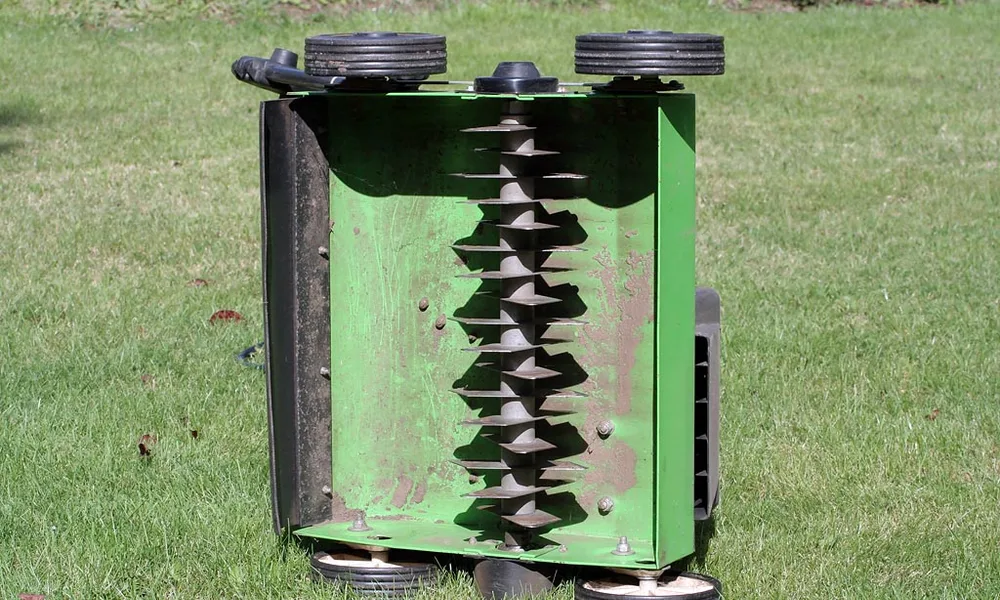
Comparison table: the worst lawn dethatchers of 2026
| Rank | Dethatcher type | Main problem | Buy instead |
|---|---|---|---|
| 1 | Fixed-depth budget electrics | Scalp the turf, no depth dial | Electric with numbered depth steps |
| 2 | Flail machines with no spares | Blades wear out, none sold | Flail model with replaceable blades |
| 3 | Tow-behind spring-tine rakes | Skip and bounce, uneven pull | Powered walk-behind dethatcher |
| 4 | One-battery cordless dethatchers | Charge dies halfway across the lawn | Corded electric or two-battery kit |
| 5 | Combination scarifier-dethatchers | One shared reel, neither job well | Separate dethatcher and scarifier reels |
| 6 | Narrow manual thatch rakes | Slow, wrist-breaking, tiny head | Wide wheeled manual scarifier |
| 7 | Oversized petrol dethatchers | Too heavy, tears small lawns | Right-sized electric for the lawn |
The worst lawn dethatchers of 2026
1. Fixed-depth budget electrics: the dethatcher to avoid first
The fixed-depth budget electric is the dethatcher to avoid first, because it fails on the one control that matters most. It has a spring-tine reel and a motor that spins it fast enough, but the depth is set at the factory and cannot be changed, or it moves in one crude lever with no numbered steps. On a lawn with thin thatch it digs too deep and scalps the turf, leaving pale strips of bare soil that take weeks to recover. On thick thatch it rides too high and only combs the surface. Buy an electric dethatcher with a numbered depth dial instead: set it so the tines just touch the soil, and test it on a small patch first.
2. Flail machines with no replacement blades: power you cannot keep
A flail-blade dethatcher is the right machine for thatch that has built up for years, because steel flails chop through a mat that spring tines only skate across. The worst of them, though, are sold as sealed units: the flails wear shorter with every season, and when they have lost a third of their length the machine pulls nothing, yet the maker sells no replacement blades, no reel and no spares at all. Owners report machines that worked for one spring and then became expensive ornaments, because a new reel costs nearly as much as a new dethatcher. Before you buy any flail machine, check that replacement blades are sold separately.

3. Tow-behind spring-tine dethatchers: the skip you cannot stop
A tow-behind dethatcher looks like a bargain: a wide frame of spring tines that hooks behind a riding mower and covers a big lawn in a handful of passes. In practice it is the hardest pattern on this list to control, because nothing holds the tines down except gravity and whatever weight you pile on the frame. Owners report tines that skip across hard ground, bounce over bumps, and dig in hard on soft patches, so the lawn comes out striped: bare in some places, untouched in others. For most gardens a powered walk-behind pulls more evenly and leaves the lawn rough for a week instead of ruined for a season.
4. One-battery cordless dethatchers: the charge runs out first
Cordless dethatchers promise freedom from the cable, and on a small lawn they deliver it. The worst of them ship with a single small battery and a reel that draws hard under load, so the charge runs out before the lawn does. Owners report machines that stall halfway across a medium lawn, then sit on the charger for an hour while the half-dethatched turf dries out in the sun. If you want cordless, buy a kit with two batteries, or buy a corded electric and keep the cable over your shoulder, working away from the socket.
5. Combination scarifier-dethatchers: one reel, two jobs, neither done well
The combination machine promises to do everything: one reel that dethatches and scarifies, one box, one price. The problem is that dethatching and scarifying are different jobs that need different tools. A dethatcher needs spring tines that comb the mat out gently, while a scarifier needs short steel blades that cut through moss. A single shared reel cannot be both, so the combination machine usually ends up as a compromise reel with stiff tines that are too harsh for dethatching and too blunt for scarifying. Buy a machine with two separate reels in the box instead, one for thatch and one for moss, and swap them for the job in hand.
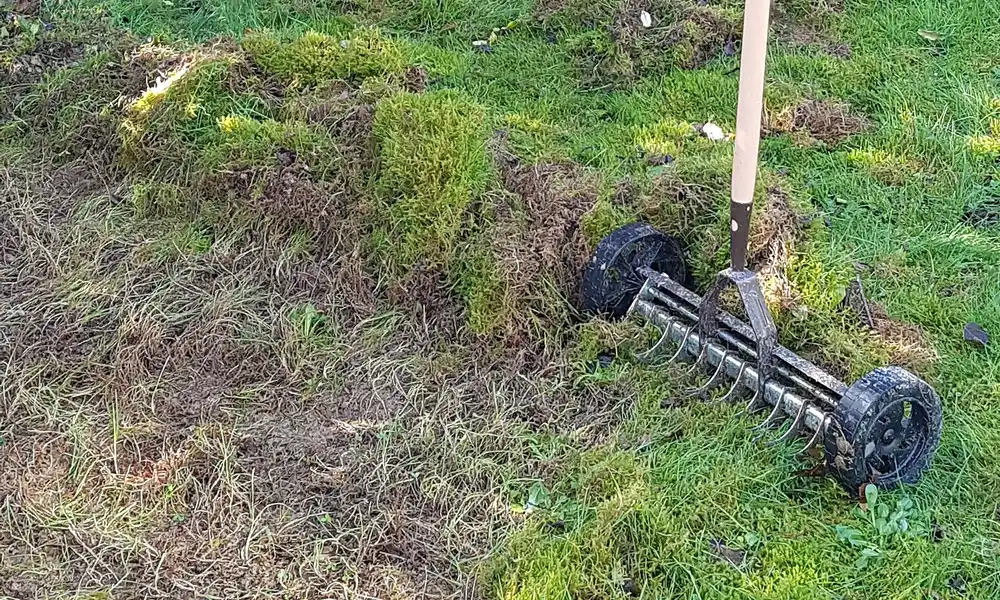
6. Narrow manual thatch rakes: slow, heavy and far too small
A thatch rake is a fine tool for a small patch or a corner a machine cannot reach, but the narrowest manual rakes are the worst way to dethatch a whole lawn. The head is barely wider than a hand span, the handle is often thin pine that flexes and then snaps, and the blades are stamped steel that dulls after one afternoon. Owners report sore wrists and a lawn still half-thatched after a full weekend, because every pass covers so little ground. If you want to dethatch by hand, buy a wide wheeled manual scarifier with a solid ash handle. It still takes effort, but the effort goes into the lawn instead of into fighting the tool.
7. Oversized petrol dethatchers: too much machine for the garden
An oversized petrol dethatcher is built for sports fields and estate lawns, and on a small suburban garden it is simply too much machine. It weighs far more than an electric model, its wide reel cannot turn in a narrow garden without crushing the edges, and its engine needs servicing, fuel and storage space that a small shed does not have. The petrol engine itself is often the weak point: hard starting after a winter in the shed, no local dealer for parts, and a carburettor that gums up if the fuel sits. Match the machine to the lawn: a 30-centimetre electric suits a small garden, 35 to 40 centimetres suits a medium lawn, and only a petrol machine suits thick thatch on a large plot.
What to buy instead of the worst lawn dethatchers
The pattern across this list is simple: buy the dethatcher with real depth control, replaceable tines or blades, and a size matched to your lawn, not the cheapest price on the shelf. A 35-centimetre electric spring-tine model with a numbered depth dial will dethatch a medium lawn well for years, and it costs less over three seasons than a cheap fixed-depth machine plus the lawn repair. The same traps catch other yard machines too: our guide to the worst lawn mowers of 2026 shows how thin dealer networks and weak support turn a small fault into a long stoppage. Once the thatch is out, an aerator opens the soil so air and feed reach the roots, and our guide to the best lawn aerators of 2026 explains which aerator suits a compacted lawn.
Checklist: buying a lawn dethatcher in 2026
- Measure your thatch first: push a screwdriver into the lawn, and dethatch only if the mat is thicker than a centimetre.
- Check the depth dial has real numbered steps, moves smoothly with one hand, and stays where you set it mid-pass.
- Make sure replacement tines or flail blades are sold separately, because the reel wears and a machine you cannot repair is one you throw away.
- Match the machine to the lawn: a 30-centimetre electric suits a small garden, 35 to 40 centimetres suits a medium lawn, and only a petrol machine suits years of thick thatch.
- Look for a collection box that fits properly and empties easily, so you are not raking up behind the machine.
- Push it loaded in the shop: the handle should sit at hip height and the machine should track straight without pulling to one side.
Frequently asked questions
What is the worst lawn dethatcher to buy in 2026?
The fixed-depth budget electric is the one to avoid first: with no depth control it scalps thin lawns and only combs thick ones.
Is a dethatcher the same as an aerator?
No. A dethatcher removes the dead mat on top of the soil, while an aerator opens the soil itself so air and water reach the roots. Many tired lawns need both, in that order.
Can I dethatch with a rake instead of a machine?
Yes, with a wide thatch rake or a wheeled manual scarifier, but only on a small lawn or a patch.
When is the best time to dethatch?
Spring, once the soil has warmed, or early autumn, when rain is coming. Never dethatch in midsummer, when the grass is stressed by heat, or in midwinter, when it is not growing at all.
Will dethatching damage my lawn?
It will look rough for a week: thin, pale and patchy. That is normal, and the lawn recovers thicker within a fortnight if you water, feed lightly and overseed the bare patches.
What should I do with all the thatch I pull out?
Rake it up and remove it. A pile left on the lawn smothers the grass beneath it.
Bottom line
The worst lawn dethatchers of 2026 fail on control, not on power: no depth dial, no spare blades, a battery that quits halfway, or a reel that does two jobs badly instead of one well. Buy a right-sized electric with numbered depth steps and replaceable tines, dethatch in spring or early autumn, and rake up everything you pull out.


