
The best fire starters in 2026 are the difference between a campfire that catches on the first strike and a cold evening spent crouching over damp kindling. A good fire starter lights fast, burns long enough to catch real wood, and keeps working when the wind picks up or the rain starts. A bad one fizzles out in seconds and sends everyone back to the tent early. This guide compares the main types, from ferro rods and fatwood to wax cubes and electric lighters, and explains which one fits the way you camp.
Key Takeaways
- Ferro rods are the most reliable starter in wet and windy weather, and they never run out of fuel.
- Fatwood and wax cubes give the longest burn time, which matters more than a big flame.
- Match the starter to your trip: hikers want a ferro rod, car campers can carry cubes and kindling.
- A fire starter is not a charcoal starter: fire starters light campfires, charcoal starters light grill charcoal.
- Always carry two ways to make fire, and practise with them at home first.
Fire Starters vs Charcoal Starters: Know the Difference
Fire starters and charcoal starters do different jobs. A fire starter lights a campfire or a fireplace: it catches tinder and kindling and builds a wood fire from nothing. A charcoal starter, such as a chimney starter, is built to light charcoal briquettes for a grill. The two are not interchangeable: a wax cube lights a campfire beautifully but struggles with a chimney of charcoal, and a charcoal chimney is useless on a forest trail. If your evenings revolve around a grill, read our guide to the best charcoal grills instead. If your evenings revolve around a fire ring or a fireplace, this guide is the one you need. The wrong tool wastes time and fuel: a campfire needs a long, steady flame that climbs from tinder to kindling to logs, while a grill needs intense, even heat across a bed of coals. Choose the tool that matches the fire you are building.
What Makes a Great Fire Starter
A great fire starter does one simple thing extremely well: it turns a spark or a small flame into a fire that keeps going. Everything else is a trade-off between weight, weather resistance, burn time, and ease of use.
Reliability in Bad Weather
Wind and rain are the real tests. A lighter that works in a calm kitchen can fail on a windy ridge, and matches are useless once damp. Ferro rods throw sparks at around 3,000 degrees and work when soaking wet, which is why they are the default for bushcraft kits. Wax cubes and fatwood also shrug off rain. In changeable weather, reliability should outrank convenience every time.
Burn Time Beats Flame Size
A dramatic two-second flare looks impressive and achieves nothing. What catches a fire is sustained heat: a flame that lasts long enough to dry out kindling and ignite it. The best fire starters burn for five to fifteen minutes, enough time to feed in twigs and build up to real logs. Short-burning starters force you to rush, and rushing is how fires die.
Weight and Packability
For backpackers, every gram counts. A ferro rod weighs less than a matchbox, and a handful of fatwood shavings weighs almost nothing. Car campers can pack a full kit instead. The right weight is the weight you will actually carry: a heavy kit left in the car is worth less than a light one in your pocket.
Ease of Use
Some fire starters demand skill. A ferro rod needs the right angle, the right pressure, and dry tinder prepared in advance. Wax cubes and electric lighters ask almost nothing: strike, place, and wait. If you are new to campfires, start with the easy options and learn the rod as a backup.
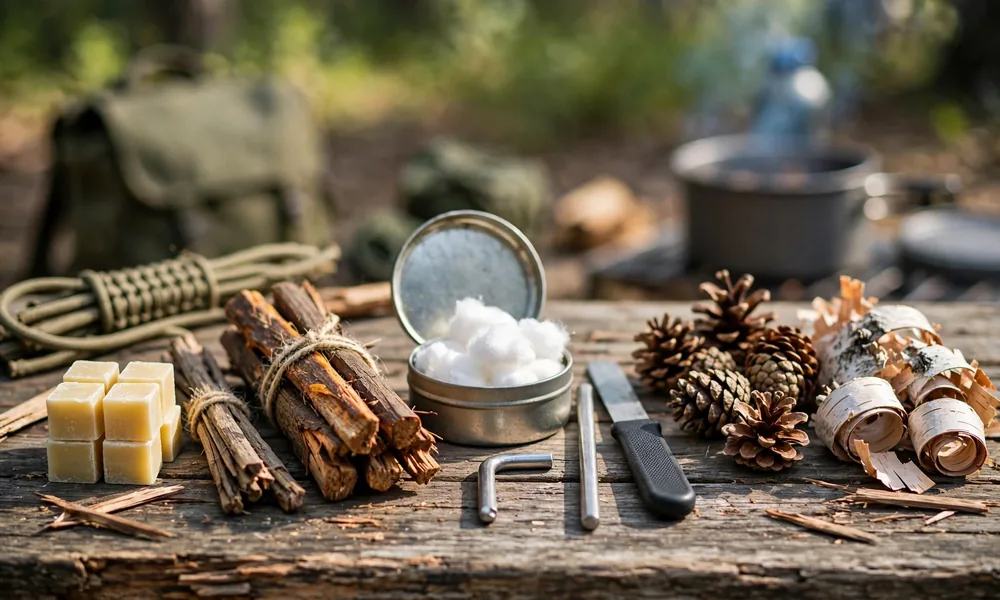
The Best Fire Starters 2026 at a Glance
| Fire Starter | Type | Burn Time | Weight | Best For |
|---|---|---|---|---|
| TrailSpark Ferro Rod | Ferro rod | Unlimited strikes | 45 g | All-weather reliability |
| EmberFat Pine Sticks | Fatwood | 8–10 min | 30 g each | Wet-weather fires |
| KindleCube Wax Cubes | Wax cube | 10–12 min | 25 g each | Beginners and families |
| StormFlame Plasma Lighter | Electric arc | Rechargeable | 60 g | Windy campsites |
| BirchBark Bundle | Natural tinder | 3–5 min | 20 g | Ultralight hikers |
| CottonFire Pods | Cotton and wax | 5–6 min | 12 g each | Emergency kits |
| FireRope Tinder Cord | Tinder cord | 5 min per cut | 40 g | Wet tinder backup |
| FlintStone Kit | Flint and steel | Unlimited strikes | 90 g | Bushcraft purists |
| QuickLight Gel Packets | Fire gel | 6–8 min | 35 g each | Fireplaces at home |
The 9 Best Fire Starters 2026
1. TrailSpark Ferro Rod — Best Overall
The TrailSpark is the fire starter we would hand to almost any camper. It throws a shower of hot sparks with one firm scrape, works when soaking wet, and lasts for thousands of strikes, so it effectively never runs out. At 45 grams it disappears into a pocket, and the handle is large enough to grip with cold hands. It takes a little practice, so learn the scraping angle at home first.
2. EmberFat Pine Sticks — Best for Wet Weather
Fatwood is pine heartwood soaked in natural resin, and it is the closest thing to a cheat code for wet fires. A single EmberFat stick catches from one spark and burns hot for eight to ten minutes, even when the wood around it is damp. Shave a few curls off the stick for tinder, light the shavings, and let the stick itself catch. A small bundle lasts a whole season of weekends.
3. KindleCube Wax Cubes — Best for Beginners
If you have never lit a campfire before, start here. KindleCube wax cubes light with a single match or lighter, burn for ten to twelve minutes, and need no skill at all: place one under a small teepee of kindling and wait. They are clean to handle, do not leak in a pack, and work in a fireplace just as well as at a campsite.
4. StormFlame Plasma Lighter — Best for Wind
The StormFlame replaces a flame with an electric arc that wind simply cannot blow out. It lights tinder in seconds, recharges from any USB port, and works at altitude where gas lighters struggle. It needs dry tinder to catch, so it is not a replacement for a ferro rod in truly wet conditions, but on a windy evening it is the fastest way to get a fire going.
5. BirchBark Bundle — Best Ultralight Option
Birch bark is nature’s own fire starter: it catches from a spark, burns hot even when damp, and weighs almost nothing. A bundle of bark strips is the lightest option in this guide and the cheapest, since you can gather it yourself where that is legal. Its weakness is burn time, so have your kindling ready and your fire laid before you strike.
6. CottonFire Pods — Best for Emergency Kits
CottonFire pods are cotton balls soaked in wax, pressed into discs that fit in a tin the size of a coin purse. Each pod burns for five to six minutes, weighs just 12 grams, and stays waterproof for years on the shelf. Every emergency kit and glovebox should have a tin. They are a backup rather than a primary starter, but they are the backup that saves the trip.
7. FireRope Tinder Cord — Best Wet-Tinder Backup
FireRope is a waxed cord you cut into short lengths, fluff up, and light. Each cut burns for around five minutes, and the cord stays dry inside its coating even in heavy rain. It doubles as useful cordage in camp, which earns it a place in a bushcraft kit. It costs more per fire than fatwood or cubes, so most campers carry it as a second option.
8. FlintStone Kit — Best for Bushcraft
Flint and steel is the oldest way to make fire in this guide, and the most satisfying. A sharp strike throws a spark onto char cloth or prepared tinder, and from there the fire grows. The kit weighs 90 grams, needs no fuel, and works indefinitely. It demands the most skill, so expect an afternoon of practice before you trust it on a trip.
9. QuickLight Gel Packets — Best for Fireplaces
QuickLight gel is a thick, slow-burning fuel in single-use packets. Squeeze it onto logs in a fireplace or a fire pit, light it, and it burns for six to eight minutes with almost no smoke or smell. It is the cleanest option in this guide and the easiest to use indoors. For evenings at home around the best fire pits, it is the simplest way to get going.
How to Light a Campfire with a Fire Starter
Lay your fire before you light it: a small teepee of dry twigs over a nest of tinder, with larger kindling leaning against it and logs waiting nearby. Place the fire starter in the centre of the tinder nest, not on top of it. Light it, then feed the flame gently, adding twigs a few at a time and letting each layer catch. The most common mistake is smothering a young fire with logs that are too big, too soon. Keep water or sand nearby, never leave a fire unattended, and drown the embers when you are done.

Common Fire Starter Mistakes
The first mistake is buying one fire starter and trusting it completely. Lighters run out, matches get wet, and ferro rods need tinder you forgot to prepare, so carry two different types. The second mistake is lighting a fire with no plan for the next layer: a starter that burns for five minutes is useless if your kindling is damp and your logs are green, so gather all your fuel before you strike. Finally, never use petrol or lighter fluid to start a campfire. It is dangerous, it ruins the smell of the evening, and it is banned on many campsites.
Fire Starter Checklist
- Carry two different fire starters, not just one.
- Prepare dry tinder and kindling before you strike.
- Match the starter to the weather: ferro rod or fatwood when wet.
- Keep starters dry in a sealed bag or tin.
- Practise with a ferro rod at home before you rely on it outdoors.
- Pack a way to put the fire out: water or sand.
Frequently Asked Questions
What is the best fire starter for beginners?
Wax cubes are the easiest place to start. They light with a match, burn for ten minutes, and need no technique, which makes them ideal for family camping and first campfires.
Do fire starters work in the rain?
The best ones do. Ferro rods, fatwood, and wax-based starters all work when wet, because the spark is hot and the fuel repels water. Matches and untreated paper do not.
What is the difference between a fire starter and a charcoal starter?
A fire starter lights wood fires in campfires and fireplaces. A charcoal starter lights charcoal briquettes for grilling.
How long should a fire starter burn?
Five minutes is the minimum, and eight to twelve minutes is ideal: long enough to dry out kindling and get a fire established without rushing.
Can I use a fire starter on a camping stove?
You should not need to: camping stoves have their own ignition, and fire starters are designed for open wood fires. Keep them for the fire ring.
Are fire starters safe to pack in a bag?
Yes, if you store them sensibly. Keep lighters away from heat, keep gel packets sealed, and keep ferro rods in a sheath. Never pack loose matches next to anything that could strike them.
The Bottom Line
The best fire starters in 2026 make a campfire simple: a ferro rod for reliability, fatwood for wet weather, wax cubes for easy evenings. Pick the one that matches how you camp, carry a backup, and practise before you need it.


