French Dressing That Balances Sweet and Tangy in 2026
The best French dressing in 2026 is the bottle that balances sweet and tangy so neither side wins by too much. A good French dressing is orange-pink and creamy, with a tomato sweetness at the front, a vinegar tang close behind, and a gentle paprika warmth in the finish, so every spoonful tastes bright and lively rather than syrupy. This guide explains what French dressing actually is, how the main styles differ, and how to read a label so you can tell a proper balanced dressing from a sugar bottle before you buy it.
Key takeaways
- Balance is the test: if the dressing tastes sweet first and tangy never, the sugar has beaten the vinegar, and the bottle is not really French dressing.
- Tomato is the colour and the sweetness: ketchup or tomato paste should come early on the label, not sugar and water.
- Creamy dressings suit wedge salads and dipping, while thinner vinaigrette-style versions suit pouring over mixed leaves and grain bowls.
- A short ingredient list is the best sign of quality: oil, vinegar, tomato, sugar and paprika should come before water and stabilisers.
- Once opened, French dressing belongs in the fridge and should be finished within a month.
What French dressing actually is
French dressing is a sweet, tangy, tomato-coloured salad dressing built on oil and vinegar, with ketchup or tomato paste for colour and sweetness, sugar to round the edges, and paprika, onion and garlic for warmth. The flavour is a three-way balance. The tomato brings sweetness and colour, the vinegar brings brightness and lift, and the oil brings body and richness, smoothing the sharpness of the acid so the dressing coats leaves instead of stinging them. Paprika adds a gentle warmth and deepens the colour, while onion and garlic give it a savoury backbone that keeps it from tasting like a dessert sauce.
The base matters almost as much as the balance. A creamy French dressing blends the oil and tomato into a smooth, opaque emulsion, and it is thick enough to cling to a wedge salad and to coat a spoon. A vinaigrette-style French dressing is thinner and clearer, with the oil and vinegar separating in the bottle until you shake it, and it pours more easily over mixed leaves. The best dressings use a real oil, a real vinegar and real tomato, and they keep the sugar in second place, so the tang is always there to answer the sweetness.
Comparison table: the best French dressings of 2026
| Rank | Style | Texture | Best for |
|---|---|---|---|
| 1 | Classic creamy | Thick, smooth | Wedge salads, dipping, chef salads |
| 2 | Light vinaigrette-style | Thin, pourable | Mixed salads, drizzling, grain bowls |
| 3 | Sweet and smoky | Creamy, warm | Grilled chicken, burgers, taco salads |
| 4 | Low-sugar | Thinner, tangier | Everyday salads, when you want less sugar |
| 5 | Catalina-style | Bold, tomato-led | Taco salads, nachos, dipping |
| 6 | Homemade shaken style | Fresh, bright | Full control, freshest tang |
The best French dressings of 2026
1. Classic creamy: the real thing
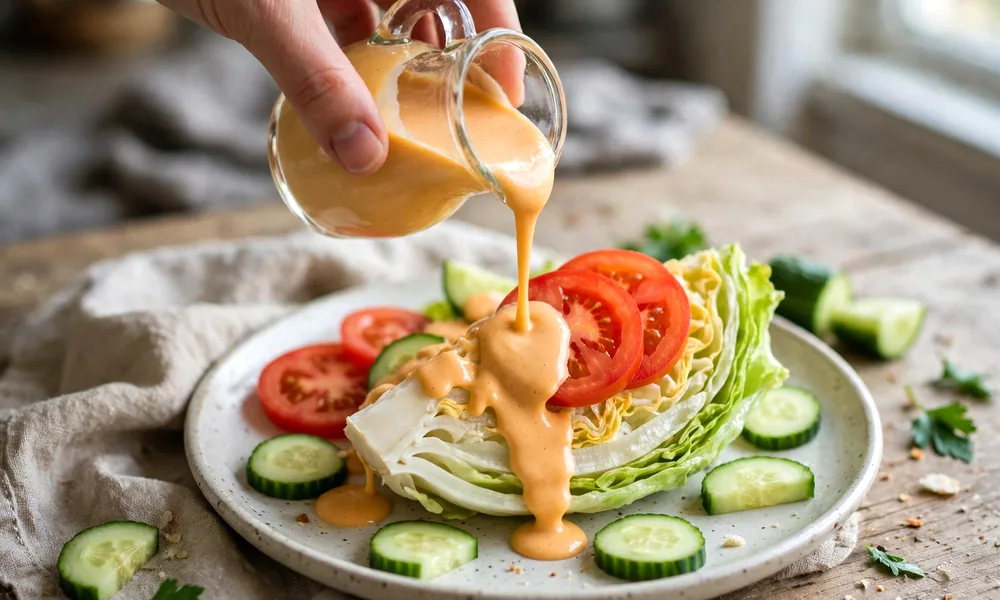
Classic creamy French dressing is the style against which all the others are judged. It is thick enough to coat a wedge salad without sliding off, and it is a warm orange-pink that comes from tomato rather than colouring. The flavour is sweet at the front and tangy close behind, with a gentle paprika warmth in the finish, and the texture is half the pleasure: the creamy base carries the dressing, and the tomato gives every spoonful a fruity depth.
2. Light vinaigrette-style: the salad dressing
Light French dressing thins the classic recipe so it pours easily, coats mixed leaves evenly, and drizzles well over a grain bowl or a plate of grilled chicken. The flavour is brighter and sharper than the classic style, because the vinegar is spread through a thinner base rather than softened by a thick emulsion, but a good light dressing still tastes clearly of tomato and paprika, with a sweetness that rounds the edges rather than dominating them.
3. Sweet and smoky: the bold bottle
Sweet and smoky French dressing adds smoked paprika and a little more sugar to the classic recipe, which makes it warmer, deeper and more savoury. The smokiness softens the sweetness and gives the dressing a barbecue-like warmth that suits grilled food, so it tastes at home on a burger, a taco salad or a plate of grilled chicken. The trap is a bottle that uses liquid smoke flavouring rather than real smoked paprika, which tastes harsh and artificial, so check that paprika appears early on the label.
4. Low-sugar: the everyday bottle
Low-sugar French dressings cut the sugar back and let the vinegar and tomato do more of the work, which makes them tangier, lighter and less cloying. The best ones still taste clearly of French dressing, because the tomato brings its own sweetness and the paprika brings warmth, so the dressing tastes balanced rather than sour. The worst ones taste sharp and thin, with the vinegar standing out because the sugar has been removed without anything replacing it.
5. Catalina-style: bold and tomato-led
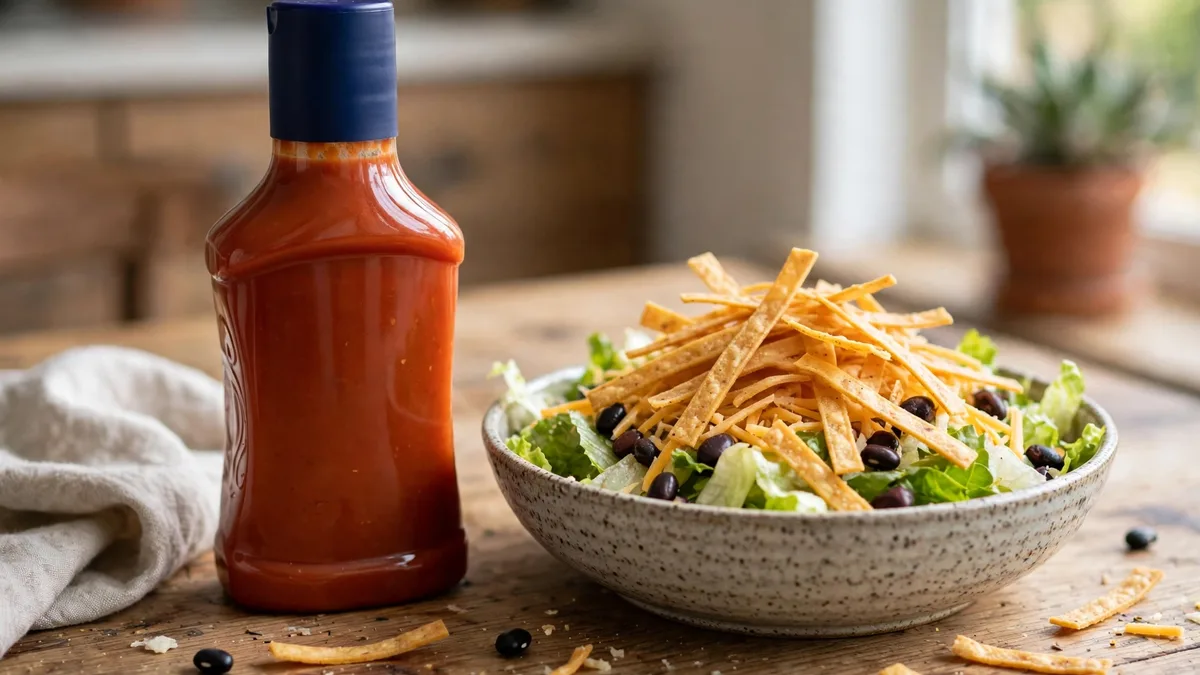
Catalina-style dressing is French dressing’s bolder cousin, with more tomato, more sweetness and a brighter red colour, and it is the style most people reach for on a taco salad. It tastes fruitier and more tomato-led than classic French dressing, with a sweetness that suits spicy food, and it clings well to crunchy tortilla strips, beans and cheese. Our guide to choosing a Thousand Island dressing covers the other sweet, creamy dressing it is most often confused with: Thousand Island is pinker, chunkier and pickle-led, while French is smoother, tomato-led and paprika-warm.
6. Homemade shaken style: the freshest bottle
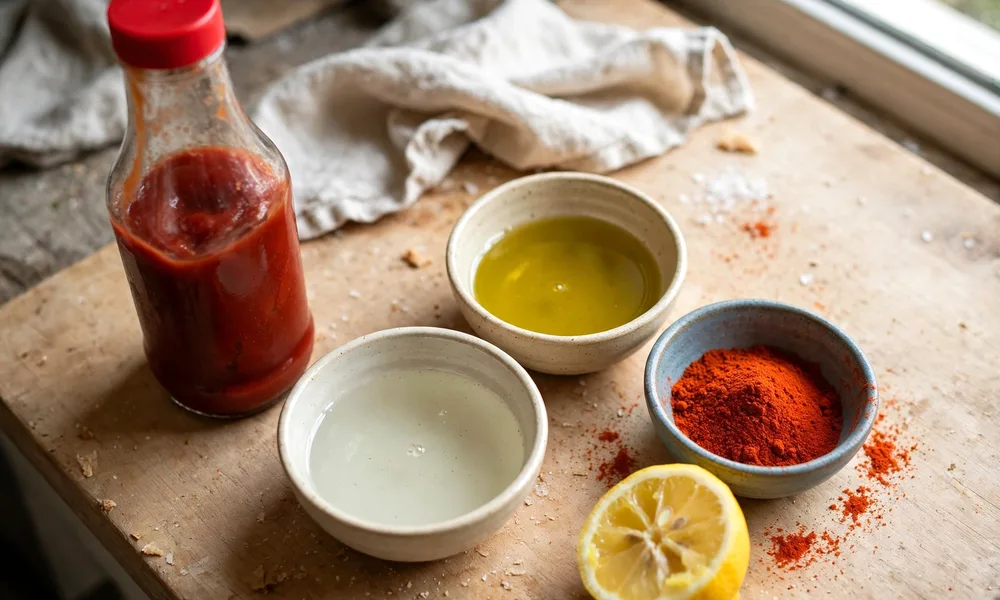
Homemade shaken French dressing is the freshest version of all, made by shaking oil, vinegar, ketchup, sugar, paprika, onion and garlic in a jar until it turns cloudy and thick, then resting it for half an hour so the flavours settle. It tastes brighter than any bottled version, because the vinegar has never been dulled by storage, and the colour is a true tomato orange rather than a tinted pink.

How to read a French dressing label
The label tells you almost everything. Tomato should come early, usually in the first few ingredients, as ketchup or tomato paste, after the oil or the vinegar. If tomato is near the end of the list, after water, sugar and flavourings, the bottle is mostly sweetened oil, and it will taste flat. The second thing to read is the sugar. Sugar, honey or corn syrup should come after the tomato, not before it, and a bottle that lists sugar first is a syrup, not a dressing. The third thing to read is the vinegar. Vinegar or lemon juice should be named plainly, and a bottle with no real acid will taste cloying however much paprika it has. The fourth thing to read is the stabiliser list. A few stabilisers are normal, but a long list, several gums, modified starch, cellulose gel, is a sign that the creaminess is engineered rather than natural.
French dressing versus vinaigrette: which bottle to buy
The choice between French dressing and a vinaigrette is the single biggest decision in the salad-dressing aisle, and it comes down to whether you want sweetness or sharpness leading the salad. French dressing is sweet-led: tomato and sugar do the talking, with vinegar keeping it bright and paprika adding warmth in the background. A vinaigrette is sharp-led: oil and vinegar do the talking, with mustard helping them stay mixed and herbs adding freshness, and it tastes bright and clean rather than sweet and rich. Neither is better in general, but each is wrong for the other’s job. French dressing suits salads where sweetness is welcome, like a wedge with bacon, a chef salad, or a taco salad, while a vinaigrette suits salads where freshness is the point, like a spring salad, a grain bowl or a plate of grilled fish. Our guide to the vinaigrettes worth making your salads around makes the comparison plainly: a vinaigrette is thin, sharp and clean, while French dressing is thick, sweet and warm.
Using French dressing well: beyond the salad bowl
French dressing earns its place in the fridge by doing more than dressing salads. As a dip, it is the natural partner for chicken strips, vegetable sticks, mozzarella sticks and onion rings, where its sweet tang balances salty, fried food. As a spread, it lifts a burger or a sandwich in a way plain ketchup never does, and it turns a taco salad into something worth eating. As a salad dressing, it is at its best on sturdy leaves and bold food: a wedge salad, a chef salad, or a taco salad with beans and cheese. The key to using it is restraint. A salad drowned in French dressing tastes of dressing and nothing else, and the leaves go limp under the weight, while the sweetness takes over completely. Two tablespoons will dress a large bowl if you toss it properly. Our guide to the salad dressings that make greens taste good covers the same rule: the dressing is there to tie a salad together, not to bury it.
Checklist: buying French dressing in 2026
- Tomato is high on the ingredient list, as ketchup or tomato paste, and the colour is a warm orange-pink, not a vivid dyed orange.
- Sugar comes after tomato, not before it: if sugar is the first ingredient after water, the bottle is a syrup, not a dressing.
- Vinegar or lemon juice is named plainly, so the tang is real and can answer the sweetness.
- Paprika is present and named, giving the dressing its gentle warmth and its depth of colour.
- The style matches the meal: creamy for wedges and dipping, thin for pouring over mixed leaves, Catalina-style for taco salads.
- The bottle is in date, the seal is intact, and the size matches how fast your household finishes it.
Frequently asked questions
What does French dressing taste like?
Sweet, tangy and warm, with tomato sweetness at the front, a vinegar tang close behind, and a gentle paprika warmth in the finish.
Does French dressing need to be refrigerated?
Yes, once opened. Shelf-stable bottles keep in the cupboard until opened, then belong in the fridge for about a month. Refrigerated bottles keep for a few weeks, and homemade dressing for about two weeks.
How long does French dressing last after opening?
About a month in the fridge for a bottled dressing, a few weeks for a refrigerated bottle, and about two weeks for homemade.
Is French dressing gluten-free?
Most French dressings are gluten-free, made from oil, vinegar, tomato and sugar. Some flavoured versions add thickeners that contain gluten, so check the label, and check the food it is served with, which is more often the problem.
Can you make French dressing at home?
Yes, and it takes five minutes. Shake oil, vinegar, ketchup, sugar, paprika, onion powder and garlic together in a jar until it turns cloudy and thick, then rest it for half an hour.
What foods go best with French dressing?
Wedge salads, chef salads, taco salads, burgers, chicken strips, vegetable sticks, mozzarella sticks and onion rings. It suits sturdy, salty food best, and delicate leaves least, where a lighter vinaigrette is the better choice.
Bottom line
The best French dressing in 2026 is the bottle that balances sweet and tangy so neither side wins by too much: real tomato high on the label, sugar in second place, vinegar you can taste, and paprika warmth in the finish. Creamy is the best choice for wedge salads and dipping, thin is the best choice for pouring over mixed leaves, and low-sugar is the kindest starting point if you find most bottles too sweet.