
Frozen cantaloupe is the most misunderstood fruit in the freezer aisle in 2026: cantaloupe is mostly water, and water is the enemy of freezing. A bad bag of frozen cantaloupe thaws into a pale, floppy mess that tastes of nothing much. But a good bag, made from a properly ripe melon, is sweet, fragrant, and ready for smoothies, sorbet, and summer desserts all year round.
The difference is the melon inside, the cut it was frozen in, and how you use it. This guide explains what makes great frozen cantaloupe, how balls and chunks differ, why ripeness matters most here, and how to use it for smoothies, sorbet, and thawing.
Key Takeaways
- Ripeness is everything: cantaloupe stops ripening the moment it is frozen, so only a fully ripe, fragrant melon freezes well.
- Chunks are the most useful cut for smoothies and sorbet, while balls are best for serving and fruit salads.
- Use frozen cantaloupe straight from the freezer for smoothies and sorbet; thawing first makes both thin and watery.
- Thawed cantaloupe is soft, best eaten within a day, and never refrozen.
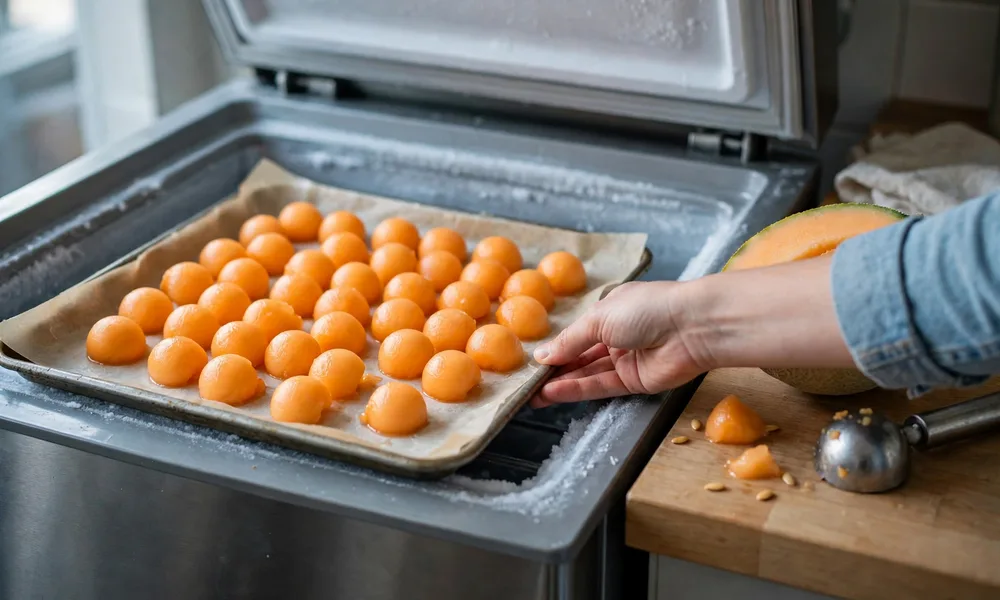
- Freeze cantaloupe at home by spreading pieces on a tray first, so they freeze loose.
What Frozen Cantaloupe Actually Is
Frozen cantaloupe is fresh cantaloupe that has been peeled, seeded, cut, and frozen very quickly, usually within hours of the melon being cut. The speed matters more for melon than for almost any other fruit, because cantaloupe is around ninety per cent water. Fast freezing forms tiny ice crystals that do little damage to the flesh, so the texture and flavour survive. Slow freezing forms large crystals that tear the flesh apart, which is why a badly frozen bag thaws into mush.
The water content is both the problem and the point. It is why frozen cantaloupe goes soft so fast once thawed, But it is also why cantaloupe is so good in the blender: that water becomes the body of a smoothie, and the melon’s gentle sweetness and musky fragrance survive freezing far better than its texture does. Check the ingredients before you buy: the bag should list one thing, cantaloupe. If sugar, syrup, or juice concentrate appears, the melon is sweetened, and it will make everything you blend with it sweeter than you planned. Our guide to the best frozen fruit makes the same point about buying plain bags.
Balls vs Chunks: The Cut That Decides Everything
The single most important choice when buying frozen cantaloupe is the cut, because balls and chunks behave very differently once they meet a blender, a bowl, or a plate. Both have their place, but they are not interchangeable, and buying the wrong one for your recipe is the most common reason a smoothie disappoints or a fruit salad falls apart.
Balls
Balls are the showpiece cut. They are the right choice for fruit salads, for serving chilled with a little lime and mint, and for any dish where the melon is eaten with a fork and needs to hold a neat shape. Their weakness is that they are slow to blend. Their round shape and solid centre mean the blender has to work harder, and a smoothie made with balls alone can come out uneven, with icy lumps hiding in an otherwise smooth drink. If you blend with balls, add the liquid first and give the blender extra time.
Chunks
Chunks are the workhorse cut and the one to buy first. Their flat faces and sharp edges catch the blender blades, so they break down quickly and evenly into a thick, smooth drink. For smoothies, sorbet, and anything that ends up blended or frozen again, chunks are the better buy every time. Chunks have one weakness, and it is visible the moment they thaw. Their cut faces go soft fast, and within an hour of thawing they lose their edges and turn floppy. Use balls for serving, and keep chunks for the blender.
Sweetness and Ripeness: Picking the Right Melon
Ripeness matters more for cantaloupe than for any other frozen fruit, because cantaloupe does not ripen after it is picked in the way a banana or a peach does, and freezing stops whatever ripening is happening dead. A melon frozen under-ripe stays bland and faintly green-tasting forever. No amount of thawing, sweetening, or blending will fix it. A melon frozen at full ripeness, on the other hand, keeps its honeyed sweetness and its musky fragrance for months.
Start with the colour: good frozen cantaloupe is a deep, warm orange, the colour of a sunset, not pale yellow or washed-out peach. Pale flesh means an under-ripe melon, and it will taste of very little. Next, feel the bag. The pieces should feel loose and free-flowing, not like a single solid block of ice, which means the bag thawed and refroze somewhere along the way. A light dusting of frost is normal; thick ice crystals mean freezer burn.
Open the bag and breathe in: a ripe cantaloupe smells sweet, musky, and floral, even frozen. If the bag smells of nothing, or worse, of the freezer itself, the melon was not ripe, and no recipe will rescue it. Mint, lime, ginger, and vanilla all lift it; a squeeze of lime is the simplest upgrade there is.
Smoothies: Where Frozen Cantaloupe Earns Its Keep
Frozen melon does two jobs at once: it flavours the smoothie and it chills and thickens it, so you need no ice. Use the melon straight from the freezer, add a liquid such as milk, yoghurt, or coconut water, and blend until smooth. The best cantaloupe smoothies are simple. Cantaloupe and banana make a thick, sweet breakfast that needs nothing else. Cantaloupe with lime and mint makes a light, refreshing one for a hot afternoon.
Start with a cup of frozen chunks, half a cup of liquid, and a spoonful of yoghurt, then adjust: too thick, add liquid; too thin, add melon. One warning: do not over-blend. Cantaloupe breaks down fast, and an extra minute in the blender turns a thick smoothie thin and frothy as the friction warms it. Blend in short bursts, stop as soon as it is smooth, and drink it straight away. Our guide to what makes great frozen mango makes the same point about blending briefly.

Sorbet and Frozen Desserts
Sorbet is the second-best use for frozen cantaloupe, and the one that surprises people most. Blended frozen chunks with a spoonful of sugar and a squeeze of lime, then frozen again for an hour, make a sorbet that is light, fragrant, and far better than anything from a tub. The melon’s high water content, which is a weakness everywhere else, is exactly what sorbet needs: it freezes into fine, scoopable crystals instead of a solid block.
The method is simple. Blend two cups of frozen cantaloupe chunks with two tablespoons of sugar, the juice of half a lime, and a tablespoon of water until completely smooth. Pour it into a shallow container, freeze for an hour, stir with a fork to break up the crystals, and freeze for another hour. The result is soft, scoopable, and ready to serve with a mint leaf on top.

Thawing: When to Do It and When Not To
For smoothies, sorbet, and anything that ends up blended, do not thaw at all: use the melon frozen and let the blender do the work. For eating raw, for yoghurt, for fruit salads, and for anything where the melon is served cold, thawing is essential, and how you do it matters. Thaw cantaloupe in the fridge, in a bowl, for one to two hours, and eat it the same day. The bowl catches the juice, which is worth keeping for yoghurt or porridge.
Once thawed, cantaloupe does not keep. Eat it within a day, and never refreeze it. Refreezing thawed melon turns it to mush, because the ice crystals melt and reform in a way that breaks the flesh down completely. Our guide to the best frozen pineapple for smoothies and baking covers the same thawing rules.
Freezing Cantaloupe at Home
Pick a melon that smells sweet and musky at the stem end, feels heavy for its size, and gives slightly when you press the blossom end. Spread the pieces in a single layer on a parchment-lined tray, making sure they do not touch, and put the tray in the freezer for two to three hours, until the pieces are frozen solid.
Once frozen, tip the pieces into a freezer bag, squeeze out the air, seal it, and label it with the date. Home-frozen cantaloupe keeps for three to six months, and it is best used within three for the fullest flavour. After that it is still safe, but freezer burn sets in: dry, pale patches where cold air has dried the surface out. Use freezer-burned melon in smoothies rather than eating it on its own.
Frozen Cantaloupe at a Glance
| Cut | Best for | Texture | Watch out for |
|---|---|---|---|
| Chunks | Smoothies, sorbet, lollies | Blends fast and smooth | Goes floppy quickly once thawed |
| Balls | Serving, fruit salads | Firm, neat, holds shape | Slow to blend, needs extra time |
| Wedges | Grilling, roasting | Sturdy, caramelises well | Thick, needs longer cooking |
| Puree | Sorbet, sauces, drinks | Ready to use, no prep | Thaws fast, use immediately |
What to Skip and the Mistakes That Ruin It
The worst frozen cantaloupe is not a particular brand. It is a bag bought for the wrong job or used the wrong way. The second mistake is buying an under-ripe bag without noticing. Check the colour through the packaging: deep, warm orange is ripe, pale yellow is not, and no recipe will fix a bland melon.
The third mistake is keeping a bag open for too long. An open bag left loose in the freezer absorbs smells, dries out, and forms clumps. Seal it properly every time, use it within three months, and buy smaller bags if you use frozen cantaloupe slowly. Thawed melon that has lost its shape is not wasted: blend it into a smoothie or stir it into yoghurt with a squeeze of lime.
Shopping Checklist
- The only ingredient on the list is cantaloupe, with no added sugar, syrup, or juice concentrate.
- The flesh looks deep, warm orange through the packaging, not pale yellow.
- The bag feels loose and free-flowing, not like a single solid block of ice.
- The pieces show no pale freezer-burned patches.
- The cut matches your plan: chunks for smoothies and sorbet, balls for serving.
- The bag is a size you will use within three months.
Frequently Asked Questions
Is frozen cantaloupe as healthy as fresh cantaloupe?
Yes. Cantaloupe is frozen quickly at its ripest, so it keeps most of its vitamins, minerals, and fibre.
Should I thaw frozen cantaloupe before making a smoothie?
No. Use it frozen, straight from the bag, and drink the smoothie straight away.
Can I eat frozen cantaloupe thawed?
Yes, but eat it within a day of thawing, and expect it to be soft. Thaw it in the fridge for one to two hours and serve it chilled with lime.
Why is my frozen cantaloupe one solid block?
A solid block means the bag thawed and refroze somewhere along the way. Use it in smoothies and buy a fresh bag next time.
Can I refreeze cantaloupe that has thawed?
No. Refreezing thawed cantaloupe turns it to mush. Use thawed melon within a day.
How long does frozen cantaloupe last?
Unopened bags keep for six to twelve months in a steady freezer. Once opened, use the melon within three months for the best flavour.
The Bottom Line
Frozen cantaloupe deserves a spot in your freezer in 2026 because a ripe, deep-orange bag makes smoothies and sorbet that fresh melon cannot match for convenience or price. Buy plain bags of loose, richly coloured chunks or balls, use them frozen for blending, and use opened bags within three months.


