
Frozen nectarines are the quiet success story of the freezer aisle in 2026: a good bag of them bakes like fresh fruit. Nectarines freeze better than most people expect. Their flesh is firmer and less watery than a peach, and their smooth skin needs no peeling before it goes into the bag. Picked ripe, sliced, and frozen within hours, they keep their honeyed sweetness and golden colour for months, ready for a crumble, a galette, or a tray of muffins.
The catch is that not every bag deserves your money, and not every use suits frozen fruit. A bag of mushy, under-ripe nectarines will ruin a tart no matter how good your pastry is, and thawing them at the wrong moment turns a crisp topping soggy. This guide covers how they are made, which cut to buy, how sweetness holds up, and the techniques that make them bake and grill like fresh.
Key Takeaways
- Slices are the most useful cut: they thaw evenly, fold into batters easily, and bake without going mushy.
- Buy nectarines frozen at full ripeness, with nothing added.
- Use frozen nectarines straight from the freezer for baking; thawing first leaks juice into the batter and makes bakes soggy.
- Grilling works beautifully with frozen nectarine halves, which hold their shape over heat in a way slices cannot.
- Keep bags sealed and flat, use within three months, and never refreeze thawed nectarines.
What Frozen Nectarines Actually Are
Frozen nectarines are fresh nectarines that have been washed, stoned, cut, and frozen very quickly, usually within hours of picking. The speed matters more than anything else. Fast freezing forms tiny ice crystals that do little damage to the fruit’s cell walls, so the texture, colour, and flavour survive. Slow freezing forms large crystals that tear the flesh apart, which is why a badly frozen bag turns to pulp the moment it thaws.
Nectarines have a natural advantage here. Compared with peaches, their flesh is denser and their water content slightly lower, and because they have no fuzz, processors do not need to blanch or peel them. Most are picked at full ripeness, a genuine edge over fresh fruit shipped long distances in winter. Check the ingredients before you buy: the bag should list one thing, nectarines. If sugar, syrup, or juice concentrate appears, the fruit is sweetened, and it will make everything you cook with it sweeter than you planned.
Slices vs Halves: The Cut That Decides Everything
The most important choice when buying frozen nectarines is the cut, because slices and halves behave very differently once they meet heat. Both have their place, but they are not interchangeable, and buying the wrong one for your recipe is the most common reason a bake disappoints.
Slices
Slices are the workhorse cut and the one to buy first. They thaw evenly, fold into batters without breaking apart, and release their juice slowly as they bake, which keeps the crumb light instead of soggy. Slices are also the easiest cut to measure. Use slices for cooking, and keep them frozen until the moment they go into the dish.
Halves
Halves are the showpiece cut. A frozen nectarine half holds its shape through grilling and roasting, and caramelises beautifully on the cut side. Halves need more care in baking, though. They are thick, so they take longer to cook through, and they release a lot of juice in one spot, which can leave a wet patch under the fruit. If you bake with halves, add a few extra minutes to the baking time.
How Sweetness Survives the Freezer
The most common worry about frozen nectarines is that freezing will dull their sweetness, and the answer is reassuring: it barely does. Freezing preserves sugars almost completely, because sugar does not break down in the cold the way some vitamins do. What freezing can change is the perception of sweetness, because cold dulls taste buds, and a nectarine eaten straight from the freezer will taste less sweet than the same fruit at room temperature. The sweetness returns as the fruit warms up.
Ripeness at freezing matters far more than the freezing itself. A nectarine frozen under-ripe stays tart forever, because freezing stops ripening dead. Yellow-fleshed varieties freeze best, holding their colour and honeyed flavour, while white-fleshed nectarines are more delicate and can turn pale and soft. Acidity is the other half of the flavour. Nectarines carry a bright acidity that survives freezing well, and it is what stops a crumble or a galette from tasting flat. That acidity is also why they pair so well with rich foods.
Baking With Frozen Nectarines
Baking is where frozen nectarines earn their place in the freezer, and the golden rule is the same one that governs all frozen fruit: use the fruit frozen, straight from the bag, and never thaw it first. Thawed nectarines leak juice into the batter, and the bake comes out soggy in the middle and pale on top. Frozen slices release their juice slowly as they bake, and the crumb stays light. Toss the frozen slices in flour before folding them in, so the fruit does not sink. Add a few minutes to the baking time, because the cold fruit slows the bake.
Crumbles and Crisps
Crumbles are the most forgiving bake for frozen nectarines, and the best place to start. The fruit goes into the dish frozen, a spoonful of sugar and a squeeze of lemon over the top, and the oat topping goes on straight away. There is no pastry to go soggy, so the topping still crisps. Use slices, and cover the fruit completely with topping so the edges do not burn.

Galettes and Tarts
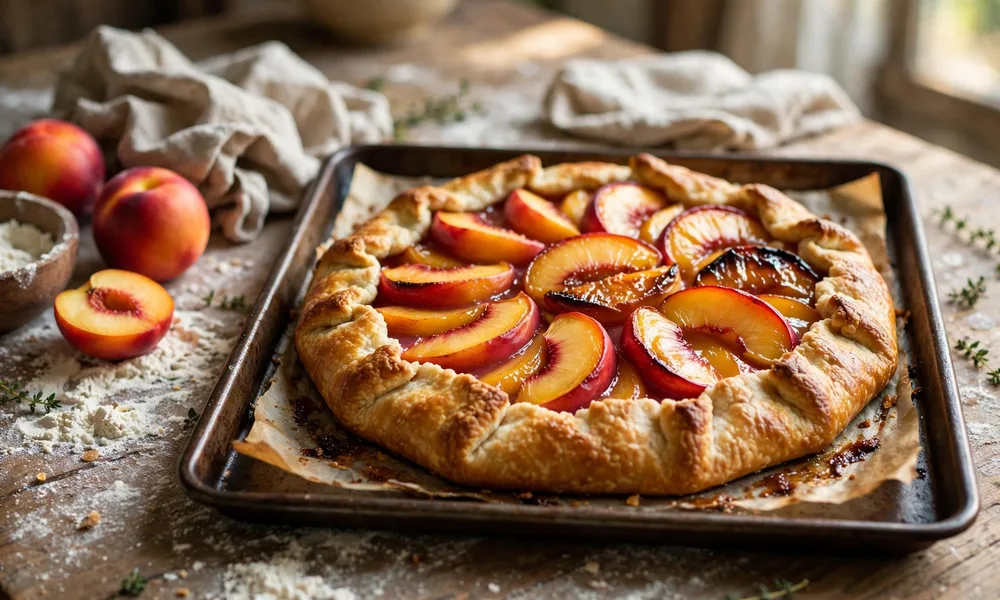
Galettes are the prettiest use for frozen nectarines, and the one that shows off the fruit best. Arrange frozen slices in overlapping rows on rolled pastry, fold the edges up, brush with beaten egg, and bake until the pastry is golden and the fruit is bubbling. The trick is a spoonful of ground almonds or fine breadcrumbs scattered over the pastry before the fruit goes on. It absorbs the juice as the fruit thaws in the oven, so the base stays crisp instead of turning wet.

Grilling Frozen Nectarines
Grilling is the use most people never try with frozen nectarines, and it is one of the best. Frozen halves go straight onto a hot grill or a griddle pan, cut side down, and the heat does two things at once: it thaws the fruit and caramelises its natural sugars. Three to four minutes a side is enough. The outside chars lightly and turns sweet and smoky, while the inside softens to a spoonable tenderness that fresh nectarines rarely achieve without falling apart. Brush the cut side with a little oil first, and do not move it once it is down.
Grilled nectarines are wonderful with vanilla ice cream, or sliced over a salad with goat cheese and walnuts. With slices only, grill them in a foil parcel with butter and honey instead.
Thawing: When to Do It and When Not To
Thawing is where most frozen nectarine cooking goes wrong, because the rule changes with the dish. For baking and grilling, do not thaw at all: use the fruit frozen and let the oven or the grill do the work. For eating raw, for yoghurt, or for salads, thawing is essential. Thaw nectarines in the fridge, in a bowl, for one to two hours, and eat them the same day. The bowl catches the juice, which is worth keeping for yoghurt or porridge.
Do not thaw nectarines at room temperature for hours, and never thaw them in water, which washes the flavour away and leaves the fruit waterlogged. Once thawed, nectarines do not keep. Eat them within a day, and never refreeze them. Refreezing thawed fruit turns it to mush, because the ice crystals melt and reform in a way that breaks the flesh down. The same care applies across the freezer, and our guide to the best frozen fruit makes the same point about keeping bags sealed and flat.
Frozen Nectarines at a Glance
| Cut | Best for | Texture | Watch out for |
|---|---|---|---|
| Slices | Baking, crumbles, muffins | Even, cooks through fast | Goes soft quickly once thawed |
| Halves | Grilling, roasting, serving | Firm, holds its shape | Releases juice in one spot |
| Wedges | Galettes, tarts, salads | Sturdy, neat on the plate | Needs extra baking time |
| Diced | Smoothies, sauces, porridge | Blends smooth, no prep | Loses shape in baking |
What to Skip and the Mistakes That Ruin It
The worst frozen nectarines are not a particular brand. They are a bag bought for the wrong job or used the wrong way. The most common mistake is thawing the fruit before baking: thawed nectarines make soggy crumbles and pale cakes, and the juice they leak cannot be put back. Use the fruit frozen and let the oven do the work. The second mistake is buying sweetened fruit without checking the ingredients.
The third mistake is keeping a bag open for too long. An open bag left loose in the freezer absorbs smells, dries out, and forms clumps. Seal it properly every time, use it within three months, and buy smaller bags if you use frozen nectarines slowly. Peaches are softer and juicier, but they go mushy faster than nectarines in baking; our guide to how to pick frozen peaches explains where they shine. Apricots are smaller, tarter, and firmer, and they hold their shape even better in tarts; the guide to apricots from the freezer that bake like fresh covers their strengths. Nectarines sit between the two: sweeter than apricots, firmer than peaches.
Shopping Checklist
- The only ingredient on the list is nectarines, with no added sugar, syrup, or juice concentrate.
- The bag feels loose and free-flowing, not like a single solid block of ice.
- The slices look golden and whole, with no pale freezer-burned patches.
- The cut matches your plan: slices for baking, halves for grilling, diced for smoothies.
- The bag is a size you will use within three months of opening it.
- You have a plan for it: a crumble, a galette, or a tray of muffins, not just a vague idea.
Frequently Asked Questions
Are frozen nectarines as healthy as fresh nectarines?
Yes. Nectarines are picked ripe and frozen quickly, so they keep most of their vitamins, minerals, and fibre. Fresh nectarines that have travelled for days can lose more.
Should I thaw frozen nectarines before baking?
No. Use them frozen, straight from the bag. Thawing first leaks juice into the batter and makes bakes soggy. Toss them in flour first and add a few minutes to the baking time.
Can I grill frozen nectarines?
Yes, and halves are the cut for it. Put frozen halves cut side down on a hot grill for three to four minutes a side. Serve them with ice cream or in a salad.
Why are my frozen nectarines one solid block?
A solid block means the bag thawed and refroze somewhere along the way. The fruit is still safe, but the texture will be soft. Use it in smoothies instead.
Can I refreeze nectarines that have thawed?
No. Refreezing thawed nectarines turns them to mush, because the ice crystals melt and reform in a way that breaks the flesh down. Use thawed fruit within a day.
How long do frozen nectarines last?
Unopened bags keep for six to twelve months in a steady freezer. Once opened, use the fruit within three months for the best flavour; after that, flavour fades.
The Bottom Line
Frozen nectarines deserve a spot in your freezer in 2026 because they bake like fresh, grill like a dream, and cost a fraction of out-of-season fresh fruit. Buy plain bags of ripe, golden slices, use them frozen for baking, save the halves for the grill, and use opened bags within three months.


