
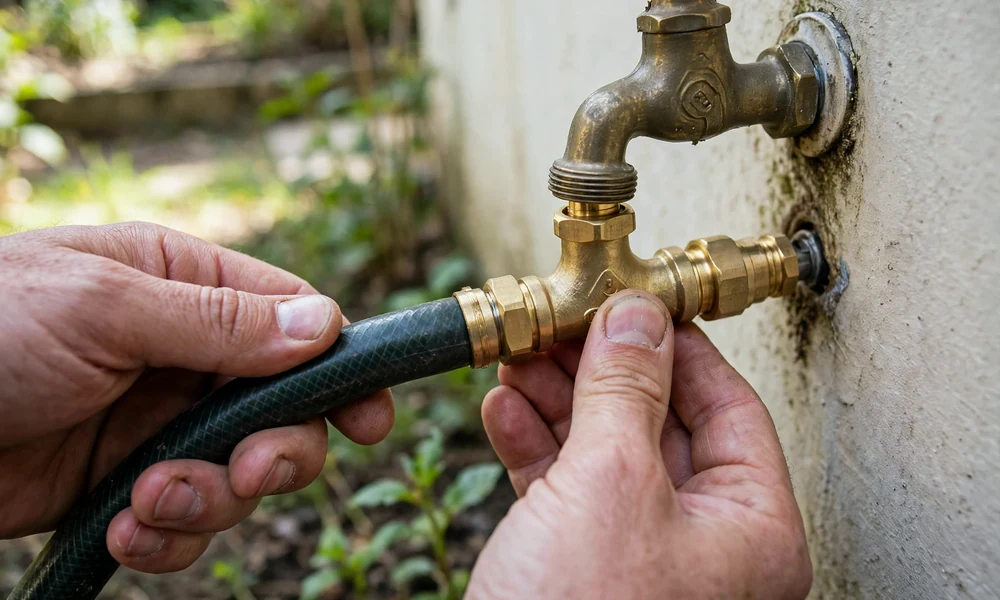
A garden hose splitter is a small brass fitting that does a big job: it turns one outdoor tap into two or four taps, so the hose, the sprinkler and the watering can can all be used without swapping the hose on and off. It sounds simple, and it is, but a bad splitter leaks, seizes up, or snaps the tap, while a good one lasts for years and makes watering the garden far easier. The best garden hose splitters of 2026 are the ones that seal properly, turn smoothly, and still work after a winter in the shed.

What Makes a Garden Hose Splitter Good
The first thing to judge is the seal. A splitter that leaks at the tap or at the hose connection wastes water, soaks the wall, and makes the whole garden damp. The best splitters have solid brass bodies, good washers, and threads that fit the tap properly, so they seal first time and stay sealed. A splitter that needs a new washer every month is a splitter that was badly made. A good seal is the first test, and it is easy to feel: turn the tap on, and see if a single drop escapes.
The second thing is the valves. A splitter with a valve on each outlet lets the water be turned on and off at the splitter, without walking back to the tap. The best valves turn smoothly, with a lever that is easy to grip even with wet hands, and they shut off completely, so the hose that is not in use does not drip. A valve that is stiff, or one that leaks when it is shut, is a valve that will be a daily annoyance. Good valves are worth paying for.
The Main Types of Garden Hose Splitter
Two-way splitters are the classic choice. They split one tap into two outlets, they are small, simple and cheap, and they are the best choice for a small garden where the hose and the sprinkler are the only two things that need water. They suit a single tap and a modest garden, and they are the easiest to fit. The trade-off is the limit: a two-way splitter can only run two things at once, and a garden with a sprinkler, a hose and a soaker hose will need more. For a small garden, a two-way splitter is all that is needed.
Four-way splitters are the bigger option. They split one tap into four outlets, they suit a larger garden with several hoses, a sprinkler and a drip system, and they are the best choice for anyone who waters a lot. They cost more than a two-way splitter, and they are bigger and heavier, but they save the constant swapping of hoses. The downside is the flow: four outlets share one tap, so running everything at once will weaken the pressure. For a large garden, a four-way splitter is the one to buy.
Splitters with a shut-off on each outlet are the practical option. They have a valve on every outlet, so each hose can be turned on and off on its own, and they suit a garden where different things need water at different times. They are the best choice for a gardener who wants control, and they are worth the extra money. The trade-off is the complexity: more valves mean more parts that can fail, so the build quality matters more. For a garden with several hoses, a splitter with a valve on each outlet is the one that works.
Metal splitters are the durable option. They are made from solid brass or aluminium, they handle the pressure of a mains tap, and they last for years without cracking or seizing. They suit a garden where the splitter stays outside all year, and they are the best choice for anyone who is tired of plastic splitters breaking. The downside is the price: a metal splitter costs more than a plastic one, and a brass splitter is heavier. For a splitter that will last, metal is the one to buy.
Plastic splitters are the budget option. They are light, cheap and easy to fit, they suit a small garden or a tap that is only used in summer, and they are the best choice for a first splitter. The trade-off is the life: a plastic splitter will crack in the cold, seize in the heat, and need replacing every year or two. For a temporary or seasonal use, a plastic splitter is fine, but for a splitter that will stay on the tap all year, metal is the better choice.
How to Choose the Right Splitter
Start with the tap, not the splitter. A splitter needs to fit the tap’s thread, and a splitter that does not fit will leak or cross-thread, which can damage the tap itself. Check the tap’s size and thread before buying, and buy a splitter that matches it. A splitter with a good washer and a solid thread will seal first time, while a splitter with a poor thread will leak from the start. And check the tap’s condition: a tap that is already worn will not seal well with any splitter, so it is worth replacing the washer on the tap first.
Then count the outlets. A garden with a hose and a sprinkler needs a two-way splitter, while a garden with a hose, a sprinkler and a drip system needs a four-way splitter. A splitter with more outlets than needed is not a problem, but a splitter with too few will mean swapping hoses, which is exactly what the splitter was bought to avoid. And check the pressure: a splitter will not increase the water pressure, and running several outlets at once will reduce it, so buy a splitter with the number of outlets that will actually be used at the same time.
The Best Garden Hose Splitters of 2026
The best two-way splitter for most gardens this year is a solid brass splitter with a valve on each outlet, a good washer, and a thread that fits a standard tap. It seals first time, it turns smoothly, and it lasts for years. It is the splitter for a small garden, it is the one that stops the daily hose-swapping, and it is the one that is still working after a winter in the shed. For a small garden, this is the splitter to buy.
The best four-way splitter of 2026 is a heavy brass splitter with four valved outlets, a solid body, and a grip that is easy to turn with wet hands. It suits a large garden with several hoses, it lets each hose be turned on and off on its own, and it is the splitter for a gardener who waters a lot. It costs more than a two-way splitter, but the control is worth it. For a large garden, this is the splitter that matters.
The best budget splitter is a simple plastic two-way splitter, at a price that is less than a bag of compost. It splits the tap, it seals well enough for a summer, and it is genuinely useful. It will not last for years, and it will crack in the cold, but for a first splitter, or for a tap that is only used in summer, it is all that is needed. Cheap does not have to mean useless, and this splitter proves it.
The best heavy-duty splitter of 2026 is a solid brass four-way splitter with large, easy-grip levers, built to handle the full pressure of a mains tap and to stay outside all year. It is the splitter for a garden that is watered every day, it is the one that will not crack, seize or leak, and it is the one that is still working after five winters. It costs more than the rest, but it is the last splitter that will need buying. For a garden that is watered hard, this is the one.

What Else You Need
A splitter works best with a little help. A good garden hose that does not kink will make the splitter far more useful, and a sprinkler that covers the lawn evenly will save water and time. And a watering can is still the best tool for pots and seedlings, because it puts the water exactly where it is needed. The splitter is the hub; the hoses and the watering can are what make the garden grow.
Common Mistakes to Avoid
The biggest mistake is buying a splitter that does not fit the tap. A splitter with the wrong thread will leak, cross-thread, or damage the tap, and a tap that is damaged will need a plumber. Check the thread first, and buy the splitter that matches it. The second mistake is over-tightening the splitter: a splitter that is wrenched on too hard will crack the washer or damage the thread, and a splitter that is tightened by hand, plus a quarter turn, is tight enough. The third mistake is leaving a plastic splitter on the tap all winter: the cold will crack it, and a cracked splitter will leak all spring. Take the splitter off in winter, or buy a metal one.
Another common mistake is running too many outlets at once. A splitter will not increase the water pressure, and running four hoses at once will leave them all dribbling. Use one or two outlets at a time, and the pressure will stay strong. And do not forget the washers: a washer that is worn will leak, so check the washer every spring, and replace it when it looks flat or cracked. A new washer costs almost nothing, and it will stop a leak that would otherwise waste water all summer.
How Garden Hose Splitters Fit a Watering Routine
A garden hose splitter is the simplest way to make watering the garden easier. It stops the daily swapping of hoses, it lets the sprinkler run while the hose is used for the pots, and it does it without anyone thinking about it. A garden with a good splitter is a garden that gets watered more often, and a garden that gets watered more often is a garden that grows better. The splitter is not exciting, but it is essential, and a good one is the kind of thing that is only noticed when it is missing.
The habit also pairs naturally with a little routine. A quick check of the splitter in spring, a new washer when the old one looks worn, and a removal in winter will keep the splitter working for years. It is a small amount of work for a large amount of saved time, and it is the kind of routine that, once started, is hard to give up.
The Verdict
The best garden hose splitter of 2026 is the one that matches the tap and the garden. For most gardens that means a solid brass two-way splitter with a valve on each outlet. For a large garden, a four-way splitter is the better choice. For a tap that is only used in summer, a plastic splitter will do. Whatever the choice, check the thread first, buy a splitter with good valves, and take it off in winter if it is plastic. A splitter chosen this way will not just split the tap; it will make watering the garden easier, the plants happier, and the mornings simpler. And that is worth more than any fitting on a tap.


