
The best green juice in 2026 is the one you will actually drink every morning, not the one with the longest ingredient list or the highest price tag. A great green juice tastes fresh and bright, leaves you feeling light rather than wired, and fits into a normal weekday.
Green juice is, at its simplest, the liquid pressed from leafy greens and vegetables, usually kale, spinach, cucumber and celery, with a little fruit for sweetness. It is not a meal, not a medicine and not a shortcut, and the best brands are honest about that. What it is, when it is done well, is a fast, pleasant way to get a generous serving of vegetables into your day before you have even decided what to have for lunch. This guide compares the best green juice options of 2026: ready-to-drink cold-pressed bottles, the best supermarket buys, the best powders for travel, and the best way to make your own at home.
Key Takeaways
- The best green juice is mostly vegetables: look for greens and cucumber first on the label, with fruit in a supporting role, not the lead.
- Cold-pressed juice tastes fresher, but it costs more and must be kept refrigerated and drunk within a few days.
- Check the sugar: a genuinely green juice has under 10 grams of sugar per serving, while fruit-heavy bottles can carry as much sugar as a soft drink.
- Juice removes most of the fibre, so a green juice is a supplement to eating vegetables, never a replacement for them.
- A daily glass works best as a morning habit: make it or open it before breakfast, when you are most likely to stick with it.
What Is Green Juice, Really?
Green juice is the juice extracted from raw leafy greens and vegetables, most commonly kale, spinach, romaine, cucumber, celery and parsley, often with green apple, lemon or ginger to lift the flavour. The taste ranges from grassy and earthy to bright and citrusy depending on the recipe, and a well-made green juice tastes clean and refreshing.
It is worth being clear about what green juice does and does not do. It does not detox your body, because your liver and kidneys already handle that, and it does not replace a balanced diet. What it reliably does is deliver vitamins, minerals and plant compounds in a form your body absorbs quickly, and it helps people who eat too few vegetables close that gap.
What Is Actually in the Glass?
A good green juice starts with a leafy base. Kale brings vitamin K and calcium; spinach adds folate and magnesium; cucumber adds a mild, cooling flavour; celery adds a savoury note. Lemon sharpens everything, while ginger adds warmth. Green apple is the usual sweetener, because its tartness suits the greens far better than a sweet fruit like mango or pineapple. As a rule of thumb, at least three quarters of the ingredients by weight should be vegetables.
The 6 Best Green Juices of 2026
We judged the strongest green juices of 2026 on taste, ingredients, sugar, price and availability. These six cover every way of drinking green juice: delivered bottles, supermarket staples, powders and homemade.

1. Suja Organic Mighty Greens — Best Overall
Suja Organic Mighty Greens is the best green juice overall in 2026 because it gets the fundamentals right at a fair price. Each bottle is cold-pressed from kale, spinach, cucumber, celery, green apple and lemon, with about 9 grams of sugar per bottle and a clean, grassy-sweet flavour. It is widely available, certified organic, and at roughly three dollars a bottle it undercuts most delivery brands by half.
2. Evolution Fresh Organic Sweet Greens — Best Supermarket Buy
Evolution Fresh Organic Sweet Greens is the best green juice you can pick up on an ordinary shopping trip. The recipe leans on apple and pineapple a little more than the purist options, so it tastes sweeter and friendlier, which suits anyone who found green juice too bitter before. The sugar is higher, around 14 grams per bottle, so it is a gentle introduction, not the greenest option here.
3. Pressed Juicery Greens 3 — Best Cold-Pressed Delivery
Pressed Juicery Greens 3 is the best cold-pressed delivery green juice in 2026. The blend of kale, spinach, romaine, cucumber, celery, parsley, lemon and ginger is the greenest on this list, with just 7 grams of sugar per bottle, and the flavour is bright, herbal and genuinely refreshing. Bottles arrive chilled and keep for three to four days in the fridge. The price is higher, around seven dollars a bottle on subscription, but it is the closest you will get to a juice bar at home.
4. Blueprint Kale It Up — Best Low-Sugar Option
Blueprint Kale It Up is the best green juice if sugar is your main concern. It carries just 5 grams of sugar per bottle, the lowest of any ready-to-drink option we tested, because the recipe uses almost no fruit: kale, spinach, cucumber, celery and lemon do the work. The taste is unapologetically green, which will not suit everyone, but if you want a genuinely vegetable-forward juice, this is the one.
5. Athletic Greens AG1 — Best Green Powder Alternative
Not everyone wants a fridge full of bottles, and for travel, office days and busy mornings, a greens powder is the practical answer. AG1 is the best green powder of 2026, blending dried kale, spinach and other greens with probiotics and vitamins into a single daily scoop that mixes into water in seconds. It does not taste like fresh juice, and no powder does, but the flavour is mild and grassy, and the convenience is unbeatable. Our guide to the best greens powders of 2026 compares the top options by ingredients, taste and value.
6. Homemade Kale and Cucumber Juice — Best Value
The best value green juice in 2026 is the one you make yourself. A simple recipe of kale, cucumber, celery, green apple and lemon costs roughly one dollar a glass in produce, tastes fresher than any bottle, and lets you control the sweetness exactly. The catch is time and equipment: you need a decent juicer and about fifteen minutes each morning, including cleaning.
Cold-Pressed vs Centrifugal vs Blended
How a juice is made changes how it tastes, how long it lasts and how much it costs. Cold-pressed juice is made by crushing produce and pressing it slowly without heat, which preserves the fresh flavour and gives it a shelf life of three to five days refrigerated. It is the most expensive method, but it makes the best-tasting bottles. Centrifugal juicers, the kind most people have at home, spin produce at high speed and fling the juice out through a fine mesh. They are fast, affordable and easy to find, but the juice oxidises faster and should be drunk within a day. If you already own a good blender, start there, and compare the wider options in our guide to the best smoothies of 2026.
How to Read the Label: Sugar, Fibre and Ingredients
The label tells you almost everything you need to know about a green juice, if you know where to look. Start with the sugar per serving: a genuinely green juice lands under 10 grams, a sweet green juice lands between 10 and 15 grams, and anything above 15 grams is a fruit juice with greens in it. Next, read the ingredient order: ingredients are listed by weight, so the first three should be leafy greens, cucumber or celery. If apple, pineapple or grape juice appears in the first three, the bottle is fruit-led. Also check whether the label says cold-pressed or pasteurised.
Making Green Juice at Home
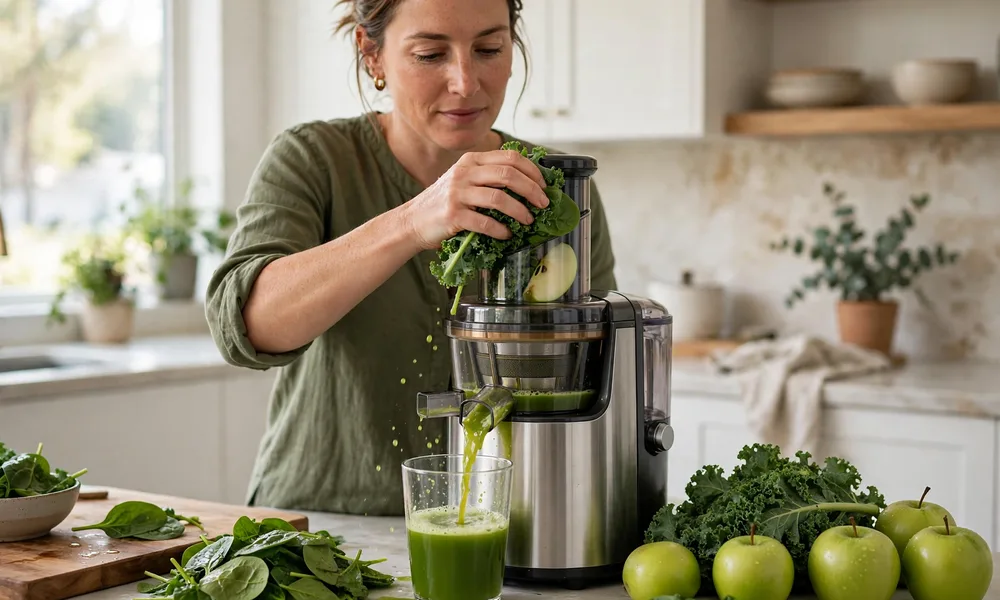
Homemade green juice wins on freshness, price and control, and it loses on time and washing up. The balance tips in its favour if you enjoy the ritual and you already own a juicer. Prep the night before: wash the greens, chop the cucumber and celery, and store everything in a bag in the fridge. The recipe to start with is simple: two large handfuls of kale, a handful of spinach, half a cucumber, two celery stalks, one green apple and half a lemon. Drink it within half an hour, and rinse the juicer parts immediately. If you are choosing your first juicer, our guide to the best juicers of 2026 compares the strongest models by yield, noise, cleaning time and price.
Green Juice vs Smoothies: Which Is Better?
Green juice and green smoothies look similar and get confused constantly, but they are different drinks with different strengths. A juice is lighter, faster to absorb and more refreshing, because the fibre has been removed; a smoothie is thicker, more filling and keeps the fibre, which means it works better as a light breakfast or a post-workout snack. Neither is better in absolute terms. The right choice depends on the moment: juice for a bright morning start, smoothie for something that needs to keep you going until lunch. A green juice can also hide a lot of sugar in a small glass, because several apples can disappear into one bottle without you noticing. The honest answer for most people is to use both.

Best Green Juice Compared
| Green Juice | Best For | Sugar per Serving | Price per Serving | Why It Wins |
|---|---|---|---|---|
| Suja Mighty Greens | Everyday drinking | 9 g | About $3 | Best balance of taste, quality and price |
| Evolution Sweet Greens | Beginners | 14 g | About $3.50 | Sweet, friendly flavour, widely available |
| Pressed Juicery Greens 3 | Cold-pressed quality | 7 g | About $7 | Greenest flavour, premium delivery |
| Blueprint Kale It Up | Low sugar | 5 g | About $6.50 | Lowest sugar, truly vegetable-led |
| AG1 powder | Travel and convenience | Less than 1 g | About $2.70 | No fridge needed, one scoop a day |
| Homemade kale and cucumber | Value and freshness | About 8 g | About $1 | Cheapest, freshest, fully customisable |
Green Juice Shopping Checklist
- Check the sugar first: under 10 grams per serving is the mark of a genuinely green juice.
- Read the first three ingredients: they should be leafy greens, cucumber or celery, not fruit juice.
- Choose cold-pressed for the freshest taste, and pasteurised only when shelf life matters more.
- Check the use-by date before you buy: cold-pressed juice lasts three to five days refrigerated.
- Start with a single serving before committing to a subscription.
- Keep eating your vegetables: juice is a top-up for your diet, not a replacement for whole greens.
Frequently Asked Questions
Is green juice actually good for you?
Yes, in the right context. A green juice made mostly from vegetables delivers vitamins, minerals and plant compounds in an easily absorbed form, and it helps people who eat too few vegetables close the gap. It is not a meal replacement, but as part of a balanced diet it is a genuinely useful habit.
How much sugar is too much in a green juice?
Under 10 grams per serving is ideal, and 10 to 15 grams is acceptable if the juice is mostly vegetables with a little fruit for taste. Above 15 grams, the bottle is effectively a fruit juice.
Can I drink green juice every day?
Yes, most people can drink a glass of green juice every day, as long as it is part of a varied diet and not a replacement for meals. If you take blood thinners, check with your doctor first, because leafy greens are high in vitamin K.
Is homemade green juice better than bottled?
Homemade juice is fresher, cheaper and fully customisable, and it wins on taste the day it is made. Bottled cold-pressed juice wins on convenience and shelf life. The best choice is the one you will keep doing.
Does green juice help with weight loss?
Green juice can help indirectly, because a low-calorie glass of vegetables in the morning can replace a sugary drink or a pastry, and it can make you more likely to eat well for the rest of the day. It does not burn fat by itself, and a juice-only diet is not safe or sustainable.
What is the best time of day to drink green juice?
First thing in the morning, before breakfast, is the most popular time and the easiest to turn into a habit, because the day has not yet had a chance to get in the way. That said, the best time is the time you will actually do it.
The Bottom Line
The best green juice in 2026 is the one that fits your mornings: Suja Mighty Greens for most people, Pressed Juicery Greens 3 if you want the best cold-pressed quality, Blueprint Kale It Up if sugar is your priority, and a homemade kale and cucumber juice if you want the freshest glass for the least money. Keep the rules simple: mostly vegetables, under 10 grams of sugar, drunk fresh, and always alongside real food. Green juice is not a miracle, but a good glass of it every morning is one of the easiest healthy habits there is, and that is exactly why it has lasted.


