
A smoothie can be the best thing you drink all day, or it can be a milkshake wearing a health halo. The difference is rarely obvious from the outside. Two tall glasses can look almost identical on a cafe counter, yet one is packed with whole fruit, greens, and protein, while the other is mostly fruit juice, syrup, and ice cream in disguise. That is what makes smoothies so tricky: the good ones and the bad ones share the same glass.
This comparison puts the best smoothies of 2026 head to head against the worst, judging them the way you would actually drink them: as a quick breakfast before work, as a snack after a run, as something you make at home in five minutes, and as something you buy from a cafe when you are out. We look at what goes into the glass, how much sugar is hiding in it, whether it actually keeps you full, and whether it tastes good enough that you would make it again. The machine matters too, and our comparison of the best and worst blenders of 2026 shows which ones turn frozen fruit into a smooth drink instead of a lumpy one.
Key Takeaways
- A great smoothie is built on whole fruit and vegetables, not on juice or sweetened drinks.
- Protein and fibre are what turn a smoothie from a snack into a meal that keeps you full.
- The worst smoothies hide as much sugar as a can of fizzy drink behind a healthy-sounding name.
- Texture matters: a good smoothie is thick and creamy, never watery, gritty, or icy.
- Homemade smoothies win on control, but a good cafe smoothie can be worth the price when it is made properly.
What Makes a Smoothie Good or Bad
A good smoothie starts with real ingredients you could recognise on a plate. Whole fruit, leafy greens, plain yoghurt, milk or a plant milk, nuts, seeds, and oats are the building blocks, and they bring fibre, protein, and healthy fats along with their flavour. The fibre is the quiet hero: it slows down the sugar from the fruit, keeps you full for hours, and is the reason a smoothie made from whole fruit behaves so differently in your body from a glass of juice. Strip the fibre away and you are left with sugar water, however fresh the fruit was.
The second test is sugar, and it is the one most smoothies fail. A banana and a handful of berries carry their own natural sweetness, and that is plenty for most people. The trouble starts when a recipe adds honey, maple syrup, agave, sweetened yoghurt, fruit juice concentrate, or a scoop of flavoured powder on top. Each one sounds harmless on its own, but together they can push a single glass past forty or fifty grams of sugar. That is dessert, not breakfast, and it will leave you hungry again within the hour.
Protein is the third test, and it separates a meal from a drink. A smoothie with a proper source of protein, such as Greek yoghurt, milk, nut butter, or a clean protein powder, can carry you through to lunch without a snack. One without it is just fruit in a glass, however pretty it looks. The best smoothies of 2026 treat protein as a requirement, not an optional extra, and they get it from food first rather than from a long list of supplements.
Finally, there is texture and taste. A good smoothie is thick enough to feel substantial, smooth enough that no single ingredient announces itself, and cold enough to be refreshing without being an ice lolly. The worst ones are thin and watery, or gritty with unblended seeds, or so sweet that your teeth ache. You know within one sip which kind you have made, and no amount of topping will rescue a bad base.
The Best Smoothies of 2026
The best smoothies of 2026 are simple, and that is exactly why they work. The classic berry and banana smoothie is still the one to beat: frozen mixed berries, half a banana, a big spoonful of Greek yoghurt, a splash of milk, and a tablespoon of oats blended until thick. It tastes like a treat, it keeps you full for three or four hours, and it takes less than five minutes from fridge to glass. There is nothing clever about it, and it does not need anything clever.

Green smoothies have grown up since the days when they tasted like a salad in a glass. The best ones in 2026 use a small handful of spinach or kale, which blends almost invisibly, balanced with banana, mango, or pineapple for sweetness, plus yoghurt or nut butter for body. The result is genuinely pleasant to drink, and it is one of the easiest ways to get a serving of greens into a morning that would otherwise have none. Our guide to the best green juice of 2026 covers the pressed-juice alternative, but a blended green smoothie keeps the fibre that juice leaves behind, which is a real advantage.
Protein smoothies are the other great pattern of the year. The best ones start with real food, milk, yoghurt, peanut butter, oats, and fruit, and add a single scoop of a clean protein powder only if the meal needs it. They are the natural choice after exercise, when your body wants protein and carbohydrate together, and they beat a chocolate bar or a pastry by a wide margin. If you do add a powder, it pays to choose carefully, and our comparison of the best and worst protein powders of 2026 sorts the clean ones from the ones padded with sweeteners and fillers.
The Worst Smoothies of 2026
The worst smoothies of 2026 are the ones that look healthy and act like dessert. The classic offender is the cafe smoothie built on a base of sweetened fruit juice or frozen yoghurt, loaded with banana, mango, honey, and a drizzle of syrup, then topped with granola, chocolate chips, and whipped cream. It can carry sixty grams of sugar and more calories than a burger, yet it is sold as a detox or a cleanse. The name on the menu is doing all the work, and the drink is doing none of it.

Bottled smoothies from the supermarket are another trap. Many of them are mostly apple or grape juice, with a small amount of the fruit on the label, and they have been heat treated so they can sit on a shelf for weeks. The fibre is gone, the vitamins have faded, and the sugar is concentrated. A small bottle can hold as much sugar as a can of cola, and because it says smoothie on the front, people drink it as if it were a serving of fruit. It is not, and the label knows it.
Then there are the homemade smoothies that go wrong. The most common mistake is piling in too much fruit: three bananas, a mango, a cup of grapes, and a glass of orange juice sounds generous, but it is a sugar bomb with no protein and no fat to slow it down. The second mistake is the opposite, a smoothie that is all ice and water with a few spinach leaves, which tastes thin and grassy and leaves you hungry in twenty minutes. The third is the supplement pile-up, a scoop of this and a spoonful of that until the drink tastes like a chemistry set. A smoothie needs a recipe, not a lucky dip.
Best vs Worst at a Glance
| Feature | Best smoothies | Worst smoothies |
|---|---|---|
| Base | Whole fruit and vegetables | Fruit juice or sweetened frozen yoghurt |
| Sugar | Natural fruit sugar only, usually under 25g | Added honey, syrup, and juice, often over 50g |
| Protein | Yoghurt, milk, nut butter, or clean powder | Little or none, so hunger returns fast |
| Fibre | Kept whole from fruit, oats, and seeds | Strained out or never there at all |
| Texture | Thick, creamy, and smooth | Watery, gritty, or icy |
| Size | A meal-sized glass, around 300 to 400ml | Oversized cups that double the sugar |
| Price | Cheap at home, fair value in a good cafe | Cafe prices for what is mostly juice and ice |
How to Build a Great Smoothie
Start with the liquid, and keep it plain. Milk, a plant milk, water, or a small amount of coconut water all work, and none of them needs to be sweetened. A glass of fruit juice as the base is the single easiest way to ruin a smoothie before it starts, so save the juice for drinking on its own. Use just enough liquid to let the blender move, around half a glass, and add more only if it stalls.
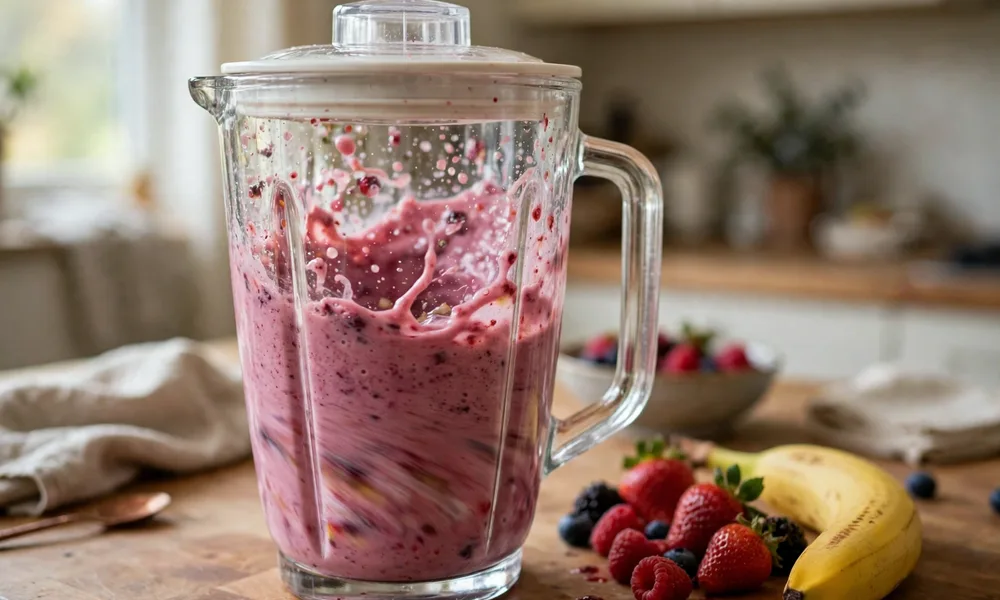
Then add the fruit, and stop at two kinds. Frozen berries are the best value of all, because they are picked ripe, they make the smoothie cold and thick without ice, and they cost far less than fresh out of season. A banana adds sweetness and body, and mango or pineapple adds brightness. That is enough. Every extra fruit you add pushes the sugar up and muddies the flavour, so pick the two you like best and leave the rest in the fruit bowl.
Next comes the part most people skip: something to keep you full. A big spoonful of Greek yoghurt is the simplest choice, and it adds protein and a pleasant tang. A spoonful of peanut or almond butter adds healthy fat and makes the smoothie taste richer. A tablespoon of oats thickens it and adds fibre, and a tablespoon of chia or flaxseed adds more fibre still, as long as you let them soak for a minute or two first. Pick one or two of these, not all of them at once.
Finally, blend it properly and drink it fresh. Start slow, then blend on high for thirty to sixty seconds until the texture is completely smooth, with no specks of unblended fruit. Taste it before you pour: if it is too thick, add a splash of liquid; if it is too thin, add a few more frozen berries. A smoothie that has been blended well and drunk within the hour is a different drink from one that has sat in the fridge all day, separated and dulled.
The Verdict
The best smoothies of 2026 are the simple ones. Whole fruit, a plain liquid, a proper source of protein, and a little fibre, blended thick and drunk fresh. They taste good, they keep you full, and they are genuinely good for you, which is more than most foods that claim to be healthy can say. They are also cheap and quick to make at home, which means there is no excuse for the sugary version.
The worst smoothies of 2026 are the ones that trade on the word smoothie while behaving like dessert. Juice-based, syrup-sweetened, oversized, and topped like a sundae, they load you with sugar and leave you hungry, and they charge cafe prices for the privilege. A bottled smoothie that is mostly apple juice is no better, however bright the label looks.
So judge a smoothie by what is in the glass, not by what is written on the menu. If you can name every ingredient and you would eat them all on a plate, you have a good one. If the list is long, sweet, and hard to pronounce, put it down. Make your own when you can, choose carefully when you buy, and let the fruit do the sweetening.


