
A sweater is the garment that decides whether winter feels cosy or miserable. The best sweaters of 2026 keep you warm without making you sweat, they hold their shape wash after wash, and they look just as good in March as they did in November. The worst sweaters do the opposite. They itch within minutes, they pill after one wear, they sag at the elbows and the neckline, and they end up at the back of a drawer by Christmas.
This comparison puts the best sweaters of 2026 head to head against the worst, judging them the way you would actually wear them: on a cold walk to work, curled up on the sofa on a Sunday, layered under a coat on a wet evening, and washed for the tenth time. We look at fibre, warmth, fit, pilling, care, and whether the sweater is still something you reach for after a full season of wear. The same honest approach sits behind our comparison of the best and worst scarves of 2026, because a good sweater and a good scarf are the two things that make winter bearable.
Key Takeaways
- Judge a sweater by its fibre first, because no amount of clever design can rescue a bad yarn.
- Warmth without breathability is a trap: a sweater that makes you sweat indoors is a sweater you will stop wearing.
- Pilling is the honest test of quality, and it shows up within weeks on a cheap sweater.
- Fit matters more than fashion, since a sweater that is too tight or too long is uncomfortable whatever the label says.
- Buy the sweater for the washing it will actually get, not the care label you wish you followed.
What Makes a Sweater Good or Bad
A good sweater starts with its fibre. Wool, especially merino and lambswool, traps warm air between its fibres while still letting moisture escape, which is why a good wool sweater feels warm without feeling clammy. Cashmere is softer still, and a well-made cashmere sweater feels like nothing at all against the skin. Cotton is cooler and easier to wash, which suits mild days and people who run warm. The worst sweaters are usually made from cheap, short-staple acrylic that feels plasticky, holds static, and pills into hard little balls within days.
The second thing that separates good from bad is how the sweater is knitted. A good sweater has a tight, even knit with no thin patches, seams that lie flat, and ribbing at the cuffs and hem that springs back when you stretch it. The stitches should be small and regular, and the whole garment should feel substantial without being heavy. A bad sweater often has a loose, uneven knit, seams that twist after washing, and ribbing that goes slack the first time you wear it. You can feel these things in the shop if you take ten seconds to stretch a cuff and look at the seams.
Warmth and breathability are the third test, and they are the one most buyers get wrong. A sweater that is warm on a freezing morning but suffocating in a heated office is not a good sweater, it is a blanket with sleeves. The best sweaters regulate temperature: warm enough outside, comfortable enough inside, and never so thick that you cannot wear a coat over them. The worst sweaters are either so thin that the wind goes straight through them or so bulky and airless that you overheat the moment you step indoors.
The Best Sweaters of 2026
The best sweaters of 2026 are mostly the quiet ones, and that is exactly the point. They are the crew necks and roll necks in plain colours that go with everything you already own: a soft merino crew neck that layers under a coat, a chunky cable knit that works on its own, and a fine cashmere blend that dresses up a pair of jeans. They are not the loudest sweaters in the shop, but they are the ones you reach for every morning.

What the best sweaters share is a feeling of substance. The fabric is dense and springy, the cuffs stay snug without cutting into your wrists, and the neckline keeps its shape instead of sagging into a boat neck after a month. Their colours stay true too: a good dye job does not fade in the wash, and a good dark sweater does not shed fluff all over your coat. These are small things, but they are the things that decide whether a sweater lasts one winter or five.
The Worst Sweaters of 2026
The worst sweaters of 2026 are not always the cheapest, and that is what makes them so frustrating. Some look smart on the hanger and feel soft in the shop, but within a few weeks the problems start: the surface goes rough and pilled, the sleeves stretch long, and the neckline loses its shape. Owners find themselves picking pills off the front every time they wear it, and the sweater slowly stops being something they choose.

Pilling is where many of the worst sweaters fall down hardest. Cheap acrylic and short-fibre blends pill almost immediately, especially under the arms and across the stomach where fabric rubs against fabric. The pills are hard, ugly, and almost impossible to remove properly, and they make a new sweater look old within a month. A sweater that pills badly is a sweater you will stop wearing, however much you liked it on the first day.
Fibres: Wool, Cashmere, Cotton, and Acrylic
Wool remains the best all-round sweater fibre in 2026, especially merino, which is fine, soft, and warm without bulk. Lambswool is slightly thicker and tougher, and it suits chunky knits and outdoor wear. A good wool sweater will keep you warm in a cold wind and still feel comfortable in a heated room, and it naturally resists smells, so it needs washing less often than you might think. The trade-off is care: wool needs a gentle wash, and a hot wash will shrink it beyond rescue.
Cashmere is the luxury choice, and the best cashmere sweaters are astonishingly soft and light for their warmth. But cashmere varies more than any other fibre, and a cheap cashmere sweater is often worse than a good wool one: thin, fragile, and quick to pill. If the price looks too good for cashmere, it usually is, because the fibres are short and the knit is loose. Cotton is the easy option, cool and simple to wash, but it holds no warmth when it gets wet and it stretches out of shape more readily than wool. Acrylic has its place in hard-wearing everyday knits, but only when it is good quality and blended with something natural.
Fit, Care, and the Numbers That Actually Matter
Fit is the difference between a sweater that looks smart and one that looks like borrowed clothes. The shoulder seam should sit on your shoulder, not halfway down your arm, and the body should skim your waist without clinging or billowing. Sleeves should end at the wrist bone, not cover your hands, and the hem should sit just below your belt. A sweater that fits well in the shop will fit well all winter, while one that is slightly wrong on day one will only feel worse as it stretches.
Care is the hidden cost of a sweater, and it deserves the same attention as the price tag. Wool and cashmere need a cool, gentle wash or a hand wash, and they should be dried flat rather than hung up, because hanging stretches a wet sweater out of shape. Cotton can take a normal wash, which is why it suits people who want no fuss. The same care applies to the rest of a winter wardrobe, and our comparison of the best and worst jackets of 2026 shows how much difference good layering makes when the weather turns.
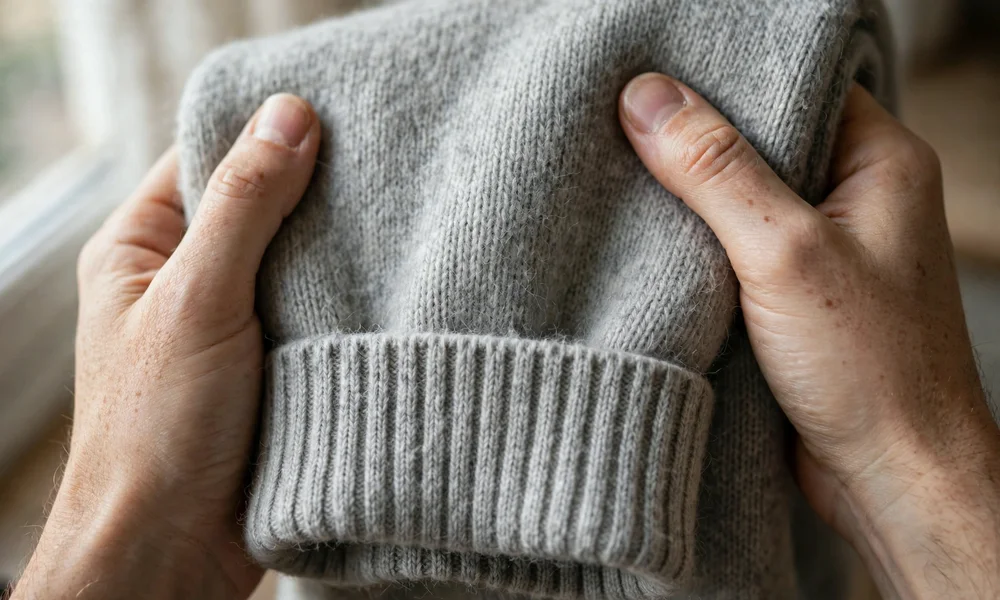
Price is a poor guide on its own. A good sweater is an investment, but the most expensive sweater in the shop is not always the best one, and a mid-priced merino often beats a flashy designer label. What matters is the fibre content on the label, the density of the knit, and how the sweater feels against your neck. Check the label before you buy, stretch a cuff, and look at the seams: ten seconds of checking can save you a winter of regret.
How to Buy a Sweater Without Regret
The single most useful thing you can do before buying a sweater is to wear it properly in the shop. Put it on over the shirt you would normally wear with it, sit down in it, raise your arms, and walk around for a minute. If the neck itches, if the seams dig in, or if the body rides up when you sit, believe it: it will feel worse after a month, not better. A sweater that is comfortable for five minutes in a shop is usually comfortable for a whole winter.
Check the label with real attention before you pay. Look for a high natural fibre content, ideally wool or a wool blend, and be wary of anything that is mostly cheap acrylic. Look at the knit closely for thin patches and uneven stitches, and tug gently at a cuff to see whether the ribbing springs back. If the sweater is already pilling on the shop rail, walk away: it will only get worse at home.
Finally, think about the winter you actually live in, not the one in the photographs. If you spend most of your time indoors, a fine merino or cashmere crew neck is the better buy than a huge chunky knit. If you walk to work in the cold, a thicker knit with a roll neck earns its keep. And remember that a sweater is only one part of staying warm: our comparison of the best and worst gloves of 2026 covers the cold hands that a good sweater alone cannot fix.
Best vs Worst Sweaters at a Glance
| What to check | The best sweaters | The worst sweaters |
|---|---|---|
| Fibre | Merino, lambswool, good cashmere | Cheap short-staple acrylic |
| Knit | Dense, even, springy ribbing | Loose, uneven, slack cuffs |
| Comfort | Soft, breathable, no itch | Scratchy, sweaty, poor fit |
| After a season | Holds shape, little pilling | Pilled, sagging, stretched out |
The Verdict
The best sweaters of 2026 are the ones that make winter easier without asking for much in return. They are warm, comfortable, well made, and honest about what they are: a good fibre, a good knit, and a fit that works with your real life. They do not need to be expensive or fashionable: they simply work, wash after wash, winter after winter.
The worst sweaters of 2026 are the ones that demand too much and give too little back: too much itching, too much pilling, and too much of your money spent on something you stop wearing within weeks. A sweater is the garment you live in all winter, and when it fails, every cold day feels a little worse.
So buy with your hands as well as your eyes. Feel the knit, check the label, try it on properly, and walk away from anything that itches, pills, or sags. Choose the fibre that fits your winter and the fit that fits your body, and the sweater you buy this year will still be the one you reach for next year.


