
A good pair of binoculars can turn an ordinary morning walk into something worth remembering. The right pair pulls a distant bird close enough to count its feathers, steadies a shaky view at dusk, and sits comfortably in your hands for hours without making your neck ache. The wrong pair does the opposite. It shows you a dim, wobbly circle, fogs up the moment the temperature changes, and ends up forgotten in a drawer after one disappointing afternoon. The gap between the best and the worst binoculars of 2026 is wider than most buyers expect, and it has very little to do with how much you spend.
This comparison puts the best binoculars of 2026 head to head against the worst, judging them the way you would actually use them: how bright and sharp the view is, how steady the image stays in your hands, how they cope with rain and cold, and how long they keep working before something breaks. A good pair earns its place in your bag. A bad pair teaches you an expensive lesson about trusting the box.
Key Takeaways
- Look for 8×42 binoculars first: they are bright, steady, and easy to hold for most people.
- Fully multi-coated glass and BaK-4 prisms make a bigger difference to the view than extra magnification.
- Cheap zoom binoculars are almost always a trap: the image gets dimmer and shakier as you zoom in.
- Waterproofing and fog-proofing matter more than a fancy carry case or a bundled tripod.
- The worst binoculars are heavy, dim, and hard to focus, which is why they end up unused.
What the Numbers Mean: 8×42 and Beyond
Every pair of binoculars carries two numbers, and understanding them saves you from most buying mistakes. The first number is the magnification: how many times closer the view appears. The second is the size of the front lens in millimetres: how much light the binoculars can gather. An 8×42 pair magnifies eight times and has a 42mm front lens. A 10×50 pair magnifies ten times with a 50mm lens. Bigger numbers sound better, but they come with real trade-offs that the box never mentions.
Higher magnification makes the image harder to hold steady. At 10x, every small tremor in your hands is magnified too, so the view shakes unless you brace yourself or use a tripod. At 12x or more, holding the image still without support is almost impossible for most people. That is why experienced birdwatchers mostly reach for 8x: the view is steadier, the field of view is wider so birds are easier to find, and the image stays bright because the light is spread over a smaller magnification.
The front lens size decides brightness. A 42mm lens gathers enough light for dawn, dusk, and woodland shade, which is when most wildlife is active. A 32mm lens is lighter and easier to carry, but the view goes dim earlier in the evening. A 25mm compact lens is fine for a bright afternoon at a football match, and disappointing everywhere else. Small, cheap binoculars with tiny lenses and huge magnification claims are the worst combination of all: they promise the moon and deliver a dark, shaky keyhole.
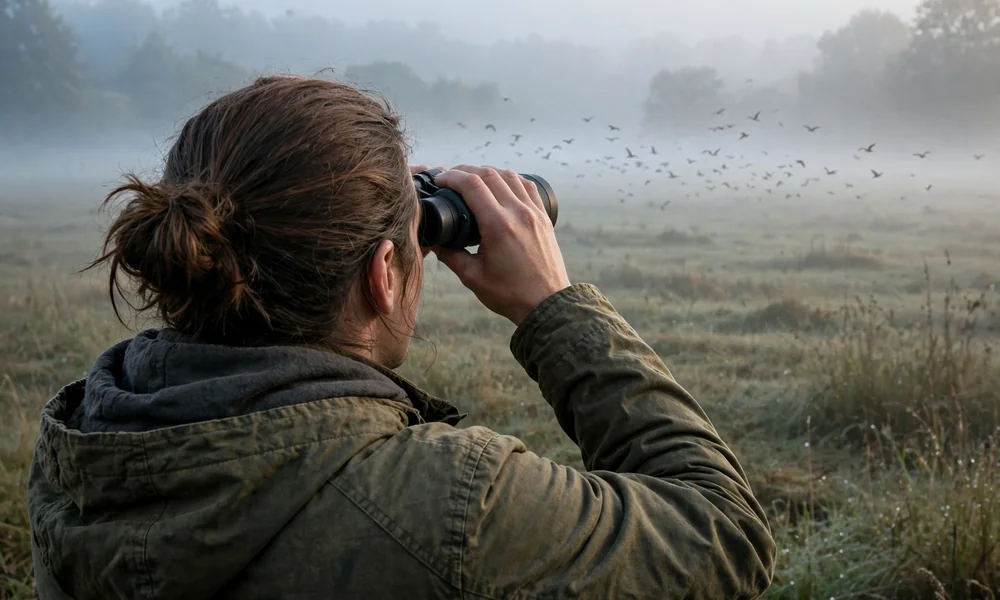
What Makes a Binocular Good: Glass, Coatings, and Build
The view through a pair of binoculars is decided by the glass inside it, and the differences are easy to see once you know what to look for. Good binoculars use BaK-4 prisms, which pass light cleanly and give a round, bright exit pupil. Cheap binoculars often use BK-7 prisms, which can show a grey, squared-off edge to the view and lose light at the corners. Hold a pair up to a bright sky and look at the small circles of light in the eyepieces: round and bright means good glass, grey and squared means the prisms are cutting corners.
Coatings matter just as much. Every glass surface inside a binocular reflects a little light away, and uncoated glass loses a surprising amount of it. Fully multi-coated lenses have coatings on every air-to-glass surface, which keeps the view bright and the colours true. Binoculars described only as coated, or with no coating mentioned at all, will look dimmer and flatter next to a fully multi-coated pair, especially in low light. This single feature separates most good binoculars from most bad ones.
Then there is the build. A good pair feels solid without being heavy, the focus wheel turns smoothly with one finger, and the eyecups twist up and down cleanly. The barrels are sealed against water and filled with dry nitrogen so the lenses never fog from the inside. A bad pair feels hollow and rattly, the focus wheel sticks or has dead spots, and the eyecups wobble. If the focus wheel fights you in the shop, it will fight you in the field too, and you will miss the moment you bought the binoculars to see.
The Best Binoculars of 2026
Best for most people: a bright 8×42 with fully multi-coated glass
The strongest all-round binoculars of 2026 are 8×42 pairs with fully multi-coated glass, BaK-4 prisms, and a waterproof, fog-proof body. The view is bright from first light to last, the image stays steady in your hands, and the focus wheel is smooth enough to follow a bird from branch to branch without losing it. These are the pairs that experienced watchers recommend to beginners, because they do everything well and nothing badly.
Best for travel: a light 8×32 you will actually carry
The best travel binoculars are the ones that come with you, and that means light and compact. A good 8×32 pair weighs noticeably less than a full-size 8×42, folds down small enough for a day pack, and still gives a bright, steady view in daylight. For holidays, walks, and sporting events, that trade is worth making. A heavy pair left in the hotel room helps nobody.
The good compact pairs keep the features that matter: fully multi-coated glass, BaK-4 prisms, and a waterproof body. The bad ones cut all of them to save weight and cost, and the result is a dim, narrow view that feels like looking down a tunnel. Check the eye relief too if you wear glasses: good travel pairs give you at least 15mm, so you can see the whole view without pressing the eyecups against your lenses.
Best for low light: a 10×50 with a wide, bright view
For dawn, dusk, and stargazing, a good 10×50 pair gathers far more light than a compact, and the difference is obvious the moment the sun drops. The view stays usable long after smaller pairs have gone dark, and stars that are invisible to the naked eye start to appear. These pairs are heavier, so they suit a hide, a garden chair, or a tripod better than a long hike, but for still watching in poor light they are hard to beat.

The Worst Binoculars of 2026
Worst for everyday use: cheap zoom binoculars
The worst binoculars of 2026 are the zoom pairs sold with dramatic claims on the box: 30x, 60x, even 90x magnification, often for the price of a takeaway dinner. The trick is that zooming in makes everything worse at once. The image gets darker as the magnification rises, the field of view narrows to a tiny circle, and the shake becomes so bad that you cannot tell what you are looking at. Most of these pairs are also built with BK-7 prisms and uncoated or barely coated glass, so the view is dim before you even touch the zoom lever.
Worst for comfort: heavy pairs with a narrow, dim view
Some binoculars look impressive in the shop and punish you within ten minutes of real use. They are heavy enough to ache your neck, the eye relief is so short that glasses wearers can only see the middle of the view, and the focus wheel needs two hands. The view is often dim at the edges, with a yellowish tint that makes everything look like an old photograph. These are the pairs that get used once, then live on a shelf.
Worst for value: pairs that fog, leak, and fall apart
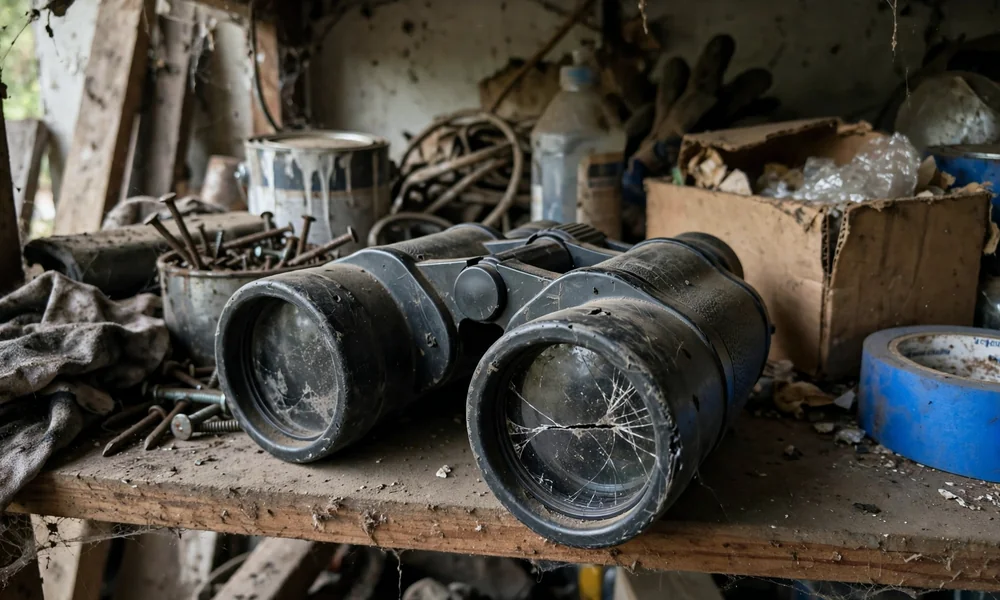
The most frustrating binoculars are the ones that work on day one and fail by month three. The lenses fog from the inside after a damp morning, water gets in during a shower, the rubber armour peels away from the barrels, and the focus wheel develops a dead spot where nothing happens. None of this is visible in the shop, which is exactly why it catches so many buyers out.
Best vs Worst Head to Head
Put the best and the worst side by side and the differences are visible in seconds. The best pair gives you a bright, sharp view the moment you lift it, with colours that match the world and a focus wheel that glides. The worst pair gives you a dim, narrow view that you have to fight to keep steady, and the focus wheel sticks at exactly the wrong moment. In daylight the gap is noticeable. At dawn or dusk it is enormous.
The best pairs are also the ones you keep using. They are comfortable enough to carry all day, tough enough to survive rain and knocks, and sealed well enough that they never fog. The worst pairs are the ones you stop reaching for: too heavy, too dim, too fiddly, until one day you realise you have not used them in months. That is the real cost of a bad pair, and it is larger than the price on the box.
The Verdict
The best binoculars of 2026 are the ones that disappear in your hands: bright, steady, comfortable, and sealed against the weather. An 8×42 with fully multi-coated glass and BaK-4 prisms is the right starting point for almost everyone, with a light 8×32 for travel and a 10×50 for low light. The worst binoculars are the cheap zoom pairs, the heavy dim pairs, and the unsealed pairs that fog and leak. They look like a bargain and cost you more in the end, because you will replace them, and you will have missed the views you bought them to see.
Who Each Is For
If you watch birds, walk in the countryside, or want one pair that does everything, buy the best 8×42 you can afford and stop shopping. If you travel light, a good 8×32 will serve you better than a heavy pair you leave behind. If you watch at dawn and dusk or enjoy the night sky, a 10×50 is worth the extra weight. And if you are tempted by a zoom pair with an enormous magnification number on the box, spend the money on a fixed 8x pair instead. Your future self, standing in a misty field with a sharp, bright view, will be glad you did.
For a closer look at how optics choices play out across other gadgets, see our comparison of the best and worst cameras of 2026, which covers similar questions about glass, sensors, and value. If your interests run to the sky rather than the hedgerow, our guide to the binoculars that make birdwatching worth it goes deeper on the birdwatching side. And for another take on portable tech that has to work outdoors, the best and worst drones of 2026 face the same trade-offs between weight, weather, and image quality.


