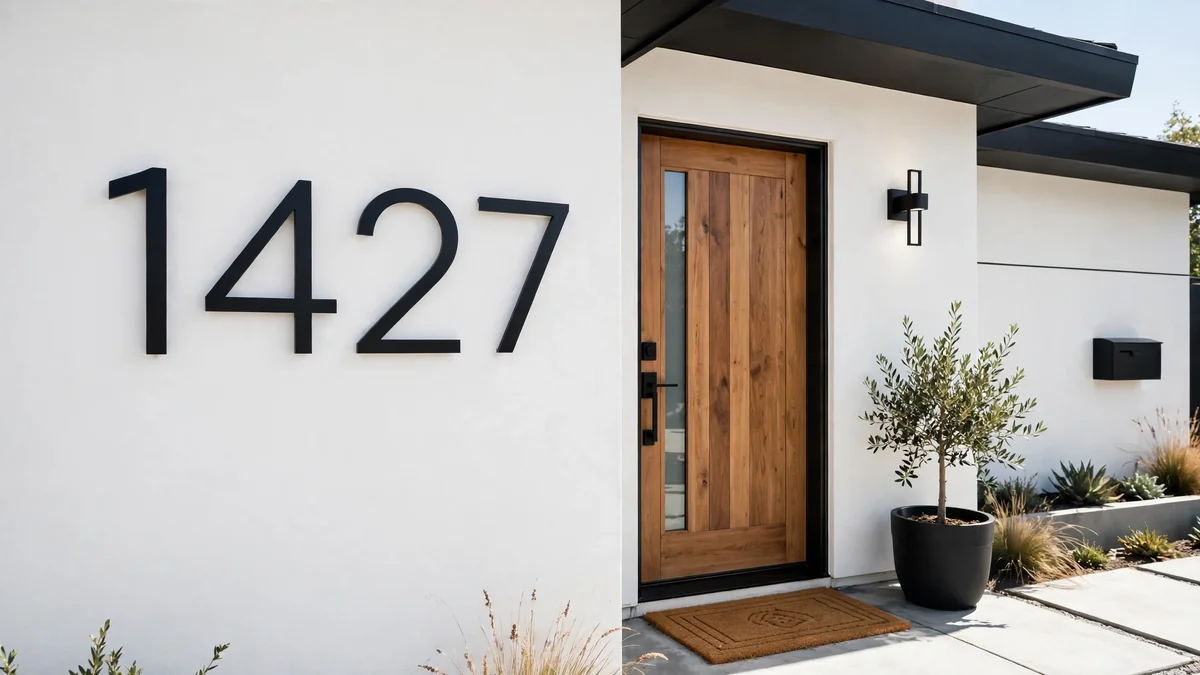
House numbers matter more than you think. They are the smallest detail on the front of a home, often no bigger than a hand, and yet they do a surprising amount of work. They help visitors, delivery drivers and emergency services find you. They set the first impression of your home before anyone reaches the front door. A home with clear numbers looks cared for; a home with faded or missing numbers looks neglected and is harder to reach when it matters most.
Most people never think about their house numbers until something goes wrong: a parcel goes to the wrong door, or an ambulance loses precious minutes looking for the right house. The fix is simple and cheap, and it takes less than an hour. This guide explains why house numbers deserve more attention than they usually get, and how to choose numbers that are visible, durable and right for your home in 2026.
Key takeaways
- House numbers should be readable from the street, ideally at least 10 centimetres tall.
- High contrast between the numbers and the wall behind them matters more than the font.
- Put numbers where they can be seen from the road, not hidden behind plants or a porch post.
- Choose weatherproof materials such as metal, ceramic or acrylic that will not fade or rust.
- Light your numbers at night, or choose reflective or illuminated ones, so they work after dark.
Why house numbers matter more than you think
The most important job of a house number is a practical one: helping people find you. Delivery drivers, guests, tradespeople and emergency services all rely on house numbers, and they rely on them quickly. An ambulance crew looking for a house at night does not have time to guess which door is yours. Clearly visible numbers can save minutes, and in an emergency minutes matter.
Beyond the practical side, house numbers shape the first impression of a home. Crisp, well-proportioned numbers on a clean wall suggest a home that is looked after. Peeling stickers, a faded painted number or a single rusty digit suggest the opposite, even if the rest of the house is immaculate. Kerb appeal is built from small details, and house numbers are one of the cheapest to get right.
House numbers also express style. A slim modern number in brushed steel says something different from a hand-painted ceramic tile or a classic brass figure, and together with your door, letterbox and lighting they form the first sentence of your home’s story.

How to choose house numbers that work
Choosing house numbers comes down to four things: size, contrast, placement and material. Get those right and almost any style will work.
Size: bigger than you think
Most house numbers are too small. As a rule, numbers should be at least 10 centimetres tall to be readable from the street, and 15 centimetres is better on a busy road or a house set back from the pavement. Stand at the kerb and look at your front door: if you cannot read the numbers easily, neither can a delivery driver in a hurry. Numbers must also be read from a moving car and in poor weather, so err on the generous side.
Contrast: the rule that matters most
Contrast matters more than font, colour or material. Dark numbers on a light wall and light numbers on a dark wall are both easy to read, because the eye separates the figure from the background instantly. The combinations that fail are the ones with no contrast: silver numbers on a grey wall, dark bronze on dark wood, or white numbers on a white wall. Before you buy, hold the numbers against the surface they will sit on and check them from the pavement, not just from arm’s length.
Placement: where people actually look
Numbers should go where a stranger would look for them: near the front door, at eye level, and visible from the road. The best spot is usually on the wall beside the door, on the door itself, or on a gatepost at the front of the property, anywhere they are not hidden. Check for the usual culprits: a porch post, an overgrown bush, a hanging basket or a parcel box blocking the view. If your house is set back from the road or hidden behind a hedge, put a second set of numbers on the gate or the fence at the front of the plot, where they can be seen from the street.
Also consider height. Numbers at eye level, around 150 to 170 centimetres from the ground, are easiest to spot. Numbers placed very high on a wall or very low near the ground are easy to miss, especially at night. In a row of similar houses, clear numbers matter even more.
Material: built to survive the weather
House numbers live outside in all weathers, so the material matters. Stainless steel and aluminium are modern, durable and will not rust. Brass and bronze look classic and age gracefully, developing a patina that many people like. Ceramic tiles are a traditional choice that holds colour beautifully and never fades. Acrylic numbers are light, cheap and available in any colour, but check that they are UV-stable or they will yellow in the sun. Avoid thin painted numbers and stickers: they fade, peel and look tired within a year or two.
House number styles compared
| Style | Best for | Look | Watch out for |
|---|---|---|---|
| Brushed steel | Modern and minimalist homes | Clean, understated, contemporary | Low contrast on grey walls |
| Brass or bronze | Period and traditional homes | Warm, classic, elegant | Needs polishing to stay bright |
| Ceramic tiles | Cottages and craftsman homes | Handmade, colourful, charming | Can crack if badly fixed |
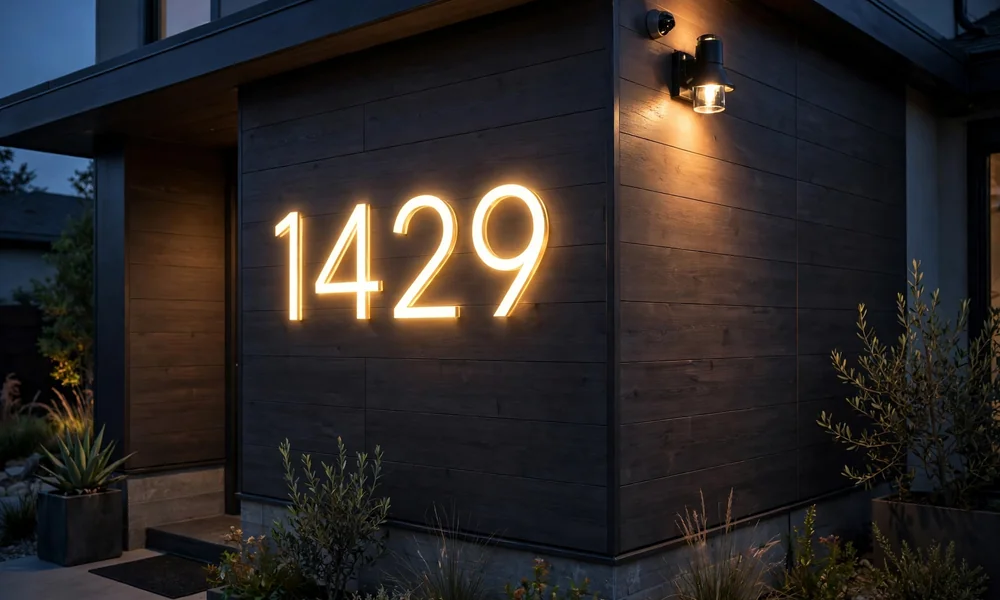
| Backlit or illuminated | Dark streets, rural homes | Visible day and night | Needs power or solar charging |
| Painted on the door | Victorian and terraced homes | Traditional, subtle, neat | Fades and needs repainting |
House numbers at night
A house number that works by day and disappears at night is only doing half its job. Deliveries, guests and emergency calls happen after dark too, and a dark frontage hides even the best numbers. There are three good solutions: a porch light or wall light positioned to wash over the numbers; reflective numbers, which catch car headlights without any wiring; or illuminated numbers, wired or solar-powered, which glow on their own after dusk. Solar versions need a spot that gets direct sun during the day.
Whichever option you choose, test it at night. Stand at the kerb after dark and check that you can read the numbers from a car with its headlights on. If you cannot, the numbers are not doing their job. For ideas on making an entrance feel finished, our guide to wall clocks that make a room feel finished shows how one well-chosen detail can pull a space together.
House numbers and kerb appeal
House numbers are one of the cheapest kerb-appeal upgrades there is. A new set of quality numbers costs less than a takeaway dinner for two, takes under an hour to fit, and changes how the whole front of the house reads. Yet numbers are often the last thing anyone updates, left over from a previous owner or fitted as an afterthought when the house was built.
When you update your numbers, look at the entrance as a whole. Do the numbers match the door furniture, letterbox and light fitting, and sit at a balanced height? Small alignments like these make an entrance feel designed rather than assembled. If the door itself is looking tired, numbers alone will not fix it, but they are a good place to start.
There is also a practical side to kerb appeal that buyers and valuers notice. A home that is easy to find and clearly identified feels cared for, and that feeling carries into every other judgement a visitor makes. It is a small detail with an outsized effect, which is exactly why it deserves more thought than it usually gets. The same principle applies indoors: the best vs worst wall clocks of 2026 shows how one piece can change a whole room.

Common house number mistakes
The most common mistake is numbers that are too small to read from the street. The second is poor contrast: elegant thin numbers in a colour close to the wall behind them. The third is bad placement, usually numbers hidden behind a plant, a post or a parcel box. The fourth is using stickers or painted numbers that fade within a year. The fifth is forgetting the night: numbers that are invisible after dark. And the sixth is mixing styles, such as a modern steel number on a period door with brass furniture.
All six are easy to avoid. Measure the viewing distance, check the contrast from the kerb, clear the sightline, choose a weatherproof material, test the numbers at night, and match the style to the house. An hour spent on these checks gives you numbers that work for a decade.
Your house number checklist
- Choose numbers at least 10 centimetres tall, or 15 centimetres if your house is set back from the road.
- Check the contrast from the kerb: dark on light, or light on dark, with no exceptions.
- Place numbers beside the front door at eye level, and add a second set on the gate if the house is hidden.
- Clear the sightline: trim plants, move baskets and boxes, and check the view from a car.
- Pick a weatherproof material such as steel, brass, ceramic or UV-stable acrylic.
- Test the numbers at night and add light, reflective finish or illumination if you cannot read them after dark.
Frequently asked questions
How big should house numbers be?
At least 10 centimetres tall, and 15 centimetres is better for houses set back from the road or on busy streets. Check from the kerb that you can read them easily.
Where is the best place to put house numbers?
On the wall beside the front door, at eye level between 150 and 170 centimetres from the ground, where they are visible from the road. If the house is hidden, add a second set on the gate.
What material lasts longest for house numbers?
Stainless steel and aluminium last longest with the least maintenance, since they do not rust or fade. Brass and bronze also last for decades. Avoid stickers and thin paint, which fade and peel within a year or two.
Do I need illuminated house numbers?
Not always, but they help a great deal after dark. A porch light aimed at the numbers, reflective numbers that catch headlights, or solar-powered illuminated numbers all work. Test them at night from the kerb: if you cannot read them, add light.
Can house numbers really affect my home’s value?
They cannot add value on their own, but they contribute to kerb appeal, which shapes a buyer’s first impression. A clear, stylish set of numbers signals a well-cared-for home, and that impression colours everything else a visitor or buyer sees. Keeping the entrance tidy matters too, from the numbers to the shoe racks that keep your entryway tidy.
Should house numbers match the front door?
They should complement it. Match the metal of the numbers to the door furniture, such as the handle, letterbox and knocker, and choose a style that suits the age of the house. A modern steel number on a period door looks out of place.
The bottom line
House numbers are small, cheap and easy to ignore, and that is exactly why they matter more than you think. They help the people who need to find you, from delivery drivers to emergency services, and they set the first impression of your home before anyone steps inside. Choose numbers big enough to read from the street, with strong contrast, visible day and night, made from a material that will survive the weather. It is an hour’s work and a small spend.