
The best humidifiers in 2026 do one simple job brilliantly: they put moisture back into dry indoor air, and they do it quietly, efficiently and without turning your home into a sauna. If you wake up with a dry throat, cracked lips, a stuffy nose or skin that feels tight every winter, the problem is often not the cold — it is the air itself. Heated indoor air can drop to 20 percent humidity or lower, and that dryness irritates airways, wakes you up at night and even damages wooden furniture and houseplants.
A good humidifier restores balance. The sweet spot for indoor humidity sits between 30 and 50 percent, and the best humidifiers of 2026 hold a room in that range with a hygrometer and a tank that lasts through the night. Whether you need one for a small bedroom, a large living room or a nursery, the right model is the one that matches your room size, runs quietly and is easy to clean.
This guide compares the strongest humidifiers of 2026 by type, room size and ease of use, so you can pick the one that fits your home.
Key Takeaways
- Aim for indoor humidity of 30 to 50 percent — below 30 percent air feels dry and irritating, above 50 percent it invites damp and mould.
- Ultrasonic models are the quietest and cheapest to run, evaporative models are the most self-regulating, and warm-mist models suit winter colds best.
- Match the tank and output to your room: a small bedroom needs far less power than an open-plan living room.
- A built-in hygrometer and auto shut-off matter more than a fancy app, because they stop the room getting too damp.
- Clean the tank every few days — a dirty humidifier can spread bacteria and mineral dust into the air it is meant to improve.
Why Dry Air Is a Problem in Winter
Winter air holds very little moisture, and central heating makes it worse. When cold outdoor air comes inside and is warmed up, its relative humidity falls sharply, often to half of what your body is comfortable with. The result is a scratchy throat in the morning, nosebleeds, dry eyes, itchy skin and static shocks from every doorknob.
Dry air also affects your home: wooden floors and furniture can crack, paint can peel, and houseplants droop. A humidifier protects the things in your home as well as your comfort.
The fix is straightforward, but it has to be measured. Adding moisture blindly can push a room past 50 percent humidity, and that is when condensation forms on windows and mould starts to grow in corners. That is why the best humidifiers in 2026 pair a decent tank with a humidity sensor: they add moisture only until the room reaches the target, then they ease off. If you already own an air purifier, the two work well together — one cleans the air and the other keeps it at a comfortable moisture level, as our guide to the best air purifiers of 2026 explains.
The Main Types of Humidifier Compared
Every humidifier adds moisture to the air, but the way it does it changes the noise, the running cost, the maintenance and the feel of the room. Understanding the four main types is the fastest way to narrow the choice.

Ultrasonic Humidifiers
Ultrasonic models use a vibrating diaphragm to turn water into a fine, cool mist. They are the quietest type by a clear margin, they use very little electricity, and they come in the widest range of sizes, from tiny desk models to large towers. Their weakness is mineral dust: if you fill them with hard tap water, the minerals can settle as a fine white dust on nearby surfaces. Using distilled or demineralised water solves that, and many models now include a demineralisation cartridge.
Evaporative Humidifiers
Evaporative models blow air through a wet wick or filter, and the water evaporates naturally into the room. They are naturally self-regulating — as the air gets more humid, less water evaporates, so they rarely over-humidify a room. They are slightly noisier than ultrasonic models because of the fan, and the wick needs replacing every few months, but they are the safest choice for people who worry about overdoing it. They also produce no white dust, which makes them a strong pick for homes with hard water.
Warm-Mist Humidifiers
Warm-mist models boil water and release a warm, soothing steam. They feel wonderful during a cold or a bout of congestion, and the boiling kills most bacteria in the water, which makes them the most hygienic type. The trade-offs are higher electricity use, a hot surface that needs care around children and pets, and a slower start. They are best as a seasonal or bedside unit rather than an all-day, all-room workhorse.
How to Choose the Right Humidifier
Choosing well comes down to five decisions, and getting them right in order saves you from buying twice.
Match the Output to the Room
Manufacturers quote coverage in square metres, and it is worth believing the number rather than the marketing. A 300-millilitre-per-hour output suits a bedroom up to about 20 square metres; an open-plan living room of 40 square metres or more needs 500 millilitres per hour or a whole-room evaporative unit. An undersized humidifier will run flat out all day and still leave the air dry, while an oversized one in a small room will fog the windows. Measure the room, then buy the size the room actually needs.
Check the Tank and the Runtime
Tank size decides how often you refill. A 4-litre tank at a moderate setting usually lasts 12 to 20 hours, which covers a full night. A 2-litre tank may need a refill before morning. Look for a tank that is wide-mouthed and easy to carry to the sink, because a narrow-necked tank is a chore to clean. A top-fill design is the easiest of all — you can refill it in place with a jug.
Noise Matters More Than You Think
A humidifier that will sit beside your bed needs to run below 30 decibels on its sleep setting, which is about as loud as a quiet whisper. Ultrasonic models manage this easily; evaporative models with a fan are usually a little louder. If you are a light sleeper, check the sleep mode and whether the display can be dimmed or switched off, because a bright LED is as disruptive as a hum.
Best Humidifiers by Room and Need
Rather than one winner for everyone, the best humidifier depends on where it will live and who will use it.
Best for Bedrooms
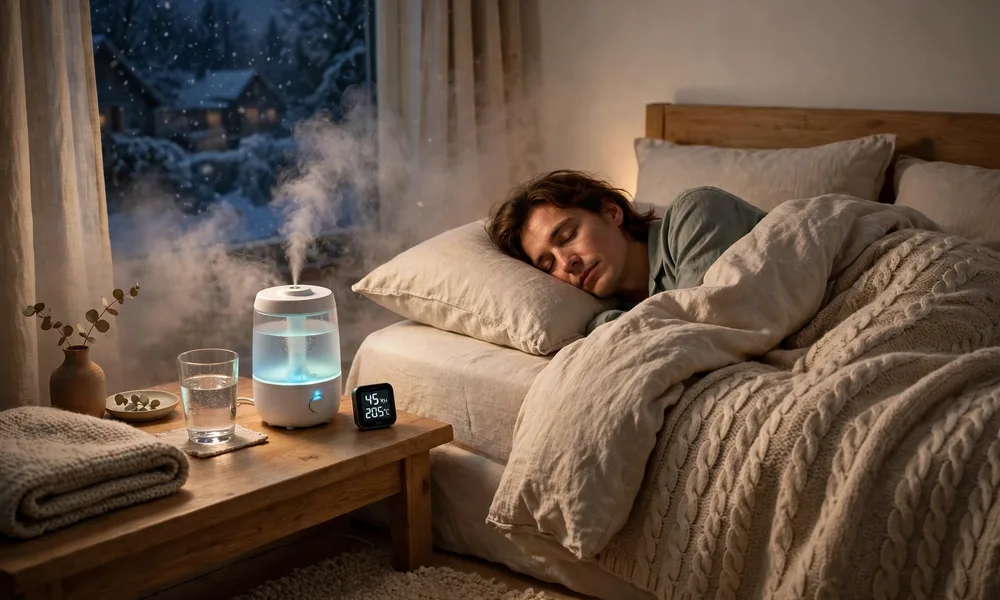
For a bedroom, quiet wins. A mid-size ultrasonic model with a 4-litre tank, a sleep mode under 30 decibels and a dimmable display is the ideal combination. Place it on a bedside table or a low stand, a metre or so from the bed, with the mist directed into the room rather than straight at your face. Run it for an hour before bed so the room is already comfortable when you lie down, then let the hygrometer hold the level overnight. If your bedroom also gets cold at night, pairing the humidifier with a small heater helps, and our roundup of the best desk heaters of 2026 covers compact heating options for small rooms.
Best for Nurseries and Babies
Nurseries are one of the most common reasons people buy a humidifier, because babies are especially sensitive to dry air and congestion. For a nursery, choose a cool-mist ultrasonic or evaporative model — never a warm-mist steamer, because of the hot surface — with a child lock, a quiet sleep mode and no bright lights. Keep the humidity around 40 to 50 percent, clean the tank more often than you would for an adult room, and place the unit out of reach of small hands. A nursery humidifier pairs naturally with the other essentials in our guide to the best nursery essentials of 2026, which covers the kit that makes the first year easier.
Running Costs and Maintenance
The real cost is maintenance. Wicks for evaporative models need replacing every one to three months depending on water hardness, and demineralisation cartridges for ultrasonic models last a similar length of time. Neither is expensive, but both are easy to forget, so set a reminder when you install a fresh one.

How to Clean a Humidifier Properly
Cleaning is the least glamorous part of owning a humidifier and the most important. Stagnant water breeds bacteria and mould, and a dirty unit can spray them into the air you breathe. Empty the tank daily rather than topping it up, rinse it every two or three days, and do a deeper clean weekly with a solution of water and white vinegar or a manufacturer-approved descaler. Scrub the corners with a soft brush, rinse thoroughly, and let every part dry completely before reassembling. Never use bleach unless the manual explicitly allows it, and never run a humidifier with a tank you would not drink from.
Best Humidifiers 2026 Compared
| Type | Best For | Noise | Running Cost | Maintenance |
|---|---|---|---|---|
| Ultrasonic cool mist | Bedrooms, nurseries, quiet rooms | Very quiet | Very low | Regular cleaning, distilled water helps |
| Evaporative | Large rooms, hard water areas | Moderate fan hum | Low | Wick replacement every 1–3 months |
| Warm mist | Winter colds, congestion | Quiet, gentle bubbling | Higher | Descaling, careful around children |


