Jewellery Stands That Display Pieces Beautifully in 2026
A jewellery stand does something no box or drawer ever will: it puts your favourite pieces on show. The necklaces you wear hang straight instead of knotting in a pile, the earrings you reach for every morning are visible at a glance, and the bracelets you love sit in a neat row rather than tangled at the bottom of a drawer. The best jewellery stands in 2026 are not just storage. They are part of the dressing table, turning the pieces you wear most into a small display you enjoy looking at. Here is how to pick the right one.
Key Takeaways
- A stand displays jewellery in the open, while a box stores it closed. Stands suit pieces you wear weekly; boxes suit everything else.
- Match the stand to the pieces: necklaces hang straight, earrings need paired hooks or holes, bracelets need a bar or tier.
- Stability matters more than looks: a heavy base and wide footprint stop the stand toppling when you pull a necklace off one-handed.
- Open display speeds up tarnish on silver, so keep stands out of sunlight and away from steamy bathrooms.
- Count your daily pieces before you shop. A stand sized for ten pieces is right for most people.
What a Jewellery Stand Actually Does
A jewellery stand has one job: hold the pieces you wear most often where you can see them and reach them. A necklace stand holds chains hanging straight, so they never knot. An earring tree keeps pairs together and visible. A bracelet bar holds bangles in a row, so you can see the one you want without digging. That is the opposite of what a box does. A box protects by hiding: lid shut, light out, air out, pieces safe. A stand protects by keeping pieces separate and visible, trading some protection for convenience.
The difference shows up the first week you own one. With a box, getting dressed means opening a lid, lifting a tray, and hunting. With a stand, you reach for the necklace already hanging there, in front of you. Most people wear more of their collection once it is on a stand, simply because they can see it. That is why stands work best as a partner to closed storage rather than a replacement: daily pieces on the stand, occasion pieces in the box. If you need closed storage too, our guide to jewelry boxes worth buying in 2026 covers lining, hinges and locks.
The Stand Types That Matter
T-Bar Necklace Stands
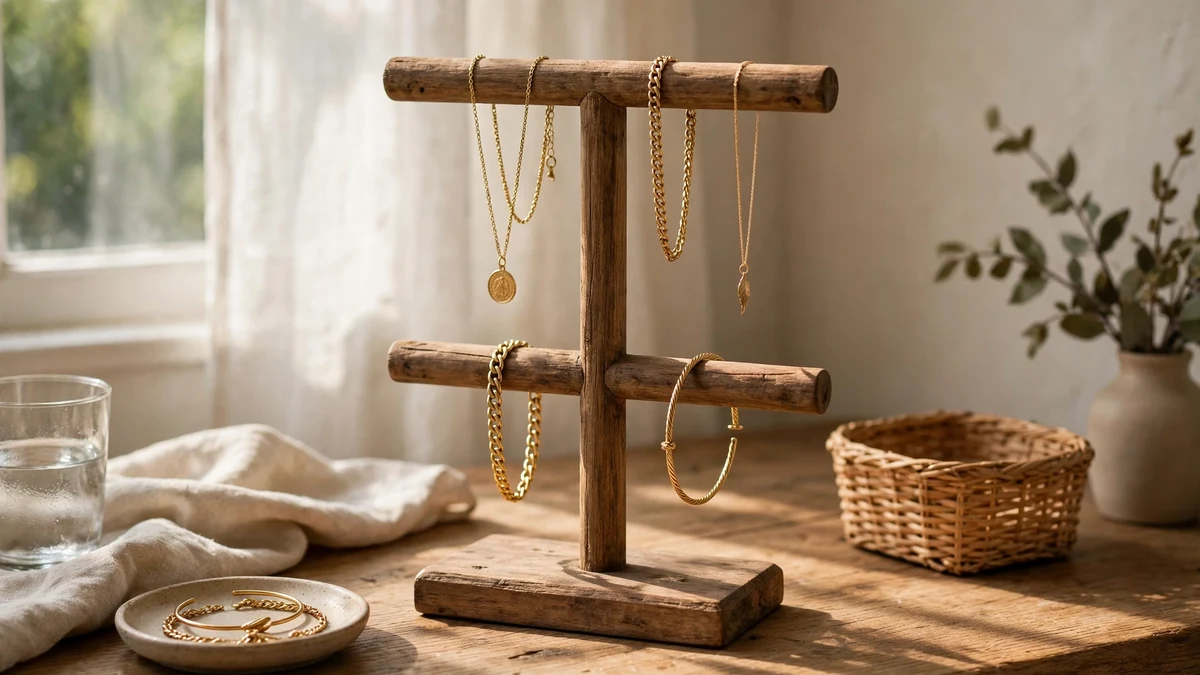
The T-bar is the classic jewellery stand: a vertical post with one or two horizontal bars, on a weighted base. Necklaces hang over the bars and fall straight, which is the only reliable way to stop chains tangling. A two-tier T-bar holds necklaces on the top bar and bracelets on the lower one, making it the best all-rounder for a small daily collection. Look for bars long enough that necklaces do not overlap, and a base heavy enough that the stand does not tip when you lift a chain off one-handed.
Earring Trees
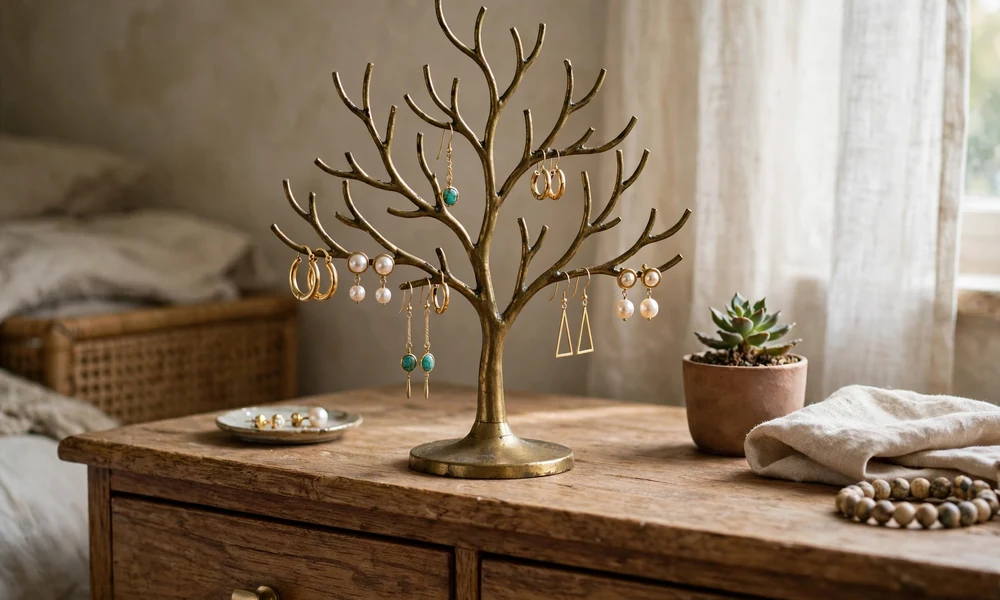
An earring tree is a small branching stand with holes or hooks for pairs, and it is the only form that keeps pairs together and visible at the same time. Studs sit in holes through the branches, while hooks hold longer drop earrings. The best trees have enough spacing that long earrings do not catch on each other, and a base wide enough to stay upright when you unhook a pair.
Bracelet Bars and Bangle Stands
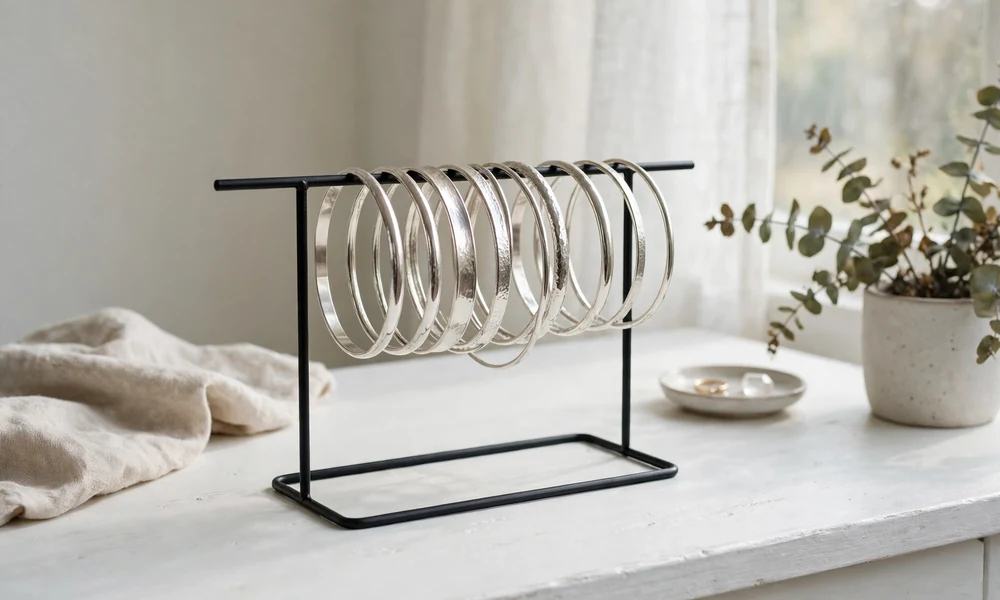
A bracelet bar is a single horizontal rod on a base, and bangles slide onto it in a row. It is the simplest stand there is, and for bracelets it is also the best, because bangles stacked in a drawer scratch each other and roll away. A good bar is smooth, so bracelets slide on and off without catching, and long enough for the bangles you own. If you own chunky cuffs, check the bar is thick enough to hold them without bending.
Tiered and Rotating Stands
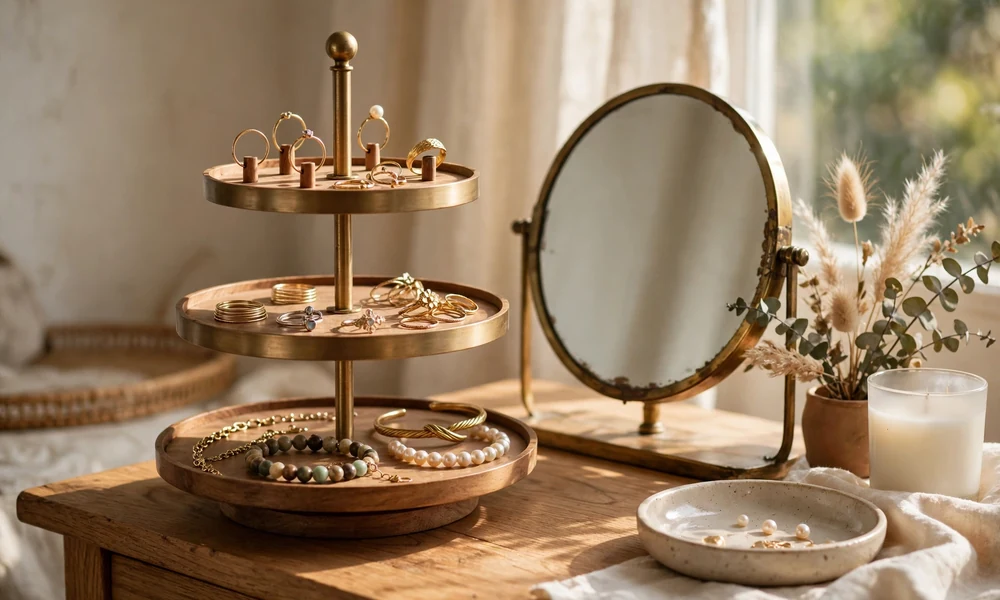
A tiered stand stacks two or three trays or bars above each other, and a rotating stand turns on its base so you can spin to the side you want. Both suit a larger daily collection, because they hold more pieces in the same footprint. The tiered form works well for rings and small pieces on the trays, with necklaces hanging from hooks underneath, while the rotating form suits a corner of a dressing table, where you cannot walk around the stand to reach the back. The trade-off is stability, so check the base weight before you buy.
Wall-Mounted Stands
A wall-mounted stand is a row of hooks, a small shelf, or a pegboard fixed to the wall, and it suits anyone whose dressing table is already full. Necklaces hang straight from the hooks, bracelets sit on a small rail, and everything is visible at once. Wall stands are the best answer when dresser space has run out. They need more commitment than a tabletop stand: screws in the wall, a proper fixing, and a spot out of direct sunlight.
Jewellery Stands at a Glance
| Stand type | Best for | Typical capacity |
|---|---|---|
| T-bar stand | Necklaces and bracelets | 8–15 pieces |
| Earring tree | Earring pairs | 10–20 pairs |
| Bracelet bar | Bangles and cuffs | 6–12 bracelets |
| Tiered stand | Mixed daily pieces | 15–30 pieces |
| Rotating stand | Corners and larger collections | 15–30 pieces |
| Wall-mounted | No dresser space left | 10–25 pieces |
Materials: Wood, Metal, Acrylic and Marble
The material decides how a stand looks, how stable it is, and how it ages. Wood is the warmest choice: a solid wooden T-bar looks like furniture and lasts for decades if kept dry. Metal, usually brass or steel, is slim, strong and stable, and a metal frame can be thinner than wood without bending. Acrylic is the clear choice when you want the jewellery to be the only thing you notice: a clear stand disappears against the wall and wipes clean in seconds, though it scratches more easily than wood or metal. Marble and stone bases add weight exactly where a stand needs it, at the bottom.
Check the parts your jewellery actually touches, whatever the material. Bars and hooks should be smooth, with no rough edges that snag a chain or scratch soft metal, and velvet or suede wrapping on the bars stops pieces sliding around. Avoid cheap plastic: it bends under a few bracelets and can mark soft metals.
Stability: The Part Nobody Checks
Stability is the part almost nobody checks before buying, and it is the part that decides whether a stand gets used or abandoned. A stand that topples scatters everything it held. The test is simple: load the stand with the pieces you would actually hang on it, and pull a necklace off one-handed. If it rocks, slides, or lifts at the base, it will topple sooner or later. What matters is a heavy, wide base, a footprint wider than the top bar, and felt or rubber pads underneath to stop it sliding on a polished dressing table.
The Tarnish Trade-Off
Open display has one real cost, and it is tarnish. Silver darkens in air, faster in a humid bathroom or near a window, and a stand leaves silver exposed to both. Gold is far more forgiving, and costume jewellery barely cares, but silver left on a stand for months will darken. That does not make stands a bad idea. It makes them a bad idea for pieces you rarely wear. Keep the pieces you wear weekly on the stand, where regular handling keeps them bright, and keep occasion silver in closed storage. Our guide to what makes a great jewelry organizer worth buying covers the five storage forms, including lidded boxes and trays that protect silver from air and light. Keep the stand out of direct sunlight and out of the bathroom, where steam speeds up tarnish. A cool, dry bedroom dressing table is the best spot.
How to Choose by What You Own
The right stand follows the collection, so count before you shop. Count necklaces first, because they are the hardest to store: more than six needs a T-bar with a long top bar or a wall-mounted row of hooks. Count earring pairs next: more than eight pairs justifies an earring tree of its own. Count bracelets: a single bar holds six to twelve. Rings need a tray or roll rather than a stand, and watches need their own cushioned slots, so our guide to the watch boxes worth keeping on your dresser is worth reading if your collection includes watches. Buy for the daily pieces, not the whole collection, and leave a little room to grow.
The 6-Point Checklist Before You Buy
- Count your daily pieces first, and buy a stand with room for a few more.
- Test the stability: load it, pull a necklace off one-handed, and check the base stays put.
- Run a finger along every bar and hook, and reject any stand with rough edges.
- Check the bars are long enough that necklaces hang without overlapping.
- Make sure the stand fits the spot, with room to reach around it.
- Keep it out of the bathroom and out of direct sunlight, where tarnish works fastest.
Caring for Your Stand and Your Pieces
A jewellery stand needs almost no care. Dust it once a week with a soft, dry cloth, and wipe acrylic stands with a soft cloth and a drop of mild soap. Wipe silver pieces with a soft cloth after wearing, and once a month take everything off and check for loose hooks, wobbly joints, or tarnish on pieces you have not worn.
Frequently Asked Questions
Are jewellery stands better than jewellery boxes?
Neither is better overall; they do different jobs. A stand displays the pieces you wear weekly where you can see and reach them, while a box protects the rest of the collection from dust, light and air. Most people do best with both.
Will a jewellery stand tarnish my silver?
Open air speeds up tarnish on silver, so pieces left on a stand for months will darken. Keep the stand out of the bathroom and direct sunlight, and keep rarely worn silver in closed storage. Pieces you wear weekly stay bright from regular handling.
How many pieces should a jewellery stand hold?
Ten to fifteen daily pieces is right for most people. A stand sized for ten pieces holds the necklaces, earring pairs and bracelets you actually wear, with a little room to grow.
What is the best material for a jewellery stand?
Wood and metal are the best all-round choices: wood looks warm and lasts for decades, while metal is slim, strong and stable. Acrylic suits anyone who wants the jewellery to be the only thing visible, and a stone base adds stability. Avoid cheap plastic.
Where should I put a jewellery stand?
On a dressing table in a cool, dry bedroom, out of direct sunlight and away from the bathroom, with room to reach around the stand and lift pieces off without knocking it over.
Can a jewellery stand hold rings and watches too?
Rings and watches are better off elsewhere. Rings need a tray or roll that holds them upright so the stones do not touch, and watches need cushioned slots of their own. A tiered stand with a small tray can hold a few rings, but a dedicated box does the job better.
The Bottom Line
The best jewellery stand in 2026 matches the pieces you wear every day: a T-bar for necklaces, an earring tree for pairs, a bracelet bar for bangles, or a tiered stand for a mixed daily collection. Buy for stability first, keep it out of the sun, and let the stand do what a box cannot: put your favourite pieces where you can see them, so you actually wear them.