How to Choose Knitting Bags for Your Projects in 2026
Knitting bags decide whether your project survives the trip from the armchair to the train, the café, or a friend’s sofa. A good one keeps the working ball from rolling away, the needles from snapping, and the half-finished sleeve free of crumbs and pet hair. The wrong bag tangles the yarn and bends the needles.
Choosing knitting bags for your projects in 2026 means matching the bag to the way you knit: small and light for socks, big and sturdy for blankets, and properly closable for knitters who take projects everywhere.
Key Takeaways
- A knitting bag is a portable project bag: it carries the work in progress, the working yarn, and the needles together — a different job from a yarn bowl, a sewing basket, or a general tote.
- Match the bag to the project first: socks fit a small drawstring bag, sweaters need a medium tote, and blankets need a large bucket bag.
- A drawstring or zip closure matters more than looks, because an open bag spills yarn and drops needles.
- Interior pockets for needles, patterns, and notions keep small things findable; one big empty sack means digging for scissors every time.
- Sturdy, washable fabric with a reinforced base lasts years, while thin unlined fabric sags and tears.
What a Knitting Bag Actually Is
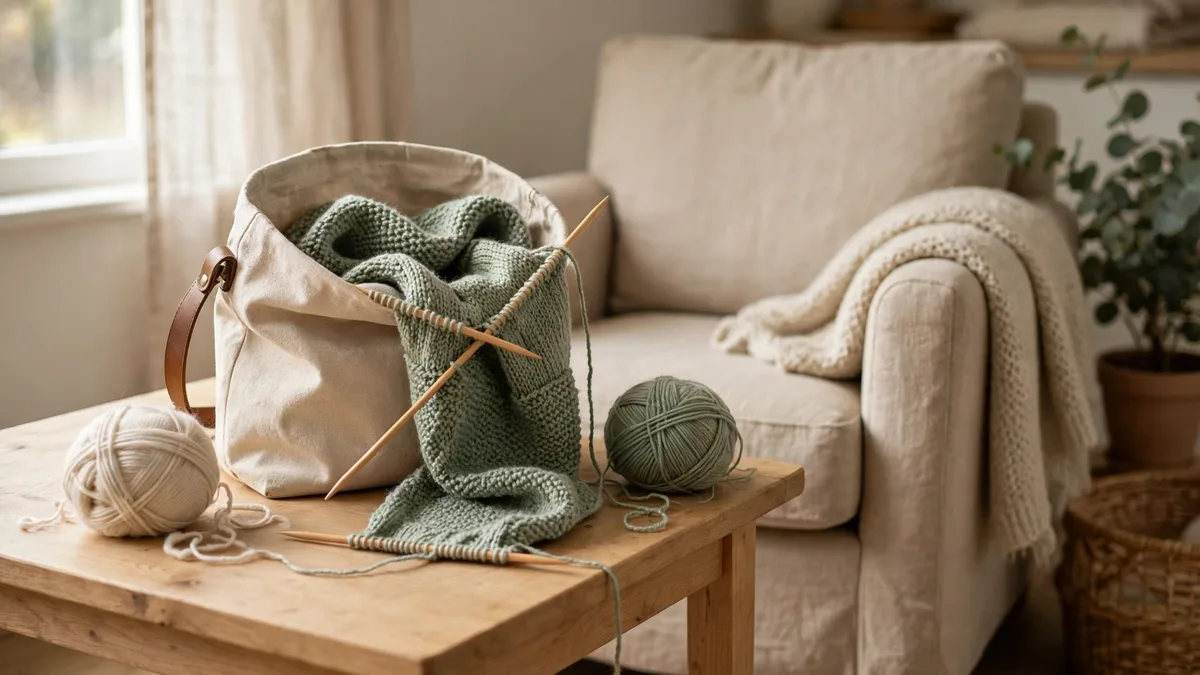
A knitting bag carries a project in progress. The working ball sits inside, the strand feeds out through a small opening, and the needles, pattern, and tools travel in pockets around it. When you stop, you close it, and the project is safe and ready to pick up where you left it.
That job is narrower than it sounds. A yarn bowl holds one working ball while you knit at home, feeding the strand through a slot; it carries nothing anywhere, as our guide to yarn bowls that keep your ball tangle-free explains. A sewing basket stores thread and pins on a shelf. A messenger bag or tote carries daily essentials, but neither feeds yarn or protects needle tips. A knitting bag is a craft project bag — not general storage, and not general carry.
How We Judged
We judged every bag the way a knitter uses one: loaded with a real project — a sweater, a sock, a shawl — and carried around the house, to the car, and on a bus, checking whether yarn tangled or needles poked through. Then we knitted from each bag for an hour, noting whether the yarn fed smoothly or caught on seams and lining. A bag scored well when the project came out as it went in and small things stayed findable.
The Main Types of Knitting Bag, Compared
Most knitting bags fall into five types, and the right one depends on the size of your projects and how far they travel.
Drawstring Project Bags
The classic: a soft, rounded bag closing with a cord at the top, often with a small hole for the yarn. Light and flat-packing when empty, it suits one small project — socks, hats, shawls. Its weakness is structure: it slumps under a heavy project.
Zippered Tote-Style Bags
The workhorse. It opens wide, zips fully shut, and is the safest bag for travel, with interior pockets and a reinforced base so it stands up alone. It suits sweaters and larger projects, and it is the best all-rounder for trains and holidays. The trade-off is weight: heavier than a drawstring bag, and it does not fold away.
Bucket and Basket Bags
Bucket bags are tall and wide, often with a drawstring inner and handles. They hold a lot — a blanket, several balls, a big project — and the wide opening makes it easy to reach in. They suit blanket knitters best. Their weakness is the open top: without a proper closure, yarn spills and the work picks up dust.
Backpack-Style Knitting Bags
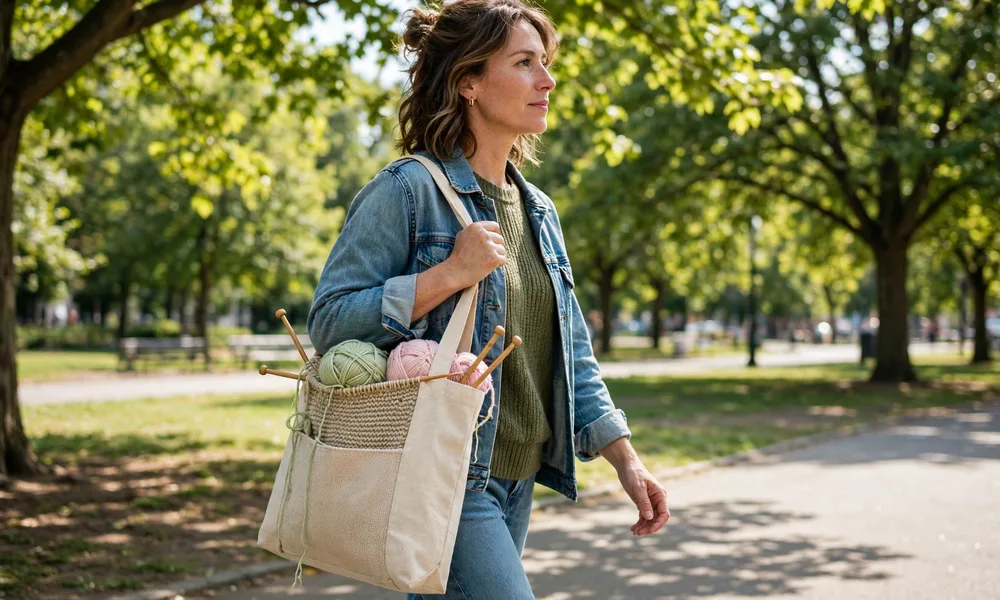
Backpack-style bags carry the project on your back, leaving both hands free, usually with a dedicated yarn compartment and feed hole. They suit commuters and walkers. They are less convenient to knit from directly — you generally take the project out first — but for a long carry, nothing beats them.
Structured Cases and Organisers
Structured cases are firm, boxy bags with fitted compartments for needle sets, cables, and notions, plus room for one or two projects. They suit knitters with interchangeable needle sets and are the tidiest option — but also the heaviest and most expensive.
| Type | Best for | Closure | Watch out for |
|---|---|---|---|
| Drawstring project bag | Socks, shawls, one small project | Drawstring | Slumps; no structure |
| Zippered tote | Sweaters, travel, everyday use | Full zip | Heavier; bulkier |
| Bucket or basket | Blankets, several balls | Drawstring or lid | Open top spills yarn |
| Backpack-style | Commuting, long carries | Zip | Awkward to knit from |
| Structured case | Needle sets, tidy storage | Zip | Heavy; pricey |

Size: How Much Project Do You Need to Carry?
Size is the decision most buyers get wrong, usually by going too small. A bag that barely fits squeezes the knitting and stretches the stitches; a bag far too big lets the project slump, the yarn tangle, and the needles bend. The right size holds the project with a little room to spare.
As a rough guide, a small bag of 20 to 25 centimetres suits socks and hats with one or two balls; a medium bag of 30 to 35 centimetres suits sweaters and two or three balls; a large bag of 40 centimetres or more suits blankets. If you knit everything, a medium zippered tote is the safest single purchase. Weight matters too: a sweater’s worth of wool can weigh half a kilo before the bag itself, so look for wide, reinforced handles.
Materials and Build: What Lasts
Canvas is the default for a reason: sturdy, washable, holds its shape, and does not snag yarn. Waxed canvas adds water resistance, which matters outdoors or in the rain. Cotton is lighter and prettier, but thin cotton sags and tears, and needle tips poke through — look for lined cotton with a reinforced base. Leather looks smart and lasts for years, but it is heavy, expensive, and stiff to knit from.
The inside matters just as much. A smooth lining lets yarn slide without catching; a rough one snags fibres and sheds fluff into the work. Seams should be bound or double-stitched, because a single row splits under a sweater’s weight. The base should be reinforced so the bag stands upright. The yarn inside deserves care too: our guide to yarn that feels soft and holds its shape explains how fibre choice affects the finished fabric, and a good bag protects it from felting and tangling. Check the hardware too: a drawstring should glide and stay tied, and a zip should run smoothly without catching the lining.
Pockets and Organisation
The difference between a good knitting bag and a frustrating one is usually pockets. A single empty sack means scissors, stitch markers, and the pattern all sink under the yarn. Look for a zipped interior pocket for notions, a slip pocket for the pattern, and a needle slot that keeps tips covered. A small lift-out pouch for notions is a bonus.
One feature worth paying for is a yarn feed hole: a small reinforced opening the strand passes through, letting you knit with the bag closed so the ball stays clean. It should be smooth inside — a rough edge will fray delicate yarn within an evening.
What to Avoid
The worst knitting bags share a few flaws: no closure at all, so the bag spills the moment it tips over; a flimsy base that collapses and lets the yarn roll out; rough seams or exposed zip teeth that catch and fray the yarn; handles too short or thin for a full bag; a beautiful but unlined bag that needle tips poke through; and a bag sized for one ball when you always knit sweaters, outgrown within a month.
Choosing by Project
If you knit socks and hats, a small drawstring bag is enough — you can own several, one per project. For sweaters and shawls, buy one medium zippered tote with good pockets and a feed hole. For blankets, buy a large bucket bag with a proper closure and reinforced base. For commuting, a backpack-style bag is worth the trade-off. And if your needle collection has outgrown a pencil case, a structured case saves you from replacing needles — our guide to knitting needles that make every stitch even explains why the right needles matter, and a good bag keeps them straight and unbroken.

Checklist: Before You Buy a Knitting Bag
- It fits your biggest usual project with a little room to spare.
- It closes fully — drawstring, zip, or lid — so the project cannot spill in transit.
- The base is reinforced and the bag stands upright on its own when loaded.
- The lining is smooth, the seams are bound, and the yarn feed hole has no rough edges.
- It has a zipped pocket for notions, a slip pocket for the pattern, and a safe place for needle tips.
- The handles or strap carry a full bag comfortably for the distance you walk with it.
Frequently Asked Questions
Do I really need a special knitting bag, or will any tote do?
Any tote can carry knitting, but a knitting bag is shaped for it: it feeds the yarn while closed and protects needle tips. A general tote leaves yarn exposed and lets needles bend against books and keys. If you knit at home only, a tote is fine; if the project travels, a proper bag earns its price quickly.
What size knitting bag should I buy first?
A medium bag of 30 to 35 centimetres across is the safest first purchase. It fits sweaters, shawls, and two or three balls of yarn, and still works for smaller projects. Buy small only if you knit socks and hats exclusively, and large only if blankets are your main project.
How do I stop the yarn tangling inside the bag?
Feed the strand through the bag’s yarn hole or over the top edge and close the bag, so the ball cannot roll. Keep only the working ball loose inside, and store spare balls in a separate pouch. If it still tangles, wind the yarn into a neat centre-pull ball before it goes in the bag.
Can I wash a knitting bag?
Most canvas and cotton bags wash well on a gentle cycle, but check the label first: leather, waxed canvas, and felt need special care, and a stiffened base may lose its shape in the machine. Empty the pockets, close the zips, and air-dry rather than tumble-drying.
Should the bag have a yarn feed hole?
Yes, if you knit from the bag while you are out. A feed hole lets you knit with the bag closed, keeping the ball clean and the project protected. It matters less if you always take the project out before knitting, but it is still a useful feature for the price it usually adds.
How many knitting bags do I need?
One good medium bag covers most knitters. Many end up with two or three — a small drawstring bag per active project, plus one larger tote for sweaters and travel. Start with one, and add a second only when you regularly have two projects on the go.
The Bottom Line
The best knitting bag for your projects in 2026 fits the way you knit: big enough for your usual project, with a closure that closes, a reinforced base, a smooth lining, and pockets that keep small things findable. A medium zippered tote is the safest first buy; a drawstring bag suits small projects, a large bucket bag suits blankets. Buy for the project you knit most, and check the lining and base before the print.