How to Choose a Lemon-Lime Soda That Stays Bright and Fizzy in 2026
A good lemon-lime soda in 2026 is one of the simplest pleasures on the shelf: clear, cold, bright with citrus and fizzing hard enough to lift the flavour. A bad one is sugar water with a chemical aftertaste, flat before the glass is half empty. The difference is easy to spot once you know what to look for. This guide shows how to choose one that stays bright and fizzy in 2026, from classic clear bottles to diet, caffeine-free and craft versions, with label checks, fizz tests and serving advice.
Key takeaways
- Real citrus oils beat artificial flavouring: a good one smells of lemon and lime peel, not of sweets.
- Fine, steady bubbles beat fierce fizz: small bubbles last longer and let the citrus come through.
- Check sugar per serving, not front-label claims: under ten grams per 250 millilitres is a good everyday target.
- Glass bottles hold carbonation best, cans chill fastest, and plastic loses fizz quickest once opened.
- Lemon-lime soda is not lemonade: it is a clear, carbonated citrus soda, and it needs a different test.
Lemon-lime soda is not lemonade
First, know what you are buying. Lemon-lime soda is a clear, carbonated drink flavoured with lemon and lime oils, with little or no real juice. Sparkling lemonade is different: lemonade with bubbles, built on real lemon juice, usually cloudy or pale yellow. Our guide to the best sparkling lemonade of 2026 covers that drink in full, and the contrast is instructive: lemonade is judged on its juice, while lemon-lime soda is judged on its oils, its balance and its fizz. It should taste bright and clean, lemon first and lime second, and smell fresh, like peel, not sweet, like boiled sweets.
Balance is everything: there is so little to hide behind. The best balance sharpness against sweetness so neither dominates, and the bubbles lift the citrus oils into something almost fragrant. Poor versions fail two ways: some are cloyingly sweet, with the citrus buried under sugar, while others are so tart and fiercely carbonated that they are hard to finish. Our roundup of the best and worst sodas of 2026 puts sparkling citrus drinks near the top of its best list, and its test is the right one: a good citrus soda should refresh you, not leave you thirstier than before.
Comparison table: the best lemon-lime sodas of 2026
| Rank | Lemon-lime soda style | Best for | Watch out for |
|---|---|---|---|
| 1 | Classic clear, glass bottle | The real thing, sipping straight | Pricier than cans |
| 2 | Lime-forward craft soda | Sharp citrus bite | Pricey, scarce |
| 3 | Lemon-forward classic | Everyday drinking | Can taste thin |
| 4 | Diet and zero-sugar | No sugar | Sweetener aftertaste |
| 5 | Caffeine-free lemon-lime | Evenings | Can taste flatter |
| 6 | Cloudy lemon-lime soda | Juicier flavour | Shorter shelf life |
| 7 | Supermarket own-brand | Value | Often too sweet |
The best lemon-lime soda styles of 2026
1. Classic clear lemon-lime in glass: the best overall
The best you can buy is the simplest done properly: carbonated water, sugar, natural lemon and lime oils, in a glass bottle. Glass holds carbonation best, chills fast, and pours fine, steady bubbles. It should taste bright and clean, lemon first and lime second, with a crisp finish. If the first sip tastes only of sugar, it is not a good lemon-lime soda.
2. Lime-forward craft soda: the best for citrus bite
Craft lemon-lime sodas are where the drink gets interesting. Brewed in small runs, they often lean hard on lime, with real lime oil and a sharper, greener bite than the big brands. The best taste like a lime cordial with bubbles: aromatic and zesty. The catch is price and availability: specialist shops, not supermarkets, and one bottle can cost as much as a four-pack.
3. Lemon-forward classic: the best everyday drink
Lemon-forward versions lead with lemon rather than lime, and are the easiest to drink all afternoon. The lemon gives a rounder, softer citrus note, balanced with just enough sweetness to take the edge off without burying the fruit. They suit parties and picnics, and mix well: a splash lifts iced tea, fruit punch and sparkling water. The risk is thinness: the cheapest use so little citrus oil that they taste of sweetened water with a faint lemon whisper.
4. Diet and zero-sugar lemon-lime: the best without sugar
Diet lemon-lime soda has one advantage over diet cola: with no dark caramel or spice to hide behind, a bad sweetener shows immediately, so the good ones have had to get genuinely good. The best use a blend of sweeteners, which smooths out the harsh aftertaste that used to define the category, and lean on citrus oils to carry the flavour. Sip, wait ten seconds, and ask whether your mouth feels clean or coated. If coated, that can is not worth finishing.
5. Caffeine-free lemon-lime: the best for evenings
Most lemon-lime sodas are already caffeine-free, but the ones that make a point of it are usually the cleanest recipes on the shelf: short ingredient lists, no stimulants, nothing to keep you awake. They suit evenings, children, and anyone wanting a cold, fizzy drink without a second thought. Without caffeine the drink can taste softer and sweeter, so the best compensate with firmer carbonation and a stronger lime note. Served ice cold with a lime wedge, most drinkers would not notice.
6. Cloudy lemon-lime soda: the best for juicier flavour
Cloudy lemon-lime sodas contain a little real juice, usually lemon, and the cloudiness is the giveaway. They taste juicier and more rounded than the clear versions, with a softness for hot days. The trade-off is shelf life: juice settles, flavour fades faster, and once opened they go flat quicker. Buy them fresh, check the date, and drink them within a day of opening.
7. Supermarket own-brand lemon-lime: the best value
Own-brand lemon-lime sodas have improved: some supermarket versions are bright, properly fizzy, and a fraction of the big-name price. The worst are still a false economy. Bargain citrus sodas are over-sweetened and built on the cheapest flavourings, so they taste of sweets rather than citrus, and go flat fast. Read the label, check the sugar, and pour a glass before committing to a multipack.

How to read a lemon-lime soda label
The label tells you almost everything you need to know before you open the bottle. Start with sugar: aim for the lowest per hundred millilitres; beware anything above ten grams. Check whether the citrus comes from natural lemon and lime oils or artificial flavouring: oils are a good sign, while a long flavouring list usually means the citrus was built in a laboratory. Short lists are good: carbonated water, sugar, natural flavourings and citric acid are fine, while a long list of colourings and sweeteners is not. Clear lemon-lime soda should have no colouring at all, so any colour is a warning sign. Most have no caffeine, which is part of their appeal, but a few energy-style versions add it. One clear citrus flavour, done well, beats a crowded label.
Fizz and serving: keeping it bright
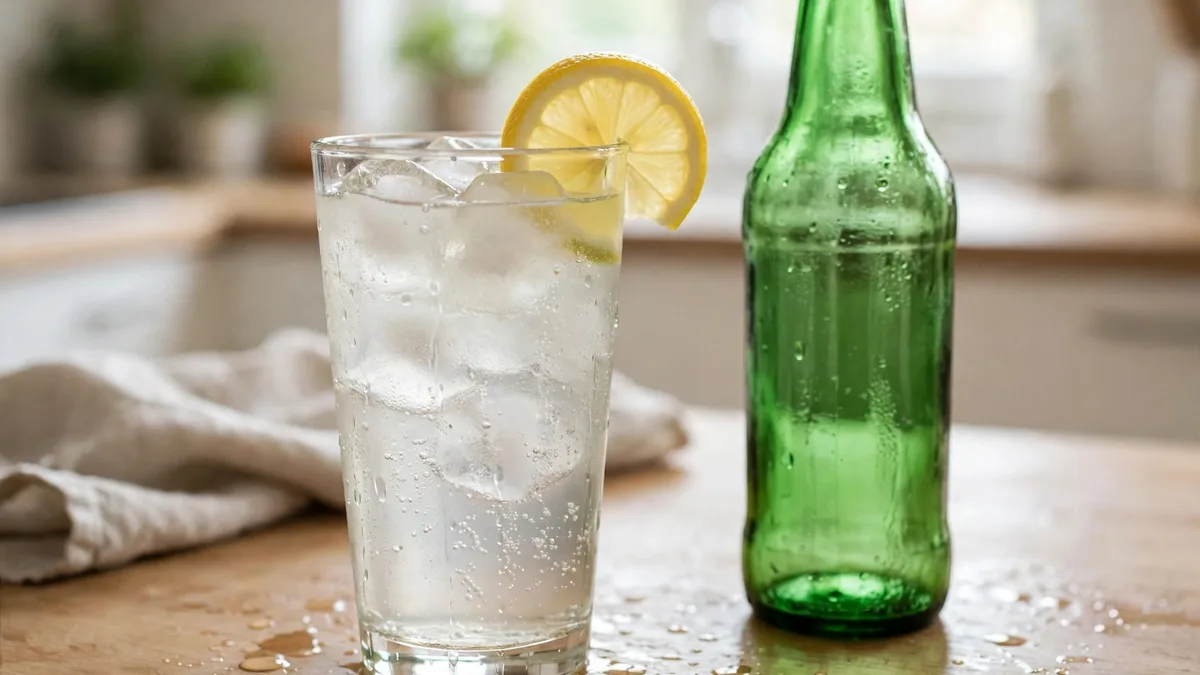
Fizz is half the drink, and in a clear soda you can see it: fine, steady bubbles rising in streams mark a good one, while coarse fizz that stings the tongue and dies within a minute does not. Temperature matters most: keep the soda cold from shop to glass, and never let a bottle warm up and cool down again. Second, the pour: tilt the glass, pour slowly down the side, and straighten it for the last third. Third, the container: an opened glass bottle holds fizz better than a can, and both beat plastic. A freezer-chilled glass keeps the drink cold and fizzy, and costs nothing. Large, clear ice cubes chill with minimal dilution; small cloudy ones melt fast and water the drink down. Serve it with a lemon or lime wedge, squeezed lightly in, and the peel oils lift the whole drink. The same care pays off across the soda shelf, including the spiced drinks in our guide to the best ginger ale of 2026, where a cold glass and a slow pour make the ginger bite last longer.

Glass, can or plastic: does it matter?
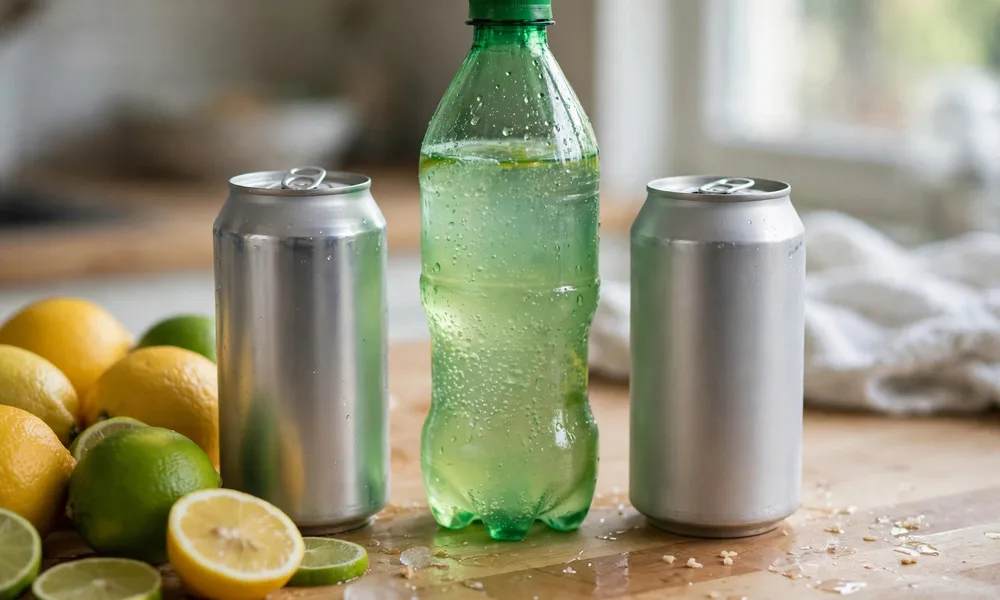
Yes, and more than most drinkers think. Glass is best: airtight, unreactive, quick to chill, and it keeps carbonation for months on the shelf and hours once opened. Its only downside is weight and breakage, which is why glass versions cost more. Cans are the middle ground: they chill fastest, block light, and are light to carry, but go flat within the hour once opened. Plastic is weakest: light and unbreakable, but it slowly lets carbon dioxide escape, so it is best in the first days after bottling. Check the date, buy a size you will finish in a day or two, and keep it cold. Serve it in a tall, narrow glass, which keeps the bubbles rising and concentrates the citrus aroma. It pairs best with salty snacks, grilled food and spicy dishes, where its sharpness cuts through richness; delicate flavours it overwhelms.
Checklist: buying the best lemon-lime soda
- Read the sugar per hundred millilitres; prefer the lowest in your style.
- Choose natural citrus oils over artificial flavouring, and a short ingredient list over a long one.
- Pick glass over can, and can over plastic, when flavour matters most.
- Check the date on plastic bottles; buy a size you will finish in a day or two.
- Serve it fridge-cold in a chilled glass, poured slowly, with a citrus wedge.
- Taste before stocking up: buy one bottle, not a multipack, until you know you like it.
Frequently asked questions
What is the difference between lemon-lime soda and sparkling lemonade?
Lemon-lime soda is a clear, carbonated drink flavoured with lemon and lime oils, with little or no real juice. Sparkling lemonade is lemonade with bubbles, built on real lemon juice, usually cloudy or pale yellow. Lemonade is judged on its juice; lemon-lime soda on its oils, balance and fizz.
Is lemon-lime soda the same as club soda with lemon?
No. Club soda is plain carbonated water with added minerals, and a squeeze of lemon makes it tart and unsweetened. Lemon-lime soda is sweetened and flavoured with citrus oils, so it is a soft drink, not a mixer base. Both refresh, but they are different drinks.
Why does my lemon-lime soda go flat so fast?
Because it was warm, shaken, or poured too fast into a warm glass. It holds its bubbles best cold, still, and poured slowly down the side of a chilled glass. Plastic bottles lose fizz faster than glass or cans, so check the date and finish an opened bottle within a day.
Is diet lemon-lime soda as good as the full-sugar version?
The best come close, using a blend of sweeteners and real citrus oils. The worst taste of sweetener first, with a metallic aftertaste. The ten-second test tells you everything: if your mouth feels clean after ten seconds, the diet soda is a good one.
Does lemon-lime soda have caffeine?
Most have no caffeine at all, which is part of their appeal as an anytime drink. A few energy-style versions add it, so check the label. If caffeine affects your sleep, the standard versions are the safe choice at any hour.
Can I make lemon-lime soda at home?
Yes: mix a syrup from sugar, water, lemon zest and lime zest, then stir it into carbonated water. It tastes fresher and less sweet than bottled versions, and you control the sugar. Carbonate the water first, then stir the syrup in gently, and serve with a fresh lime wedge.
Bottom line
The best lemon-lime soda in 2026 is made with care: real citrus oils, sugar in moderation, fine bubbles that last, and a clean finish. Start with a classic clear bottle in glass, try a lime-forward craft version for more bite, and keep a good diet version for everyday drinking. Read the label, pour it cold.