Madeleines vs Macarons: The Best Madeleines to Buy in 2026
The best madeleines in 2026 are small, shell-shaped French sponge cakes with a crisp golden edge, a soft buttery crumb and the little hump on top, and they could not be more different from the macarons they are so often confused with. A madeleine is a cake baked in a shell mould, eaten warm from the oven or hours later with tea; a macaron is two crisp almond meringue shells sandwiched around a filling. They share a French bakery counter and almost nothing else.
This guide ranks the best madeleines you can buy in 2026, from the classic lemon-zest original to chocolate, almond and miniature versions, judged on crumb, butter flavour, freshness and value.
Key takeaways
- The best madeleines have a crisp edge, a soft buttery middle and a clear hump; a flat, pale one was underbaked.
- Madeleines are small sponge cakes baked in a shell mould; macarons are almond meringue sandwiches. The two are not interchangeable.
- Butter is the flavour that matters most: real butter beats margarine or oil every time.
- Buy madeleines baked the same day when you can; they dry out fast, and day-old ones are best warmed for a few minutes.
- Mini madeleines are the best value for parties, while full-size classic and lemon are the best introduction.

How the best madeleines were judged
Every madeleine here was judged on five measures. Crumb comes first: fine, even and springy, moist in the middle without feeling wet, never dense or doughy. Butter flavour is second, because a madeleine is mostly butter, eggs, flour and sugar, and cheap fat has nowhere to hide. Freshness is third: a madeleine loses its edge within hours. The hump is fourth: a good rise shows rested batter and a hot oven. Value is fifth: a bakery box at three times the supermarket price has to taste three times as good.
Madeleines vs macarons: the real differences
The confusion is understandable: both are French, both are small, both appear in the same patisserie window, and both are sold by the dozen in pretty boxes. But they are made from different batters, baked in different ways, and eat completely differently.
A madeleine is a sponge cake: butter, eggs, sugar, flour and a little leavening, rested, then baked in a shell-shaped mould, soft and cake-like with a browned, crisp edge. A macaron is a meringue: whipped egg whites and almond flour, piped into rounds and baked into crisp shells filled with ganache, buttercream or jam. One is a cake; the other is a sandwich of two crisp cookies.
Texture tells them apart in the mouth: a madeleine gives way softly and tastes of butter and lemon, while a macaron cracks, then chews, then melts, tasting of almond and its filling. Madeleines are best the day they are baked and go stale quickly; macarons improve after a night in the fridge, as the filling softens the shells. Madeleines crush easily; macarons travel well in a rigid box. Want something soft and buttery with tea? Buy madeleines. Want something crisp, chewy and colourful for a gift box? Buy macarons.
| Madeleines | Macarons | |
|---|---|---|
| What it is | Small sponge cake | Almond meringue sandwich |
| Main flavours | Butter, lemon, vanilla | Almond plus filling |
| Texture | Soft, springy, crisp edge | Crisp shell, chewy centre |
| Best eaten | Same day, ideally warm | After a night in the fridge |
| Travels | Poorly, crushes easily | Well in a rigid box |
| Price per piece | Usually lower | Usually higher |
The best madeleines to buy in 2026
1. Classic French madeleines
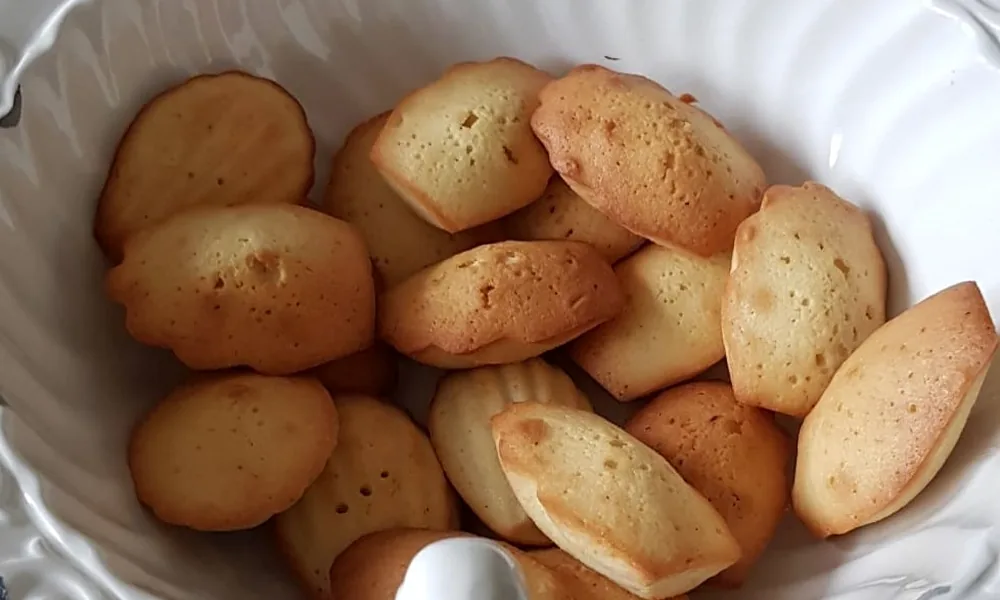
The classic is still the best madeleine you can buy, and the one every other kind is measured against. It is flavoured with lemon zest and a little vanilla, baked until the edges are deep gold, with a fine crumb, a soft buttery middle and a proud hump. Buy from a bakery that bakes daily; a good bakery classic beats a supermarket one by a clear margin. This is the madeleine to buy if you have never had one.
2. Lemon madeleines
Lemon madeleines take the classic and turn the citrus up. The zest goes into the batter, sometimes with a little juice in a glaze brushed on while the cakes are warm. The result is brighter than the classic, and the lemon cuts the butter’s richness so a second one is hard to resist. The best taste of real lemon, not flavouring: a sharp, chemical flavour means the baker used flavouring instead of zest. These are the best madeleines for summer, and for anyone who finds the classic a little too rich.
3. Chocolate madeleines
Chocolate madeleines replace some of the flour with cocoa, and the best are dipped or half-dipped in dark chocolate once cool. They are the richest madeleine here and the most forgiving: cocoa hides a slightly dry crumb and the chocolate shell adds crispness. The worst taste dusty and flat, a sign of cheap cocoa and short butter. Buy these when you want a treat rather than a tea cake, and serve them with coffee rather than tea.
4. Almond madeleines
Almond madeleines fold ground almonds into the batter, sometimes with a drop of almond extract, for a denser, moister, longer-keeping cake than the classic. The flavour is warm and nutty, and these stay soft a day longer than any other kind here — the best choice if you are buying a day ahead. Baking with almond flour at home changes the crumb the same way, and a guide to baking with almond flour is worth reading first, because almond flour absorbs liquid differently from wheat flour and the batter needs adjusting.
5. Mini madeleines
Mini madeleines are the same cake in a smaller mould, about half the size of a classic, and the best value here for parties, lunchboxes and tasting: two bites each, crisp all the way through, easy to eat without a plate. The smaller size also means more browned edge per bite, so minis taste more caramelised than full-size madeleines from the same batter. The only downside is that a bad mini dries out faster than a bad full-size one, so freshness matters even more. Buy them in sealed bags and eat them the same day.
6. Honey and brown-butter madeleines
Honey and brown-butter madeleines are the connoisseur’s pick: the butter is cooked until nutty and amber, then folded into the batter with a spoonful of honey, for a deeper, toastier flavour than the classic. These are the madeleines to buy when you already like the classic and want something more interesting. They cost more, because brown butter takes time and honey is not cheap, and they are worth it. Serve them on their own: too subtle for jam or cream.
What to look for when you buy madeleines
Start with the colour: the edges should be golden brown, the shell pattern clear, the hump a little darker. Pale madeleines were underbaked and will taste doughy; very dark ones taste bitter at the edges. Then the shape: a good madeleine is plump, with a clear hump and a crisp shell imprint. Flat ones came from unrested batter or an oven that was not hot enough.
Smell them if you can: a good madeleine smells of butter and lemon before you bite it, and a box that smells of nothing holds stale cakes made with flavourless fat. Pick the box up too: it should feel light for its size. And check the date: madeleines baked today are worth paying more for, and ones baked three days ago are worth almost nothing.
Butter is the ingredient that decides quality. A madeleine made with real butter tastes richer and keeps a better crumb than one made with margarine or oil, and the difference is obvious side by side. The guide to why real butter beats margarine for baking sets out the full case. The same rule applies at home: use the best butter you can afford, and brown it lightly for extra flavour.
How to store madeleines
Madeleines are at their best within a few hours of baking. Keep them in an airtight tin or sealed bag at room temperature, never in the fridge, which dries them out faster than the counter. They keep for two days, though the crisp edge softens after day one.
To revive day-old madeleines, warm them in a moderate oven for three to four minutes: the heat brings back the crisp edge and wakes the butter up. Do not microwave them: thirty seconds turns one rubbery, with no coming back. They also freeze well for up to a month in a sealed bag; thaw at room temperature, then warm briefly.

How to bake madeleines at home
Baking madeleines at home is easier than most people expect, and the only way to eat one warm from the oven. The batter is simple: melted butter, eggs, sugar, flour, a pinch of salt, lemon zest and a little leavening. The two steps that matter are resting the batter and heating the mould: rest the batter in the fridge for at least an hour, or overnight, to hydrate the flour and help the hump form, and chill the mould, then butter and flour it well, so the cakes release cleanly.
Bake in a hot oven and do not open the door for the first eight minutes: the shock of the heat pushes the hump up. They are done when the edges are deep gold and the centres spring back. Turn them out onto a rack at once, and eat the first one while it is still warm. Leavening does a lot of the work here: a guide to what baking powder is and which one rises best explains the difference between the types.
Buying checklist
- Golden-brown edges and a clear shell pattern, never pale or flat.
- A proud hump on top, showing the batter was rested and the oven was hot.
- A smell of real butter and lemon when you open the box.
- Baked today, or yesterday at the latest; check the date, not the discount.
- Real butter in the ingredients, not margarine, oil or shortening.
- Packaging that protects the shells: a rigid box or tin, not a paper bag.
Frequently asked questions
Are madeleines French?
Yes. Madeleines come from Lorraine in France, traditionally linked to the town of Commercy, and are one of the most famous small cakes in French baking.
Why do madeleines have a hump?
Cold, rested batter hitting a hot oven makes the middle rise fast before the crust sets. Resting the batter and baking hot make it happen.
How long do madeleines stay fresh?
About a day at their best, two days in an airtight tin. After that they dry out, though warming them briefly in the oven revives them.
Can you freeze madeleines?
Yes, for up to a month in a sealed bag. Thaw at room temperature, then warm briefly in a moderate oven to bring back the crisp edge.
Are madeleines the same as macarons?
No. Madeleines are soft sponge cakes baked in a shell mould; macarons are crisp almond meringue shells filled with ganache or cream. They look alike in a bakery window and eat differently.
What do you serve with madeleines?
Tea is the classic pairing, especially Earl Grey or green tea. Coffee works too: a single madeleine with an espresso is one of the best small pleasures in baking.
Bottom line
The best madeleines to buy in 2026 are the classic French madeleines, baked the same day with real butter and lemon zest; lemon is a close second for a brighter flavour. Buy them fresh, eat them the same day, and do not confuse them with macarons: a madeleine is a small warm cake, and that is what makes it worth buying.