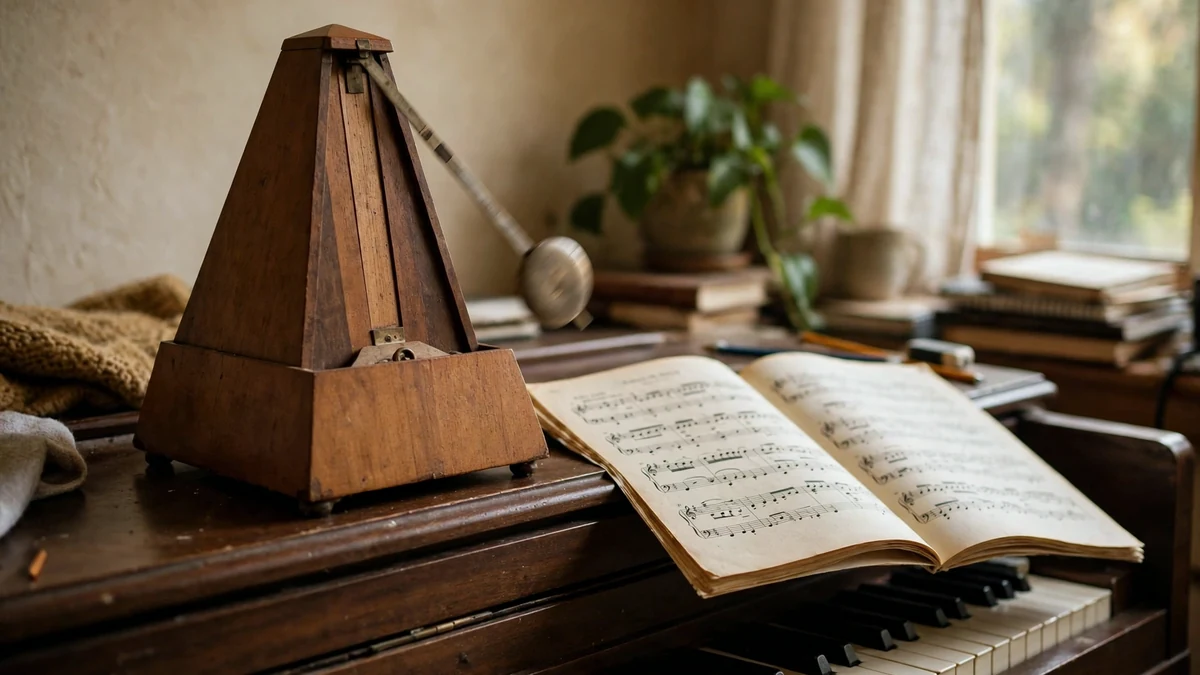
A metronome is a small device that keeps time, ticking or flashing at a steady beat while you play. It sounds simple, and it is, but for anyone learning an instrument, preparing for an exam, or trying to play a fast passage cleanly, a metronome is the difference between practice that drifts and practice that builds real control. A bad metronome drifts off the beat, while a good one is clear, steady, and easy to use. The best metronomes of 2026 are the ones that make steady time feel natural, so you can focus on the music instead of the counting.

What Makes a Metronome Good
The first thing to judge is the steadiness of the beat. A metronome is only useful if every tick lands exactly on time, and the best metronomes hold their tempo without drifting, whether they use a swinging pendulum, a digital circuit, or a vibrating pulse. A metronome that speeds up, slows down, or skips a beat teaches bad timing, and a metronome that teaches bad timing is worse than no metronome at all. Steadiness is the first test, and it is easy to feel: set a slow tempo, play a simple scale, and notice whether the beat ever seems to move. A metronome that stays put is a metronome that earns trust.
The second thing is how easy the beat is to hear and follow. A metronome is used while you are playing, often over the sound of your own instrument, so a tick that is too quiet or too soft will be lost. The best metronomes have a clear, sharp click, a loud speaker, or a bright flashing light, and many have a headphone socket for quiet practice. A metronome that you can hear without straining is a metronome you will actually use, and a metronome you use is a metronome that works. Clarity is worth paying for, because it is what makes practice time count.
The third thing is how simple it is to set the tempo. A metronome should take seconds to set, not minutes, and the best ones have a large dial, clear buttons, or a tap button that lets you tap the beat you want. A metronome with a confusing menu or tiny buttons will be left in a drawer, while a simple one becomes part of every practice session. Look for a display you can read at a glance and a tempo range that covers slow practice and fast playing. Simple controls make good habits easy.
The Main Types of Metronome
Mechanical metronomes are the classic choice. They have a wooden pyramid case, a swinging pendulum, and a sliding weight that sets the tempo, and they need no batteries at all. They suit a piano, a practice room, or anyone who likes a visible, physical beat, and the swinging arm makes the pulse easy to see as well as hear. The trade-off is the sound: a mechanical metronome is quieter than a digital one, and it must sit on a level surface to keep time. For a traditional practice room, a mechanical metronome is the one to buy.
Digital metronomes are the practical choice. They are small, light, and loud, with a clear display, a headphone socket, and extra features such as different sounds, rhythms, and a tuner built in. They suit a student, a gig bag, or anyone who practises in different places, and they are the easiest to hear over a loud instrument. The downside is the batteries: a digital metronome needs power, and it will stop working at the worst moment if the battery runs out. For most players, a digital metronome is the one that gets used every day.
Clip-on and vibrating metronomes are the discreet choice. They clip to your clothing or your instrument and pulse against your skin, so you feel the beat instead of hearing it. They suit a performer, an ensemble player, or anyone who needs a silent beat on stage, and they are the best choice when a loud tick would disturb others. The trade-off is the feel: a pulsing beat takes a little getting used to, and it suits a steady tempo better than a changing one. For silent practice and live playing, a clip-on metronome is the one that works.
Metronome apps are the cheapest choice. They run on a phone or tablet, they are free or very cheap, and they offer every feature a digital metronome has, plus a visual flash and a tap tempo. They are the easiest way to try metronome practice before buying a device. The downside is the phone itself: notifications, calls, and a dying battery can all interrupt practice, and a phone speaker is quieter than a dedicated metronome. For trying the idea out, an app is a fine start, but most serious players soon buy a real metronome.

How to Choose the Right Metronome
Start with where you practise. A piano player in a quiet room will be happy with a classic mechanical metronome, while a drummer, a guitarist, or a brass player needs a loud digital one that can cut through the sound. A student who practises in a shared house will want a headphone socket, and a performer will want a clip-on that stays silent. The right metronome is the one that fits your room, your instrument, and your neighbours, and it is worth thinking about all three before you buy.
Next, think about the tempo range you need. Slow practice is where a metronome earns its keep, so look for one that goes down to forty beats per minute or lower, and check that it goes high enough for fast playing too. A metronome that only covers the middle of the range will let you down at both ends, while a wide range covers every piece you will ever play. If you play piano, our guide to the best keyboards of 2026 is a useful companion, since a good keyboard and a good metronome make practice sessions far more productive.
Finally, hold the metronome before you buy it, if you can. The dial should turn smoothly, the buttons should be easy to press, and the display should be easy to read from your playing position. A metronome that feels fiddly in the shop will feel worse in the middle of a practice session, while one that feels simple will be used every day. Comfort and clarity matter more than extra features, and the best metronome is often the simplest one that does the job well.
The Best Metronomes of 2026
The best metronomes of 2026 cover every kind of player. The best mechanical metronome is a classic wooden pyramid with a smooth pendulum, a clear tempo scale, and a tick that is warm rather than harsh. It looks good on a piano, it needs no batteries, and it will last for years. The best digital metronome is a small, loud unit with a bright display, a headphone socket, and a built-in tuner, and it is the one most teachers recommend for students. The best clip-on metronome is a light, comfortable unit that pulses clearly without slipping, and it is the one to choose for silent practice and live playing.
For beginners, the best choice is a simple digital metronome with a clear display and a tap button. It is cheap, it is easy to set, and it does everything a beginner needs without a confusing menu. For advanced players, the best choice is a metronome with subdivisions, odd time signatures, and a loud speaker, so it can handle complex rhythms and fast passages. In every case, the best metronome is the one that is steady, clear, and simple enough to use every day.

What Else You Need
A metronome works best with a few simple companions. A music stand keeps your sheet music at eye level, so you can watch the beat and read the music at the same time. A tuner keeps your instrument in tune, so your practice sounds right as well as steady, and many digital metronomes have one built in. A practice notebook is worth keeping too, so you can write down the tempo you reached each day and watch your speed grow over weeks. These small extras cost little, and they make practice sessions far more useful.
Your instrument matters too, and a metronome is only as useful as the instrument you practise on. If you play guitar, our guide to the best guitars of 2026 will help you find an instrument that stays in tune and is comfortable to play for long sessions. If you play violin, our guide to the best violins of 2026 covers instruments for beginners and advancing players alike. A good instrument, a good metronome, and regular practice are the three things that build a musician.
Common Mistakes to Avoid
The first mistake is setting the metronome too fast. Many players start at the target tempo, struggle, and give up, when the right approach is to start slow, play the passage cleanly, and only then raise the tempo a little at a time. Slow practice feels boring, but it is the fastest way to learn, because it lets your hands learn the right movements. A metronome set too fast teaches mistakes, while a metronome set slow teaches accuracy, and accuracy is what speed is built on.
The second mistake is ignoring the metronome when it gets hard. It is tempting to turn the metronome off when a passage gets tricky, or to play through a mistake and catch up with the beat, but that defeats the purpose. The metronome is there to show you where your timing slips, and the slips are the places that need the most work. Keep the metronome on, slow it down, and play the hard bars until they are clean.
How Metronomes Fit Daily Practice
A metronome works best as a daily habit, not a sometimes tool. Start each practice session with a few minutes of scales or exercises at a slow tempo, letting the metronome set the pace. Then use it on the hardest passage in your current piece, playing it slowly until it is clean, and raising the tempo by a few beats each day. Finish by playing a piece you know well at its proper tempo, with the metronome as a gentle check rather than a strict master. This routine takes only a few minutes, and it builds timing that lasts.
Over weeks, the change is easy to hear. Passages that once fell apart stay together, fast sections become clean, and your sense of tempo becomes steadier even when the metronome is off. That is the point of the tool: it trains your inner sense of time, so you carry the beat with you. A metronome is not a crutch, it is a coach, and the players who use one every day are the ones who sound the most secure. Keep it on your music stand, keep it charged or wound, and keep it part of every session.
The Verdict
The best metronomes of 2026 are steady, clear, and simple to use. A classic mechanical metronome suits a traditional practice room, a loud digital metronome suits most players, and a clip-on metronome suits silent practice and live playing. Start slow, raise the tempo a little at a time, and use the metronome every day. The right metronome will not make you a musician on its own, but it will make every hour of practice count, and that is what a good metronome is for.


