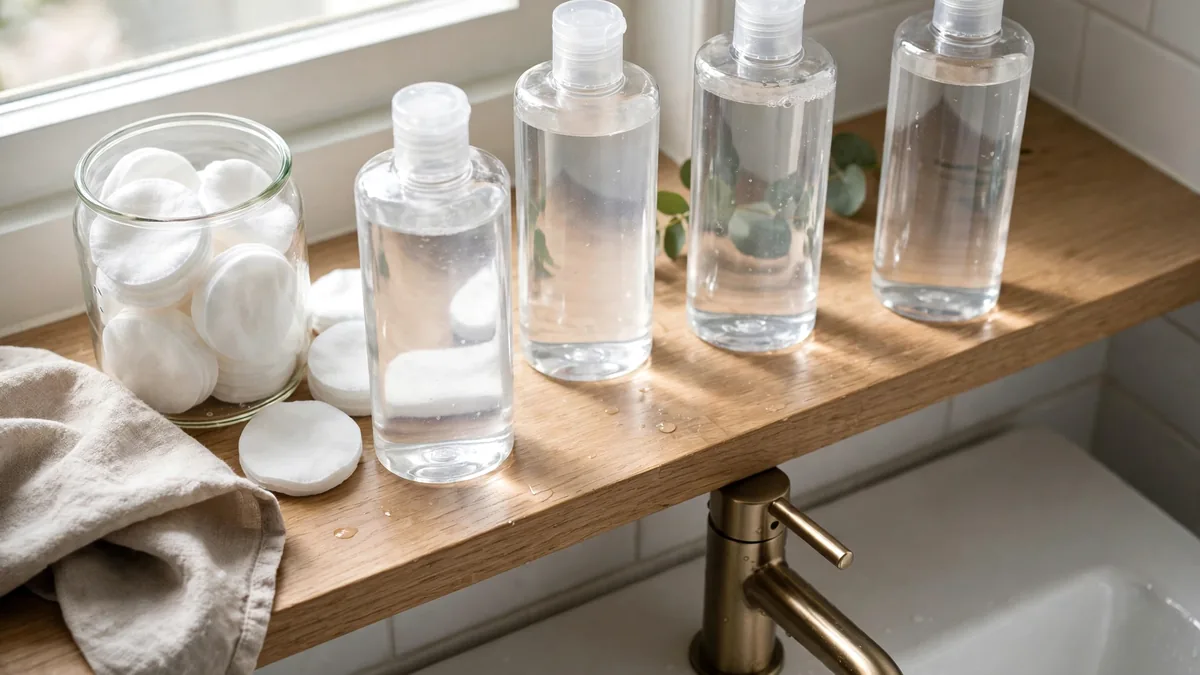
A good micellar water is the quietest product in skincare. It looks like plain water, feels like nothing on the skin, and asks for no rinsing or lather — yet it can take off a full day of foundation, sunscreen and city grime in under a minute. The best micellar waters of 2026 do that without leaving skin tight, sticky or filmed, using a cotton pad and a gentle sweep rather than rubbing. The worst ones look identical on the shelf but leave residue behind, sting the eyes, or demand so many passes that the pad does the damage the formula was supposed to prevent. This guide explains what micellar water is, how the formulas compare, and how to pick one that suits your skin and your makeup.
Key Takeaways
- Micellar water cleans with micelles — tiny clusters of cleansing molecules that trap makeup, oil and dirt so a cotton pad can lift them away.
- It suits light to medium makeup best. Heavy, waterproof and long-wear makeup usually needs a second pass or a dedicated eye remover.
- Match the formula to your skin first: fragrance-free and soothing formulas for sensitive skin, oil-free and rinsing formulas for oily skin, and hydrating formulas for dry skin.
- Press and hold the soaked pad for a few seconds instead of scrubbing. Letting the micelles dissolve the makeup is what keeps the skin calm.
- Micellar water is a first cleanse, not a complete routine. A gentle face wash afterwards still matters, especially at night.
How Micellar Water Actually Works
Micellar water is mostly purified water with a small amount of mild cleansing agents called surfactants. In water, those molecules gather into tiny spheres called micelles. Each micelle has one end that loves water and one end that loves oil, so the oil-loving ends grab makeup, sebum and grime while the water-loving ends keep the cluster suspended in the liquid. Sweep a soaked cotton pad across your face and the micelles trap the dirt and carry it away on the pad. Nothing needs to foam or be rinsed, and the skin is left with very little behind — which is why the format feels so gentle.
That gentleness has a limit. Micelles are mild by design: they dissolve a normal day of makeup easily, but waterproof mascara and water-resistant sunscreen resist exactly this kind of mild cleansing. A micellar water will shift them eventually, with repeated pads and patience — but that is where people go wrong. They keep rubbing, the pad drags at the skin, and the eyes get irritated. The formula did not fail; it was asked to do a job it was never designed for.
Micelles, surfactants and the no-rinse promise
The no-rinse claim is what makes micellar water different from a face wash. A face wash needs water to carry the cleanser and the dirt away, and it usually contains stronger surfactants that strip more oil from the skin. A micellar water leaves only a trace of mild surfactant behind, which is why most people can use it without rinsing and feel nothing afterwards. Sensitive skin usually prefers that trace to be as small as possible, which is why fragrance-free formulas with short ingredient lists tend to suit reactive skin best. If your skin ever feels filmy afterwards, the formula was too rich for your skin, or too much was left on without a follow-up wash.
The Main Types of Micellar Water
Walk down any skincare aisle and the bottles all look alike, but the formulas split into a few clear families. The differences are not marketing. They decide which skin the bottle suits and which makeup it can handle.
| Type | Best for | How it feels | Watch out for |
|---|---|---|---|
| Classic / all-skin | Light makeup, daily use | Like water, no residue | Struggles with waterproof makeup |
| Fragrance-free / sensitive | Reactive, redness-prone skin | Calm, minimal, no sting | May need two pads for sunscreen |
| Hydrating | Dry and mature skin | Soft, slightly cushioned | Can feel filmy on oily skin |
| Oil-infused / biphasic | Waterproof eye makeup | Silky, needs a shake first | Leaves an oily film if not rinsed |
| Purifying / mattifying | Oily and combination skin | Fresh, clean-rinsing | Can dry out already-dry cheeks |
| Makeup-removing wipes with micellar solution | Travel, gym bags, late nights | Quick, convenient | Rubbing can irritate; not a full cleanse |
The classic formula is the default for a reason: it does the ordinary job for the most people. Sensitive formulas trade a little cleaning power for a lot of calm. Hydrating formulas add glycerine so dry skin does not feel stripped. Oil-infused and biphasic bottles are the specialist tool — shake them to mix the layers, and the oil phase dissolves waterproof mascara that a classic formula cannot shift. Purifying formulas suit oily skin, and wipes are the convenience version of the same idea: handy in a gym bag, a poor daily habit.
Which Micellar Water Suits Your Skin?
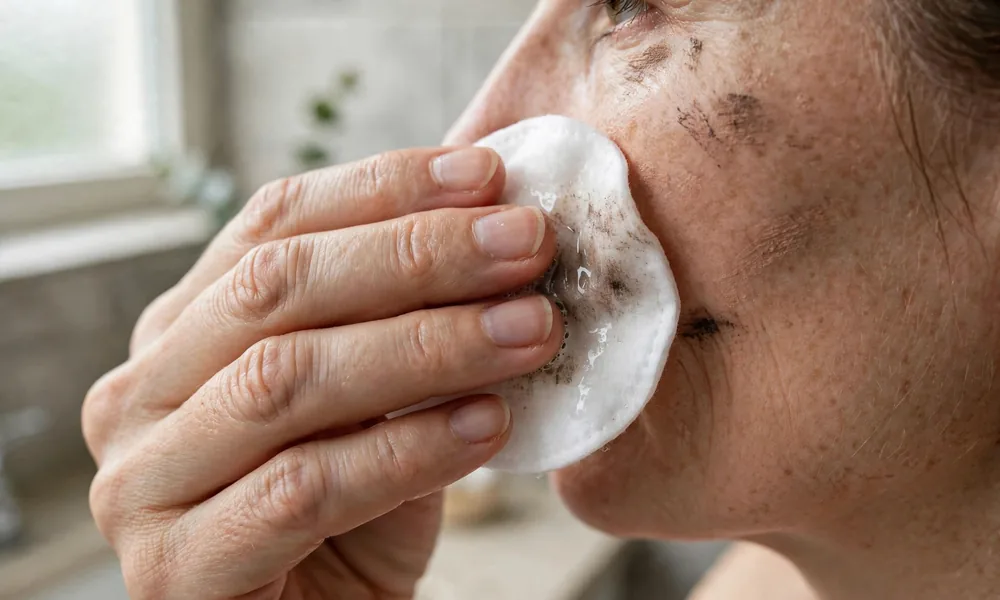
The right bottle leaves skin clean and comfortable, with no tightness, redness or film.
Dry skin
Hydrating formulas with glycerine are the natural fit, and a classic fragrance-free formula is a safe second choice. Use a soft pad, press rather than rub, and moisturise while the skin is still slightly damp. Avoid purifying formulas on the cheeks.
Oily and combination skin
A purifying micellar water, or a classic formula followed by a gentle face wash, is the most reliable routine. Avoid a heavy oil-infused bottle left on without a second cleanse: the residue can clog pores.
Sensitive skin
A fragrance-free micellar water with a short ingredient list is the safest starting point. Patch-test on the jawline for two or three nights before using it around the eyes, press and hold the pad rather than scrubbing, and never use a rough pad on red skin. Our guide to what makeup remover is and which type suits you explains where micellar water sits among the other remover formats.
Acne-prone skin
A classic or purifying micellar water followed by a gentle face wash is the most reliable routine. Avoid heavy, poorly rinsing formulas, and skip wipes as a daily habit — the friction and residue work against you.
Mature skin
Hydrating micellar waters are the favourites here, because they clean without dragging or drying. Avoid harsh rubbing, especially around the eyes. A soft, thick cotton pad matters more than the bottle: it holds more solution and needs fewer passes.
How to Use Micellar Water Properly
Technique matters as much as the bottle. A good micellar water used badly will still leave makeup behind, while a modest one used well will do the job. Soak the pad properly — a half-wet pad drags, a well-soaked pad glides. Press it over closed eyes for ten seconds before wiping gently downwards, and let the micelles dissolve the mascara instead of scrubbing at it. Sweep the face in sections, using a fresh side of the pad when one side comes away dirty, and keep going until a fresh pad comes away clean.
For the eyes, keep a biphasic formula even if the rest of the face uses a classic one: shake it, soak the pad, press, hold, wipe down — never rub back and forth across the lashes. Modern sunscreens are water-resistant and cling to the skin, so one quick pass is rarely enough; use two pads, or a micellar pass followed by a gentle wash. Soft, thick, lint-free pads hold more solution and leave less fluff behind than thin, rough ones. Our guide to the best cotton pads for gentle skincare covers what to look for, because the pad is half the tool.
What Micellar Water Cannot Do
Micellar water is a cleanser with one job, and it is worth knowing where that job ends. It is not a treatment: it will not exfoliate, fade dark spots or replace a moisturiser, however many soothing ingredients the label lists. It is not a toner either, though the two bottles look alike. A toner is the step after cleansing that balances or hydrates, and it works on clean skin — micellar water is the step that gets the skin clean. Our guide to what toner is and whether you really need it explains the difference in full, and why the two are not interchangeable.
It is also not a substitute for washing your face. Micellar water is the first cleanse, not the only one. At night, a gentle face wash after the micellar pass clears away whatever the pads left behind. In the morning, most people need no micellar water at all: there is no makeup to remove, so a splash of water or a gentle wash is enough. And no micellar water will remove a full face of waterproof makeup in one pad — if it claims to, the claim is doing the work, not the formula.
Mistakes That Undo the Good Work
The most common mistake is scrubbing. Micellar water works by dissolving, not by friction, and a pad dragged hard across the face irritates the skin and pulls at the lashes. The second mistake is stopping at the first dirty pad: one pass removes the surface layer, and the makeup underneath needs a second, clean pad. The third is using the same pad for the whole face and both eyes, which just moves makeup around. The fourth is skipping the second cleanse after heavy makeup or sunscreen. The fifth is buying a biphasic bottle and never shaking it. The sixth is treating micellar water as a morning-and-night must: used twice a day on already-clean skin, even a gentle formula can slowly strip the barrier it was meant to protect.
Your Micellar Water Checklist
- Match the formula to your skin type first, and to your makeup second.
- Soak the pad properly — a half-wet pad drags, a well-soaked pad glides.
- Press and hold pads over the eyes for ten seconds instead of rubbing.
- Keep going until a fresh pad comes away clean, then stop.
- Follow with a gentle face wash at night, especially after sunscreen.
- Keep a biphasic bottle for waterproof eye makeup, and shake it first.
Frequently Asked Questions
Is micellar water enough on its own?
For light makeup, usually yes, though a quick rinse or a gentle wash afterwards is still a good idea. For heavy or waterproof makeup it is rarely enough.
Do I need to rinse after using micellar water?
Most formulas are designed to be left on, and most people can leave them without any problem. If your skin feels filmy, or you used an oil-infused formula, a rinse or a gentle wash afterwards is the better habit.
Can I use micellar water every day?
Yes. A gentle micellar water used once a day, in the evening, is exactly what it is made for. Applied without rubbing, it will not harm your skin barrier.
Can micellar water remove waterproof mascara?
A classic micellar water will shift it only with repeated pads and patience, which usually means rubbing. A biphasic, oil-infused micellar water is the right tool: shake it, press a soaked pad over the closed eye for ten seconds, and wipe gently downwards.
Is micellar water good for sensitive skin?
Fragrance-free micellar water is one of the safest cleansers for sensitive skin, because it cleans with mild micelles and no rinsing or lathering. Patch-test new bottles on the jawline first, use soft pads, and press rather than rub.
Does micellar water replace a face wash?
No. Micellar water is the first cleanse: it dissolves makeup, sunscreen and the day’s grime so the face wash can do its real job on clean skin. Skipping the wash leaves a trace of surfactant and whatever the pads missed.
The Bottom Line
Micellar water earns its place by doing one thing quietly and well: lifting the day off your face without a fuss. The best micellar waters of 2026 match your skin, dissolve your makeup without rubbing, and leave nothing behind. Pick the formula for your skin first, use a soaked pad and a patient press, and follow it with a proper wash at night.