How to Pick the Best Pet Conditioners of 2026 for a Soft, Tangle-Free Coat
The best pet conditioners of 2026 do the job shampoo cannot: they put moisture back into the coat, loosen tangles before they become mats, and leave the fur soft enough to brush without a struggle. This guide explains what a conditioner does, which type suits which coat, and how to use it properly.
Key Takeaways
- A pet conditioner restores moisture and slip after shampoo, which stops tangles and mats forming as the coat dries.
- Rinse-out conditioners suit most dogs, leave-in formulas suit long and curly coats, and sprays suit quick freshening between baths.
- Match the conditioner to the coat: light formulas for short coats, rich detangling formulas for long and double coats.
- Never use a human conditioner on a pet unless the label says it is safe for animals, since human formulas are too acidic for pet skin and cats lick residue off their coats.
- Apply conditioner to a clean, wet coat, leave it for the time on the label, and rinse thoroughly, because residue is the most common cause of dull, itchy coats.
What a Pet Conditioner Actually Does
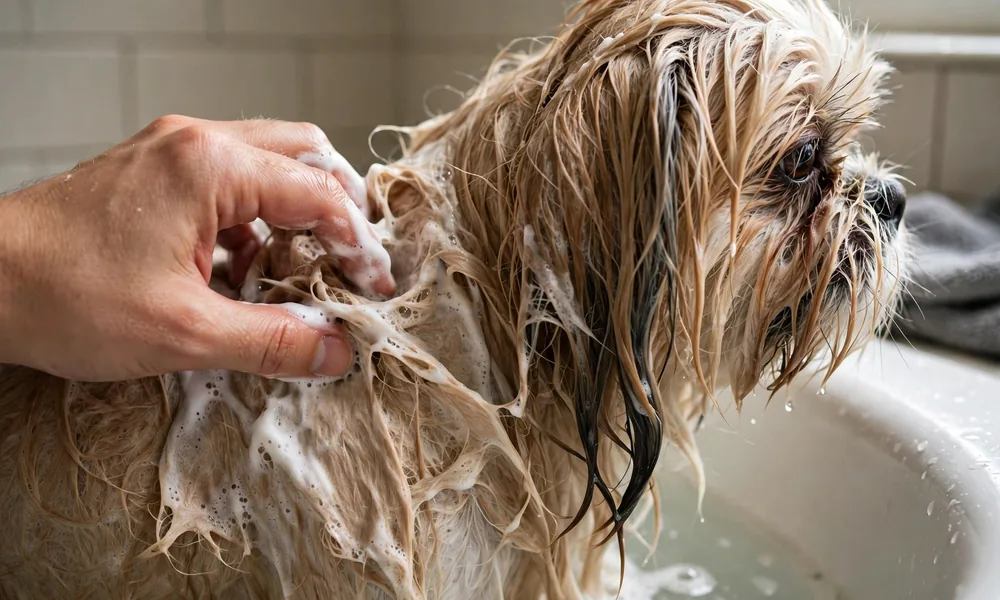
Shampoo cleans by lifting dirt and oil off the hair, but it also lifts some of the natural oils that keep a coat soft. A pet conditioner replaces that moisture with a thin, slippery layer, so the hairs slide past each other instead of catching and tangling. Without it, a long coat dries into a knotty mass, and the brushing pulls and hurts, which is why so many dogs dread bath time.
A good conditioner also smooths the hair cuticle, so the coat reflects light and looks shiny, and it holds less static, so it does not frizz up in dry weather. For double-coated breeds, it helps the dense undercoat release loose hair instead of packing into mats. For curly coats, it keeps the curls defined, and for dry skin, a conditioner with oatmeal or aloe calms the itch shampoo alone leaves behind.
Conditioner is not a substitute for shampoo, and shampoo is not a substitute for conditioner. Washing without conditioning leaves the coat clean but stripped, and conditioning without washing first just seals dirt into the coat. If you have not yet settled on a wash, our guide to pet shampoos that keep coats soft covers how to choose a gentle formula for a multi-pet household.
Rinse-Out, Leave-In and Spray: Which Format Wins
Most pet conditioners fall into three formats. A rinse-out conditioner is the classic choice: work it through the wet coat after shampooing, leave it for two to five minutes, and rinse it away. It gives the deepest conditioning and the most slip, which is what long and double coats need, though it adds several minutes to the bath.
A leave-in conditioner stays in the coat after the bath. It is lighter than a rinse-out formula, brushed through a damp coat, and it keeps working as the coat dries, which makes it the best choice for curly coats and for coats that tangle between baths. The risk is overuse: too much leave-in weighs a short coat down and leaves it greasy.
A conditioning spray is the quickest option: a few spritzes onto a dry or damp coat, followed by a brush, adds slip and shine and makes a mid-week brush-out easier. Sprays are not a replacement for a proper treatment, but they are the best tool for a cat that hates baths.
Best Pet Conditioners by Coat Type in 2026
There is no single best pet conditioner for every animal, because the right choice depends on the coat in front of you. Start with the coat, not the bottle, and the choice becomes simple.
Short Coats
Short coats need the lightest touch. A thin, easy-rinsing conditioner adds shine and a little softness without weighing the coat down or leaving it greasy. Heavy detangling conditioners are wasted here: there is nothing to detangle, and the extra richness just makes a short coat look flat and oily.
Long and Double Coats
Long and double coats are where conditioner earns its keep. These coats tangle as they dry, and a rich, slippery rinse-out conditioner is the only thing that lets a brush glide through afterwards without pulling. Look for shea butter, jojoba or argan oil on the label, and work it right down to the undercoat, since the mats form underneath.
Curly and Wiry Coats
Curly coats need moisture above all else. A leave-in conditioner suits them best, because it keeps the curls hydrated as they dry instead of letting them frizz. Apply it to a damp coat, comb it through, and let the coat dry naturally. Wiry coats need a light conditioner that does not soften the texture too much.
Sensitive and Itchy Skin
Pets with sensitive skin need the simplest formula you can find. Oatmeal soothes itchy or flaky skin, aloe calms irritation without adding fragrance, and a short ingredient list is usually a good sign. A fragrance-free bottle is worth paying more for, since fragrance is the most common irritant in grooming products.
Cats
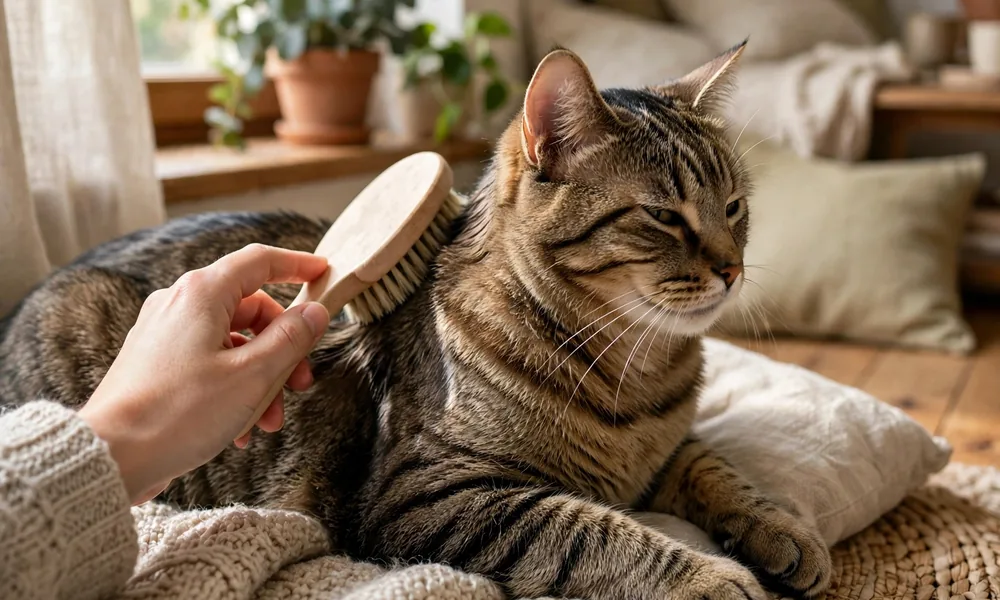
Cats need a conditioner that is safe to lick. Cats groom themselves constantly, so anything left on the coat gets swallowed, and a cat conditioner must be gentle and free of anything toxic to cats. Never use a dog conditioner on a cat unless the label clearly says it is safe for cats.
Ingredients Worth Looking For
Oatmeal is the most reliable soother in a pet conditioner: it calms itchy skin and suits puppies, kittens and older animals. Aloe vera cools and hydrates without a greasy film. Shea butter and jojoba add richness for long coats, glycerin pulls moisture into the hair, and keratin and silk proteins patch rough spots on damaged hair so the coat brushes out more easily.
Keratin and silk proteins are worth looking for in a detangling conditioner. They patch the rough spots on damaged hair, which makes the coat smoother and easier to brush, and they are especially useful for coats that have been sun-dried or over-washed. Coconut-derived conditioners are gentle and rinse clean, and they suit short coats that need shine without weight. Vitamin E helps the skin as much as the coat, and it is a good sign on a label for a pet with dry, flaky skin.
Ingredients to Avoid
Heavy fragrance is the first thing to avoid: it can bother an animal long after the bath, since its sense of smell is far sharper than ours, and fragrance is the most common cause of skin irritation in grooming products. Skip artificial dyes, parabens and sulphates too, especially for cats, puppies and sensitive skin. A little silicone adds shine, but a heavy silicone formula builds up over weeks and weighs the coat down.
Pet Conditioners Compared
No single conditioner suits every animal, so compare by coat and format rather than by brand. Start with the coat, add a specialist formula only when the coat asks for it, and keep a cat-safe bottle in a mixed household.
| Type | Best for | Coat result | Watch out for |
|---|---|---|---|
| Rinse-out, rich | Long and double coats | Deep slip, tangle-free brush-out | Needs 3 to 5 minutes to work |
| Rinse-out, light | Short coats, everyday baths | Soft, light, shiny | Too mild for very tangled coats |
| Leave-in cream | Curly coats, between baths | Moist, defined curls, less frizz | Weighs down short coats if overused |
| Conditioning spray | Quick brush-outs, cats | Light slip and shine | Not a substitute for a real treatment |
| Oatmeal and soothing | Itchy, flaky or sensitive skin | Calm, comfortable, soft | Needs a long rinse to avoid residue |
| Detangling | Mats and knots | Smooth, knot-free, easy to brush | Can feel greasy on fine coats |
A light rinse-out conditioner is the right starting point for most pets, a rich or detangling formula earns its place only when the coat tangles, and a spray keeps things tidy between baths. The right brush matters as much as the right bottle, and our guide to pet grooming kits covers the tools that pair with a good conditioner.
How to Condition Without the Wrestling Match
Start with a clean, wet coat. Shampoo first, rinse thoroughly, and squeeze the excess water out before you reach for the conditioner, since a dripping coat dilutes it before it can work. Use a small amount, working it through with your fingers from the ends of the hair towards the skin, since the ends are the driest part.
Leave it for the time on the label: two minutes for a light formula, five for a rich detangling conditioner on a long coat. Then rinse longer than you think. Conditioner left in the coat is the most common cause of dullness and itching, and a long rinse is what separates a soft coat from a sticky one.
Dry the coat gently. A towel blot, not a hard rub, keeps the coat from tangling as it dries, and a wide-toothed comb through the damp coat finishes the job. For long coats, brush in small sections from the ends inward, and stop the moment you feel resistance: that is a tangle, and it needs conditioner and patience, not force. If bath time still ends in a mess on the floor, our guide to pet stain removers covers the enzyme formulas that actually work on pet messes.
Checklist: Buying a Pet Conditioner
- Match the formula to the coat: light for short coats, rich and detangling for long and double coats.
- Check the label says it is safe for your animal, especially for cats, which lick residue off their coats.
- Look for oatmeal, aloe, shea butter or jojoba, and skip heavy fragrance, dyes and parabens.
- Choose the format for your routine: rinse-out for deep conditioning, leave-in for curly coats, spray for quick brush-outs.
- Use a small amount first and add more only if the coat still feels dry, since overuse weighs coats down.
- Rinse longer than you think, and brush the damp coat gently from the ends inward.
Frequently Asked Questions
Do pets really need conditioner, or is shampoo enough?
Shampoo cleans but strips natural oils, so without conditioner the coat dries out and tangles. Short coats can manage with shampoo alone, but long, double and curly coats need the slip and moisture a conditioner adds.
Can I use human conditioner on my dog or cat?
No, unless the label says it is safe for animals. Human conditioner is too acidic for pet skin, and cats lick residue off their coats, so anything left behind must be safe to swallow in small amounts.
How often should I condition my pet?
Condition every time you shampoo, which for most dogs is every few weeks and for most cats is rarely. Over-conditioning a short coat makes it greasy, so match the frequency to the coat, not the calendar.
What is the difference between a detangler and a conditioner?
A conditioner is a full treatment that adds moisture and slip to the whole coat, while a detangler is a lighter product aimed at loosening knots. Many detangling conditioners do both jobs.
Is leave-in conditioner safe for cats?
Yes, if the label says it is safe for cats and the formula is fragrance-free. Cats lick their coats, so anything left in the fur must be non-toxic, and essential oils should be avoided unless a vet confirms they are safe.
Why does my pet’s coat still look dull after conditioning?
The most common causes are residue from not rinsing long enough, silicone build-up from a heavy formula, or a shampoo that is too harsh for the coat. Rinse longer, switch to a lighter formula for a month, and the shine usually returns.
Bottom Line
The best pet conditioner of 2026 is the one that matches the coat in front of you: light for short coats, rich and slippery for long and double coats, leave-in for curls, and oatmeal-based for sensitive skin. Buy the formula for the animal and the coat, not for the scent, apply it to a clean wet coat, and rinse longer than you think.