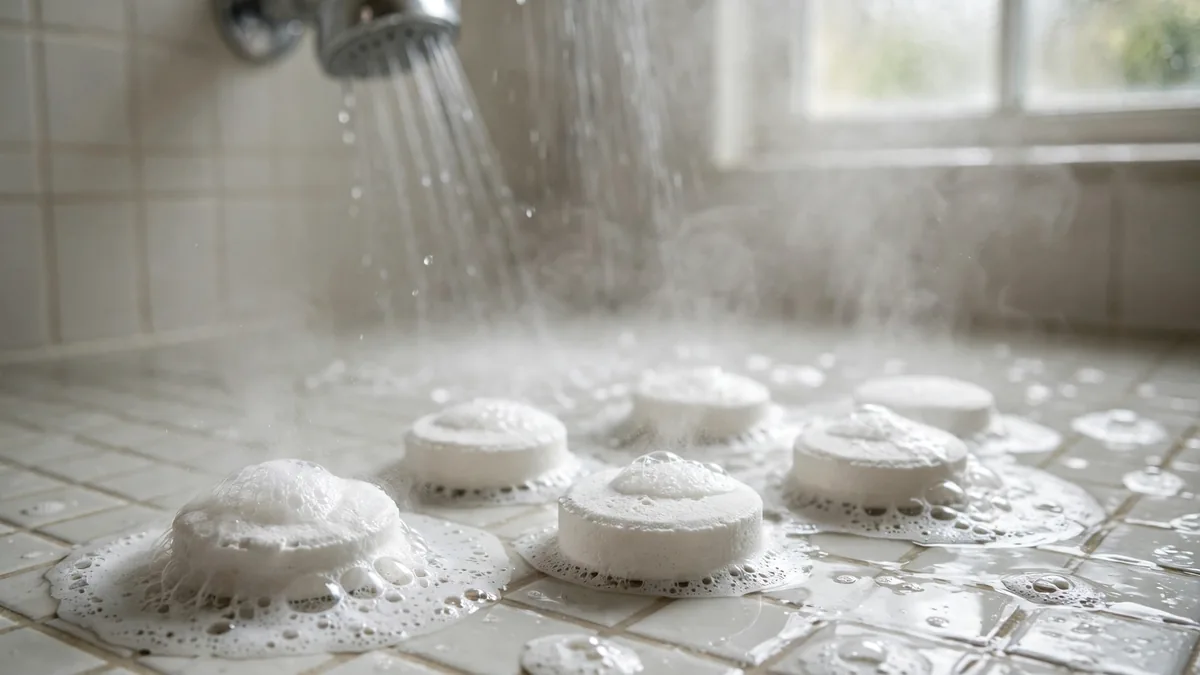
Shower steamers promise the best part of a bath bomb without needing a bath: drop a tablet on the shower floor, let the hot water and steam carry the scent up around you, and turn an ordinary shower into something that feels like a spa. Bath bombs promise the same pleasure in a different form: a slow fizz, swirling colour and soft skin after a long soak in the tub. Both cost a few pounds or dollars a go, and both are usually bought on impulse. So which one earns your money? This shower steamers vs bath bombs comparison looks at the two side by side: scent, skin, cost, and who should buy which.
Key takeaways
- Shower steamers work through steam and scent, not skin contact, while bath bombs soak your whole body in scented water.
- Bath bombs win on skin softness and theatre, because the oils and colour stay in the water around you for twenty minutes or more.
- Shower steamers win on time and convenience, because they take no longer than a normal shower and need no bath at all.
- A steamer costs roughly the same per use as a bath bomb, but it is wasted in a weak shower with little steam.
- If you have no bath, shower steamers are the only choice of the two; if you love long soaks, nothing a steamer does replaces a bath bomb.
What a shower steamer actually is
A shower steamer is a hard, round tablet made mostly of baking soda and citric acid, the same fizzing pair that powers a bath bomb, pressed together with scented oils and sometimes a little colour. The difference is the job: a bath bomb is dropped into a tub full of water, while a shower steamer sits on the shower floor, out of the direct stream, where splashes and steam slowly dissolve it. As it fizzes, it releases its scent into the steam rising around you.
That is the whole point of a steamer. It is an aromatherapy product first and a bathing product second: it does not touch your skin, it does not colour the water, and it does not soften your skin. What it does is fill a small, steamy shower with scent, which is why lavender steamers are sold for winding down, eucalyptus for clearing the head, and citrus for waking up. A good steamer fizzes steadily for several minutes, and the scent should be strong enough to notice without putting your nose to the tablet.
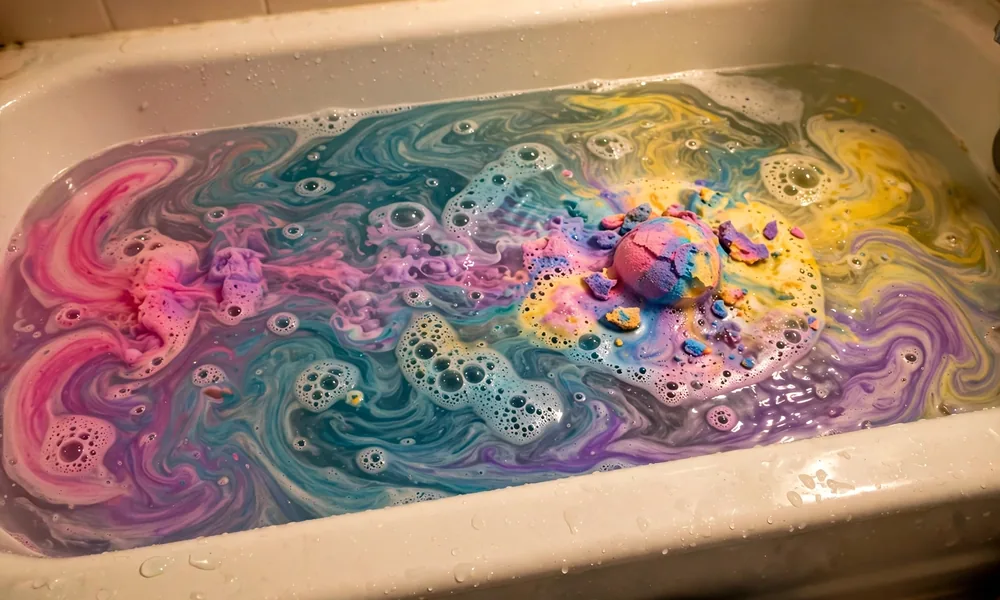
A bath bomb works by soaking: fizz, colour and oil in the water around you for as long as you stay in the tub.
Shower steamers vs bath bombs at a glance
| What matters | Shower steamers | Bath bombs |
|---|---|---|
| How it works | Fizzes on the shower floor, scent rises in steam | Fizzes in the tub, scent, colour and oil in the water |
| Needs a bath? | No, any shower with hot water | Yes, a full tub is essential |
| Scent strength | Strong for 5–10 minutes, then gone | Steady for a 20-minute soak |
| Skin feel after | No change, it never touches skin | Soft and lightly moisturised |
| Time needed | None extra, a normal shower | 20–30 minutes plus filling the tub |
| Cost per use | About the same as a bath bomb | About the same as a steamer |
| Mess and cleanup | Almost none, it rinses away | Colour and oil can ring the tub |
| Best for | Busy mornings, no-bath homes, scent lovers | Slow evenings, dry skin, gifts, children |
Scent: steam against soak
Scent is where the two products differ most. A shower steamer delivers scent fast and hard: the steam carries it straight up to your nose, so the first minute of your shower smells wonderful, and the scent fades as the tablet dissolves. A bath bomb delivers scent slowly and steadily: it fizzes for one to three minutes, and the scent then sits in the warm water and steamy air for as long as you soak, usually twenty minutes or more.
That makes steamers better for a short, sharp lift and bath bombs better for a long, slow wind-down. A eucalyptus steamer on a stuffy morning can clear your head in a way a bath bomb cannot match for speed, and a lavender bath bomb wins on a slow evening, because the scent is still there ten minutes in, long after a steamer has gone quiet. Our guide to bath bombs that actually fizz explains how to judge a bomb’s scent before you buy it, and the same rule applies to steamers: if it smells faint through the wrapping, it will smell fainter in the shower.
Skin: the bath bomb’s clear win
On skin, there is no real contest. A bath bomb sits in the water with you, and its oils, usually shea butter, cocoa butter or a light plant oil, coat your skin as you soak, so you climb out feeling soft and lightly moisturised. A shower steamer never touches your skin at all: it sits on the floor, its oils wash down the drain, and your skin feels exactly as after an ordinary shower. If soft skin is what you are buying, a steamer cannot give it to you.
That does not make steamers useless, but it changes what they are for. A steamer is a scent product, not a skincare product, and it pairs with whatever you wash with rather than replacing it. Wash with a good body wash first and let the steamer handle the scent: our guide to the best body washes for every skin type covers which formulas are kindest to skin. Sensitive skin should note that steamers keep fragrance away from the skin, a genuine advantage over soaking in scented water.
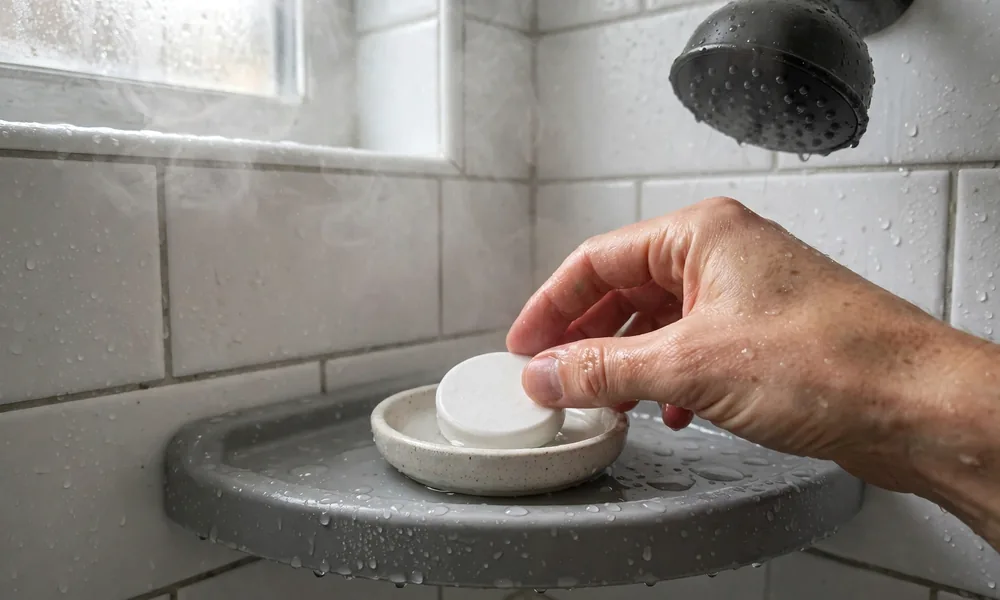
A steamer belongs out of the direct stream, where splashes dissolve it slowly instead of washing it away.
Who should pick which
No bath at home
If your bathroom has a shower and no tub, the choice is made for you: shower steamers are the only one of the two you can use. This is the single biggest reason steamers exist: a steamer turns a plain shower into something worth looking forward to, and it is the closest a shower-only home gets to the bath bomb experience.
Sensitive skin
Sensitive skin favours steamers, because the fragrance and colour never touch your body. A bath bomb soaks your whole skin in dye and scent for twenty minutes, which is a lot of exposure for skin that flares up easily. If your skin reacts to bath products, try a plain or lightly scented steamer first.
Dry skin and long soaks
Dry skin favours bath bombs, because the oils in the water do real work while you soak, and a steamer does nothing for dry skin. If your skin feels tight after a shower, a moisturising bath bomb plus a good moisturiser will do far more for you.
Children and gifts
Bath bombs win for children and for gifts, and it is not close. Children love the fizz and the colour, and a shaped bomb is a treat in a way a white tablet on a shower floor is not. As gifts, bath bombs look better and feel more generous; steamers suit someone with no bath, but for most people a bath bomb is the safer present.
How to use a shower steamer properly
Run the shower first and let the bathroom fill with steam, because a steamer in a cold, dry shower barely fizzes at all. Place the tablet on the shower floor away from the direct stream, or better still on a small dish or shelf where splashes reach it slowly. Direct water dissolves a steamer in a minute and wastes most of the scent down the drain. Use hot water, not lukewarm: steam is what carries the scent, and a cool shower makes little steam. Close the bathroom door and keep the extractor fan off, so the scented steam stays in the room. One steamer per shower is enough; two at once is a waste, not a luxury. A good shower head helps too, because strong, hot water makes more steam, and our guide to shower heads that turn an ordinary bathroom into a spa explains what to look for if yours is weak or tired.
The mistakes that waste a steamer
The first mistake is putting the steamer directly under the shower head, where the full force of the water dissolves it before you have finished washing your hair. The second is using one in a cold shower, or in a large, draughty bathroom with the door open, where the steam escapes before it reaches you. The third is expecting a steamer to soften your skin: it will not. The fourth is buying on colour. Some steamers are dyed bright pink or blue, but the colour washes down the drain and does nothing for you in a shower, so buy for scent and for fizz, not for colour. Store spare steamers somewhere dry, wrapped and away from bathroom steam: damp air starts the fizzing reaction on the shelf.
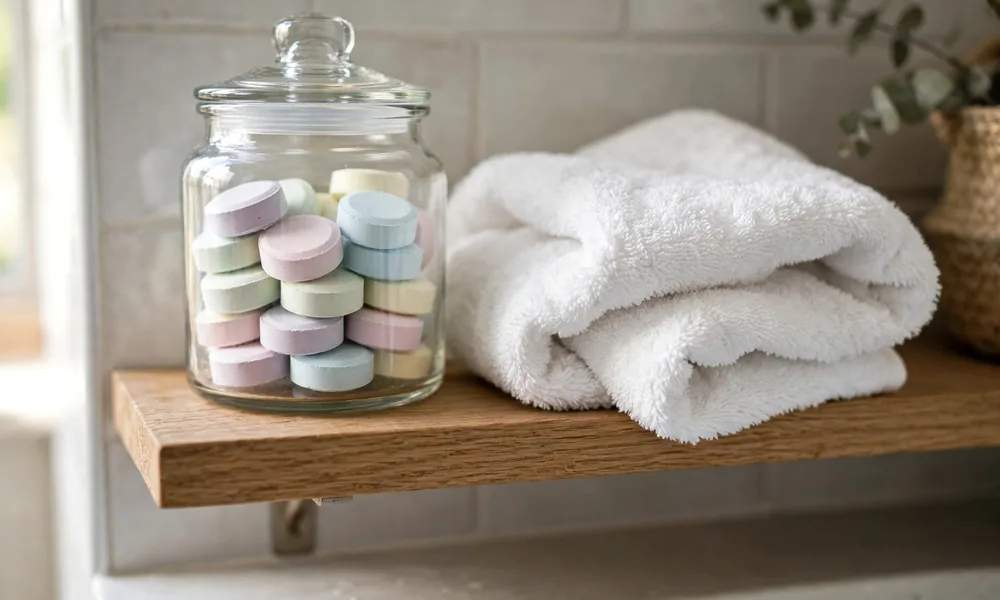
Steamers keep best in a dry jar away from bathroom steam, which starts the fizz long before you want it to.
Checklist: choosing between steamers and bath bombs
- Start with your bathroom: no bath means steamers, a bath you love means bath bombs.
- Buy for scent first, because scent is the steamer’s whole job and the bomb’s biggest pleasure.
- Check the fizz: a good tablet fizzes steadily for several minutes, not in one quick rush.
- Count the cost per use, not per pack, and buy multi-packs if you will use them weekly.
- Place a steamer out of the direct stream, on a dish or shelf, so splashes dissolve it slowly.
- Keep spare tablets dry and wrapped, away from bathroom steam, or they will fizz on the shelf.
Frequently asked questions
Can I use a shower steamer in the bath?
You can, but it is a waste of money. A steamer is made to release scent into steam, not into a tub of water, and in a bath it will fizz weakly and give you little scent or skin benefit.
Can I use a bath bomb in the shower?
No, not properly. A bath bomb needs a tub of water to dissolve in, and on a shower floor it will fizz and wash down the drain in a minute or two. It can also leave dye on the floor and make the tiles slippery.
Are shower steamers safe for sensitive skin?
Usually, yes, because the tablet never touches your skin. The scent is in the steam, not on your body, which is gentler than soaking in scented water.
How long does a shower steamer last?
A good steamer fizzes for five to ten minutes, depending on its size and how much water reaches it. Out of the direct stream it lasts longer; under the shower head it can vanish in a minute.
Do shower steamers make the shower floor slippery?
A little, yes. The oils in a steamer can leave a light film on the tiles, so rinse the floor before you step out.
Which is cheaper, shower steamers or bath bombs?
About the same per use, a few pounds or dollars each, with multi-packs cheaper for both. A bath bomb gives you more minutes for the money, but a steamer costs no extra water or time.
The bottom line
Shower steamers and bath bombs are not rivals so much as answers to different questions. If you have no bath, or ten minutes before work, or skin that hates soaking in fragrance, shower steamers win: they bring scent to a shower you were already going to take. If you have a bath, an evening to spare, and skin that loves a long soak, bath bombs win: nothing a steamer does matches twenty minutes of fizz, colour, scent and soft skin. Buy the one that fits the bathroom and the life you actually have.


