The Best Mushroom Brushes of 2026 for Clean Mushrooms Without Bruising
The best mushroom brushes of 2026 solve a small kitchen problem: mushrooms arrive dirty, and washing them under the tap makes them soggy. A mushroom brush sweeps the soil off a delicate cap without water, without bruising the flesh, and without tearing the thin skin. This guide explains what makes a mushroom brush different, which bristle suits which mushrooms, and how to use one properly.
Key Takeaways
- A mushroom brush cleans with dry, soft bristles, which keeps mushrooms dry so they brown in the pan instead of steaming.
- Soft natural bristles suit delicate caps, while slightly firmer bristles suit sturdy portobellos and field mushrooms.
- Brush before you slice, never after, since cut faces bruise and absorb moisture far more easily than whole caps.
- A mushroom brush is not a vegetable brush: stiff vegetable brushes tear mushroom skin and bruise the flesh.
- Clean the brush by tapping out the dirt and letting it dry bristle-down, and never soak it, since a soaked brush goes limp and mouldy.
Why Mushrooms Need Their Own Brush
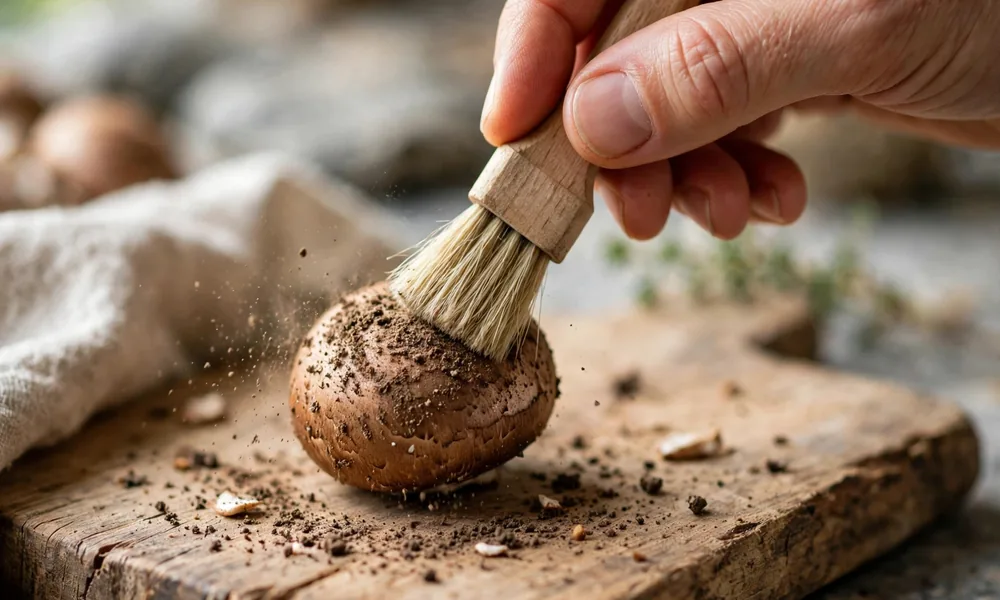
A mushroom is mostly water held together by a delicate structure, and it behaves nothing like a carrot or a potato. Rinse a mushroom under the tap and it soaks up water like a sponge, and a wet mushroom will not brown: it steams in the pan and turns grey and rubbery. A mushroom brush is the tool built for this exact job: soft bristles that flick soil away without water, without pressure, and without tearing the skin.
The difference is in the bristles. A mushroom brush uses fine, soft, flexible bristles, usually natural horsehair or soft plant fibre, set into a small head that fits the curve of a cap. The bristles bend over the surface rather than digging into it, so they lift dirt out of the creases without bruising the flesh. A stiff brush does the opposite: it scratches the skin, leaves marks that darken within minutes, and pushes dirt deeper into the gills.
Size matters too. A mushroom brush is small enough to work around a button mushroom without knocking it about, and the handle is short enough to control with a light grip. A big brush covers too much surface at once and makes it easy to press too hard, which is how caps get bruised. The best mushroom brushes feel more like a paintbrush than a scrubbing brush, and that lightness is the point.
Bristle Types Compared
Natural horsehair is the traditional choice, and it is still the best all-rounder. The bristles are soft, flexible and slightly springy, so they flick dirt away without scratching, and they hold their shape for years if they are kept dry. Horsehair suits delicate mushrooms best: button, chestnut, shiitake and oyster mushrooms, where the skin is thin and the flesh bruises easily. The only drawback is care: horsehair must never be soaked.
Soft plant fibre, usually tampico or agave, is the vegan alternative, and it is a little firmer than horsehair. It suits sturdier mushrooms such as portobellos and field mushrooms, where the cap is thick and the dirt is heavier, and it copes better with a quick rinse. The trade-off is delicacy: plant fibre is less forgiving on the thinnest skins, so use a lighter touch on small caps.
Synthetic nylon bristles are the cheapest option, and the one to be careful with. Good nylon is soft and even and dries quickly, which makes it practical for a busy kitchen. Cheap nylon is stiff, uneven and scratchy, and it bruises caps faster than any other bristle. If you buy nylon, run the bristles across the back of your hand first: if they feel prickly on skin, they will bruise a mushroom.
Best Mushroom Brushes by Mushroom in 2026
There is no single best mushroom brush for every kitchen, because the right choice depends on what you cook most. Start with the mushroom, not the brush, and the choice becomes simple.
Button and Chestnut Mushrooms
Small, delicate caps need the softest brush you can find. A small round-headed brush with fine horsehair bristles fits the curve of a button mushroom, reaches into the crease where the cap meets the stem, and lifts the light soil without marking the skin. Work with short, gentle strokes from the centre of the cap outward, and turn the mushroom in your fingers rather than pressing harder.
Portobello and Field Mushrooms
Big, sturdy caps can take a firmer brush. A larger flat-headed brush with plant-fibre bristles suits portobellos and field mushrooms, because the caps are thick and the dirt is heavier. The gills need attention too: brush them lightly with the tip of the bristles, but never scrub them, since they tear easily and turn the mushroom dark.
Shiitake and Oyster Mushrooms
Shiitake and oyster mushrooms have thin, delicate flesh and uneven surfaces, so they need a soft brush and a patient hand. A small horsehair brush works best, used with the lightest strokes, and the gills of a shiitake should be brushed only once, gently, since they bruise at a touch. Oyster mushrooms grow in clusters with grit trapped between the layers, so separate the cluster first and brush each piece.
Wild and Foraged Mushrooms
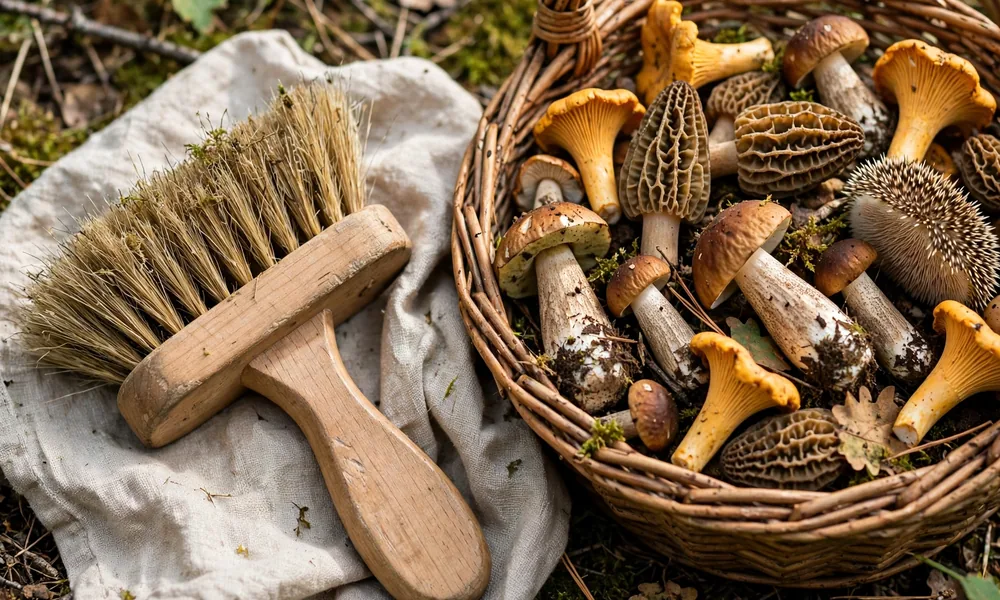
Wild mushrooms arrive far dirtier than shop-bought ones, and they are also more fragile. Brush off the loose soil first, then use a soft, dry cloth for stubborn patches and a small knife to trim the dirty base of the stem. Never wash a wild mushroom unless the recipe truly demands it. A brush with a built-in knife is handy for foragers: brush with one end, trim with the other, and the mushroom never touches water.
Mushroom Brushes Compared
No single brush suits every mushroom, so compare by bristle and mushroom rather than by brand. Start with the mushrooms you cook most, and pick the bristle that suits them.
| Type | Best for | Result | Watch out for |
|---|---|---|---|
| Horsehair, small round head | Button, chestnut, shiitake | Gentle, no bruising, clean caps | Never soak; must dry fully |
| Plant fibre, flat head | Portobello, field mushrooms | Firmer clean on sturdy caps | Less forgiving on thin skins |
| Synthetic nylon, soft | Everyday use, quick drying | Practical, dries fast | Cheap nylon bruises caps |
| Brush with knife | Wild and foraged mushrooms | Brush and trim in one tool | Knife needs care in the drawer |
| Small pastry-style brush | Delicate gills and creases | Reaches tight spots | Too soft for heavy soil |
A small horsehair brush is the right starting point for most kitchens, a firmer plant-fibre brush earns its place when you cook portobellos often, and a brush with a knife is the forager’s tool. Other kitchen brushes are not substitutes: a stiff dish brush tears mushroom skin, as our guide to dish brushes makes clear, and a vegetable peeler strips skins rather than cleaning them, as our guide to vegetable peelers covers.
How to Brush a Mushroom Properly
Hold the mushroom gently in one hand, cap up, and the brush in the other. Start at the centre of the cap and brush outward with short, light strokes, letting the bristles do the work. Turn the mushroom as you go, and pay attention to the crease where the cap meets the stem, since that is where soil collects. Then turn it over and brush the stem, and give the gills one light pass.
Brush before you slice, never after. A whole mushroom is firm and resists bruising, while a sliced mushroom is soft, wet and easily marked, and brushing a cut face just pushes dirt into the flesh. If a mushroom is very dirty, brush it, leave it for a minute, and brush it again. Resist the urge to press harder when the dirt does not move: pressure bruises the cap, and a bruised cap darkens within minutes.
After brushing, the mushroom should look clean and feel dry. If it still looks grubby, it probably needs trimming rather than more brushing: cut a thin slice off the base of the stem, where the soil is ground in, and check the gills once more. A mushroom that is clean and dry will brown in a hot pan in minutes; a wet or bruised one will steam and turn grey.
Caring for a Mushroom Brush
A mushroom brush lasts for years if it is kept dry. After each use, tap it firmly against the bin to shake out the dirt, then brush the bristles against your palm to clear the last of it. If the bristles are damp, stand the brush bristle-down so air reaches the base, and never put it away wet in a closed drawer. A brush that stays damp goes limp, smells musty, and eventually grows mould.
Never soak a mushroom brush. Soaking swells the wooden handle, loosens the bristles, and ruins horsehair in a single afternoon. If the brush is genuinely filthy, a quick rinse followed by immediate drying is the most it should ever get. Every few months, wash the bristles with a drop of mild soap, rinse quickly, and dry bristle-down overnight. A brush that sheds bristles or smells musty despite cleaning has reached the end of its life. A narrow brush for bottles and jars faces the same care rules, and our guide to bottle brushes covers how to keep long, thin bristles clean and dry.
Checklist: Buying a Mushroom Brush
- Choose the bristle for your mushrooms: soft horsehair for delicate caps, firmer plant fibre for portobellos.
- Test the bristles on the back of your hand first; if they feel prickly on skin, they will bruise a mushroom.
- Pick a small head that fits the curve of a cap, with a short handle you can control with a light grip.
- Look for a wooden handle that feels solid, with bristles set tightly enough that none shed on the first use.
- Consider a brush with a knife if you forage, since trimming the stem base is part of cleaning wild mushrooms.
- Plan to store it bristle-down and dry, and never soak it, since a soaked brush goes limp and mouldy.
Frequently Asked Questions
Should I wash mushrooms instead of brushing them?
Brushing is better for almost every mushroom. Washing makes mushrooms absorb water, and wet mushrooms steam instead of browning. Brush off the soil, trim the stem base, and only rinse quickly if a mushroom is very dirty, drying it at once.
Can I use a vegetable brush on mushrooms?
No. A vegetable brush has stiff bristles built for scrubbing root vegetables, and it tears mushroom skin and bruises the flesh. A mushroom brush is soft and flexible by design, and that softness is the whole point.
What is the best brush for portobello mushrooms?
A larger flat-headed brush with plant-fibre bristles suits portobellos, because the caps are thick and the dirt is heavier. Brush the cap, give the gills one light pass, and trim the stem base if it is dirty.
How do I clean a mushroom brush?
Tap out the dirt after each use, brush the bristles against your palm, and let the brush dry bristle-down. Never soak it. Every few months, wash the bristles with a drop of mild soap, rinse quickly, and dry overnight.
Do mushroom brushes work on wild mushrooms?
Yes, and they are essential for wild mushrooms, which arrive far dirtier than shop-bought ones. Brush off the loose soil, use a dry cloth for stubborn patches, and trim the stem base with a small knife. A brush with a built-in knife is handy for foragers.
When should I replace a mushroom brush?
Replace it when the bristles shed, bend and stay bent, or smell musty despite cleaning. A well-kept horsehair or plant-fibre brush lasts for years, but a brush that has been soaked or stored wet will fail much sooner.
Bottom Line
The best mushroom brush of 2026 is the one that matches the mushrooms you cook: soft horsehair for delicate button, chestnut and shiitake caps, firmer plant fibre for sturdy portobellos, and a brush with a knife if you forage. Brush before you slice, use light strokes, and keep the brush dry between uses.