Mirror Cleaners That Leave Bathroom Mirrors Streak-Free in 2026
Mirror cleaners have a harder job than most people give them credit for. A bathroom mirror collects a film that no window ever sees: toothpaste spray, hairspray mist, soap splash, and a daily coat of steam that dries into faint marks. A cleaner that works beautifully on a window can still leave a bathroom mirror hazy,
This guide covers the mirror cleaners worth buying in 2026: the sprays, foams, and wipes that cut through bathroom grime, the formulas that are safe for the silver backing behind the glass, and the technique that matters as much as the bottle.
Key Takeaways
- A mirror cleaner must cut toothpaste, hairspray, and soap film, not just dust.
- Ammonia can damage the silver backing and edges of a mirror, so ammonia-free formulas are the safer choice for bathroom mirrors.
- The cloth matters as much as the cleaner: a clean microfibre cloth beats paper towels, which shed lint and leave streaks.
- Spray the cloth, not the mirror, so cleaner does not run down into the frame and attack the backing from the edges.
- Clean mirrors in the evening or with the bathroom light off.
What Makes Mirror Cleaning Different
A mirror is not a window, and treating it like one is how mirrors get ruined. A window is a single sheet of glass with nothing behind it. A mirror is glass with a thin silver coating on the back, and that coating is the mirror: damage it, and the mirror develops black spots around the edges that no cleaner can fix. That is why the first rule of mirror cleaning is to keep liquid away from the edges,
The grime is different too. Windows collect dust, rain spots, and pollen. Bathroom mirrors collect toothpaste, hairspray, shaving foam, and soap, all of which dry into a sticky film that water alone will not shift. A good mirror cleaner needs solvents that dissolve that film in one pass, then evaporate evenly so nothing is left behind. Our comparison of the best and worst glass cleaners of 2026 covers window formulas, where ammonia is fine; mirrors need a gentler version of the same job.
The light is the third difference. A window is judged in daylight, from a distance. A mirror is judged from thirty centimetres away, in bathroom light, by someone checking their face. Every streak, every lint fibre, and every faint haze shows.
The Main Types of Mirror Cleaner
Mirror cleaners come in a few clear types, and the right one depends on the mirror, the grime, and how often you clean.
Ammonia-free sprays
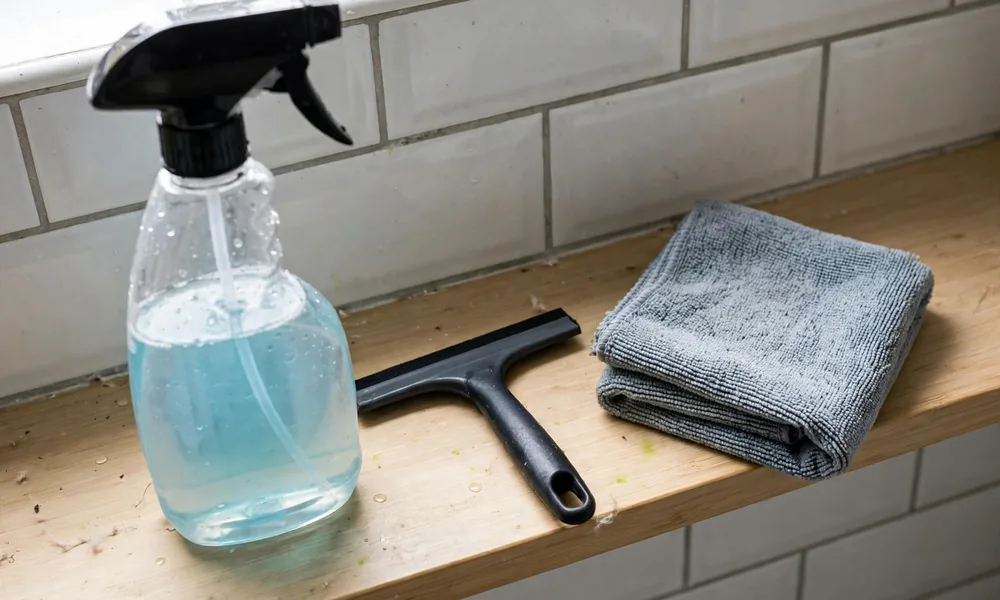
The standard mirror cleaner is an ammonia-free spray, and it is the right default for almost every home. It cuts through toothpaste and hairspray, dries without a trace, and will not attack the silver backing or the frame. The weakness is heavy grime: a spray alone will not shift a month of dried hairspray,
Foaming cleaners
A foaming cleaner clings to a vertical mirror instead of running down it, which makes it the best choice for large mirrors and for mirrors above a sink, where drips land on the tap and the worktop. The trade-off is residue: a foam that is not wiped off fully leaves a faint film, so it needs a second wipe with a clean, dry cloth.
Vinegar and homemade mixes
A mix of white vinegar and water is the cheapest mirror cleaner there is, and it works well on light grime and water spots. The limits are smell and strength: vinegar smells sharp while it dries, and it struggles with heavy hairspray and soap film. Never mix vinegar with bleach-based cleaners, and never use it on a mirror with a damaged edge, where the liquid can seep behind the glass.
Wipes and pre-moistened cloths
Pre-moistened wipes are the convenient option, and they suit a quick clean of a small vanity mirror or a mirror in a guest bathroom. The weakness is cost and waste: a pack of wipes costs far more per clean than a bottle of spray, and a wipe that has picked up grime from one mirror spreads it on the next.
Steam cleaners and squeegees
Steam cleaners lift grime without chemicals, and they suit homes that want to avoid sprays altogether. A small squeegee, covered in our guide to the best squeegees for streak-free windows, pulls dirty water off in one smooth pass.
What to Look for Before You Buy
The formula is the first thing to check, and it decides whether the cleaner lifts grime or just moves it around. A good mirror cleaner uses solvents that dissolve the thin layer of grease, toothpaste, and hairspray that sits on every bathroom mirror. Choose ammonia-free, and check the label for any warning about mirrors or coated glass.
Drying speed is the second thing, and it is where most cleaners fail. One that dries too slowly drips and pools at the bottom of the mirror, where it seeps into the frame. One that dries too fast leaves streaks before you can wipe it off. The best formulas sit in the middle: workable for the few seconds you need to wipe, then evaporating evenly across the whole surface.
The cloth is the third thing, and it matters as much as the bottle. Microfiber cloths are the right tool for mirrors. Paper towels shed fibres, old rags carry grit that scratches glass, and a dirty cloth spreads grime instead of removing it.
Scent and safety come next. A bathroom is a small, enclosed room, so a cleaner with a harsh chemical smell is unpleasant and can irritate eyes and lungs. Low-smell and fragrance-free formulas are worth the small premium, especially in a home with children or anyone with asthma.
Mirror Cleaners Compared
| Type | Best for | Backing safe | Weakness |
|---|---|---|---|
| Ammonia-free spray | Weekly bathroom mirrors | Yes | Struggles with heavy dried grime |
| Foaming cleaner | Large mirrors, above sinks | Yes | Needs a second dry wipe |
| Vinegar and water | Light grime, water spots | Yes | Weak on hairspray, sharp smell |
| Pre-moistened wipes | Small mirrors, quick cleans | Yes | Costly, spreads grime if reused |
| Steam and squeegee | Chemical-free cleaning | With care | Steam at edges risks the backing |
How to Clean a Mirror Without Streaks
Start with a dry dusting. Wipe the mirror with a dry microfibre cloth to remove dust and loose hair, because dust rubbed into the glass with cleaner becomes a paste that smears. Then spray the cloth, not the mirror: two or three sprays on the cloth is enough, and it keeps cleaner away from the frame and the edges, where it can seep behind the glass and attack the silver.
For dried toothpaste or hairspray, hold a damp cloth against the spot for ten seconds to soften it, then wipe it away before you spray the whole mirror. If the mirror is large, a squeegee finishes the job faster than a cloth: one smooth pull from top to bottom, wiping the blade after each pass.
Finish with a dry buff. Take a second, clean, dry microfibre cloth and buff the mirror in small circles, then check it from an angle in the light you actually use. If you see streaks, buff again with the dry cloth before you reach for more spray: most streaks are cleaner that dried before it was wiped, and more cleaner only adds to the problem.
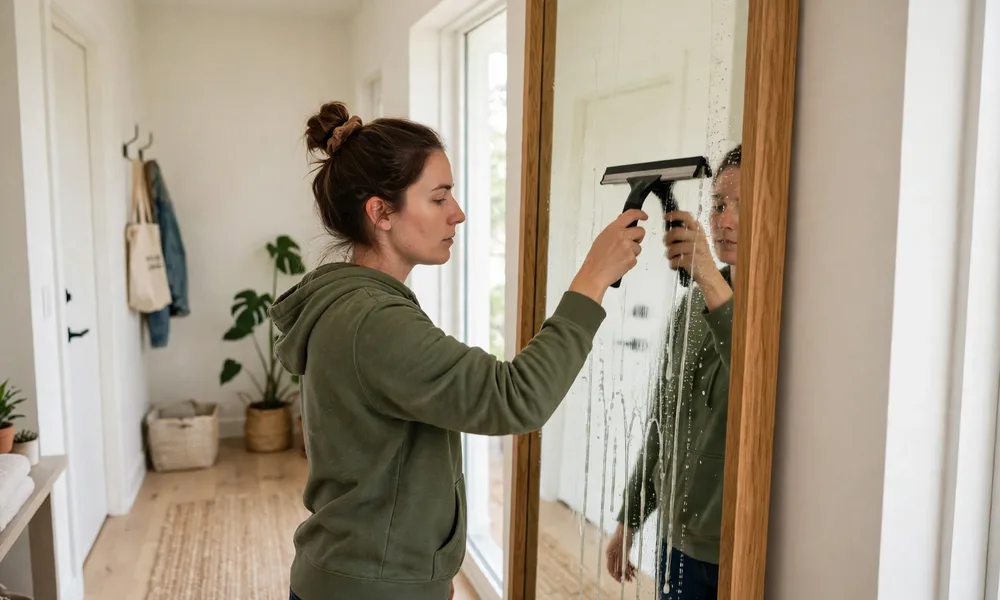
Hallway and full-length mirrors need the same method, just more of it. Work in sections from the top down, and dry each section before you move on, since a tall mirror dries unevenly and the bottom is always the last to be wiped. A squeegee is worth having here: one pull per section, blade wiped after each pass, is faster than a cloth and leaves fewer streaks on a large surface.
Mistakes That Ruin Mirrors
Spraying the mirror directly is the first mistake, and it is the one that does the most damage over time. Cleaner runs down the glass, pools at the bottom edge, and seeps behind the mirror, where it attacks the silver and leaves black spots that cannot be cleaned off. The second mistake is using an ammonia cleaner on a bathroom mirror, especially an older one, where the backing is already thin at the edges.
The fourth mistake is cleaning a mirror in bright sunlight or under a hot bathroom light, which dries the cleaner before you can wipe it and leaves the streaks you were trying to remove. The fifth is using the same cloth for the mirror and the sink: a cloth that has picked up toothpaste, soap, and limescale from the basin spreads all of it across the glass.
Fog, Hard Water, and Old Mirrors
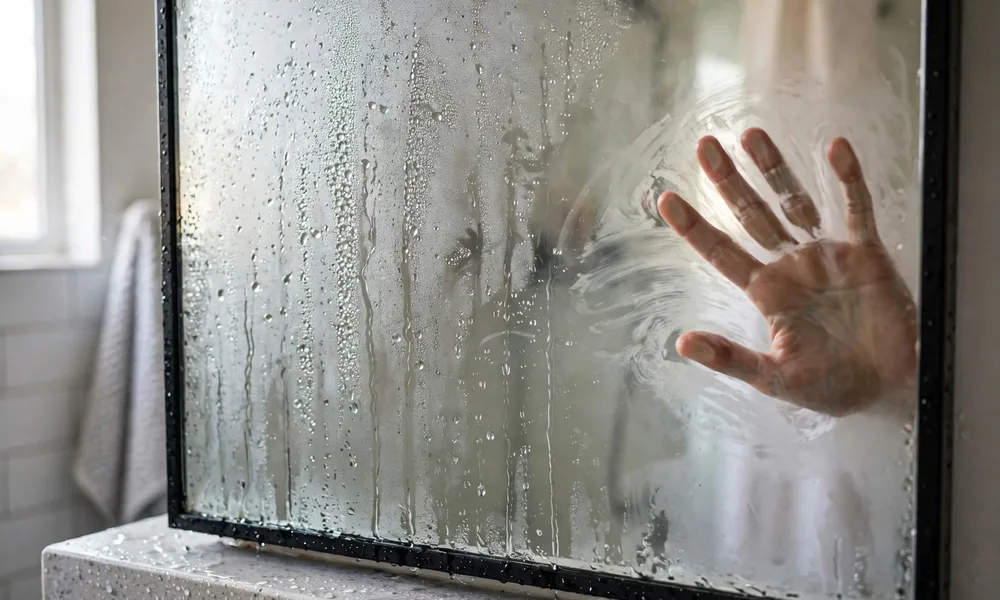
Bathroom mirrors fog because warm, damp air hits cold glass, and the fix is partly about cleaning and partly about the room. Ventilation helps more: run the extractor fan during and after a shower, and leave the bathroom door ajar for ten minutes afterwards.
Hard water leaves white spots that a normal cleaner will not shift, because they are mineral deposits, not dirt. A vinegar mix dissolves them: dampen a cloth with equal parts white vinegar and water, hold it on the spot for a minute, then wipe and dry. Old mirrors need gentler care still. A mirror with edge damage is a mirror to protect, not to scrub.
Before You Buy Checklist
- Ammonia-free formula, with no warning against mirrors or coated glass.
- Fine mist spray that covers evenly without drips or jets.
- Two clean microfibre cloths: one damp for cleaning, one dry for buffing.
- Low smell, especially for small bathrooms and homes with children or pets.
- Foam option for large mirrors and mirrors above sinks, where drips matter.
- Small squeegee with a clean rubber blade for large or hallway mirrors.
Frequently Asked Questions
Can I use glass cleaner on a mirror?
You can, but only if it is ammonia-free. Ammonia-based glass cleaners can attack the silver backing, especially at the edges, and the damage shows up as black spots that cannot be fixed.
Why does my mirror streak even after cleaning?
Streaks are usually cleaner that dried before it was wiped, or a dirty cloth spreading grime. Use less spray, spray the cloth rather than the mirror, and finish with a clean dry cloth.
How do I stop my bathroom mirror fogging?
Keep the mirror clean, run the extractor fan during and after showers, and leave the door ajar afterwards.
Can I use vinegar to clean a mirror?
Yes, a mix of equal parts white vinegar and water works well on light grime and hard-water spots, and it is safe for the silver backing. It struggles with heavy hairspray and soap film, and it smells sharp while it dries.
Are paper towels bad for mirrors?
Yes. Paper towels shed lint that shows up as soon as the light changes, and they can leave a faint residue. A clean microfibre cloth is cheaper over time, since it can be washed and reused, and it leaves no lint behind.
How often should I clean a bathroom mirror?
Once a week is enough for most homes, with a quick wipe of toothpaste spots as they happen.
Bottom Line
The best mirror cleaner is an ammonia-free spray, used sparingly on a clean microfibre cloth, with a dry cloth for the final buff. Clean top to bottom, check from an angle, and dry the frame. Do that once a week, and the mirror stays clear, streak-free, and undamaged for years.