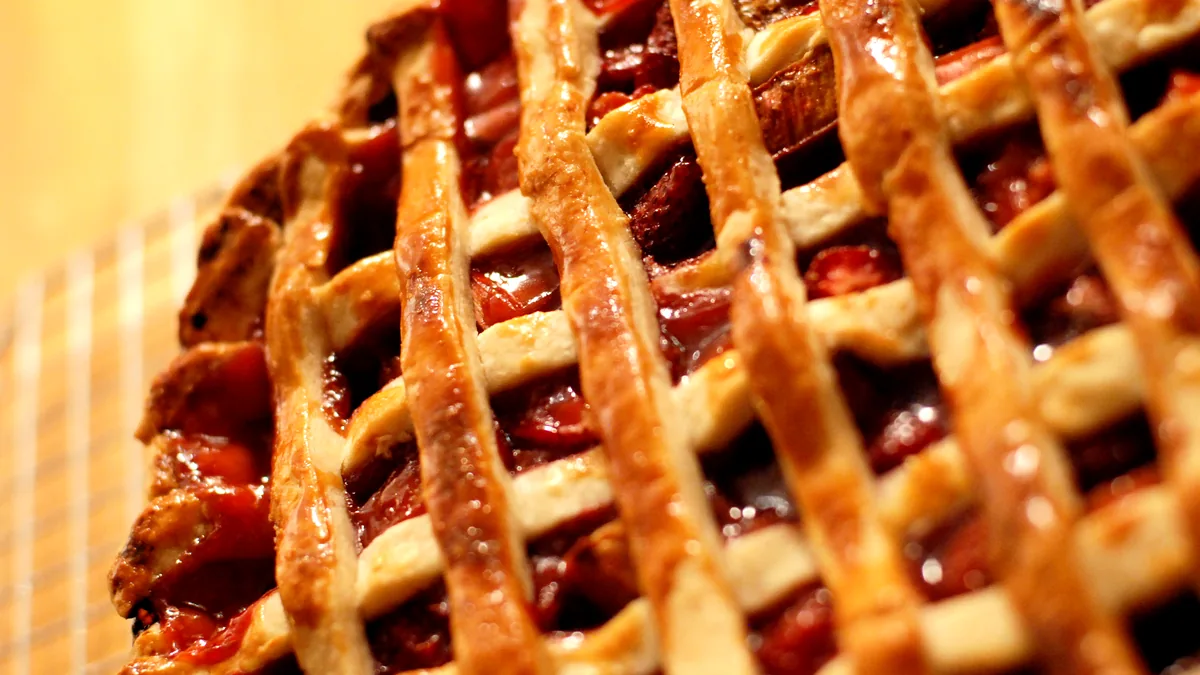
The pastry cutter that cuts clean lines in 2026 is a sharp stainless wheel on a comfortable handle, big enough to roll across a pie dish in one pass. A good pastry cutter turns rolled dough into neat strips, lattice and ravioli squares in minutes. A poor one drags, tears the edges and skips over cold dough.
A pastry cutter is a bladed wheel that you roll across a sheet of pastry dough to cut it into strips, squares or decorative edges. It is not a cookie cutter, which stamps a shape out of dough, and it is not a rolling pin, which flattens dough before any cutting happens. It is also not the tool some American bakers call a pastry cutter or pastry blender, the hand tool with curved wires that cuts cold butter into flour.
Key Takeaways
- A sharp stainless steel wheel is the best all-round choice: it slices chilled pastry in one pass.
- A wheel around 60 mm across rolls through a standard pie dish in one pass; smaller wheels need overlapping passes.
- A fluted wheel gives lattice and pie edges a decorative crimped finish, while a straight wheel gives the cleanest lines for strips and ravioli.
- A handle you can grip firmly and press straight down matters, because wobble is what makes wavy lines.
- Chill the dough, flour the wheel lightly, and cut in one steady roll without stopping.
What a Pastry Cutter Actually Does
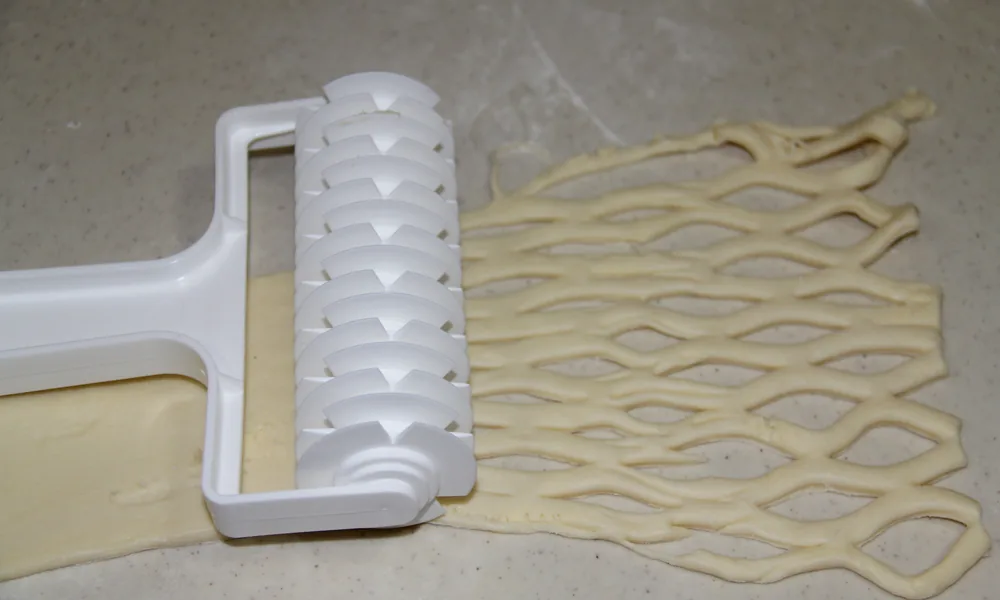
A pastry cutter cuts a sheet of dough into pieces with a rolling blade. You set the wheel at the edge of the dough, press down gently and roll. Because the blade rolls rather than slides, it does not drag the dough sideways the way a knife can, and it does not compress the edge the way a blunt stamp does.
Pastry is unforgiving: a lattice needs strips of even width, ravioli need squares that seal, and a torn edge bakes into a thick, uneven rim. A good cutter gives the same clean edge on the first strip and the last.
How it differs from the cookie cutter and rolling pin
Three tools share the pastry bench, and each does a different job. The rolling pin flattens the dough to an even thickness, and our guide to the rolling pin that rolls dough evenly explains what makes one roll true. The pastry cutter then cuts the flattened sheet into strips or squares. The cookie cutter stamps shapes out of the sheet, and our guide to cookie cutters that keep their shape covers what makes one press cleanly.
The pizza cutter is the closest cousin: both are wheels on handles. But a pizza cutter cuts a cooked pizza, slicing through melted cheese and crisp crust, and our guide to pizza cutters for clean slices is about that job. A pastry cutter cuts raw dough, where the job is a clean edge that will bake evenly.
The Main Types of Pastry Cutter
A straight wheel is the workhorse, a fluted wheel is the decorator, a double wheel cuts two lines at once, and a ravioli cutter is a specialised wheel that cuts and seals in one pass. Most home bakers need only a straight wheel and a fluted wheel.
| Type | Edge | Best For | Watch Out For |
|---|---|---|---|
| Straight wheel | Smooth, sharp | Lattice strips, pie lids, ravioli squares | Cheap wheels go dull fast |
| Fluted wheel | Wavy, crimped | Decorative lattice, pie edges, crackers | Crimp can tear soft dough |
| Double wheel | Two straight wheels | Even strips, fast lattice work | Fixed spacing limits flexibility |
| Ravioli cutter | Fluted, sealing edge | Ravioli, filled pasta, sealed squares | Only suits filled pasta |
| Pastry blender | Curved blades or wires | Cutting butter into flour | Not a dough-cutting tool |
Straight and fluted wheels
The straight wheel is the cutter to buy first: a single round stainless blade on a handle, cutting the cleanest line of any pastry cutter. Use it for lattice strips, trimming a pie lid, and cutting dough into squares for ravioli or turnovers. A good one has a thin, stiff blade and a wheel around 60 mm across.
A fluted wheel has a wavy edge that crimps the dough as it cuts, leaving a decorative zigzag border. It suits lattice strips that should look finished, the edge of a pie lid, and crackers. Fluted wheels need a sharper edge than straight wheels, and a dull fluted wheel tears soft dough badly.
Double wheels and ravioli cutters
A double wheel carries two straight blades a fixed distance apart, so one roll cuts two parallel lines and a strip of even width between them. It halves the cutting time for weekly lattice bakers, but you get the width the tool gives you and nothing else. A ravioli cutter is a single fluted wheel with a slightly toothed edge that cuts and crimps a seal in one pass, so filled pasta squares do not leak in boiling water.
What Makes One Cut Cleanly
A clean cut has three parts, all in the same roll. The blade must be sharp enough to part the dough before it presses it. It must be thin enough to slice without squashing the edge. And the wheel must keep moving in a straight line without wandering or skipping. When a cutter does all three, the strip separates neatly and the edge stays thin.
Sharpness matters most. Pastry dough is soft, cold and full of butter, and a dull blade presses the dough before it cuts it, leaving a thick, compressed rim. A sharp blade slices before the dough has a chance to move. The best wheels are ground from stainless steel with a fine, even edge, and they hold that edge for years. Cheap wheels are stamped from thin metal and go dull within months.
Wheel size, weight and handles
Wheel size decides whether you can cross a pie dish in one pass. A wheel around 60 mm across rolls from one side of a standard pie to the other without stopping, and stopping mid-cut is the main cause of wavy lines and torn edges. Smaller wheels, around 40 mm, are fine for biscuits and small tarts but need two passes across a pie. Weight helps too: a wheel with a little heft presses the blade into the dough by itself.
The handle is where cheap cutters give themselves away. A good handle is wide enough to grip firmly, shaped so your palm can press straight down, and fixed solidly to the wheel so there is no wobble. Wooden handles grip well even with floured hands; plastic handles are easier to clean but can feel slippery. Test the grip before you buy: hold it as if you were cutting, press down, and check the wheel stays true.

Materials: What to Buy and What to Avoid
Stainless steel is the material to buy first. It is stiff, it takes and keeps a clean edge, it does not rust when dried properly, and it is heavy enough to sit still on the dough. Good stainless wheels have a smooth, even edge and a hub that turns freely without wobble. They cost more than plastic, but a stainless cutter bought once will still be cutting cleanly in ten years.
Plastic wheels suit children and very soft dough, but a plastic wheel cannot hold a truly sharp edge, so it presses more than it cuts and flexes under pressure. Dishwasher heat warps the blade and hub, and a warped wheel never rolls true again. Wood appears in handles rather than wheels, and a well-made wooden handle is warm and grippy. Brass and copper wheels look beautiful but are softer than steel, so they dull faster.
How to Use a Pastry Cutter Well
Chill the dough first: cold pastry cuts cleanly because the butter is firm, while warm pastry is soft, sticky and tears at the slightest drag. Flour the wheel lightly before each cut, not the dough: a dusted wheel releases cleanly, while flour on the dough can leave pale marks on the baked pastry.
Cut in one steady roll. Set the wheel at the edge, press down just enough to feel the blade bite, and roll in a single smooth movement without stopping. Do not saw back and forth, and do not press harder when the wheel meets resistance: if it resists, the dough is too warm or the wheel is dull. For a lattice, cut all the strips first and check the widths match before weaving. For ravioli, cut the filled sheet into squares, then press the edges firmly: the cutter makes the cut, but your fingers make the seal.
Care, Cleaning and Storage
Wash the cutter by hand in warm soapy water after every use, and dry it straight away: dough left in the joint turns hard and stops the wheel turning freely, and a wet steel wheel left in a drawer will spot and eventually rust. If the wheel comes apart, take it apart and clean the hub. Store it with a blade cover on, where the edge cannot knock against other tools: a nicked wheel tears dough at the same spot on every cut. Do not put a good cutter in the dishwasher unless the maker says it is safe.
What to Avoid When Buying
Avoid cutters with a wheel that wobbles on its hub, because a wobbling wheel cannot cut a straight line. Avoid sets of a dozen novelty wheels: you will use one or two. Avoid wheels with a raw, sharp edge on the top of the blade, a sign of cheap stamping. And avoid buying a pastry cutter when what you need is a pastry blender: if the job is cutting butter into flour, buy the blender.
Pastry Cutter Checklist
- Choose a sharp stainless steel wheel, around 60 mm across, that rolls through a pie dish in one pass.
- Pick a straight wheel first for everyday cutting, and add a fluted wheel for decorative lattice and pie edges.
- Check the handle: firm grip, no wobble, comfortable to press straight down with your palm.
- Chill the dough before cutting, flour the wheel lightly, and cut in one steady roll without stopping.
- Clean by hand after every use, dry straight away, and store with a blade cover so the edge stays sharp.
- Do not buy a pastry blender by mistake: wheels cut dough, blenders cut butter into flour.
Frequently Asked Questions
What is a pastry cutter used for?
A pastry cutter is a wheel cutter used to cut rolled pastry dough into strips, squares or decorative edges, for lattice pies, ravioli and turnovers.
Is a pastry cutter the same as a cookie cutter?
No. A cookie cutter stamps a shape out of dough, while a pastry cutter rolls across the dough to cut lines and strips. They are different tools, and most bakers need both.
Is a pastry cutter the same as a pastry blender?
No, although the names are often mixed up. A pastry blender is a hand tool with curved blades or wires that cuts cold butter into flour.
Should I choose a straight or fluted wheel?
Choose a straight wheel first: it cuts the cleanest line and suits every job. Add a fluted wheel for a decorative crimped edge on lattice strips and pie lids.
Why does my pastry cutter tear the dough?
Usually the dough is too warm, the wheel is dull, or you stopped mid-cut. Chill the dough, flour the wheel lightly, and cut in one steady roll.
Can I put a pastry cutter in the dishwasher?
Only if the maker says it is safe. Hand washing and drying straight away keeps the edge sharp and stops the wheel from rusting.
Bottom Line
The pastry cutter that cuts clean lines in 2026 is a sharp stainless wheel around 60 mm across, on a handle you can press straight down without wobble, with a straight edge for everyday cutting and a fluted wheel added for decoration. Chill the dough, flour the wheel, cut in one steady roll, and clean it by hand.


