Which Rolling Pin Rolls Dough Evenly in 2026?
The rolling pin that rolls dough evenly in 2026 is a straight, heavy, well-balanced pin with a smooth, seamless barrel, handles that turn freely, and enough length to cover the dough in one pass. A rolling pin looks like the simplest tool in the kitchen — a cylinder you push back and forth — yet it decides whether pastry, pizza bases and cookies bake evenly.
Most uneven dough is blamed on the baker, and sometimes it is the baker’s fault — pressing harder on one side, rolling in one direction only, or working dough that is too cold. But a surprising amount of it is the pin. A barrel that is not straight will always leave a thick stripe. A pin that is too light will skate over firm dough instead of pressing it.
Key takeaways
- A straight, seamless barrel matters more than any other feature: roll the pin on a flat counter and watch for wobble or a gap under the middle before you buy.
- Wood is the best all-round material — heavy enough to do the work, grippy enough not to slip, and kind to pastry when kept dry and lightly floured.
- Choose a barrel around 40 to 50 cm long for everyday baking; shorter pins force extra passes that make dough uneven.
- French tapered pins suit pastry and pizza, where feel and control matter; handled pins suit heavy doughs and bakers who want leverage.
- Flour the dough lightly, roll from the centre outwards, turn the dough a quarter turn often, and let chilled dough rest a few minutes before rolling.
What makes a pin roll evenly — and what makes it wobble
Even rolling comes down to three things: a straight barrel, even weight, and a smooth surface. The barrel must be a true cylinder, the same diameter along its whole length. If the middle is even a millimetre wider than the ends, the centre of the dough will always be thinner; if one end is wider, that side will always be thinner. Test it in a shop in seconds: set the pin on a flat counter and roll it slowly, watching the line where the barrel meets the surface.
Weight is the second factor. A pin does most of its work by weight, not by muscle: a heavy barrel presses the dough as it rolls, so you guide it rather than forcing it. A very light pin — thin plastic, a hollow tube — needs to be pushed down hard, and pushing down hard is exactly what makes dough uneven, because your hands press harder on one side than the other. Length is the third factor: a short pin forces overlapping strips, and every overlap can leave a ridge.
Wood, marble, steel and silicone
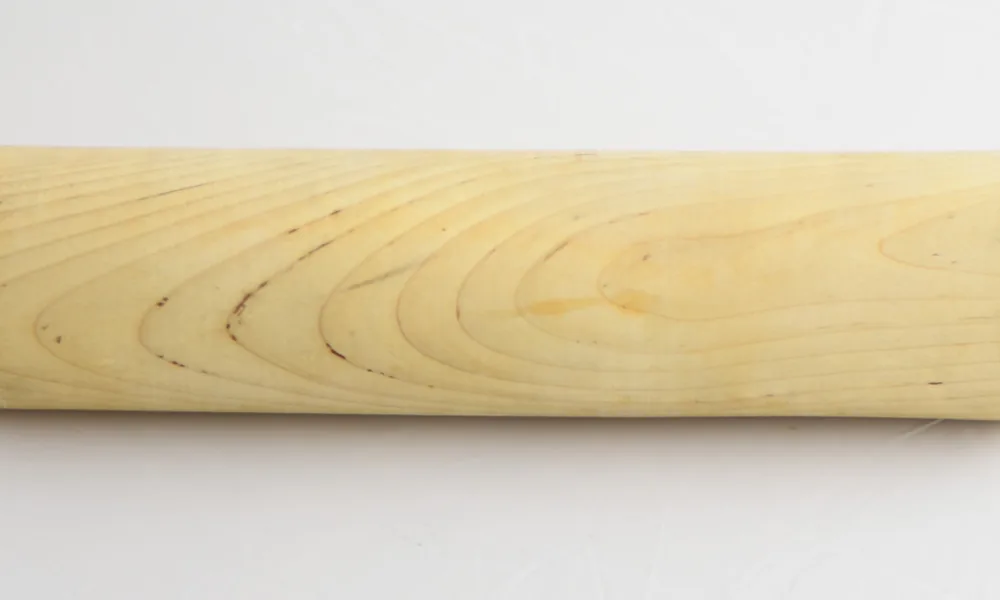
Wood is the pin most bakers should buy. A good wooden pin — maple, beech or ash — is heavy, warm to the touch, and slightly grippy, which is an advantage: the dough moves with the pin instead of sliding away from it. Wood needs care: never soak it, never put it in the dishwasher, and wipe it clean with a dry cloth or a barely damp one, then dry it at once. A wooden pin that is washed like a plate will crack, warp and go rough.
Marble pins are beautiful and heavy, and they stay cool, which helps with pastry and butter-rich doughs in a warm kitchen: cold dough stays cold under a marble barrel. Their weaknesses are weight and fragility. A marble pin is heavy enough to tire your arms on a big batch, it can crack or chip if dropped on a tile floor. Steel pins are heavy, cool and easy to clean, but slippery, so dough slides rather than rolling.
Silicone pins, and pins with a silicone sleeve, are non-stick and easy to clean, which sounds ideal. In practice they are usually too light, and their soft surface gives slightly under pressure, so the dough ends up thicker in the middle than at the edges. They are a reasonable choice for a beginner, for a child, or for very sticky doughs, but they are not the pin for even pastry.
Handled pins, French pins and the tapered question
The classic handled pin — a barrel with a handle at each end, turning on bearings — is the pin most people grew up with. Its strength is leverage: the handles let you press down and steer at the same time, which helps with stiff doughs like pasta and gingerbread. Its weakness is the bearings. Cheap handled pins have stiff, gritty bearings, so the barrel drags instead of rolling freely, and the handles wobble. Good handled pins have smooth bearings that spin for several seconds with a flick.
The French pin has no handles at all — just a long, straight or gently tapered barrel that you hold in your palms. It gives you more feel: you can sense the thickness of the dough through your hands, and you can tilt the pin slightly to press one side more than the other, which is how pastry cooks even out a sheet. A straight French pin is the most versatile shape; a tapered French pin, narrower at the ends, is the pastry cook’s favourite, because the taper lets you roll a round of dough into a circle without the edges thickening.
How to roll dough evenly
Technique is half the answer, and it is simple once it becomes habit. Start with dough at the right temperature: pastry straight from the fridge is too hard to roll and will crack at the edges, so let it sit on the counter for five to ten minutes until it yields gently to a fingertip. Flour the work surface and the pin lightly — a dusting, not a snowfall.
Roll from the centre outwards, never from one edge to the other, and use long, even strokes. After every few strokes, lift the pin, turn the dough a quarter turn, and roll again. Turning the dough is what keeps it even: it stops one side getting all the pressure and keeps the sheet round rather than oval. If the dough sticks, lift it, dust a little more flour underneath, and carry on — never force a stuck sheet, or it will tear. Check the thickness as you go and roll the thick spots a little more.
Cleaning and caring for a rolling pin
A rolling pin fails through washing, not through rolling. Wooden pins should never be soaked and never go in the dishwasher: water swells the wood, the barrel warps, and the surface goes rough and sticky. Wipe a wooden pin with a dry cloth after use, and if dough has stuck, scrape it off with a blunt knife or a bench scraper, then wipe with a barely damp cloth and dry at once.
Marble and steel pins are easier: wash them in warm soapy water, rinse and dry, and they are ready for the drawer. Silicone pins can go in the dishwasher. Whatever the material, store the pin where it will not roll off a shelf or get knocked: a drawer, a pin rest, or a hook through the handle. A pin that lives loose on top of a cupboard will fall, and a dropped marble pin chips, a dropped wooden pin dents, and a dented barrel never rolls evenly again.
Rolling pins compared
The table below sums up the main choices. There is no single best pin for every baker — the right choice depends on the doughs you make most and whether you value feel, weight or easy cleaning.
| Type | Best for | Weight and feel | Care | Watch out for |
|---|---|---|---|---|
| Wooden handled pin | Everyday baking, stiff doughs | Heavy, warm, good leverage | Wipe dry, never soak | Cheap bearings drag and wobble |
| French straight pin | Pastry, pizza, general use | Balanced, excellent feel | Wipe dry, oil occasionally | Tiring on very stiff dough |
| French tapered pin | Pastry rounds, pie crusts | Light, precise control | Wipe dry, oil occasionally | Needs practice to use well |
| Marble pin | Butter pastry in warm kitchens | Very heavy, stays cool | Wash and dry | Chips if dropped; tiring |
| Steel or silicone pin | Easy cleaning, sticky doughs | Steel heavy and slippery; silicone light | Wash or dishwasher | Slippery surface; silicone too light |
What to look for when you buy
Before you buy, test the pin in the shop. Roll it on a flat counter and watch the contact line: it should stay even along the whole barrel, with no rocking and no gap under the middle. Spin the barrel if it has handles — it should turn smoothly for several seconds. Run your palm along the barrel: a good pin is smooth along its whole length and feels substantial, not hollow. The price difference between a poor pin and a good one is small, and a good wooden pin bought once will outlast a decade of baking. Once the dough is rolled, it needs a tray that bakes it evenly — a good baking sheet is the partner to a good pin, because even dough on a warped tray still bakes unevenly.
Choosing well: a quick checklist
- Roll the pin on a flat counter before buying: the contact line must stay even, with no wobble or gap under the middle.
- Choose wood for everyday baking, marble for butter pastry in a warm kitchen, and a French pin when feel and control matter most.
- Pick a barrel around 40 to 50 cm long so it spans the dough in one pass.
- Check handled pins spin freely and smoothly; stiff or gritty bearings mean the barrel will drag.
- Flour lightly, roll from the centre outwards, and turn the dough a quarter turn every few strokes.
- Wipe wooden pins dry after use, never soak them, and store the pin where it cannot roll off and fall.
Frequently asked questions
Why is my dough thicker in the middle than at the edges?
Usually the pin is not straight, or you press harder at the ends of each stroke. Roll it on a flat counter: if it rocks or gaps, the barrel is the problem.
Is a French rolling pin better than a handled one?
For pastry and pizza, yes: a French pin gives you more feel and lets you even out a sheet by tilting it slightly. For stiff doughs like pasta and gingerbread, a handled pin’s leverage helps.
How do I stop dough sticking to the pin?
Flour the pin and dough lightly, keep the dough cool, and lift and dust more flour when it sticks.
Can I put a wooden rolling pin in the dishwasher?
No. Soaking and dishwasher heat swell the wood, warp the barrel and roughen the surface. Wipe a wooden pin with a dry cloth, scrape off stuck dough, and dry it at once.
What length of rolling pin should I buy?
A barrel around 40 to 50 cm long suits most baking: it spans a standard pastry sheet and a large pizza base in one pass. Shorter pins are fine for small batches.
Why does my dough keep springing back when I roll it?
The gluten is tight because the dough is cold or freshly kneaded. Cover and rest it for ten minutes, then roll again.

The bottom line
The rolling pin that rolls dough evenly in 2026 is a straight, seamless, well-balanced pin — wood for everyday baking, French in shape when you want feel and control, with a barrel around 40 to 50 cm long, handles that spin freely if it has them, and enough weight to press the dough without forcing it. The pin is only part of the bake: a good cake pan that bakes evenly, plus flour that behaves — see a guide to baking with almond flour — will show the difference a true pin makes. Buy the straight barrel first, the length second, and the material third.