Laundry bags are the cheapest insurance a wardrobe can buy. A fine mesh bag costs less than a takeaway coffee, yet it is the difference between a silk blouse that survives fifty washes and one that comes out with a snagged seam and a missing button. The best laundry bags of 2026 let water and detergent flow through to your delicates while keeping straps, hooks, lace and underwires away from the drum and the rest of the load.
Most people discover laundry bags too late, usually after a favourite bra loses its shape or a beaded top sheds decoration in a single spin. The damage is slow: a strap stretched a little further each wash, a hook catching on a zip, lace fraying against denim. A mesh bag stops that slow damage before it starts, without changing anything else about your routine.
This guide covers the bags worth buying in 2026: the mesh sizes that protect, the closures that stay shut, the sizes that fit real loads, and the mistakes that turn a good bag into a soggy ball of tangled fabric. It is about wash bags — the zippered mesh bags that go inside the machine — not travel sacks or storage hampers, which do a different job.
Key Takeaways
- Fine mesh is the best all-round choice for delicates: it protects lace, silk and bras while still letting water and detergent through.
- Zippered bags beat drawstring bags in the machine, because a zip stays shut through the spin cycle and a drawstring can loosen and spill.
- One garment per bag is the rule for bras and structured items; overfilling a bag defeats the whole point of using one.
- A set of three sizes — small, medium and large — covers almost every household, from socks and underwear to sweaters and bedding trims.
- Wash the bags themselves every few weeks, and replace any bag with a broken zip or a torn seam before it fails mid-cycle.
What a Laundry Bag Actually Does
A washing machine is a rough place. Clothes tumble, twist and rub for forty minutes or more, and the spin cycle pulls everything outward at high speed. Sturdy fabrics can take that punishment; delicate fabrics cannot. A laundry bag creates a small, calm pocket inside that chaos, so the garment inside moves less, stretches less and never wraps around a zip or another garment.
The Main Types of Laundry Bag
Fine Mesh Bags
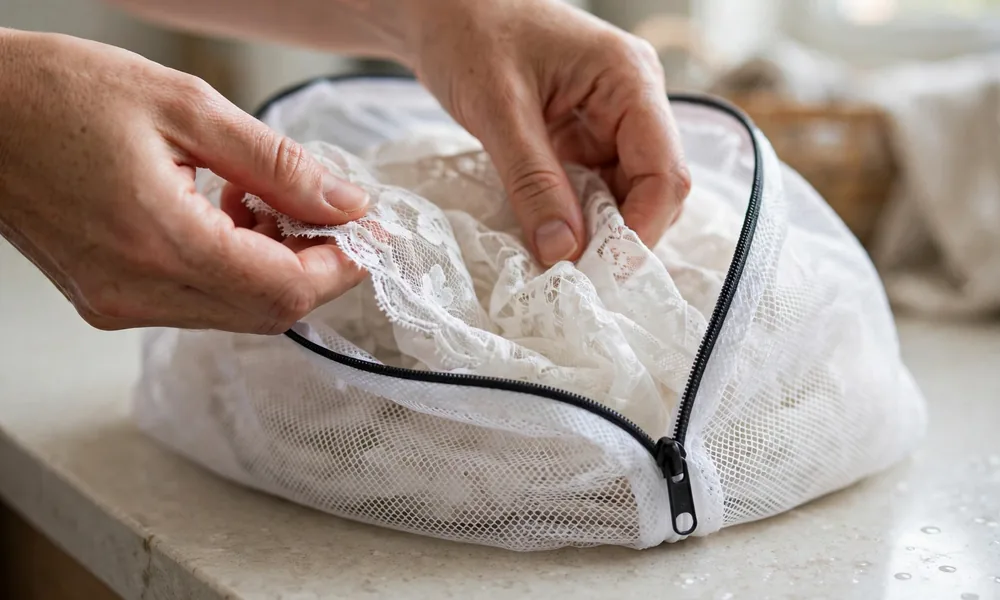
Fine mesh bags have tiny holes, usually under two millimetres, and they are the best choice for the most delicate items: bras, silk camisoles, lace underwear, tights and anything with beads or sequins. The tight weave stops small items poking through and keeps straps and hooks contained. The trade-off is slower water flow, so fine mesh suits small loads and gentle cycles.
Coarse Mesh Bags
Coarse mesh bags have larger holes, around three to five millimetres, and they are the workhorses of the laundry room. They suit socks, underwear, baby clothes and cloths — anything that needs a thorough wash but still benefits from being kept together. Water flows through freely, so clothes come out cleaner and the bags dry quickly.
Bra Bags and Shaped Bags
Bra bags are the specialist of the family. Some are flat, shaped pouches with a padded frame that holds a bra’s cups in shape through the wash; others are simple round bags sized for one or two bras. The shaped versions are worth the extra cost for moulded or underwired bras, because they stop the cups folding or creasing.
Large and Extra-Large Bags
Large laundry bags, roughly the size of a pillowcase or bigger, are for bulky delicates: sweaters, hoodies with drawstrings, curtains with hooks, and soft toys. They also work as sock bags for a whole family, keeping dozens of small socks together so none vanish into the machine’s filter.
How to Choose the Right Bag
Mesh Size
Match the mesh to the garment. Fine mesh for lace, silk, bras and beaded items. Medium mesh for everyday delicates and knitwear. Coarse mesh for socks, underwear and baby clothes. If you buy only one set, choose fine-to-medium mesh, which handles the widest range.
Closure
The zip is the most important part of any laundry bag, and it is where cheap bags fail first. Look for a sturdy zip with a chunky pull, a fabric flap that covers the pull, and clean stitching around the zip tape. Drawstring bags are fine for storage, but in the machine a drawstring can work loose and spill the contents. For wash bags, zips win every time.
Size and Shape
Sizes are not standardised, so check the measurements. A small bag of around 30 by 40 centimetres suits socks and underwear. A medium bag of around 40 by 50 centimetres suits a bra or a folded blouse. A large bag of around 50 by 60 centimetres suits sweaters and hoodies. Buy a set with at least three sizes rather than three of the same size.
Material and Build
The best bags are made from polyester mesh, which is strong, quick-drying and resistant to detergent and heat. Nylon mesh is softer and gentler on fabric, but it weakens faster in hot washes. Avoid thin, papery mesh; it tears within months. Check the seams: double-stitched or bound seams last years, while a single row of loose stitching unravels quickly.
Laundry Bags at a Glance
| Type | Best For | Mesh | Weakness |
|---|---|---|---|
| Fine mesh zip bag | Bras, silk, lace, beaded tops | Very fine | Slower water flow |
| Coarse mesh zip bag | Socks, underwear, baby clothes | Open | Too open for fine lace |
| Shaped bra bag | Moulded and underwired bras | Fine, padded frame | Only fits one or two bras |
| Large mesh bag | Sweaters, hoodies, curtains | Medium | Easy to overfill |
| Drawstring bag | Storage and travel | Varies | Can open in the machine |
What to Put in a Laundry Bag — and What to Leave Out
The obvious candidates are bras, silk blouses, lace tops, tights, stockings, camisoles, baby clothes, socks and anything with sequins, beads or embroidery. Less obvious candidates include hoodies with long drawstrings, which tangle around everything in the drum, and garments with Velcro, which grabs every other fabric it touches.
Also bag anything with hooks, wires or sharp trims, even if the fabric itself is sturdy. A dress with a metal zip and a beaded collar is a danger to the rest of the load, not just to itself. And bag small items generally: socks and baby mittens are the items most likely to slip into the gap between the drum and the door seal.
Getting the rest of the wash right matters too. The right detergent makes a real difference to delicates, and our guide to laundry detergent pods explains which formulas clean well without the harsh chemicals that stiffen silk and fade lace. Pair a gentle pod with a cold cycle and a mesh bag, and most delicates will outlast the trend that made you buy them.
How to Use a Laundry Bag Properly
Start by sorting. Group delicates by colour and fabric weight, and decide which items share a bag. One bra per bag is the gold standard; two at most if they are soft-cup and similar in size. Socks and underwear can share a bag freely, as long as it is not more than two-thirds full.
Close every hook, zip and button on the garment before it goes in the bag. A bra hook left open will catch on the mesh from the inside, and a zip left open will snag its neighbours. Turn the garment inside out if the care label suggests it, then place it loosely in the bag, zip it shut, and tuck the zip pull under its fabric flap.
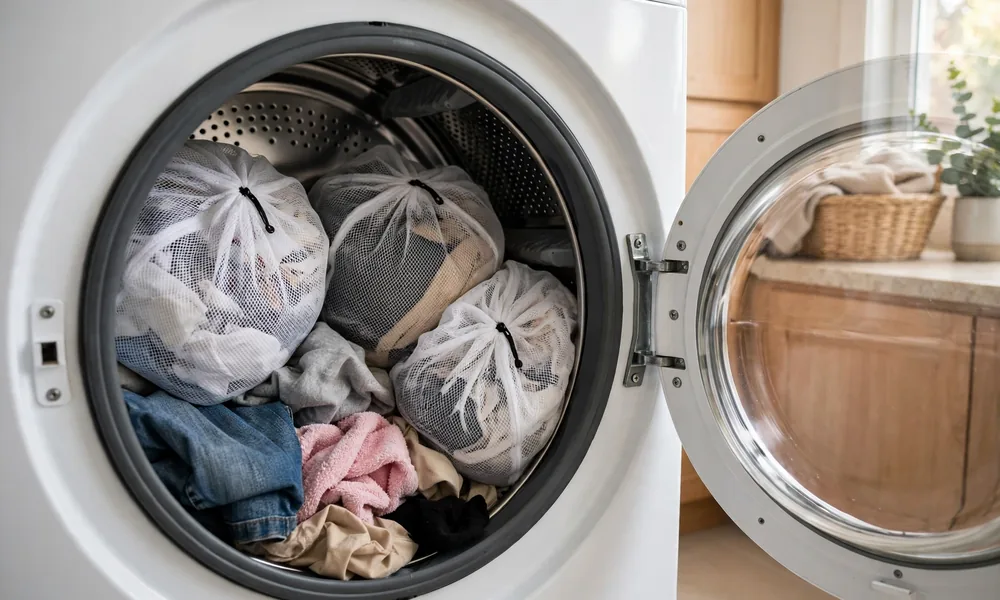
Load the bag into the machine with the rest of the wash, choosing a gentle or delicates cycle with cold or lukewarm water. Do not overload the drum: the bag needs water circulating around it, and a drum packed tight will leave the contents soapy. When the cycle ends, take the garment out promptly and reshape it before drying.
Drying is where many delicates are ruined after surviving the wash. Never tumble-dry a bra, a silk blouse or a lace top, even in a bag. Air-dry them instead, and if space is tight our guide to the best drying racks shows which racks fit small laundry rooms. A mesh bag plus a gentle cycle plus air drying is the full routine that keeps delicates alive.
Mistakes That Ruin Delicates Even With a Bag
The most common mistake is overfilling. A bag crammed full cannot protect anything, because the garments inside are pressed together so tightly that they rub, crease and trap detergent. If the zip strains to close, take something out. The second mistake is using the wrong cycle: a bag does not turn a heavy-duty hot wash into a gentle one.
The third mistake is forgetting the bag itself needs care. A mesh bag left damp in the machine goes musty within a day, and that mustiness transfers to the next load. Hang bags to dry after use, and run them through a wash of their own every few weeks.
Finally, do not use laundry bags as storage for dirty clothes. A damp garment sealed in a mesh bag in a warm room is a recipe for mildew. Dirty laundry belongs in a ventilated hamper until wash day, and our guide to the best laundry hampers covers the slim, lidded designs that keep a small space fresh. The bag’s job starts at the machine, not before it.
Laundry Bag Checklist
- Choose fine mesh for lace, silk and bras, and coarser mesh for socks and everyday items.
- Buy a set of three sizes so every garment gets a bag that fits it.
- Check the zip glides smoothly and hides under a fabric flap before the first wash.
- Fill each bag no more than two-thirds full and put one bra per bag.
- Close all hooks, zips and buttons on the garment before bagging it.
- Replace any bag with a torn seam or broken zip instead of gambling on one more wash.
Frequently Asked Questions
Do laundry bags really protect clothes?
Yes. A mesh bag stops straps tangling, hooks snagging and lace rubbing against rough fabrics, the three main causes of damage in the machine. It does not replace a gentle cycle, but it removes most of the mechanical wear that shortens a delicate garment’s life.
Can I put a bra in a laundry bag?
Yes, and bras are the single best use for a laundry bag. Use a fine mesh or shaped bra bag, fasten the hooks, put one bra per bag, and wash on a cold gentle cycle. Air-dry the bra afterwards.
Should laundry bags go in the dryer?
The bags themselves can usually go in the dryer on low heat, but the delicate garments inside should not. Take the garment out after washing and air-dry it.
How many laundry bags do I need?
Most households need five to seven: two small bags for socks and underwear, two medium bags for bras and blouses, one large bag for sweaters, and one spare.
Do mesh bags make clothes less clean?
Slightly, for very fine mesh, because water flows through more slowly. The difference is small on a gentle cycle, and it disappears if you avoid overfilling the bag.
How often should I replace laundry bags?
A well-made bag lasts one to two years of weekly use. Replace it as soon as the zip sticks, the mesh tears or the seams fray, because a failing bag can damage clothes and the machine.
The Bottom Line
Laundry bags are a small, cheap habit that pays for itself the first time a favourite garment survives a wash it would not have survived loose. Buy a mixed set of zippered mesh bags, use fine mesh for the pieces you care about most, and never overfill.