A Guide to Motion-Sensor Lights for Safer Nights in 2026
A motion-sensor light stays dark until something moves, then switches itself on. Walk up the path after dark and the porch glows; cross the hallway at 3 a.m. and a soft light shows the way. Nothing is left burning all night, nothing needs a switch, and nobody fumbles for a key in the dark. That simple trick is why motion-sensor lights have become the default way to light a home after dark.
The best motion-sensor lights in 2026 react fast, shine bright enough to be useful, and ignore the cat. The worst switch on for every passing car, go dark while you are still on the step, or die after one winter outdoors. This guide explains how the sensor works and which types suit each spot in your home.
Key Takeaways
- A motion-sensor light uses a PIR sensor to spot the heat of a moving person, then switches on for a set time before going dark again.
- Put them where hands are full or eyes are tired: front doors, garden paths, driveways, hallways, stairs, and garages.
- Detection range matters more than brightness. Look for 8 to 12 metres outdoors and an angle that covers the approach, not just the door.
- Warm white light, around 2700K to 3000K, suits doors and paths; save bright cool white for driveways and security corners.
- Set the timer to at least 60 seconds and aim the sensor across the path of movement, not straight at it.
How a Motion-Sensor Light Actually Works
Almost every motion-sensor light uses a PIR sensor, short for passive infrared. It watches for changes in infrared heat across its field of view. A person walking past is warmer than the wall behind them, so their heat stands out as a moving warm shape, and the sensor switches the light on. It sees heat moving against a cooler background, which is why it works in complete darkness.
That is why placement matters. A sensor aimed straight down a path sees a person coming toward it as a shape that barely changes size, so it reacts late. Aimed across the path, it sees the same person cross its view and reacts fast. Pointed at a busy road, it sees every passing car engine and switches on all night.
Once triggered, the light stays on for a set time, then switches off until the next movement. Better models add a daylight sensor, so the light only works after dark, and a sensitivity control for a sensor that keeps firing for the neighbours’ cat.
The Main Types of Motion-Sensor Light
There are four kinds worth knowing, and each suits a different job. The differences are in brightness, power, and where they can live.
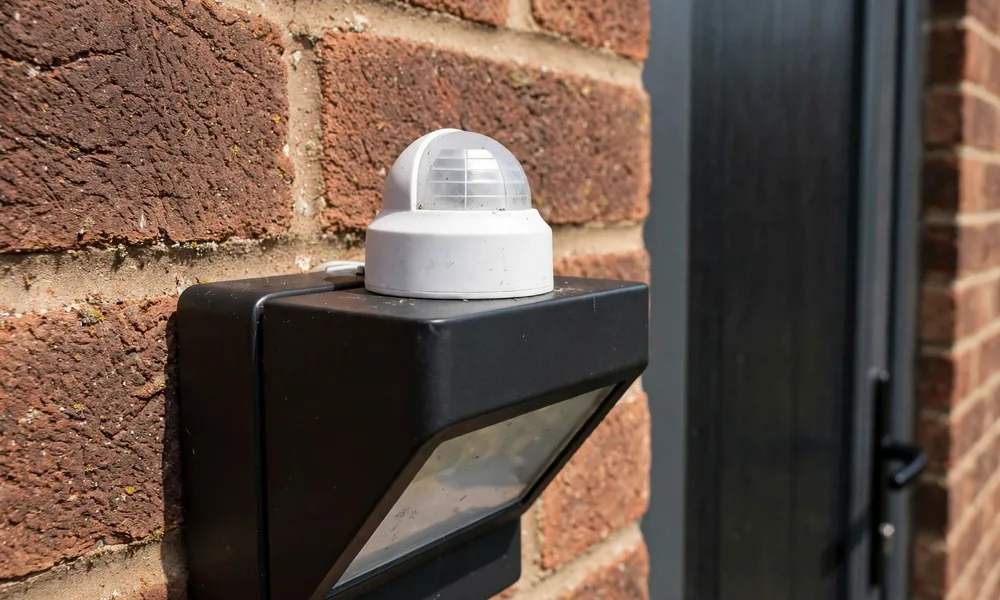
Wall lights are the classic: a mains-powered fitting beside the front or back door, usually 800 to 1,500 lumens, that floods the step and the lock the moment you arrive. They are the brightest and most reliable, but they need wiring and an IP44 weatherproof rating or better.
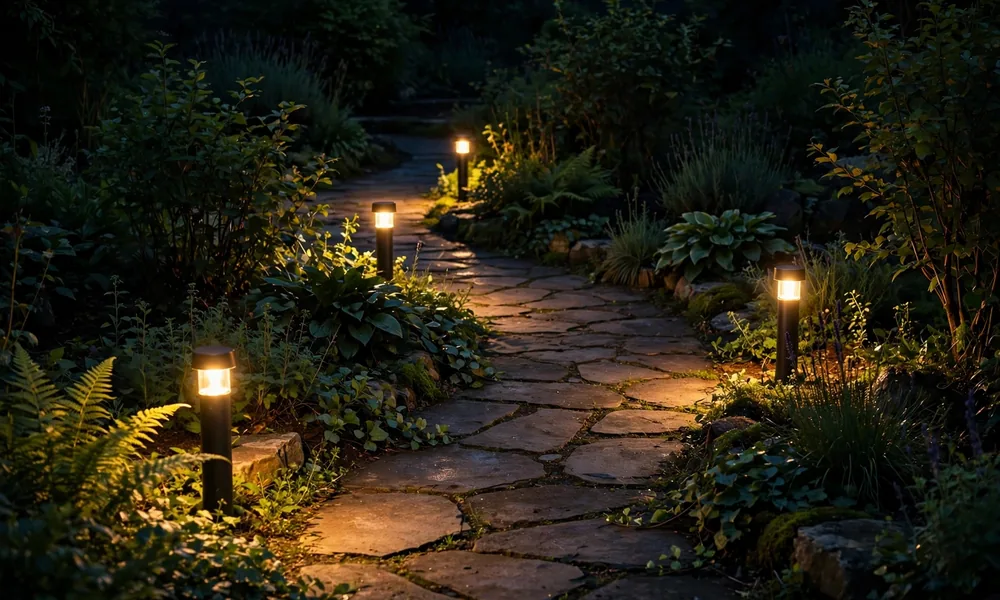
Bollard and stake lights mark a path: low posts, 30 to 60 centimetres tall, that pool light where your feet are. Most are solar or battery powered, around 100 to 300 lumens each, so you need several spaced a couple of metres apart.
Floodlights are the security option: one or two bright heads, often 1,500 to 3,000 lumens, mounted high to cover a driveway or back garden. Choose adjustable heads and aim them down at your own ground, never across a boundary.
Indoor sensor lights are small and soft: plug-in or battery lights for hallways, stairs, and bathrooms, usually 50 to 200 lumens, that switch on when you pass and off a minute later.
Motion-Sensor Lights at a Glance
| Type | Typical brightness | Power | Best for |
|---|---|---|---|
| Wall light | 800 to 1,500 lumens | Mains | Front and back doors |
| Bollard or stake | 100 to 300 lumens | Solar or battery | Garden paths |
| Floodlight | 1,500 to 3,000 lumens | Mains | Driveways, security |
| Indoor sensor light | 50 to 200 lumens | Battery or plug-in | Hallways, stairs, bathrooms |
Where Motion-Sensor Lights Work Best
The front door comes first. You arrive with bags or a stubborn key, and a light that switches on as you reach the gate changes the whole arrival. Mount the fitting beside or above the door, about two metres high, with the sensor covering the path, not just the step. Warm white flatters faces and brick; cool white looks harsh.
Paths and driveways come next. A dark path is a small problem that feels much bigger at night: one missed step and a garden you love in daylight turns into somewhere you would rather not walk. Low bollard lights with PIR sensors solve it without lighting the whole garden. Space them two to three metres apart, staggered so the pools overlap.
Indoors, the hallway and stairs are where sensor lights earn their keep. A small plug-in light near the floor stops stumbles without waking the house, and the same goes for the bathroom, where a light that finds you beats a switch you must find in the dark.
How to Choose the Right One
Detection range is the first number to check. Outdoors, look for 8 to 12 metres and an angle of at least 120 degrees, so the sensor sees the approach and not just the door. Indoors, 3 to 6 metres is plenty. Too short switches on when you are already on the step; too long watches the street.
Brightness comes second, and more is not always better. A front door needs 400 to 800 lumens; a path needs 100 to 300 per light; a driveway floodlight needs 1,500 or more. Warm white at 2700K to 3000K suits doors, paths, and patios; cool white suits only security corners and driveways.
Timer and sensitivity controls separate a good light from an annoying one. Set the timer to at least 60 seconds outdoors, so the light does not go dark while you unlock the door, and 30 seconds indoors. Sensitivity lets you turn down a sensor that fires for cats, branches, or passing cars.
Where to Put Them and How to Aim Them
Outdoors, mount wall lights and floodlights at two to three metres: high enough to cover the ground, low enough for the sensor to see people. Indoors, mount sensor lights low, near the floor, where the light pools on the floorboards.
Aim the sensor across the path of movement, not along it. A person walking toward it head-on is hard to spot; walking across its view, they are easy. Angle it slightly downward, about 10 to 15 degrees, and keep branches, washing lines, and tall grasses out of its view: they are the most common cause of lights that switch on for nothing.

Keep sensors away from heat that is not a person: a boiler flue, a dryer vent, or a sun-warmed wall will fire all evening. If the light keeps triggering, move it, shade it, or turn the sensitivity down.
False Triggers and How to Stop Them
Every sensor light fires when it should not, sometimes. Pets are the first cause: a cat at sensor height will trigger most PIR sensors. Turn the sensitivity down, mount the sensor higher, or choose a model with pet immunity.
Wind is the second: branches moving in the sensor’s view look like moving heat. Trim what is in front of the sensor, or move it to face open ground. Passing cars are the third: angle the sensor away from the road, shorten its range, or shield the sensor head.
The fourth cause is the sun: a west-facing sensor can be blinded by low evening sun, and one on a heat-storing wall can fire as the wall cools. Face sensors north or east where you can.
Power, Batteries, and Winter
Mains-powered lights are the most reliable: always ready and brightest, but they cost more to install. Battery lights fit anywhere and last months, but they fade in cold weather and need recharging or replacing.
Solar lights sit in the middle: no wiring and no batteries to buy, but they need four to six hours of direct sun for a full night of light. In winter, a shaded one may only manage a few hours, so put solar path lights where the sun actually reaches them.
Common Mistakes Worth Avoiding
The most common mistake is aiming the sensor at the thing you want to light, instead of across the approach to it. A sensor pointed at the front door sees you only when you are already there; one pointed across the path sees you coming. The second is pointing the brightest floodlight at the neighbours: aim lights down at your own ground. The third is a timer too short: sixty seconds is the minimum outdoors.
Your Motion-Sensor Light Checklist
- Choose PIR lights with adjustable range, timer, and sensitivity, plus a daylight sensor so they only work after dark.
- Put the first light at the front door, then add path, driveway, hallway, and stair lights.
- Aim each sensor across the path of movement, angled slightly down, and keep branches and washing lines out of its view.
- Use warm white light at doors and paths, and save bright cool white for driveways and security corners.
- Set the timer to at least 60 seconds outdoors and 30 seconds indoors.
- Check solar panels get four to six hours of direct sun, and recharge or replace batteries before winter.
Frequently Asked Questions
Do motion-sensor lights work in daylight?
Most do not, by design. A daylight sensor stops the light switching on while the sun is up. If yours fires in daylight, check the setting: many models let you adjust how dark it must be first.
How far can a motion-sensor light detect movement?
Outdoor PIR sensors typically detect people at 8 to 12 metres, with an angle of 120 to 180 degrees. Indoor sensors cover 3 to 6 metres. On a hot day, a person stands out less against warm surroundings, so the range shortens.
Do motion-sensor lights deter burglars?
They help, but they are not a security system on their own. A sudden bright light makes a garden feel watched, and most opportunists prefer darkness. For real security, pair sensor lights with a camera and lights that cover every approach, not just the front door.
Why does my motion-sensor light keep turning on?
Usually pets, wind-blown branches, passing cars, or heat from a wall or vent. Turn the sensitivity down, trim plants in front of the sensor, and angle it away from the road. If it still fires for nothing, the sensor may be cheap, and replacing the fitting is the honest fix.
Can I use motion-sensor lights indoors?
Yes, and hallways, stairs, and bathrooms are where they work best. Small plug-in or battery lights near the floor switch on when you pass and off a minute later, so night trips are safe without waking the house.
Are solar motion-sensor lights any good?
Yes, where the sun reaches the panel. A solar path light with a PIR sensor is one of the easiest outdoor lights to fit, with no wiring and no bills. But it needs four to six hours of direct sun a day, and in winter, in shade, it runs for fewer hours.
The Bottom Line
A motion-sensor light is a small kindness you give your future self: light exactly when you need it, darkness the rest of the time. Buy a PIR light with adjustable range, timer, and sensitivity, aim it across the approach, and give it warm white light at the door. For the rest of the home, porch lights set the welcome, outdoor lights cover the zones, and security cameras watch what the light reveals.