
The best motorcycles for beginners in 2026 are small, light, forgiving, and fun, and that combination matters far more than horsepower. A first motorcycle should build your confidence, not test it. It should be easy to pick up if you drop it, cheap to insure and repair, and predictable enough that a small mistake stays small, while still being genuinely enjoyable to ride.
Choosing your first bike is the most important motorcycling decision you will make. Too much power too soon is the classic beginner error, and it ends riding careers before they start. A 125cc or small-capacity bike teaches you the fundamentals, throttle control, braking, balance, and road awareness, at speeds where mistakes are survivable. When you outgrow it, and you will, it holds its value well and sells quickly to the next beginner.
Key takeaways
- The best motorcycles for beginners are light, low, and modestly powered, usually under 500cc.
- A low seat height and light weight matter more than top speed when you are learning.
- ABS is essential on a first bike, and it is standard on nearly every new beginner motorcycle in 2026.
- Small bikes are cheap to buy, insure, and run, and they hold their value well.
- Buy the bike that fits your body and your riding plans, not the one that impresses other people.
What makes a great beginner motorcycle
Weight is the first thing to check. A bike under 180 kilograms is easy to push around a car park, simple to pick up after a slow-speed drop, and far less intimidating at a junction. New riders drop bikes, and a light bike turns that into an embarrassment rather than an injury or an expensive repair bill.
Seat height comes next. You should be able to put both feet flat on the ground at a stop, or at least the balls of both feet. A seat height under 800 millimetres suits most riders. Being able to plant your feet confidently at traffic lights removes a huge amount of beginner anxiety, and it makes slow-speed manoeuvres and parking dramatically easier.
Power delivery matters more than peak power. The best beginner bikes make their power smoothly and predictably, with a gentle throttle and no sudden surge. A bike that produces 45 horsepower in a linear, friendly way is a far better teacher than one that makes 70 horsepower with a sharp spike. Look for a forgiving engine, a light clutch, and brakes that are strong but not grabby. ABS is non-negotiable: it is standard on most new bikes and it saves beginners every day.
Finally, consider running costs and resale. A popular beginner bike is cheap to insure, cheap to service, and easy to sell, because there is always another beginner waiting. Unusual first bikes can be hard to insure and hard to shift. The smart first bike is a popular one.
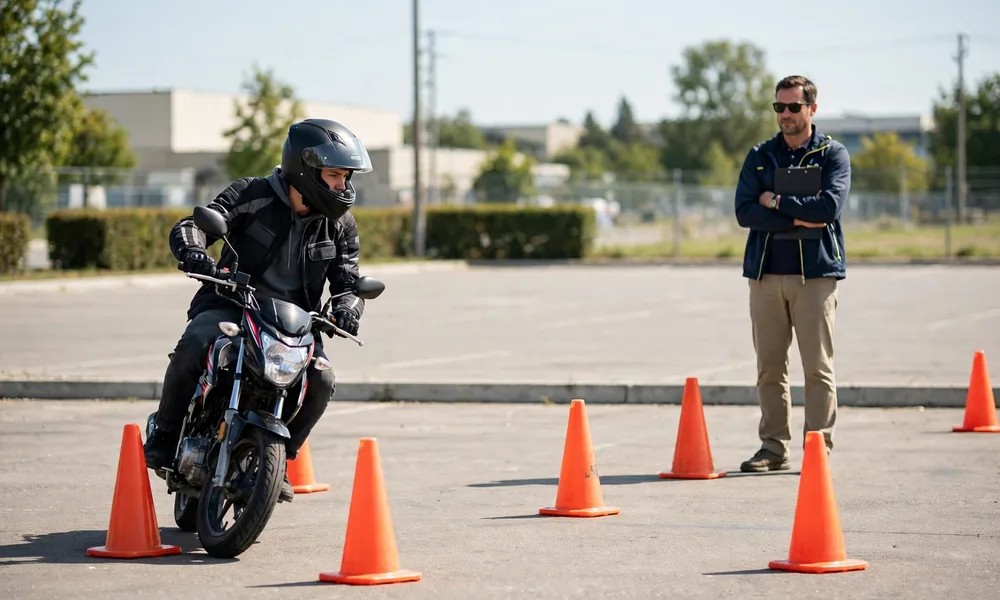
Best motorcycles for beginners 2026
The bikes below are ranked by how well they suit a new rider: light weight, friendly power, low seat, and strong value.
1. Honda CB125R
The Honda CB125R is the default first motorcycle for good reason. At around 130 kilograms with a 796-millimetre seat, it is light, low, and beautifully built, and its 125cc engine is smooth, economical, and good for well over 100 miles per gallon. It looks like a much bigger bike, handles like a bicycle, and costs very little to run.
2. Yamaha YZF-R125
The Yamaha YZF-R125 brings sports-bike looks and sharp handling to the beginner class. Its 125cc engine is lively without being scary, its chassis is precise, and its riding position is sporty but not punishing. It is the best choice for a beginner who loves the look of a sports bike and wants to learn cornering properly.
3. KTM 125 Duke
The KTM 125 Duke is the sharpest, most aggressive-looking 125 on sale, with a punchy engine, excellent brakes, and a lightweight chassis that loves corners. It suits taller beginners well, and it feels faster than its numbers suggest. It is a brilliant first bike for riders who want excitement from day one, without the danger of a big engine.
4. Honda CB500F
The Honda CB500F is the best step up for beginners who can ride a bigger bike on their licence. Its 471cc twin makes 47 horsepower, the maximum for the A2 licence, delivered so smoothly it feels entirely unthreatening. At around 189 kilograms it is still manageable, and it is comfortable enough for longer rides and commuting. Many riders keep a CB500F for years.
5. Yamaha MT-03
The Yamaha MT-03 is a naked 321cc twin that hits the sweet spot between the 125s and the 500s. It is light at around 168 kilograms, quick enough to be fun on any road, and its upright riding position gives a great view of traffic. It is an excellent choice for a beginner who finds a 125 too slow but is not ready for a 500.
6. Kawasaki Z400
The Kawasaki Z400 pairs a lively 399cc twin with a featherweight chassis, and the result is one of the most fun beginner bikes you can buy. It is quick, agile, and easy to ride, with a low seat and a friendly engine that pulls cleanly from low revs. Few bikes teach you more, faster.
7. Royal Enfield Hunter 350
The Royal Enfield Hunter 350 is the best beginner bike for riders who want character and style. Its 349cc single is relaxed and torquey, its seat is low at 800 millimetres, and it is one of the cheapest new bikes you can buy. It is not fast, and it does not pretend to be, but it is charming, simple, and easy to live with.
8. Suzuki SV650
The Suzuki SV650 is the classic beginner big bike, and it has earned that title over decades. Its 645cc V-twin is smooth, torquey, and forgiving, and it can be restricted for A2 licences. It is comfortable, reliable, and versatile enough for commuting and touring. Buy one as a first big bike and you may never need another.
Comparison table: best motorcycles for beginners 2026
| Motorcycle | Engine | Power | Weight | Seat height | Best for |
|---|---|---|---|---|---|
| Honda CB125R | 125cc | 15 hp | 130 kg | 796 mm | All-round first bike |
| Yamaha YZF-R125 | 125cc | 15 hp | 142 kg | 825 mm | Sports-bike style |
| KTM 125 Duke | 125cc | 15 hp | 139 kg | 830 mm | Taller beginners |
| Honda CB500F | 471cc | 47 hp | 189 kg | 790 mm | Best all-rounder |
| Yamaha MT-03 | 321cc | 42 hp | 168 kg | 780 mm | Step up from 125 |
| Kawasaki Z400 | 399cc | 45 hp | 167 kg | 785 mm | Fun and agility |
| Royal Enfield Hunter 350 | 349cc | 20 hp | 181 kg | 800 mm | Style and value |
| Suzuki SV650 | 645cc | 76 hp | 197 kg | 785 mm | First big bike |
The pattern in the table is the lesson of this guide: the best beginner bikes cluster under 200 kilograms with seats under 830 millimetres. Weight and seat height predict beginner confidence far better than horsepower does.
The numbers: what a first bike really costs
A beginner motorcycle is one of the cheapest ways into motorcycling. A new 125cc bike costs roughly 4,000 to 5,000 pounds, insurance for a new rider is typically 400 to 800 pounds a year, and fuel economy of 90 to 110 miles per gallon means a 100-mile week costs under 10 pounds in petrol. A popular 125 holds its value so well that many beginners sell after a year for only a few hundred pounds less than they paid.
Compare that with jumping straight to a big bike. Insurance can easily exceed 1,500 pounds a year for a new rider on a powerful machine, tyres and servicing cost far more, and a single drop can mean a four-figure repair bill. New riders on smaller bikes have fewer serious accidents in their first year, and they build skills faster because they can use all of the bike’s performance instead of being scared of it. Starting small is the fastest way to become a good rider.
Electric motorcycles are also worth a look for city beginners. They are quiet, simple to ride, and cost pennies per mile to run, with no gears and no clutch to learn. Our guide to the best electric motorcycles for city riders compares the strongest options, and our comparison of electric vs petrol motorcycles explains the trade-offs in range, charging, and cost.
Beginner mistakes to avoid
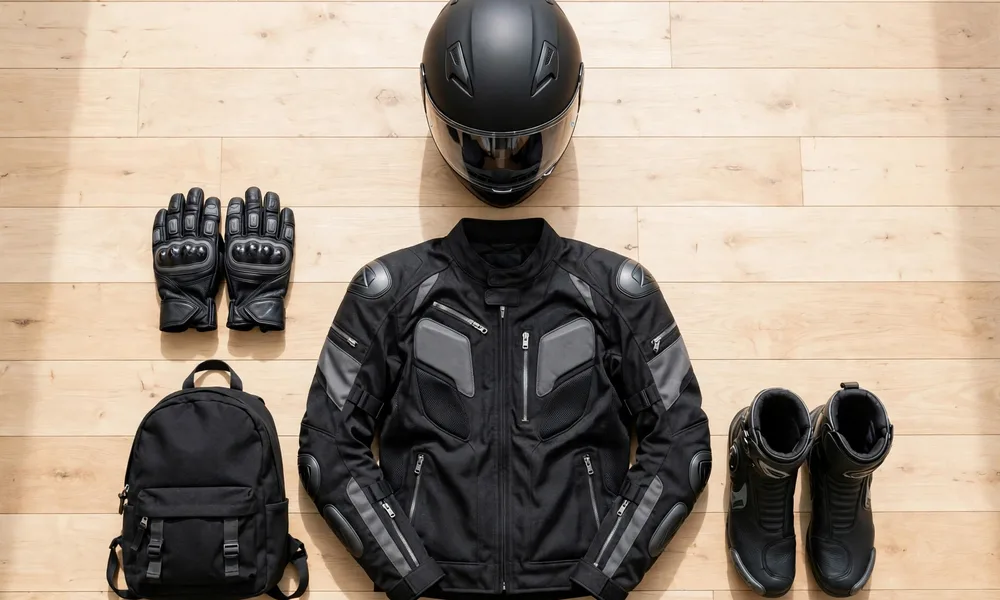
The biggest mistake is buying too much bike. A 1,000cc superbike as a first motorcycle is not brave, it is dangerous, and it teaches you fear instead of skill. The second mistake is skipping training: a proper riding course teaches you more in a weekend than months of solo trial and error, and it can cut your insurance. The third is buying cheap gear: a good helmet, jacket, gloves, and boots cost less than a single hospital visit.
Other common errors are easier to fix. Do not buy a bike you cannot flat-foot at a standstill, no matter how much you love it. Do not skip ABS to save money, and do not buy a rare first bike that is hard to insure and hard to sell. Practise slow-speed control, U-turns, and emergency stops in an empty car park before you ride in traffic. If you are torn between a manual and an automatic, our guide to manual vs automatic motorcycles for beginners walks through the choice.
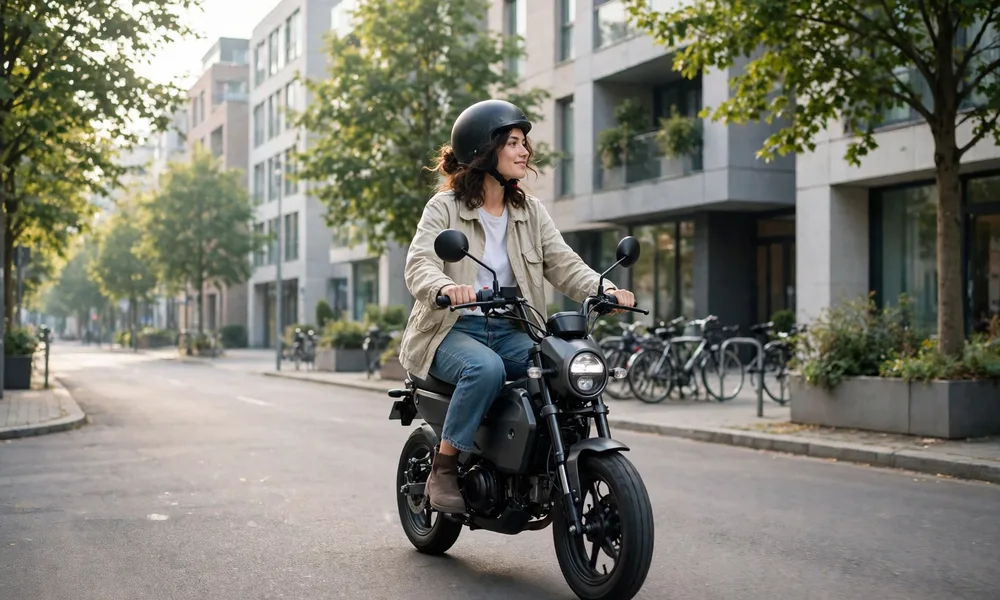
Checklist: choosing your first motorcycle
- Sit on the bike and check you can put both feet flat on the ground.
- Keep the weight under 200 kilograms and the power under 50 horsepower.
- Make sure the bike has ABS, and check the tyres and brakes.
- Get insurance quotes before you buy, and compare at least three insurers.
- Budget for a good helmet, jacket, gloves, and boots, not just the bike.
- Book a training course and practise slow-speed control before you ride in traffic.
Frequently asked questions
What is the best motorcycle for a complete beginner?
The Honda CB125R is the safest all-round answer: light, low, economical, and easy to ride. If you can ride a bigger bike on your licence, the Honda CB500F is the best larger beginner bike.
Is a 125cc motorcycle fast enough for a beginner?
Yes for learning, commuting, and town riding, where a 125 is quick, nimble, and fun. It will cruise at motorway speeds, but it is not a comfortable long-distance machine. Most beginners outgrow a 125 within a year, which is exactly the point.
Should my first bike be new or used?
A used beginner bike is usually the smarter buy, because popular models hold their value and a first bike will probably be dropped. A one- or two-year-old bike with a service history gives you nearly all the benefits of new for far less money.
How much should I spend on my first motorcycle?
Budget 3,000 to 5,000 pounds for the bike, plus 500 to 1,000 pounds for gear and training, and your first year of insurance. Spending more on the bike rarely makes you a better rider; spending more on training does.
Do I need ABS on my first bike?
Yes. ABS prevents the wheels locking under hard braking, which is the most common beginner crash. It is standard on nearly every new beginner bike in 2026, and it is worth paying extra for on a used bike.
When should I upgrade from my first bike?
Upgrade when you can use all of your current bike’s performance confidently, including full-throttle acceleration, hard braking, and fast cornering. For most riders that takes one to two years. Upgrading earlier means paying more to learn the same lessons on a heavier, faster machine.
Bottom line
The best motorcycles for beginners in 2026 are the light, low, friendly ones: the Honda CB125R and CB500F, the Yamaha YZF-R125 and MT-03, the KTM 125 Duke, the Kawasaki Z400, the Royal Enfield Hunter 350, and the Suzuki SV650. They are cheap to buy, cheap to run, and forgiving enough to teach you properly. Start small, buy good gear, and take training seriously. The fast bikes will still be there in a year or two, and when you ride one, you will be ready for it.


