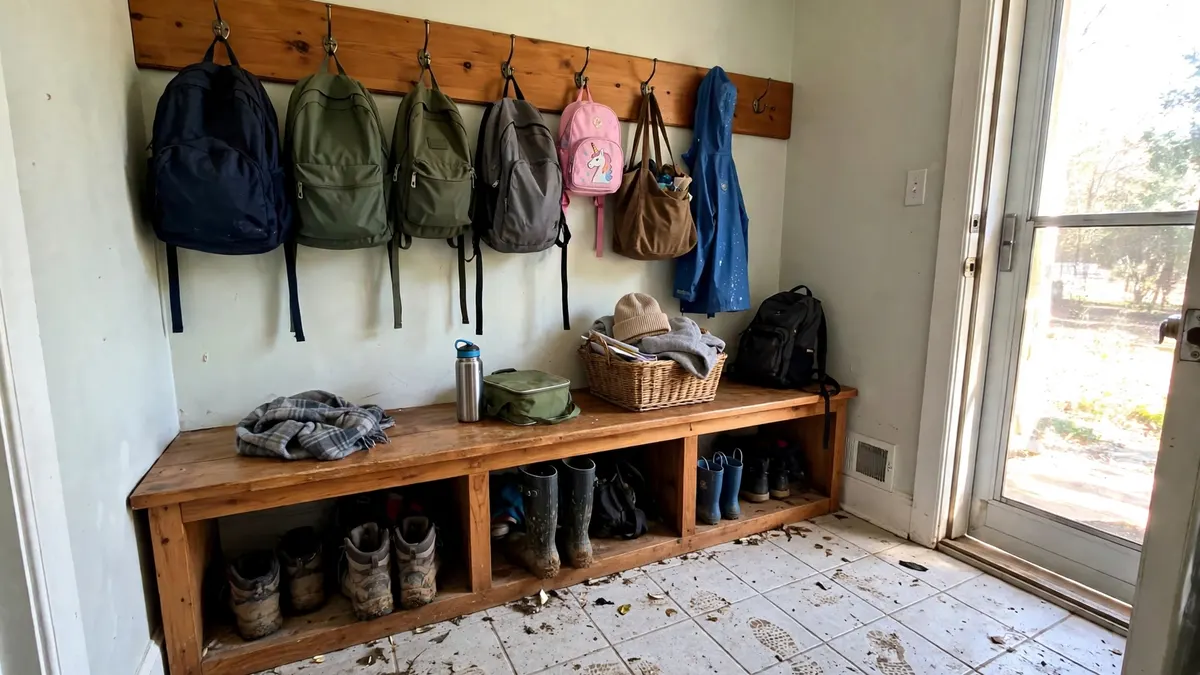
A mudroom bench is the piece of furniture that stops mud, wet coats and school bags from taking over the house. Unlike a hallway bench, which is mostly a place to sit, a mudroom bench is built for a room whose whole job is handling mess: a back-door room, a boot room or a utility entrance where muddy boots, wet dogs, sports kit and rain-soaked coats arrive every day. The best mudroom benches in 2026 give every person in the house their own cubby, their own hooks and their own space for boots, so the mess has somewhere to go instead of spreading across the floor.
Key Takeaways
- A mudroom bench serves a dedicated messy room, not a hallway, so it must handle wet boots, mud and damp coats every day.
- Give every person their own cubby and hooks, because a shared pile is a pile nobody owns or tidies.
- Open cubbies dry wet shoes far faster than closed cupboards, which trap moisture and smell.
- Choose washable materials and a tiled or vinyl floor, because a mudroom bench will get muddy, wet and scuffed.
- Plan for boots, not just shoes: tall boots need a tall slot or a boot tray, and trainers need far less height.
Mudroom Bench vs Entryway Bench: What Is the Difference?
The difference is the room, not just the bench. An entryway bench sits in a hallway, where the priority is looking tidy for visitors and giving guests somewhere to sit. Our guide to the best entryway benches covers that broader family, including benches with hooks above and benches with no storage at all. A mudroom bench sits in a mudroom, a working room: a back-door entrance, a boot room or a utility room where people come in from the garden, the school run or a dog walk, usually muddy, wet or both.
That changes what the bench has to do. A mudroom bench must cope with mud on the floor, water dripping off boots, wet coats hanging above it, and sports kit dumped on it after practice. It needs open storage that dries things out, materials that wash clean, and a layout that gives every person their own bay. An entryway bench can be elegant and minimal; a mudroom bench has to be tough, washable and organised.
A mudroom bench also differs from a shoe bench, which narrows the job to footwear alone. Our guide to the best shoe benches covers benches sized and ventilated for shoes. A mudroom bench does more than hold shoes: it holds coats, bags, hats, dog leads, sports kit and school bags as well, and it usually forms part of a bigger mudroom system, with hooks above and cubbies below. If your bench only needs to hold shoes, a shoe bench is the better buy.
The Main Types of Mudroom Bench Compared
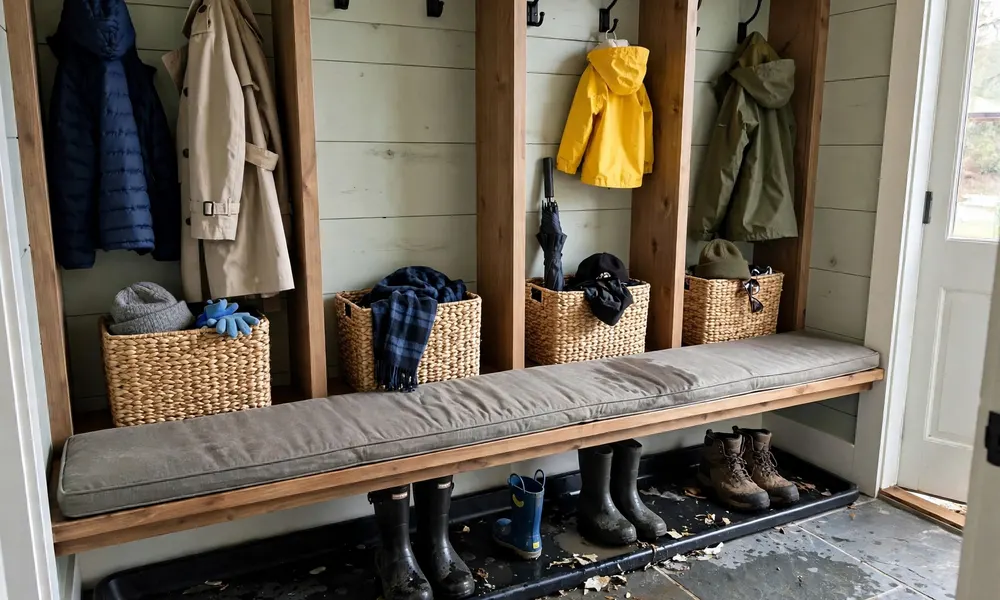
Mudroom benches fall into a few clear types. The locker-style bench is the classic mudroom unit: a bench with vertical dividers above it, so each person gets their own bay with hooks, a cubby and a basket. The open cubby bench is simpler: a bench with open cubbies underneath, one or two per person, with no dividers above. It suits a smaller mudroom.
| Mudroom bench type | Best for | Storage | Watch out for |
|---|---|---|---|
| Locker-style bench | Families, one bay per person | Excellent, hooks plus cubbies | Needs a wide wall |
| Open cubby bench | Smaller mudrooms | Good, shoes grabbable | Looks messy if cubbies overflow |
| Metal and washable bench | Boot rooms, dogs, heavy mud | Good, slatted and washable | Can feel cold and hard |
| Slim bench | Narrow mudrooms | Fair, shallow shelves | Boots may stick out |
| Upholstered bench | Mudrooms that double as hallways | Fair, open shelves | Fabric marks easily |
| Built-in bench | Renovations, large families | Excellent, most storage | Expensive and permanent |
Our Picks: The Best Mudroom Benches for Every Home
We judged mudroom benches on five tests: how much wet gear they actually hold, how fast wet things dry in them, how easy they are to clean, how well they survive daily use by a whole family, and value for money.
Best Overall: Locker-Style Mudroom Bench
A well-made locker-style bench remains the best all-round mudroom bench for most families. Look for a bench about 120 to 180 centimetres long, with a vertical divider for each person, two hooks per bay, a cubby or basket above the seat, and open shoe storage below. The dividers are what make it work: each person has their own bay, so coats, bags and shoes stay in their own space instead of sliding into a shared pile.
Best for Small Mudrooms: Open Cubby Bench
A small mudroom does not need full lockers, and an open cubby bench is the honest answer. Look for a bench with two or three open cubbies underneath, one per person or one per pair of boots, and a row of hooks above it on the wall. The open cubbies dry wet shoes far faster than closed cupboards, because air circulates around them, and you can see at a glance what is missing.
Best for Wet Weather: Metal and Washable Bench With a Boot Tray
A mudroom that deals with real mud needs a bench that washes clean. A metal bench with slatted shelves and a boot tray underneath is the best choice for wet weather, because water drips through the slats into the tray instead of pooling on a wooden shelf, and the whole bench can be wiped or hosed down. Pair it with a proper boot tray, and our guide to the best boot trays covers the trays that keep mud off your floors.
Best Budget Pick: Simple Wooden Cubby Bench
A simple wooden bench with open cubbies underneath is the cheapest way into a proper mudroom setup, and for a family of three or four it is often enough. It has no dividers above and no tall cupboards, but it still gives every pair of boots a home and every person a place to sit. The trade-off is organisation: without dividers, coats and bags will need a separate row of hooks on the wall above, and without baskets the cubbies will look untidy.
Sizing a Mudroom Bench for a Real Family
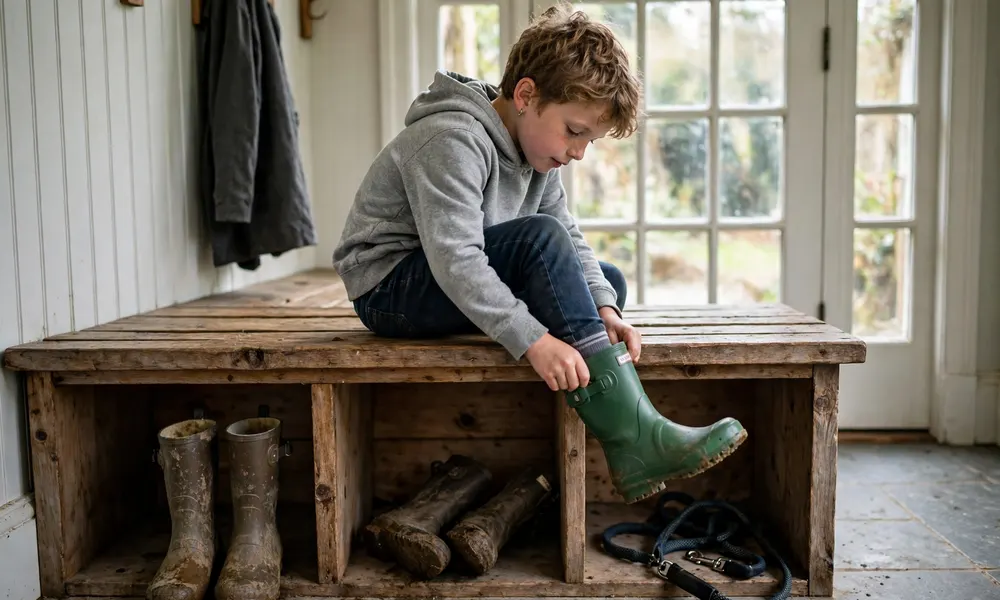
Size is where most mudroom bench purchases go wrong: people measure the wall and forget to count the people. A bench for one person needs about 60 centimetres of seat, and a family of four needs 120 centimetres or more, so two people can sit at once and every person has a cubby. Measure the wall, subtract space for doors and radiators, and leave five centimetres of breathing room at each end and at least 90 centimetres of clear floor in front of it.
Seat height matters more than most people expect. A bench 45 to 48 centimetres high suits most adults: low enough to sit on comfortably, high enough to stand up from without effort. Benches below 40 centimetres feel like sitting on the floor, especially for older knees. If the bench will be used by children, 40 to 45 centimetres is more practical.
Depth is the number people forget. Most mudroom benches are 35 to 45 centimetres deep: enough to sit on comfortably and to store shoes underneath. Check the cubby heights too: trainers need about 15 centimetres, ankle boots about 25, and tall wellington boots about 40 or a dedicated tall slot at one end. A bench with identical shallow cubbies will hold trainers beautifully and leave every boot on the floor beside it.
Handling Wet Boots, Mud and Damp Coats
A mudroom bench earns its keep in wet weather. Open cubbies and slatted shelves dry wet boots far faster than solid shelves or closed cupboards, because air circulates and water drips away instead of pooling. A boot tray under the bench catches the mud and water that drips off, and it is far easier to empty a tray than to mop a floor.
Wet coats need somewhere to drip as well. Hooks above the bench let coats hang with air around them, and a tiled or vinyl floor underneath catches the drips. Avoid hanging wet coats in a closed cupboard, because they will stay damp and start to smell. If the mudroom has a radiator, put the bench near it, so coats and boots dry overnight.
Materials matter more in a mudroom than in a hallway. Solid wood lasts well if you wipe it down and keep it out of standing water, and painted wood is easier to clean than bare wood, because mud wipes off paint. Metal is the toughest option for a boot room that gets hosed down. Avoid pale fabric, and choose a cushion with a removable, washable cover in a dark, hard-wearing fabric.
Keeping a Mudroom Bench Tidy
A mudroom bench only works if the system around it works, and the system is mostly habit. Give every person their own bay, hooks and cubby, and make it a rule that coats go on hooks, boots go in cubbies, and bags go in baskets. A shared pile is a pile nobody owns, and a pile nobody owns is a pile nobody tidies. A basket per person hides the small things that would otherwise spread across the bench.
Mudroom Bench Buying Checklist
- Count the people first, and give every person their own cubby, hooks and basket, because a shared pile never stays tidy.
- Measure the wall and the walkway, and leave at least 90 centimetres of clear floor in front of the bench.
- Choose open cubbies or slatted shelves for wet boots, and a boot tray underneath to catch mud and water.
- Check the cubby heights against your tallest boots, and give wellington boots a tall slot or a tray of their own.
- Pick washable materials and a removable, washable cushion cover, because a mudroom bench will get muddy.
- Fix the bench and any tall unit to the wall, so it cannot tip when children climb it or coats pile up.
Frequently Asked Questions
What is the difference between a mudroom bench and an entryway bench?
A mudroom bench serves a dedicated messy room, usually a back-door entrance or boot room, and it is built for wet boots, mud and damp coats. An entryway bench sits in a hallway, where the priority is looking tidy for visitors.
How wide should a mudroom bench be?
Allow about 60 centimetres of seat per person, so a family of four needs at least 120 centimetres. Measure the wall first, and leave five centimetres of breathing room at each end and 90 centimetres of clear floor in front.
Are open cubbies or closed cupboards better for a mudroom?
Open cubbies are better for daily boots and shoes, because air circulates and wet things dry faster. Closed cupboards trap moisture, so do not store wet boots in them.
What is the best material for a mudroom bench?
Solid wood or painted wood suits most mudrooms, because it is sturdy and easy to wipe clean. Metal is the toughest option for a boot room that gets properly muddy. Avoid pale fabric.
Do I need a boot tray under a mudroom bench?
Yes. A boot tray catches the mud and water that drips off boots, and it is far easier to empty a tray than to mop a floor.
Should a mudroom bench be fixed to the wall?
Yes, especially a tall locker-style unit. Fix it to the wall with proper fixings, because a bench loaded with winter coats can tip if children climb it.
The Bottom Line
A mudroom bench is not a hallway bench with mud on it. It is a working piece of furniture for a working room, and it earns its place by giving every person their own bay, every pair of boots a home, and every wet coat somewhere to dry. Buy a locker-style bench that fits your wall, give each person their own cubby and hooks, put a boot tray underneath, and choose materials you can wipe clean.