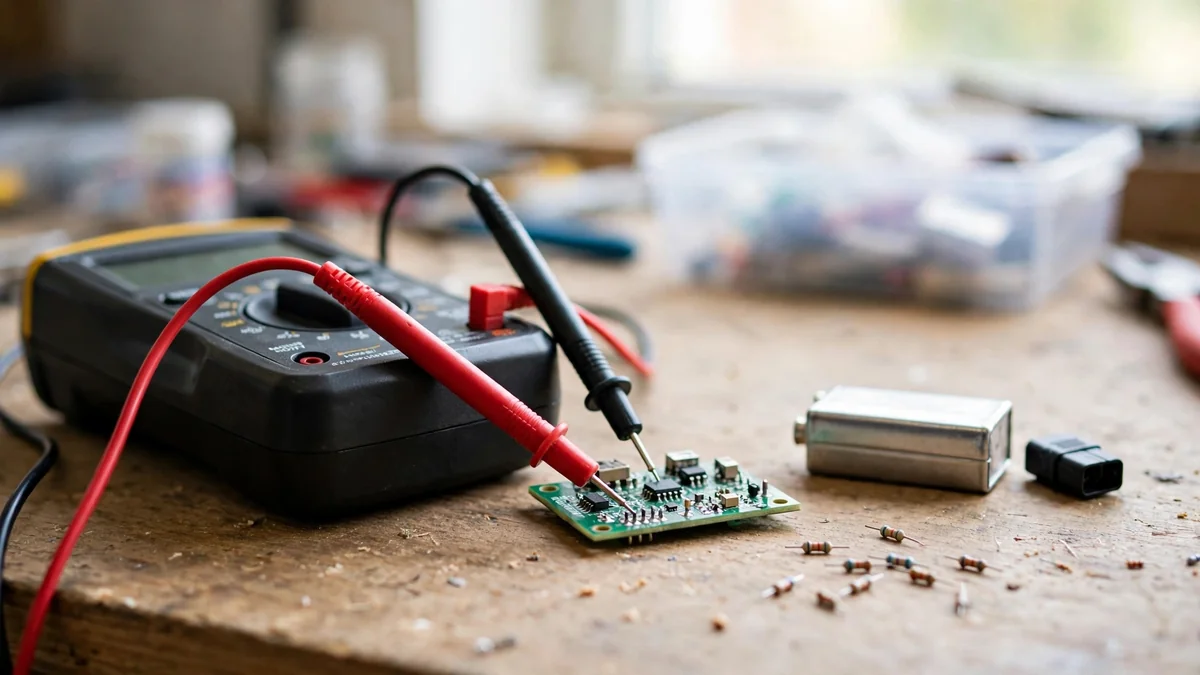
The best multimeters that read true every time in 2026 are the ones you can trust on the first reading, because a meter that lies is worse than no meter at all. A wrong voltage reading can send you chasing a fault that does not exist, and a wrong battery reading can leave you stranded. Accuracy is not a luxury feature on a multimeter. It is the whole point of the tool, and the difference between a meter that reads true and one that drifts is the difference between a quick fix and a wasted afternoon.
Choosing a multimeter that reads true is not about buying the most expensive meter on the shelf. It is about matching the meter to the work you do, because a meter perfect for car batteries can be the wrong choice for delicate electronics. This guide explains what accuracy really means, compares the main types of meter side by side, and shows you how to pick one that gives you a reading you can act on the first time, every time.
Key Takeaways
- True RMS matters for modern electronics: cheap averaging meters misread the distorted waveforms from chargers and inverters.
- Auto-ranging is worth paying for, because it removes the most common beginner mistake of testing on the wrong range.
- Match the meter to the job: a basic meter covers batteries and continuity, while car and mains work needs a tougher, higher-rated meter.
- Check the safety rating before you buy: a CAT III 600V rating is the minimum for household mains work.
- Test your meter on a known source before every important job, because a flat battery or a damaged lead can fake a reading.
What “Reads True” Actually Means
Accuracy on a multimeter is stated as a percentage, usually something like plus or minus 0.5 percent, and it tells you how far the displayed reading can be from the real value. On a 12-volt car battery, a meter accurate to 0.5 percent reads between 11.94 and 12.06 volts, close enough to tell a healthy battery from a dying one. A cheap meter accurate to only 2 percent could read 11.76 to 12.24 volts, a spread wide enough to hide a real problem. For most home and car work, 0.5 percent accuracy is the standard worth aiming for.
The bigger trap is the way the meter measures alternating current. Cheap meters assume a clean sine wave and average it out, which works on simple mains power but fails on inverters, dimmers and modern chargers, where an averaging meter can read 20 to 40 percent low. A true RMS meter measures the actual heating value of the waveform, so it reads correctly on clean and distorted supplies alike.
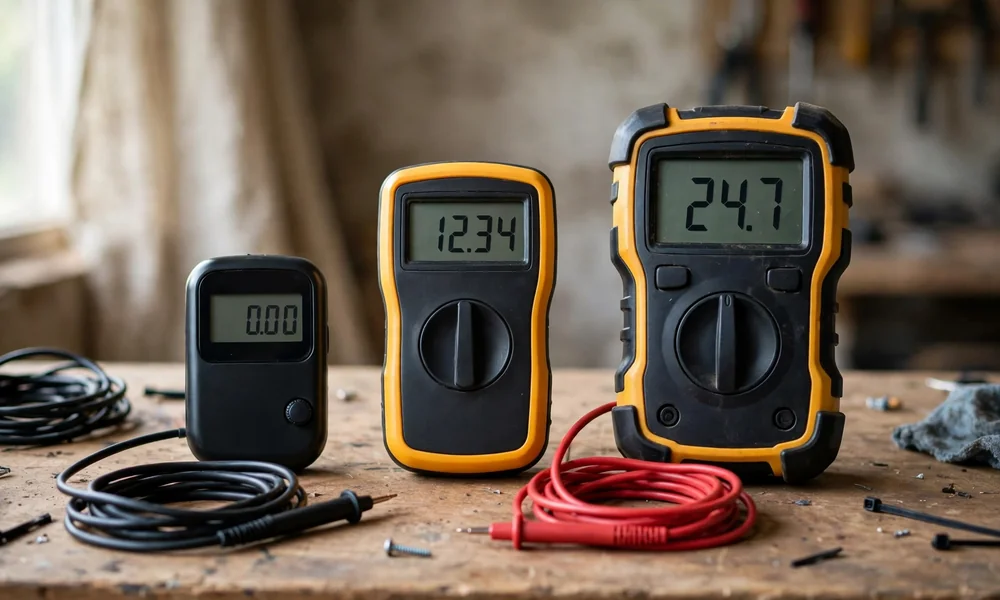
Resolution is the smallest change the meter can display, and it is easy to confuse with accuracy. A meter showing 12.34 volts has finer resolution than one showing 12.3, which helps when you watch a battery charge, but it does not make the reading more accurate. A meter can display four decimal places and still be wrong. What counts is accuracy plus a display that updates steadily, without the last digit flickering so fast that you cannot read it.
The Main Types of Multimeter
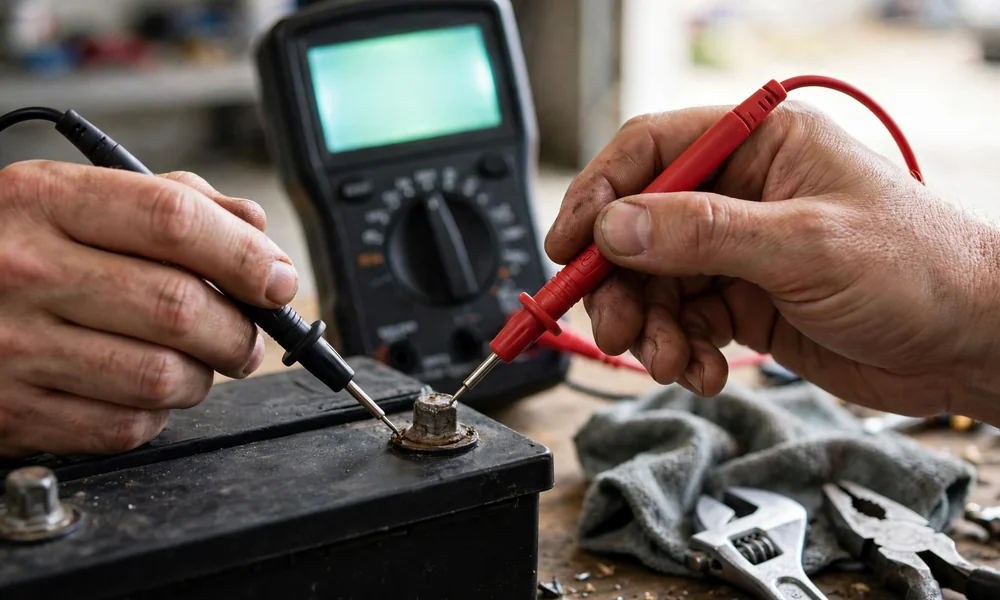
Handheld digital multimeters are the standard choice for almost everyone, and they split into manual-ranging and auto-ranging models. A manual meter asks you to turn a dial to the right range before you measure, which is fine once you know the habit, but a wrong range gives a wrong reading or an overload warning. An auto-ranging meter picks the range itself, so you only choose what to measure. It costs a little more, but it removes the most common beginner error and makes the meter faster to use.
Clamp meters measure current without breaking the circuit, by closing a jaw around a wire. They are the right tool when you need to check how much current a device draws, because a standard meter forces you to disconnect a wire and put the meter in series, which is slow and, on mains circuits, dangerous. A good clamp meter also works as a normal multimeter. If you work on cars, solar panels or home wiring, a clamp meter earns its place.
Pocket meters are small, cheap and genuinely useful as a second meter. Their limits are real: small displays, fewer features, lower safety ratings and usually no true RMS. Treat one as a quick checker, not your only meter, and never use it on mains circuits it is not rated for.
Features That Keep Readings Honest
Test leads are the weakest link in most meters, and they are the first thing to check. Thin leads with flimsy probes break inside their insulation, and a broken lead gives readings that jump around or vanish entirely, which looks exactly like a faulty circuit. Good leads are silicone-insulated, flexible in cold weather, and fitted with sharp probes that bite through light corrosion. If readings ever turn erratic, test the leads first by shorting the probes: a good pair reads near zero ohms, a damaged pair reads high or jumps.
A continuity beeper sounds a tone when a circuit is complete, so you can test fuses, switches and wires without looking at the display. The best beepers respond in well under a second. A backlit display is similarly practical: most fault-finding happens in dark corners and inside cupboards, and a meter you cannot read is one you cannot trust. A data-hold button that freezes the reading is the third small feature worth having.
Protection is what keeps a meter accurate after a mistake. A good meter has fuses on its current ranges and input protection that survives an accidental connection to the wrong socket. The safety category rating, printed as CAT II, CAT III or CAT IV, tells you which circuits the meter is safe on. CAT III 600V covers household mains and distribution boards, and it is the minimum for any meter used on a home’s wiring.

Multimeters Compared
| Type | Best for | True RMS | Auto-ranging | Typical price |
|---|---|---|---|---|
| Basic handheld, manual | Batteries, continuity | Usually no | No | Budget |
| Mid-range handheld, auto | Home and car work | Yes | Yes | Mid-range |
| Clamp meter | Current, mains, solar | Often yes | Yes | Mid to high |
| Pocket meter | Quick checks on the go | Rarely | Usually yes | Budget |
| Professional handheld | Daily trade use | Yes | Yes | High |
The choice is simple for most people: the mid-range auto-ranging handheld with true RMS is the sweet spot, covering home, car and hobby work in one tool. A clamp meter is the right second meter for current work, and a pocket meter is a handy spare. Buying the cheapest meter on the shelf is a false economy, because the day it misleads you will cost more than it saved.
How to Choose the Right Meter for You
If you mostly test batteries and household jobs
A mid-range auto-ranging handheld with true RMS is all you need, and it will serve you for years. Look for a clear display, a fast continuity beeper and a CAT III 600V rating, even if you never plan to open a consumer unit. Check that the meter feels solid in the hand and that the dial turns with a firm click, because a loose dial is the first sign of a meter that will drift. Our guide to the best vs worst car batteries of 2026 is a good companion, since a healthy battery and an honest meter go together.
If you work on cars
Car work adds two demands: measuring starter current and surviving a greasy, bumpy environment. A clamp meter handles the first, reading the hundreds of amps a starter draws without breaking a connection. For the second, choose a meter with a rubber holster, a tilt stand and a display you can read in sunlight.
If you work on home wiring or generators
Mains work is where safety ratings stop being a detail and become the whole decision. Buy a meter rated CAT III 600V or better, with fused current inputs and properly insulated leads, and check the rating comes from a recognised testing body. If you keep a generator for outages, a true RMS meter is essential, because generator output is rarely a clean sine wave. Read our guide to which generator keeps the lights on in 2026 for the other half of that setup, and if you are fitting smart controls, our guide to smart switches that actually work in 2026 covers what to wire them into.
Checklist: Before You Buy a Multimeter
- Choose true RMS if you test inverters, generators, dimmers or any modern charger.
- Pick auto-ranging unless you are experienced and prefer manual control.
- Check the CAT safety rating, and make it CAT III 600V as a minimum for mains work.
- Inspect the test leads, because good silicone leads outlast cheap ones and give steadier readings.
- Look for a fast continuity beeper, a backlit display and a data-hold button.
- Buy from a known brand with a warranty, since a meter is a tool you trust with your safety.
Using Your Meter Safely
A multimeter is a safety tool as much as a measuring tool, and a few habits keep both you and the meter honest. Always check the meter on a known source before an important test: a fresh battery should read close to its marked voltage, and shorting the probes should read near zero ohms. If either check fails, change the meter’s battery and inspect the leads before you trust anything it says. Never measure current on a mains circuit unless you know exactly what you are doing, and never exceed the meter’s rated voltage on any range. Keep the meter dry, replace its battery when the low-battery warning appears, and store it with the dial set to off or to volts, never to current.
Frequently Asked Questions
What does true RMS mean on a multimeter?
True RMS means the meter measures the real heating value of an alternating current waveform, so it reads correctly on distorted supplies from inverters, dimmers and generators. A cheap averaging meter assumes a clean sine wave and can read 20 to 40 percent low.
Do I need auto-ranging?
Most people do. Auto-ranging picks the range itself, so you cannot get a wrong reading from the wrong range. Manual meters are cheaper and fine for experienced users, but auto-ranging is faster and removes the most common beginner mistake.
What safety rating do I need for home wiring?
CAT III 600V is the minimum for household mains work, including sockets and distribution boards. A meter with no CAT rating, or one with a rating that has not been independently tested, should never be used on mains circuits.
Why does my multimeter give different readings each time?
Check the test leads first, since a broken lead is the most common cause of jumping readings. Then check the meter’s battery, because a flat battery makes readings drift. Finally, test a known source, like a fresh battery, to see whether the meter itself is at fault.
Can a multimeter test a car battery?
Yes. A healthy 12-volt car battery reads about 12.6 volts at rest, and below 12.0 volts means it is discharged or failing. Test again with the engine running: a good charging system shows between 13.7 and 14.7 volts.
How often should a multimeter be calibrated?
For home and hobby use, a good meter holds its accuracy for years without formal calibration. If you rely on it professionally, have it calibrated once a year, and check it against a known voltage source every few months.
The Bottom Line
The best multimeters that read true every time in 2026 are mid-range auto-ranging handhelds with true RMS, a CAT III 600V rating and solid test leads. Buy for accuracy and safety, test the meter on a known source before every important job, and look after the leads.