Which Generator Keeps the Lights On in 2026?
Which generator keeps the lights on in 2026 depends less on the biggest engine you can afford and more on matching the machine to your home. One too small will trip the moment the fridge compressor kicks in, while one far too large will burn fuel all night to power a handful of lamps. The right choice sits in the middle: enough starting power for the appliances that matter, a fuel supply you can keep topped up, and a noise level your neighbours can live with.
The trouble is that generator shopping is full of numbers that sound alike but mean different things: running watts, starting watts, surge watts and inverter output. This guide cuts through the jargon, compares the main types side by side, and shows you how to size a generator for a real home, so the next time the power goes out, your lights stay on and your food stays cold.
Key Takeaways
- Size by starting watts, not running watts: fridges, freezers and pumps need a short burst of extra power to start.
- Inverter generators are the quietest, safest choice for phones, laptops and televisions; conventional portables give more watts per pound.
- A standby generator is the only one that switches itself on automatically, but it needs professional installation and a permanent fuel supply.
- Fuel is the real limit in a long outage: a generator is only as useful as the fuel you have stored or piped in.
- Never run a generator indoors, in a garage, or near an open window: carbon monoxide is colourless, odourless and deadly.
Why the Right Generator Matters When the Power Goes Out
A power cut is rarely just an inconvenience. Within a few hours, a freezer full of food starts to thaw, a sump pump stops holding back groundwater, and a home on an electric well pump loses its water altogether. In winter, pipes can freeze and a house without heat cools fast. A generator turns that emergency into a manageable evening, but only if it can run the things you need.
The most common mistake is buying on price alone: a small, cheap generator will happily charge phones and run a lamp, then stall the moment you plug in the fridge. The opposite mistake is buying a huge machine that drinks fuel, rattles the street, and cannot be connected to the house properly because there is no transfer switch. Work out what you need to keep running, add up the watts honestly, and choose the type that fits how you live.
The Main Types of Generator
Portable Inverter Generators
Inverter generators are the quiet members of the family. They produce clean, stable electricity safe for sensitive electronics, and throttle their engines down when the load is light, saving fuel and keeping noise down. A typical 2,000-watt inverter generator is quiet enough to hold a conversation beside and light enough for one person to carry.
The trade-off is power: inverter generators usually top out at a few thousand watts, so they suit essentials rather than whole homes — fridge, lights, phone charger and laptop. They are the best choice for most households wanting backup for a night or two, and the easiest to store, since they are compact and sip fuel. If you only buy one generator, this is usually the one to buy.
Conventional Portable Generators
Conventional portable generators are the workhorses: a larger engine and simpler alternator deliver far more watts for the money than an inverter of the same price. A mid-size one can run a fridge, freezer, well pump and several lights at once, which is why they are the default choice on building sites and farms.
The downsides are noise and power quality: a conventional portable is loud, and its raw output can fluctuate enough to worry owners of expensive electronics. That is why surge protection matters with this type: a good surge protector between the generator and your devices is cheap insurance against a voltage spike. Fuel consumption is higher too, so you will need more petrol stored safely on hand.
Standby Generators
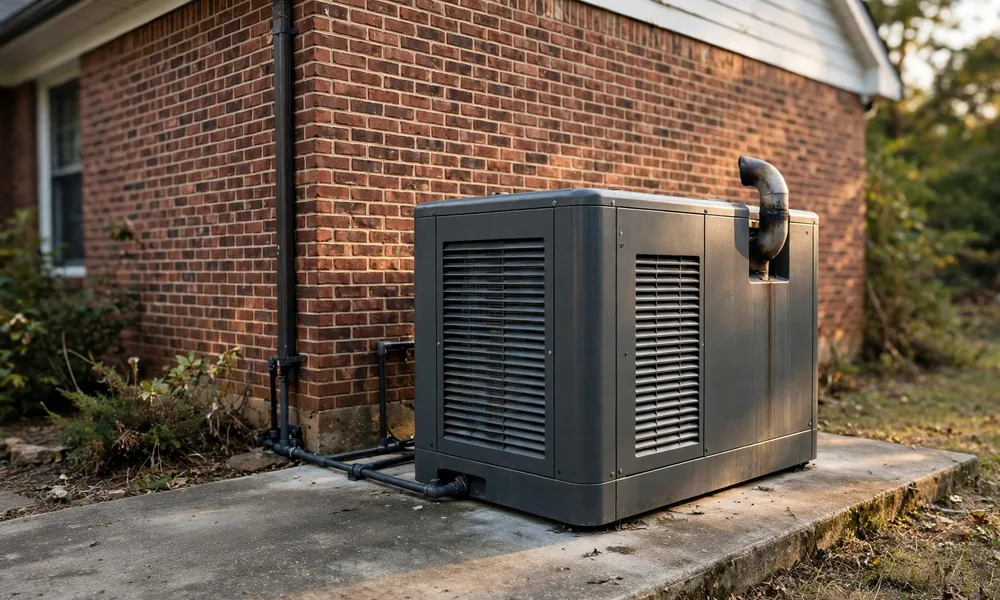
Standby generators are permanently installed outside the home, wired into the electrical panel through an automatic transfer switch. When the mains fails, they start themselves within seconds, and switch off again when power returns. There is nothing to drag out of the garage, nothing to refuel in the rain, and no extension leads snaking through windows.
That convenience comes at a price: a standby generator costs many times more than a portable, needs a concrete pad, a gas connection or a large propane tank, and professional installation that may require permits and an inspection. It also needs regular servicing, because a machine idle for months must still start on the worst night of the year. For homes with frequent cuts, or where someone depends on powered medical equipment, the cost is easy to justify.
Dual-Fuel and Solar Generator Kits
Dual-fuel generators run on petrol or propane; propane never goes stale in storage, while petrol degrades in months. Solar generator kits pair a folding panel with a battery box: silent and fuel-free, but store far less energy than a fuel generator produces. Our guide to the best vs worst solar generators explains where they shine, and the top portable power stations cover the battery-only end of that market.
How Much Power Do You Actually Need?
To size a generator, list the appliances you must keep running and add up their watts. Starting watts matter because motors need a surge to get going: a fridge that runs on 700 watts may need 2,200 watts for the first second while its compressor starts. Add the running watts of everything you want on at once, then add the largest single starting surge on top.
| Appliance | Running watts | Starting watts |
|---|---|---|
| Fridge or freezer | 600–800 | 1,200–2,200 |
| Sump pump | 800–1,000 | 1,300–2,100 |
| Well pump | 1,000–1,500 | 2,000–3,000 |
| Gas furnace fan | 500–800 | 1,000–1,500 |
| Microwave | 1,000–1,200 | 1,000–1,200 |
| Lights, phones, laptop | 200–400 | 200–400 |
A typical essentials list — fridge, freezer, a few lights, phones and laptop — lands around 2,500 running watts with a starting surge near 4,000 watts, pointing to a generator rated around 4,000 to 5,000 starting watts. Add a well pump or sump pump and you are quickly into the 7,000-watt range. Whole-house backup, including cooker and air conditioning, is standby territory, and an electrician should do the sums before you spend anything.
What to Look For Before You Buy
Running Watts vs Starting Watts
Manufacturers advertise the bigger number, so read the label carefully. A generator sold as 5,000 watts may only deliver 4,000 running watts, and the running figure decides what you can power all evening. Make sure the running watts cover your essentials with headroom: a generator running flat out is loud, thirsty and short-lived, while one at half load is quieter, cheaper and longer-lived.
Fuel Type and Runtime
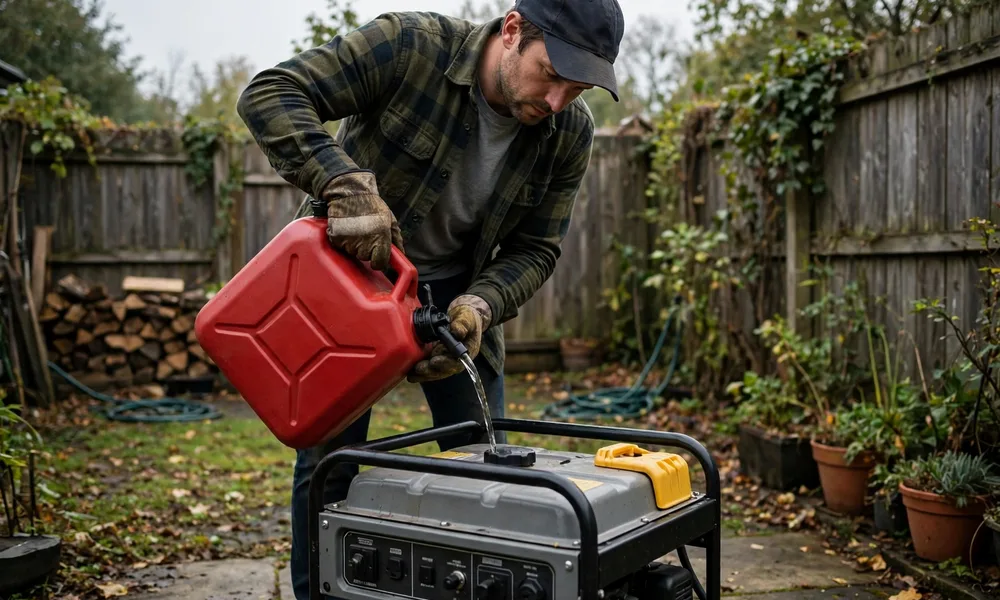
Petrol is easy to find but goes stale, propane stores forever but needs a tank, and natural gas never runs out but needs a piped supply. Check the runtime at half load: one that runs eight hours on a tank will get you through the night, while one needing refuelling every four hours will have you outside in the dark. Never refuel a hot generator; always let it cool first.
Noise Level
Noise is measured in decibels: every ten-decibel increase sounds roughly twice as loud. An inverter generator at 55 decibels is a quiet conversation; a conventional portable at 75 decibels is a vacuum cleaner that never stops. If you have close neighbours, or the generator will sit near a bedroom window, noise deserves as much weight as watts, and some areas have noise rules, so check before you buy.
Outlets and Connection
Count the outlets: enough standard sockets for your extension leads, plus a higher-capacity outlet if you plan to connect to the house. Connecting a generator to home wiring is not a DIY job: it needs a transfer switch installed by a qualified electrician, because a generator feeding power back into the grid can kill a linesman working to restore it. Never plug a generator into a wall socket to backfeed your house.

Generator Types Compared
| Type | Best for | Typical power | Noise | Cost |
|---|---|---|---|---|
| Inverter portable | Essentials, electronics, camping | 2,000–4,000 W | Quiet (50–60 dB) | Moderate |
| Conventional portable | Whole-house essentials, tools | 4,000–10,000 W | Loud (70–78 dB) | Low per watt |
| Standby | Automatic whole-home backup | 10,000–22,000 W | Moderate (60–68 dB) | High, plus install |
| Dual-fuel portable | Infrequent use, fuel flexibility | 3,000–9,000 W | Loud (70–76 dB) | Moderate |
Before You Buy: The Checklist
- Add up the running watts of your essentials, add the largest starting surge, and buy a generator whose running watts cover that total with headroom.
- Choose inverter power if you will run laptops, televisions or medical devices, accepting lower wattage for clean, stable electricity.
- Decide your fuel plan before you buy: petrol needs rotating and stabiliser, propane needs a tank, natural gas needs a piped connection.
- Budget for a transfer switch and an electrician if you want to power house circuits; never backfeed through a wall socket.
- Check the noise rating and local rules, especially if it will run overnight near neighbours or bedrooms.
- Plan storage and maintenance now: monthly test runs, fresh oil, and a safe ventilated place to keep fuel away from the house.
Frequently Asked Questions
What size generator do I need for my house?
Most homes can cover the essentials — fridge, freezer, lights, phones and laptop — with a generator rated at 4,000 to 5,000 starting watts. Add a well pump, sump pump or air conditioner and you will need 7,000 watts or more. Whole-home backup is usually a standby generator of 10,000 watts and above.
Can I run a generator in my garage?
No. Never run a generator indoors, in a garage, or in any enclosed space, even with the door open. Carbon monoxide has no smell and can kill in minutes. Run it outside, at least 20 feet from the house, exhaust pointing away from windows and doors.
Is an inverter generator worth the extra money?
Yes, if you run sensitive electronics or value quiet: inverter generators produce clean power safe for laptops and televisions, are much quieter, and use less fuel at light loads. If you only need raw power for tools and motors, a conventional portable gives you more watts for the same money.
How long can a generator run continuously?
Most portables run eight to twelve hours on a tank at half load, and can run for days if you keep refuelling and change the oil on schedule. Check the manual for oil-change intervals: running a small engine for days without fresh oil is the fastest way to destroy it.
Do I need a transfer switch?
You need one if the generator will power circuits wired into your house, such as the furnace, well pump or hard-wired lights. A transfer switch isolates your home from the grid so the generator cannot feed power back out to the lines. Extension leads to individual appliances do not need one.
What is the safest way to store fuel for a generator?
Store petrol in approved containers in a ventilated area away from the house, with stabiliser, and rotate it every few months. Propane is simpler: a sealed tank keeps indefinitely. Never store fuel indoors, near a water heater, or anywhere a spark could reach it.
The Bottom Line
The generator that keeps the lights on in 2026 is sized to your real loads, fuelled by a supply you can maintain, and quiet enough that you will actually use it. For most homes, that means a portable inverter generator in the 3,000 to 5,000 starting-watt range, with a transfer switch if you want to power house circuits. Homes with frequent, long outages should look at a standby unit instead. Buy it before the storm, test it monthly, and keep the fuel fresh — a generator is only useful if it starts on the night you need it.