
What is the best radio for kitchen and workshop in 2026? It is the one that switches on instantly, holds its station without drifting, sounds warm at ordinary volume, and keeps working happily with wet hands, flour on the worktop, or sawdust in the air. A good radio is the simplest pleasure in a home: no menus, no passwords, no updates to wait for. You switch it on, and within seconds the kitchen fills with the morning news or a song you half remember.
Radios have not stood still. The wooden box with a glowing dial still exists, better made than ever, but the category now stretches from pocket sets and rugged workshop radios to smart kitchen radios streaming stations from the other side of the world. A digital radio brings dozens of stations with no static, a kitchen radio adds a timer and a display you can read from across the room, and a portable set lets you take the match to the garden.
This guide answers it directly: which radios work best in a kitchen, which in a workshop, and which manage both — judged on reception, sound, ease of use, and durability, not gimmicks.
Key Takeaways
- Reception matters more than features: a radio that cannot hold a station is useless, however many buttons it has.
- For the kitchen, pick a digital radio with clear presets, a readable display, and a wipe-clean case that survives splashes.
- For the workshop, pick a rugged radio with a long telescopic aerial, big controls you can use with gloves, and a battery that lasts a full working day.
- A bigger speaker in a solid case usually means warmer sound; tiny plastic radios almost always sound thin and tiring.
- Simple controls win: one clear tuning knob and a handful of preset buttons beat a fiddly menu every morning.
How Radios Actually Work in 2026
Every radio does three things: it catches a broadcast, separates the station you want, and turns that signal into sound. The aerial catches the signal, the tuner picks out one station, and the amplifier and speaker do the rest. On an analogue radio you turn a dial until the station comes clear; on a digital radio the set locks on and shows the station name. Internet radios skip the airwaves entirely and fetch stations through your home Wi-Fi.
The aerial is the part most buyers ignore, and it is the part that decides most failures. A long telescopic aerial, fully extended and angled, pulls in far more than a short stubby one left folded down. Digital radios need a decent signal too, and in a thick-walled house or basement workshop the set that sang in the shop can fall silent. Before you buy, check which stations you receive where the radio will live.
The speaker matters just as much. A radio with a proper speaker in a solid case can sound warm and full at kitchen volume; a flat plastic box with a tiny driver sounds sharp and strained, and turning it up only makes it worse. Wooden cases tend to sound warmer than plastic, and a heavier case resists the buzzing cheap radios develop at higher volumes.
The Best Radios for the Kitchen in 2026
A kitchen radio lives a hard life: splashed, steamed, knocked by elbows, and operated with hands covered in flour or washing-up water. The best are designed around that, with wipe-clean cases, big buttons, and displays readable from across the room.
Digital Kitchen Radios
A digital kitchen radio is the best all-round choice for most homes in 2026. It finds dozens of stations with no hiss, shows the station and song playing, and stores favourites on presets, so the morning routine is one press. Look for a model with at least four presets, a kitchen timer, and an alarm that can wake you with the radio rather than a buzzer. Sound varies enormously: the best have a speaker of at least three inches in a solid case and sound full at the low volumes you use while cooking, so listen before you buy if you can.
Classic Wooden Kitchen Radios
There is still a place for the classic wooden radio in a kitchen, and the good ones are genuinely lovely objects. A well-made wooden case warms the sound in a way plastic rarely manages, and a big tuning dial with a clear frequency scale is a pleasure to use. These suit listeners who want a few stations, beautifully presented, rather than dozens of digital channels. The trade-off is reception: an analogue wooden radio finds fewer stations and will not show what is playing.
Smart Kitchen Radios
Smart kitchen radios add internet stations, podcasts, and voice control, and can be the most capable option for a connected kitchen. The best smart speakers for kitchens overlap heavily with this category, and the line between a smart speaker and a smart radio has all but disappeared. The question to ask is whether you want a radio that happens to be smart, or a smart speaker that happens to play the radio. If the answer is the first, choose a radio with proper radio tuners as well as streaming, so it keeps working when the Wi-Fi does not.

The Best Radios for the Workshop in 2026
A workshop radio has a different job: to be heard over a saw or sander, survive being knocked off a bench, play on battery all day, and work with gloves on. What matters is volume without distortion, toughness, battery life, and controls big enough to find by feel.
Rugged Jobsite Radios
The best workshop radios in 2026 are the rugged jobsite models built around a roll cage or a rubber-armoured case. They are heavy, and that weight is the point: it stays put, resists vibration, and houses a bigger speaker and battery. Most run on the same rechargeable batteries as their maker’s power tools, which is a genuine convenience if you already own the tools. Look for a long telescopic aerial, a tuning knob you can grip with gloves, and presets you can find without looking. Check battery claims carefully: eight hours at moderate volume may mean only three at full volume.
Portable Radios for the Garage and Garden
If your workshop is a garage, a shed, or half the garden, a lighter portable radio may suit you better than a full jobsite unit. The best portables combine a decent speaker, a handle, a battery that lasts a working day, and an aerial that actually works. Water resistance is worth having in a damp garage. The compromise is volume: a portable will not fill a large workshop, and pushing it to full volume brings distortion.
Kitchen and Workshop Radios Compared
| Type | Best room | Sound | Toughness | Ease of use |
|---|---|---|---|---|
| Digital kitchen radio | Kitchen | Warm, clear | Splash resistant | Presets, display |
| Classic wooden radio | Kitchen | Warm, rich | Delicate | Big dial |
| Smart kitchen radio | Kitchen | Good, varies | Average | Voice, apps |
| Rugged jobsite radio | Workshop | Loud, full | Very tough | Glove-sized controls |
| Portable radio | Garage, garden | Clear, modest | Water resistant | Simple, light |
Kitchen radios win on sound and convenience, workshop radios on toughness and volume; no single radio is best at both. One portable digital set is the honest compromise, but two cheaper radios matched to their rooms usually serve better.
What to Look For Before You Buy
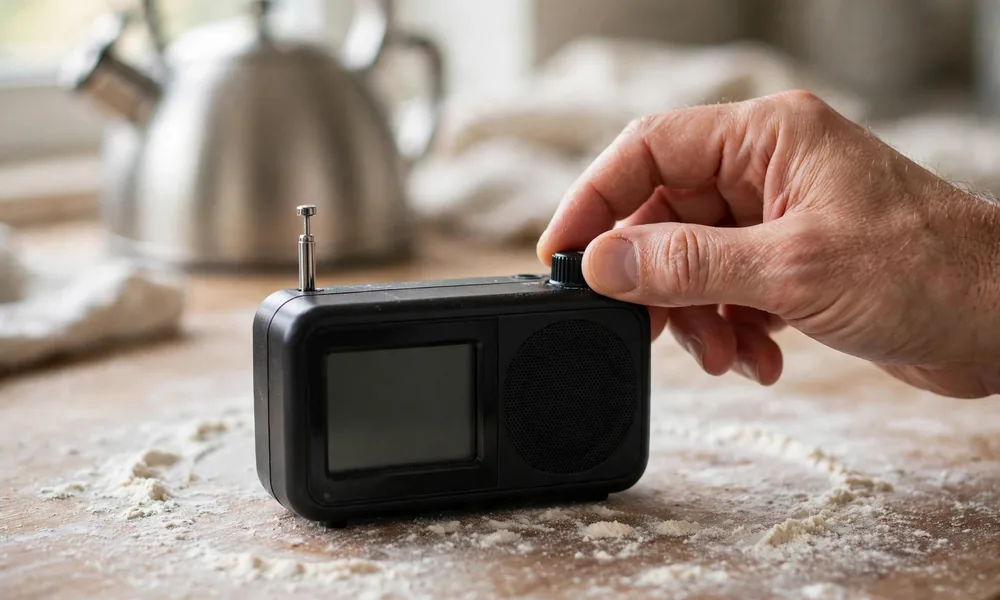
Reception comes first and is hardest to judge in a shop: a radio that pulls in every station under bright lights may struggle in a thick-walled kitchen or a metal-roofed garage. Test it where it will live, or buy where returns are easy. Extend the aerial fully; many reception complaints come down to an aerial left folded away.
Sound comes second: listen at the volume you will actually use. A good kitchen radio sounds warm and clear at conversation level; a good workshop radio stays clean at high volume without buzzing. If it hurts after five minutes, it will hurt after five months.
Ease of use comes third, and it is where most radios fail: count the steps from switch-on to your favourite station. The best need one press; one needing a menu, a mode button, and a scroll wheel will spend its life switched off. Our broader look at the best versus worst radios of 2026 shows just how much difference battery life and build quality make once a radio has been used daily for a few months.
Common Radio Mistakes to Avoid
The most common mistake is buying on looks: a radio styled like a 1950s classic can hide a dreadful tuner and a coin-sized speaker, while a plain box can sound wonderful. Judge by reception and speaker, not the retro dial.
The second is buying the smallest radio in the shop: small speakers sound thin above a whisper, and a slightly bigger radio usually sounds dramatically better. You are rarely short of a few spare inches of bench.
The third is ignoring the aerial, or forgetting where the radio will live. A broken or stubby aerial is the most common reason a radio drifts or hisses, and a delicate wooden radio belongs in a calm kitchen, not beside a circular saw. Match the radio to the room.

Before You Buy: A Quick Checklist
- Check reception where the radio will live, with the aerial fully extended and angled.
- Listen at the volume you will actually use, not at full blast in the shop.
- Count the presses from switch-on to your favourite station: one is ideal, three is the limit.
- For the kitchen, choose a wipe-clean case, big buttons, and a display you can read across the room.
- For the workshop, choose a rugged case, glove-sized controls, and a battery that lasts a full day.
- Check the aerial is long, firm, and replaceable, and that presets are easy to set and keep.
Frequently Asked Questions
Are digital radios better than analogue ones?
For choice and clarity, yes: more stations, no hiss, and a display showing what is playing. For warmth and simplicity, a good analogue wooden radio still has its fans.
Do I need Wi-Fi for a kitchen radio?
No: a digital or analogue radio works entirely without Wi-Fi. You only need it for internet stations and smart features, and a good kitchen radio should still play ordinary broadcasts if the internet goes down.
What is the best radio for a noisy workshop?
A rugged jobsite radio with a large speaker and a tool battery that lasts all day: volume without distortion matters more than features, and glove-friendly controls more than a pretty display.
Can I use a kitchen radio in the workshop?
You can, but it will not last: steam and splashes are one thing, sawdust, knocks, and high volume another. A radio matched to its room is cheaper in the long run.
How do I improve a radio’s reception?
Extend the aerial fully, move the radio away from metal objects and other electronics, and try it near a window. If reception is still poor, the problem is usually the location, not the radio.
Are smart speakers a good replacement for a radio?
They can be, especially in the kitchen, but a dedicated radio is simpler, works without Wi-Fi, and is easier with wet or dirty hands. A bedside clock with a radio shows the same idea in miniature: the best bedside devices do one job well.
The Bottom Line
So, what is the best radio for kitchen and workshop in 2026? For the kitchen, it is a digital radio with clear presets, a readable display, and a wipe-clean case that survives real cooking. For the workshop, it is a rugged jobsite radio with a long aerial, glove-sized controls, and a battery that lasts the working day. Buy the radio that matches its room, test reception where it will sit, and choose the one you can operate without thinking. The best radio is the one that is on, in tune, and part of your day.


